
Words & Photography by Aurélien Foucault
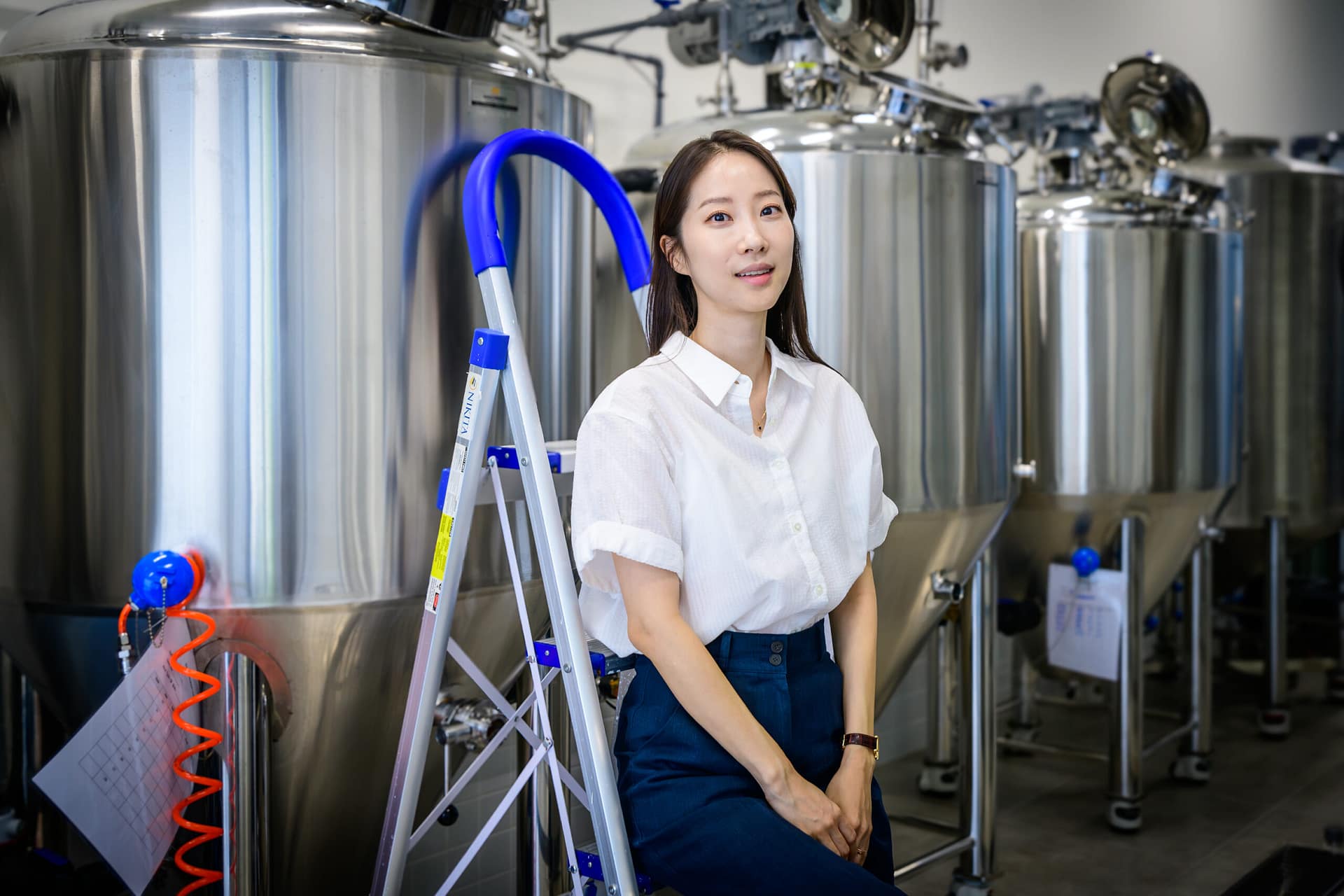
Tucked in a green alley within Ho Chi Minh City’s An Phu district, just next to a coffee roaster, lies an unsigned building, where I am greeted with a warm smile by the founder, Minkyu Lee and Sales Manager Jessie Jeong.
We are at IIUM Brewery, home of a very special product, Saigon’s first Craft Makgeolli: Magpie Sparkling.
I came across their product on social media, and was intrigued by their marketing, aimed at Fine dining restaurants, with a product that – although traditionally popular within the Korean community – remains largely unknown to Vietnamese and expats.
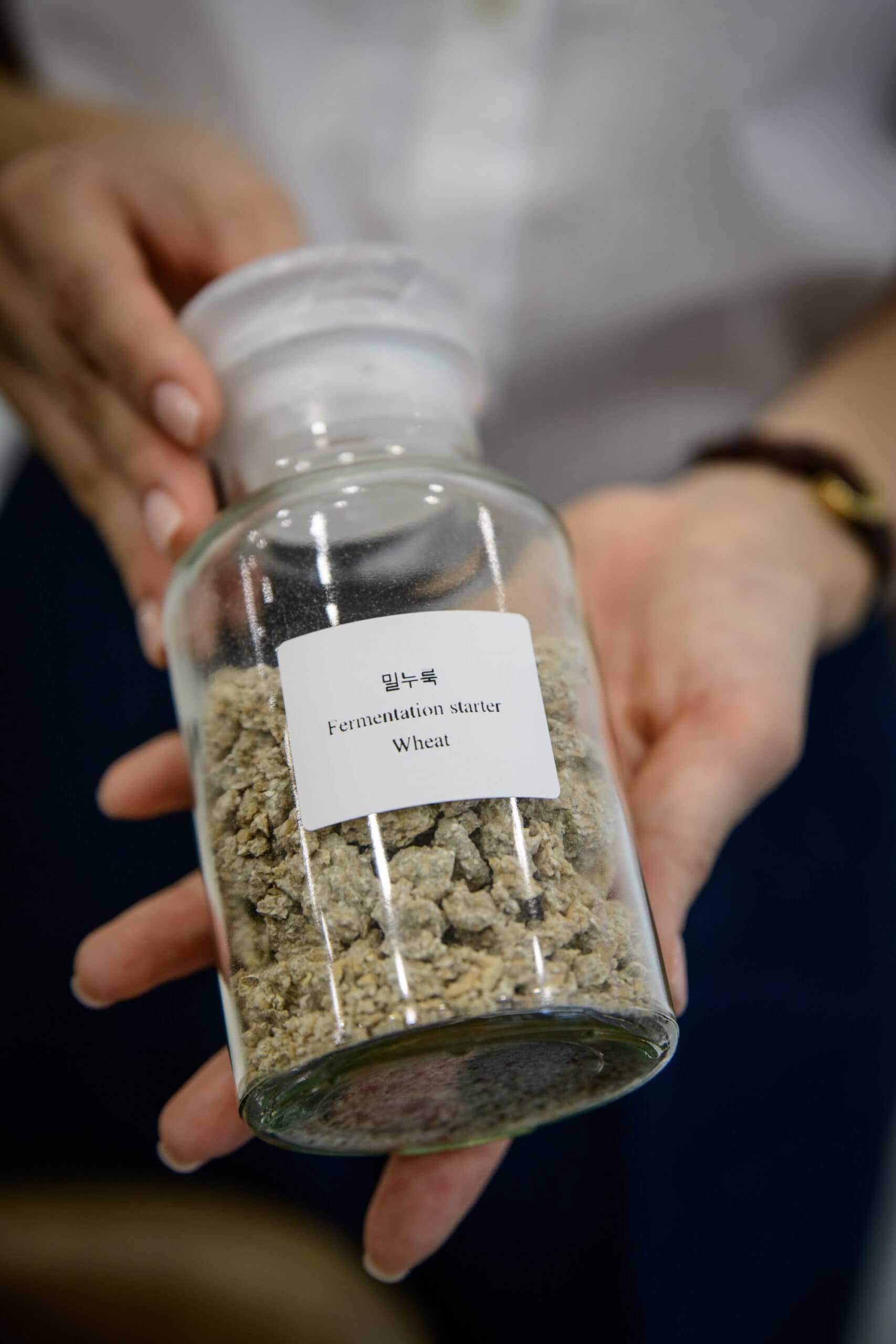
For those who aren’t familiar with it – Makgeolli is a milky rice wine that Koreans have been fermenting for over two thousand years. It’s made by steaming rice, mixing it with nuruk (a wheat or rice starter colonized by wild yeasts and moulds), then fermenting for about a week and straining the mix loosely enough to keep it cloudy rather than clear. Although it appears to be less popular than Soju outside of Korea, it is an integral part of the South Korean dinner table and is usually available in most Korean dining establishments.
I had had Makgeolli on occasion, while dining at Korean restaurants and had even bought a couple from Korean grocery stores, always curious to try something new, but I had remained sceptical most times at the slightly artificial taste and the heavy texture of the drink.
The idea of trying a craft, unpasteurised version got me excited and I contacted them to arrange a visit.
IIUM, which means ‘connection’ (이음) in Korean – evidencing the link between cultures, ingredients, and time – is the project of Minkyu Lee, a Korean transplant in Vietnam, with a background in biology.
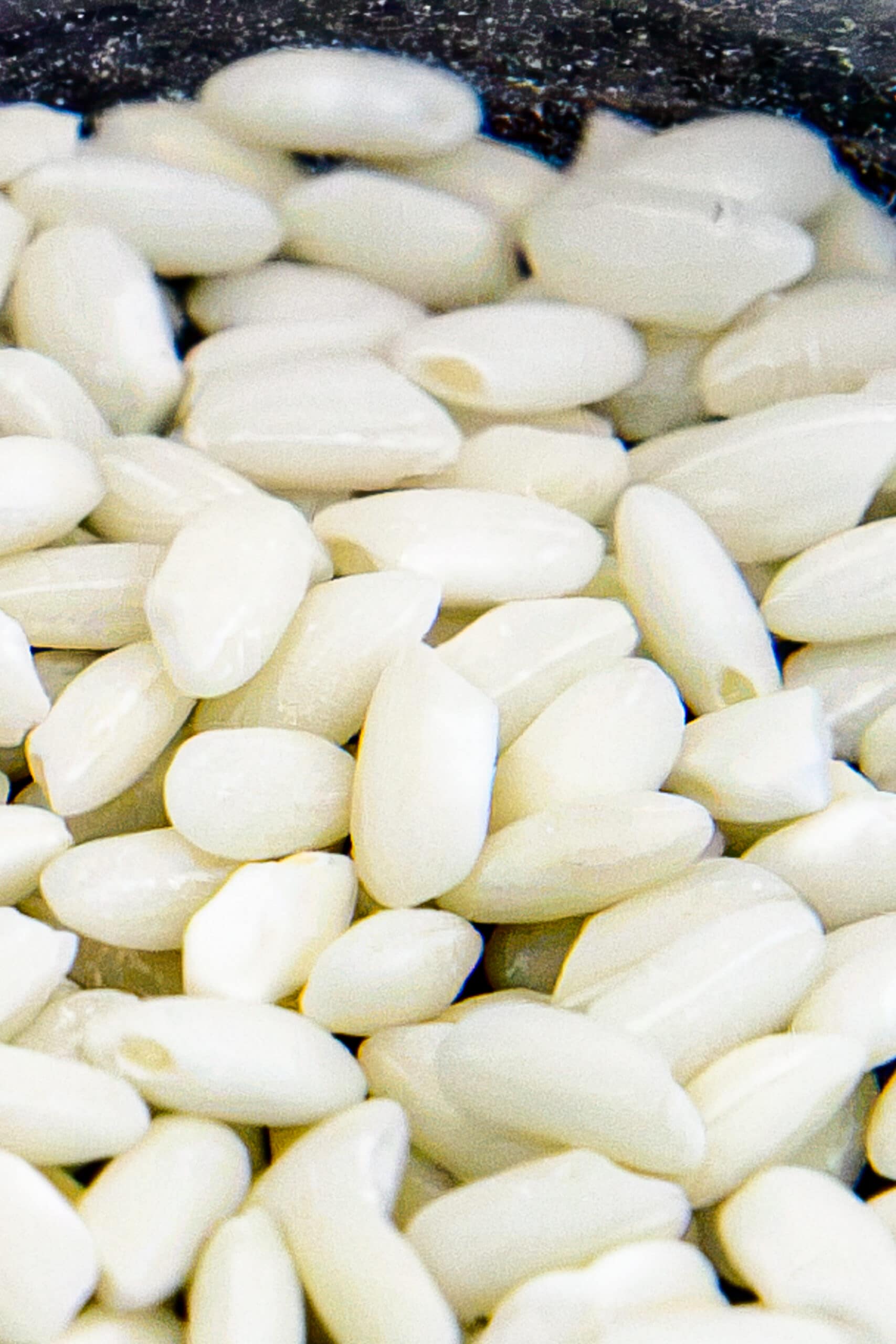
During the Covid pandemic, when most of us suddenly found an interest in sourdough or crochet, Minkyu dedicated herself to making Makgeolli. As many craft projects, she started this at home, initially for her husband. After seeing the positive results and the exceptional quality she managed to get out of using ST25 and Vietnamese glutinous rice, she decided to take this one step further and to develop a full concept for a premium beverage, both classy and audacious.
Made with Vietnamese glutinous rice instead of the traditional Korean rice, she offers an alliance between her home country and her current home and has managed to refine a very impressive product. Their first release is called Magpie Sparkling, a fresh, unpasteurized, unfiltered, makgeolli that is naturally sparkling – without any additives and designed “for Vietnam’s climate and modern dining culture”.
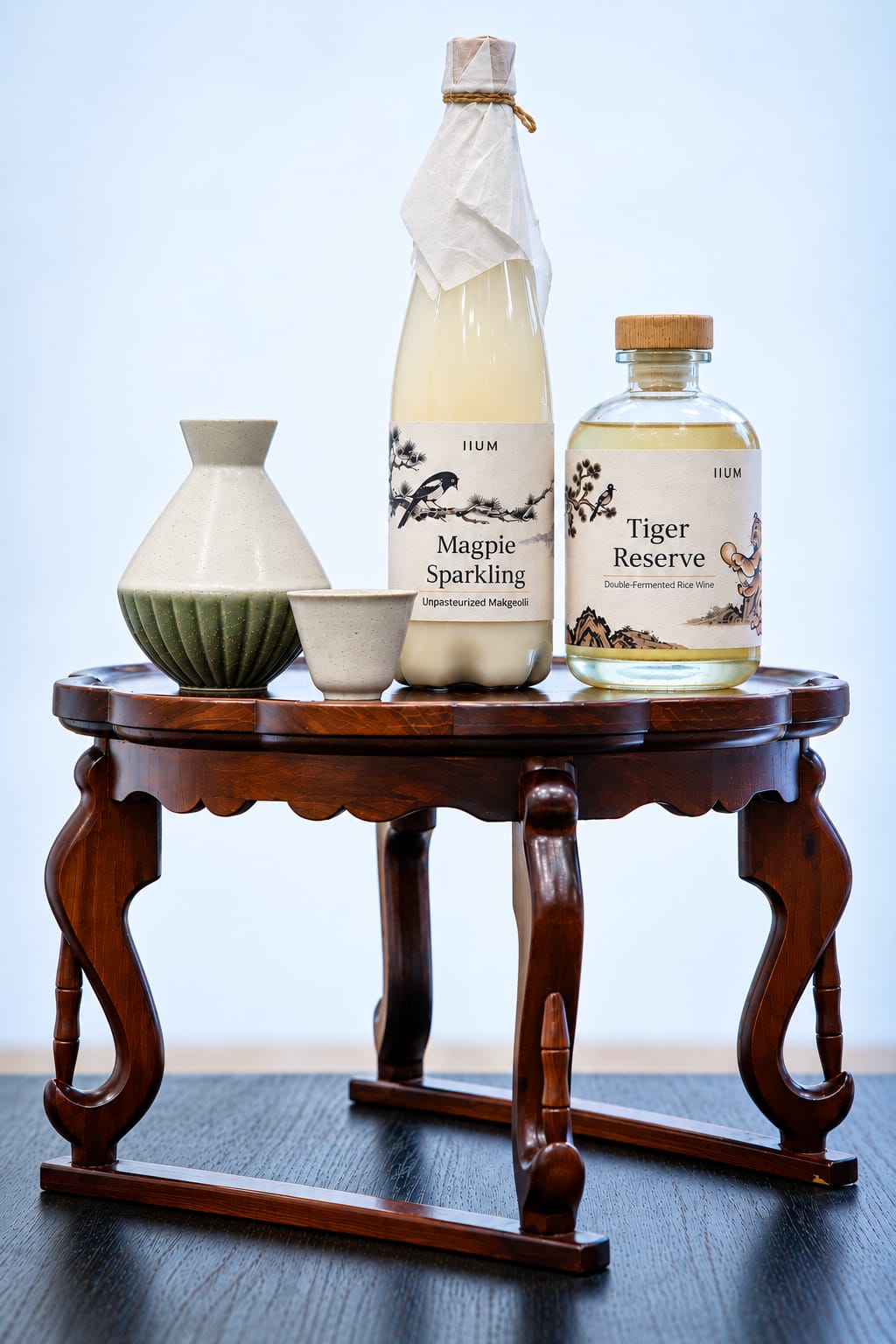
Minkyu shows me the bottle with a pretty label made of rice paper, inspired by the traditional Korean motifs of the Magpie perched on a pine-branch.
-Would you like to taste it? she enquired.
-Of course!, I answered with anticipation.
I must say at first, I was somehow startled to see that, although nicely packaged, the bottle was made of plastic – which I immediately saw as a conflict with their premium placement.
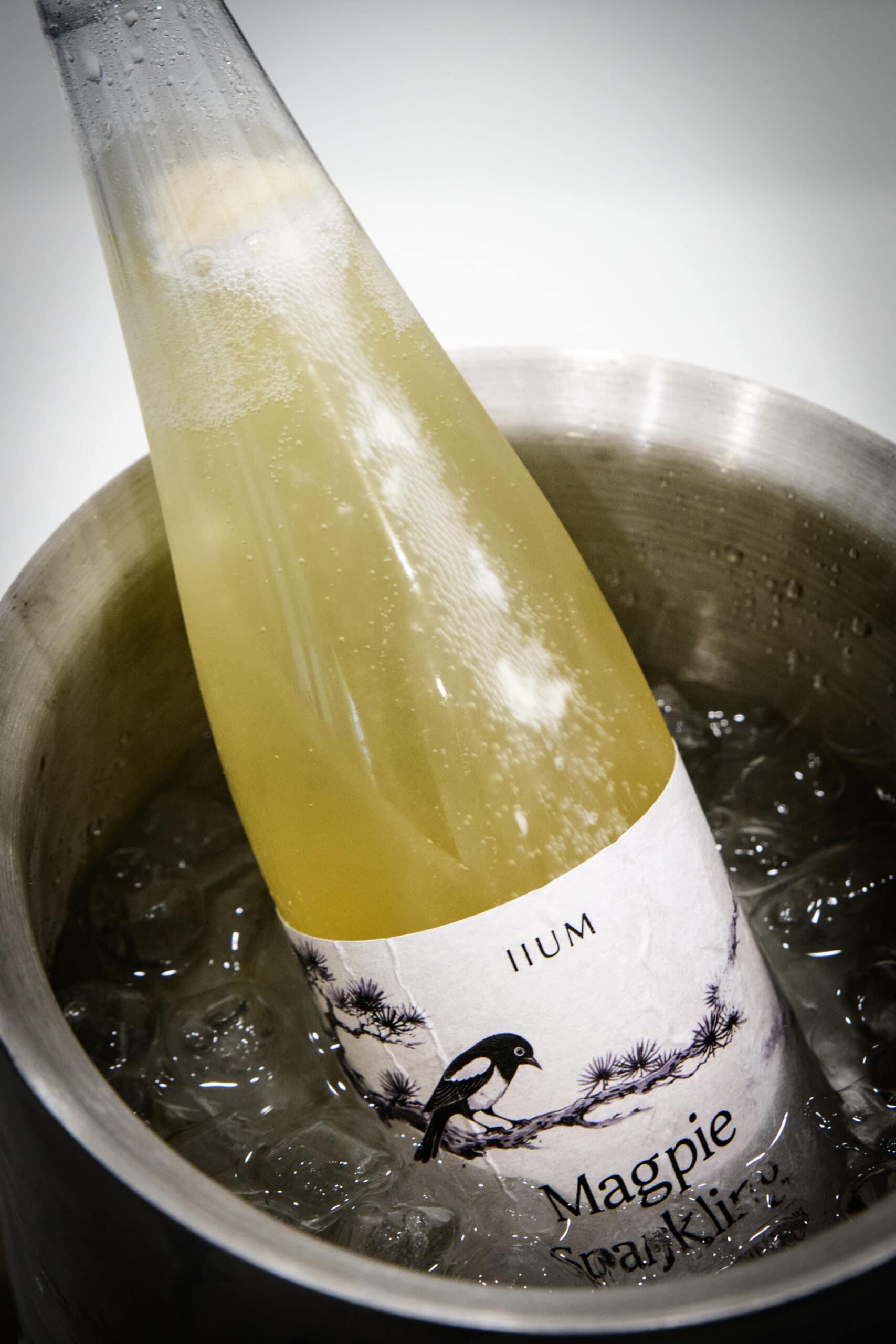
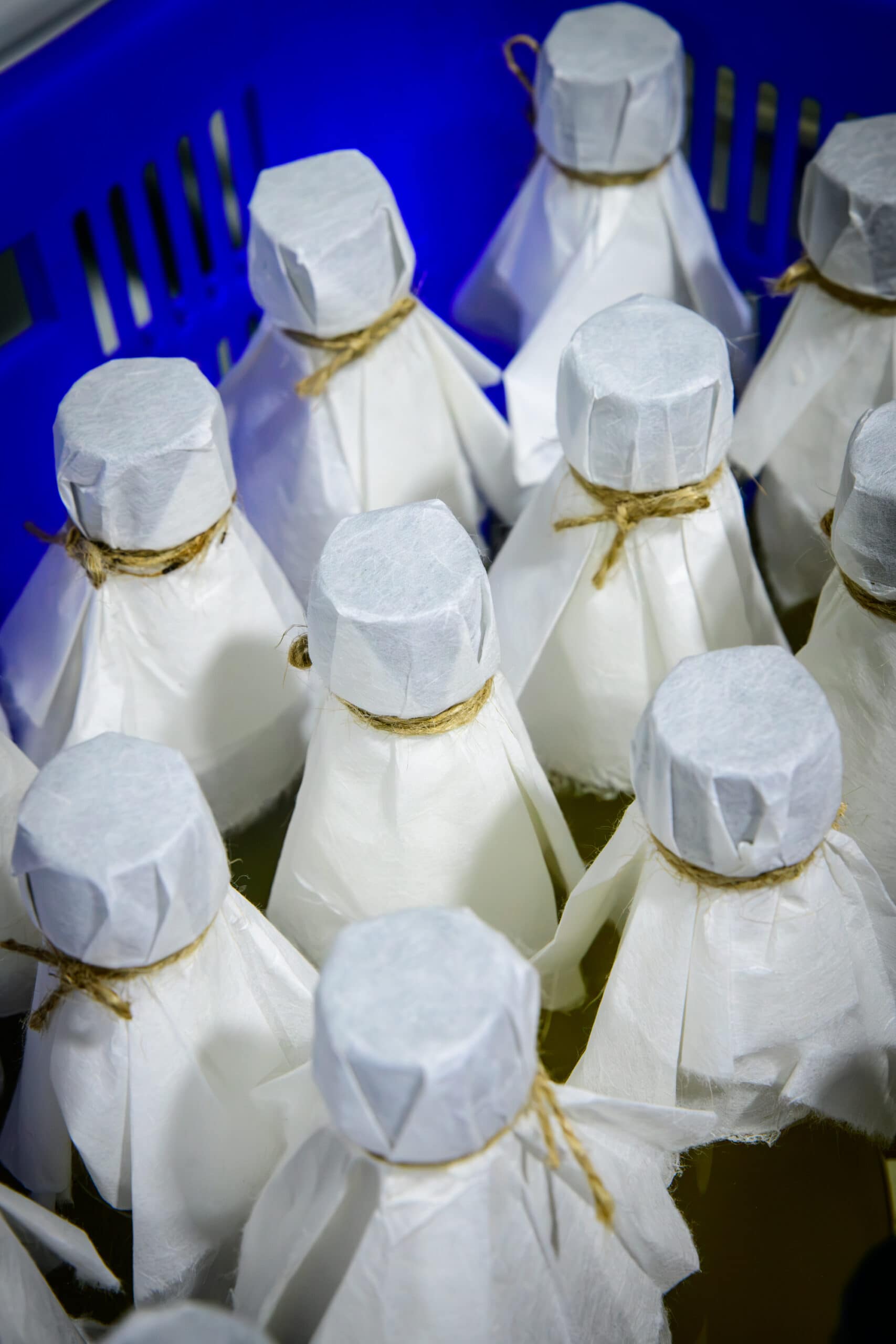
Minkyu explained that because the makgeolli is still alive, fermentation continues inside the bottle and the pressure gradually builds. Their cap is designed to let small amounts of gas escape while keeping that pressure at a controlled level, and despite their R&D, PET paired with this cap system has been the most practical and reliable solution they’ve found so far. The plastic screwcap was a non-negotiable, as I was about to witness.
Opening the bottle apparently takes a bit of practice-as the sediments within the bottle suddenly rise to the top and the bubbles could easily send the content waltzing in the air.
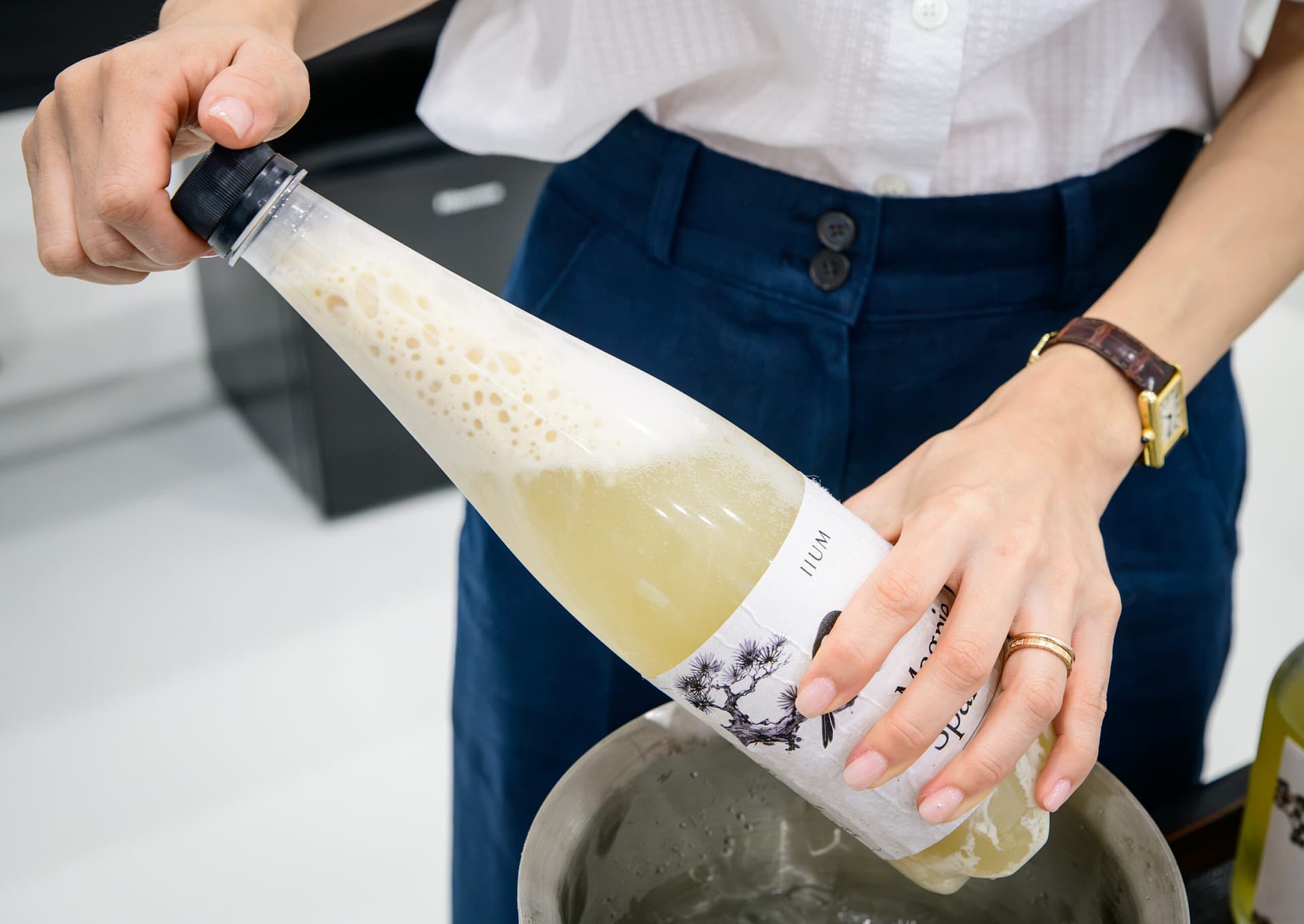
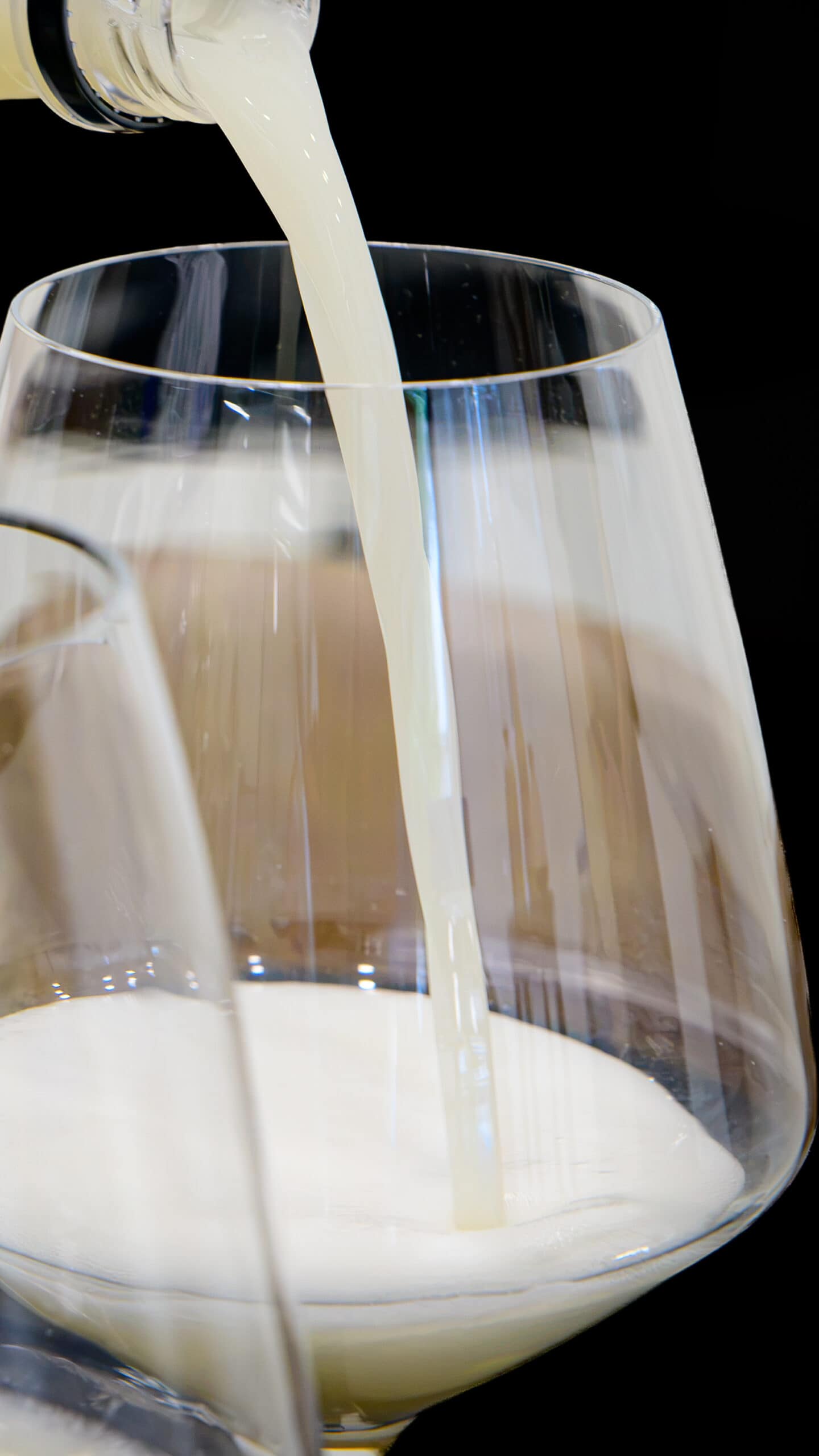
Angled at a 45-degree angle, Minkyu slowly screws on and off the cap of the bottle to slowly and carefully release the gas as the volume rises to the top. She does it with confidence and the waves of rice sediments don’t faze her a bit, but I can immediately tell this will be requiring proper staff training at restaurants. Once she had tamed the lively storm within the bottle, she poured us glasses and I could see some of the sediment at the surface. I remarked that this was quite unappealing, but she quickly showed me that a couple of swirls dissolved it right away.
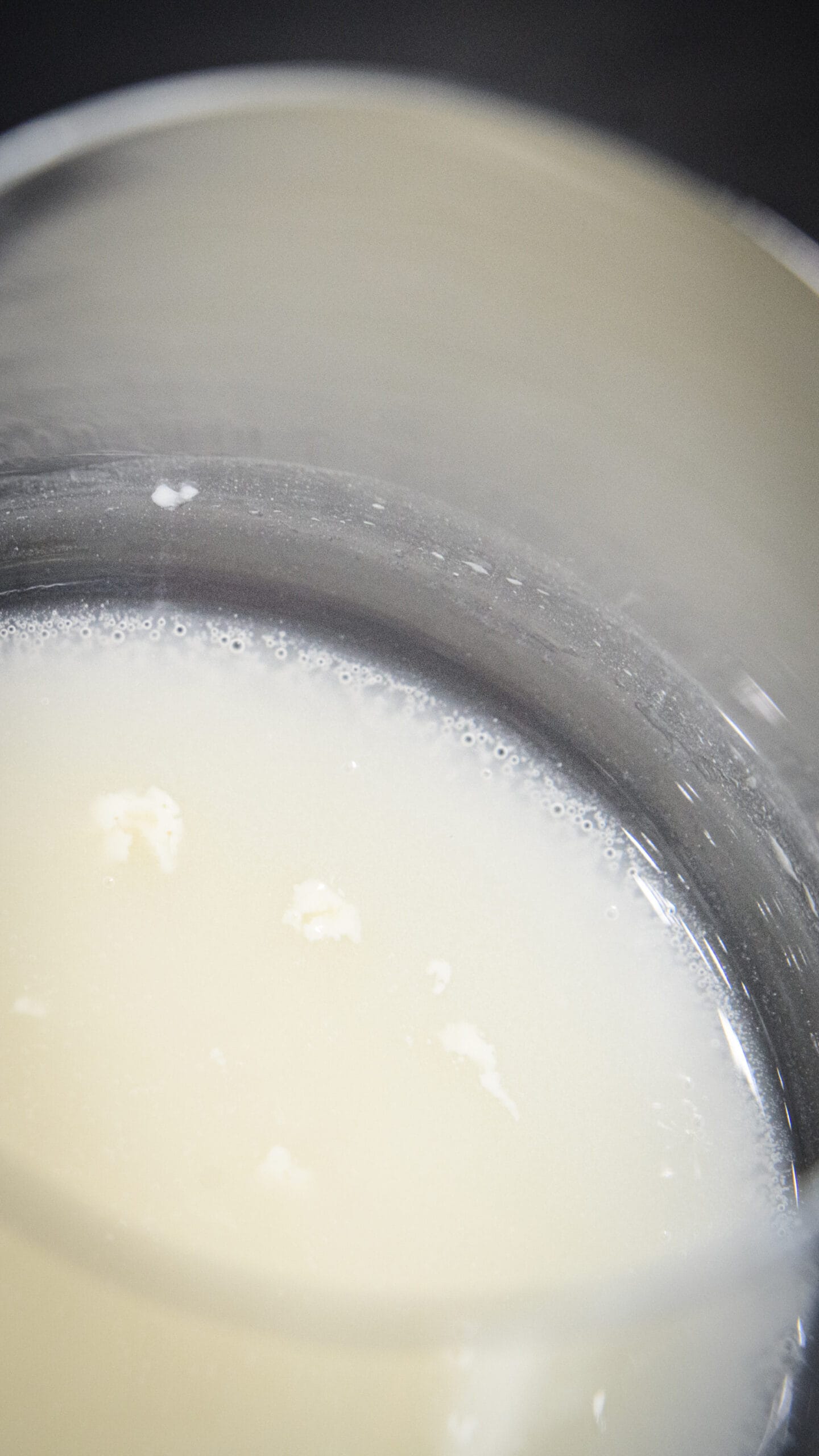
The minute I brought the glass to my mouth; all aesthetic concerns vanished at once.
The bubbles were ravishingly elegant, and it had a superb complexity: a touch of grass, pine, green apple, and a touch of nuts… It had nothing of that artificial flavour I noticed in mass-produced ones, and its texture, once swirled a couple times in the glass, was much smoother and lighter than expected.
Besides carrying live yeast, lactic acid bacteria, amino acids and vitamins from the fermentation, it is also a beverage with a serious potential to impress with its surprising versatility – this could go down by itself at the aperitif, but also pair with food, even spicy dishes – which could be attenuated by its lactic touch. Its rather low alcohol content (8% abv) and its freshness make it an ideal candidate for the new trends in wine drinking. Minkyu adds that this can also be had as a super refreshing slushy, and that it proved to be quite the star at a mixology competition, where bartenders took advantage of its uniqueness in many of their cocktails.

In the Korean folk art called Hojak-Do, the magpie, bearer of good news, is often associated with another animal, the tiger, which wards off evil spirits.
Always keen on bridging cultures, IIUM recently launched their new product: Tiger Reserve, whose label shows the tiger under that same pine-branch as the Magpie Sparkling.
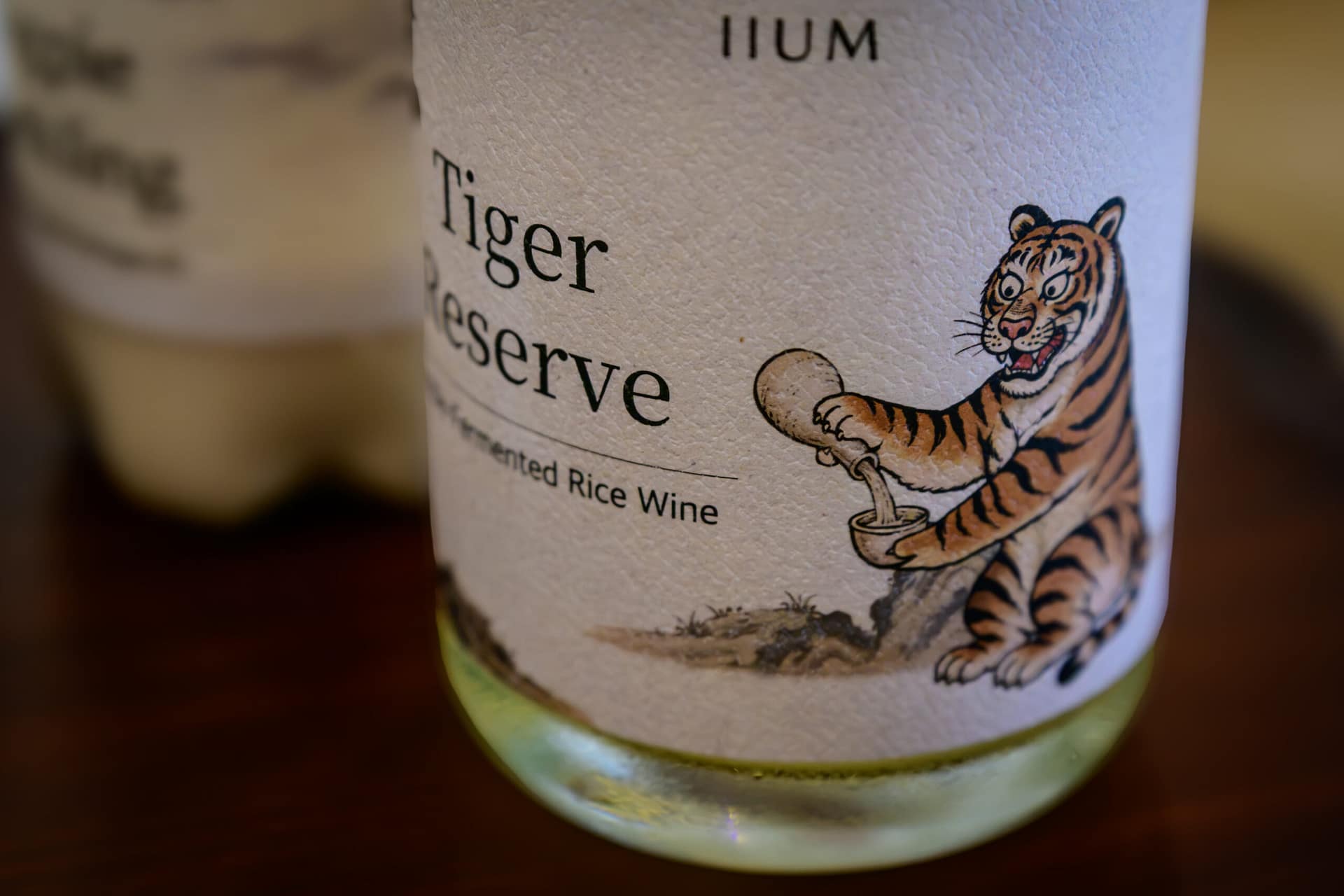
Tiger Reserve, although also a product of rice fermentation, is a very different drink.
Using a combination of ST25 rice and Vietnamese glutinous rice, it goes through a two-stage fermentation and a much longer maturation period.
Where the Makgeolli undergoes 6 to 10 days of fermentation, followed by at least 3 weeks of maturation, the Tiger Reserve ferments in two stages over 21 days, followed by at least 2 months of maturation. Neither of them goes through fine filtration, but because of the Tiger Reserve’s longer maturation, the sediments settle naturally, making it what is considered a Yakju (약주) – a clear rice wine.
This production process gives it a higher alcohol content (15% ABV) and a deeper, more complex flavour.
Minkyu poured me a glass, and I was immediately transported into a very different universe. Where the Sparkling Magpie was festive and light-hearted, I felt like the Tiger Reserve would be the ideal companion to a late night of drinking with close friends, when the time has come for sharing confidences and life-contemplation. It pains me to write such a cliché when talking about Asian drinks, but one could see them as a Yin and a Yang of some sort.
When asked which of those I preferred, I honestly couldn’t say. There is a time and a company for both.
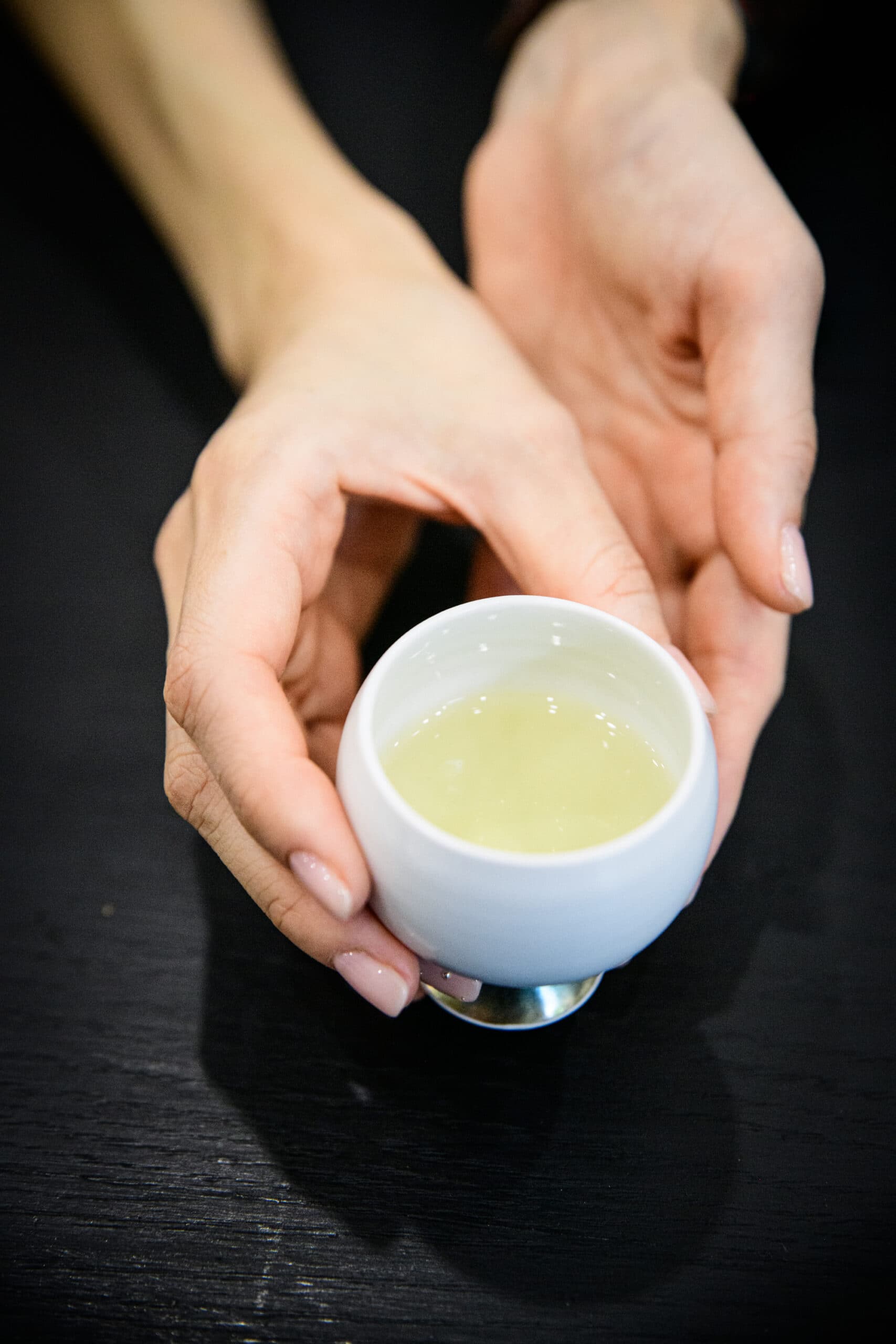
In terms of business, the Tiger Reserve might be easier to sell – it’s somewhat similar to Sake, is served in a glass bottle, and requires no technique to open and pour. But again, sometimes good things require a bit of effort, and I am a believer that their Sparkling Makgeolli deserves it that extra mile.
Minkyu also gave me a little tour of their spotless-clean brewery, which was – unfortunately for the photos – inactive on that day.
IIUM moved into the current space in November 2025 and started production in February 2026.
She showed me the rice washing machine she had made specifically for the brewery, as well as their rice steamer and fermentation tanks.
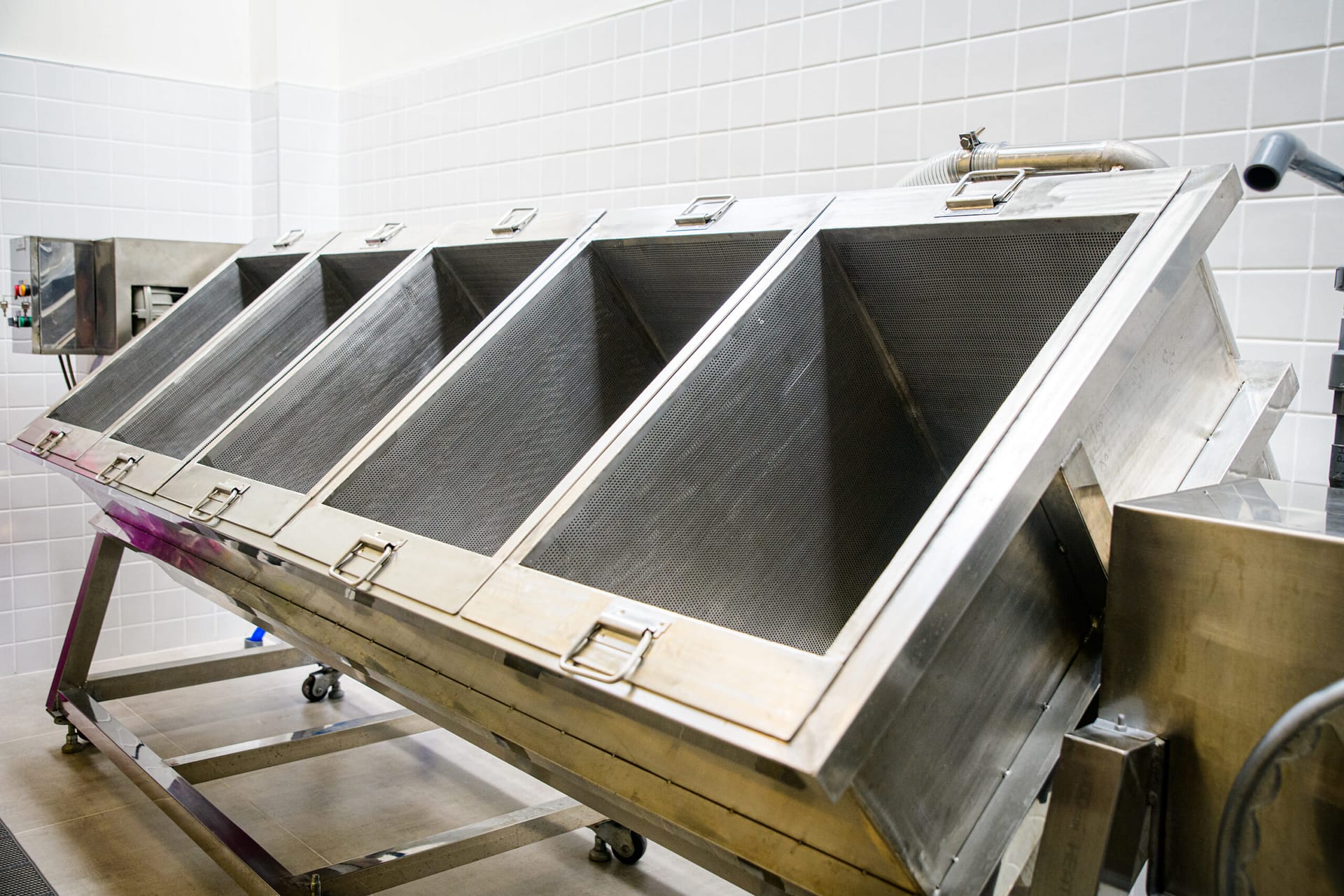
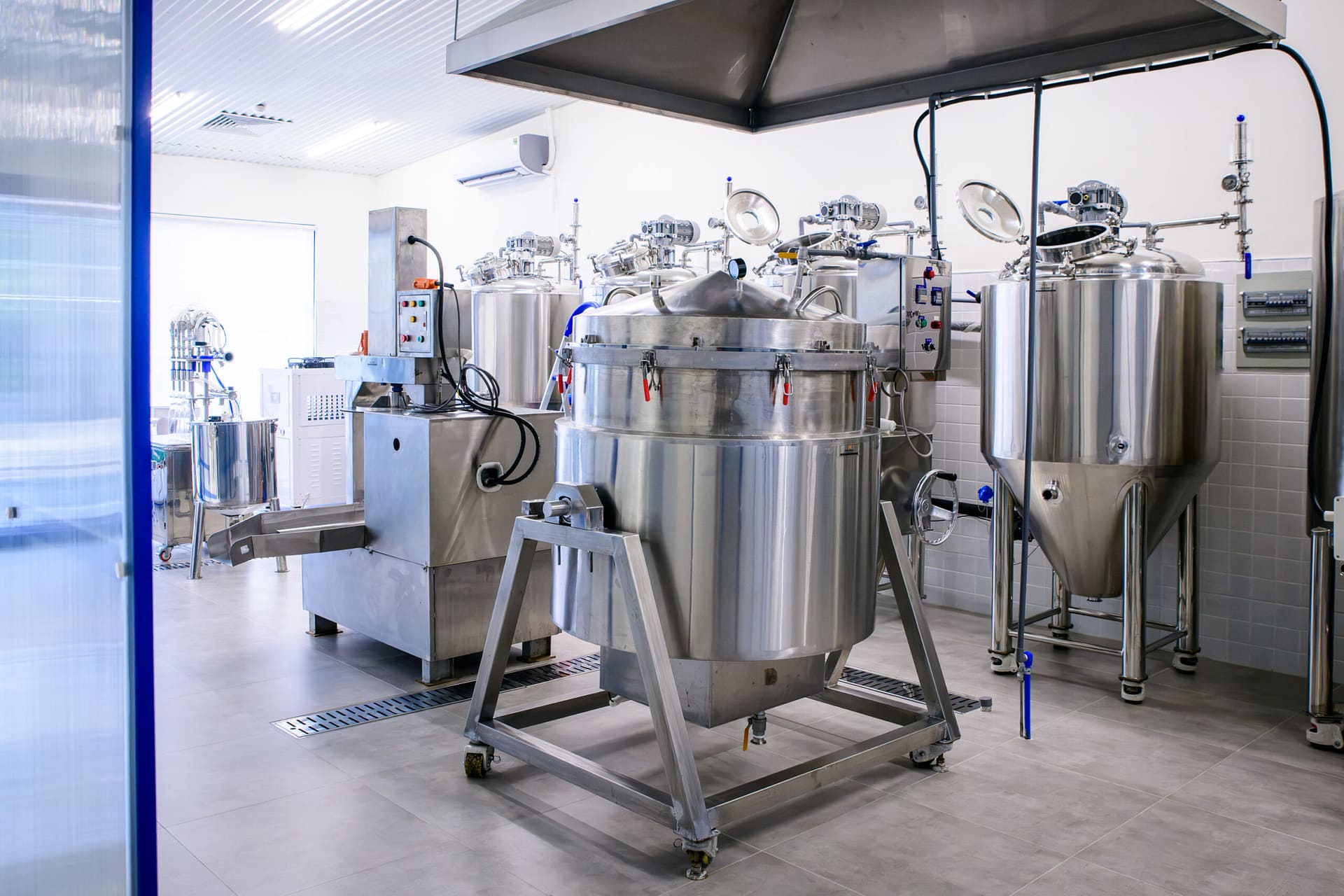
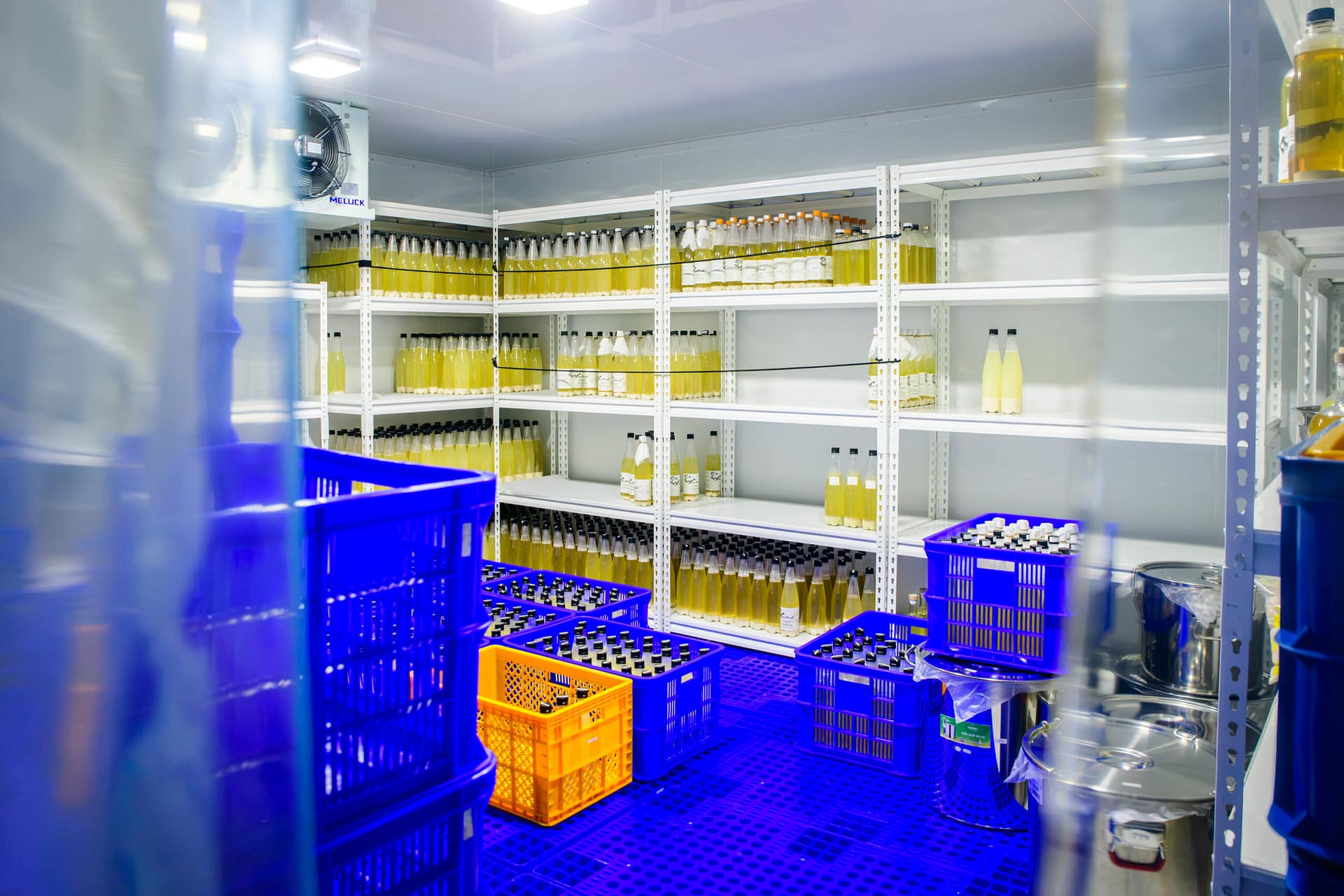
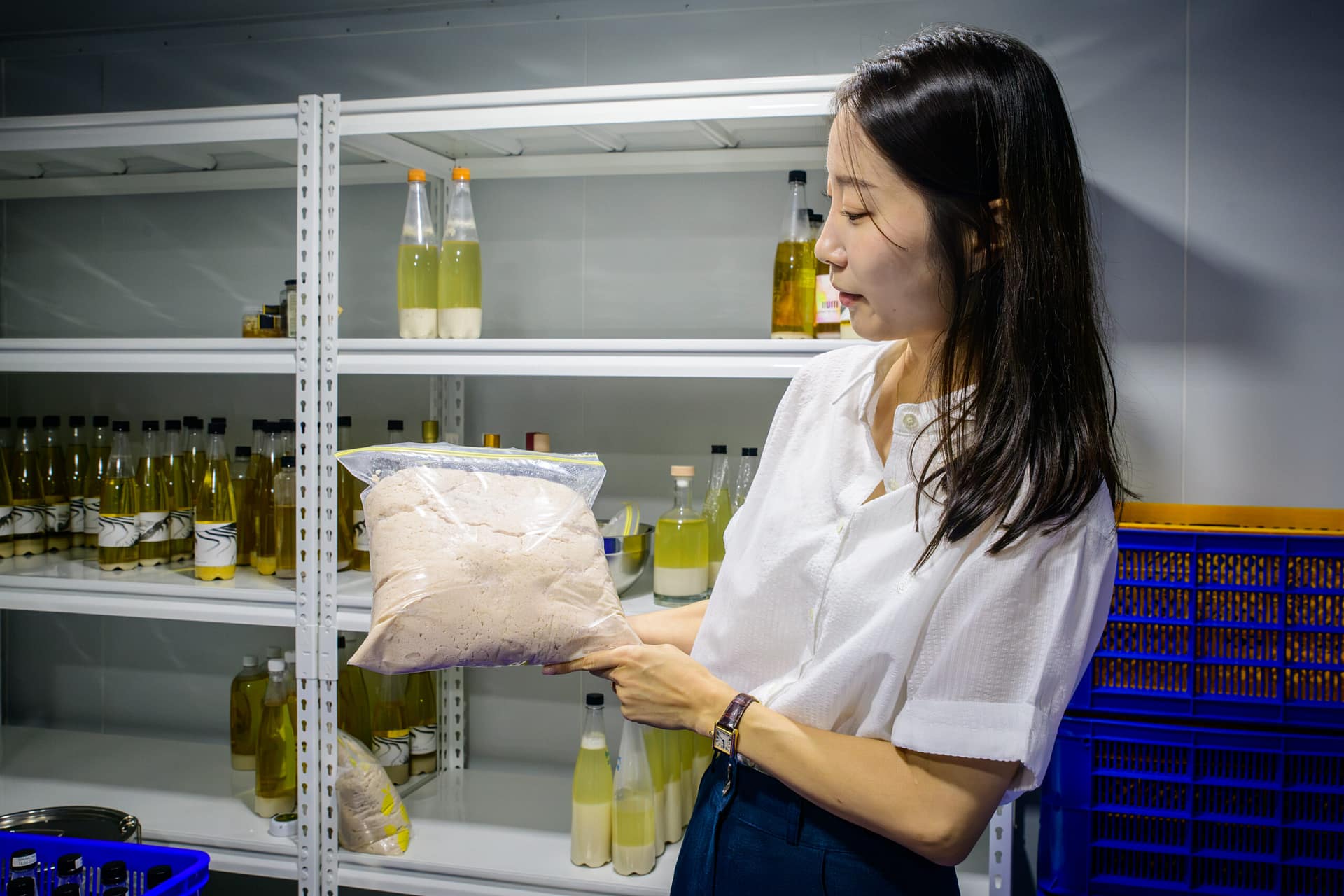
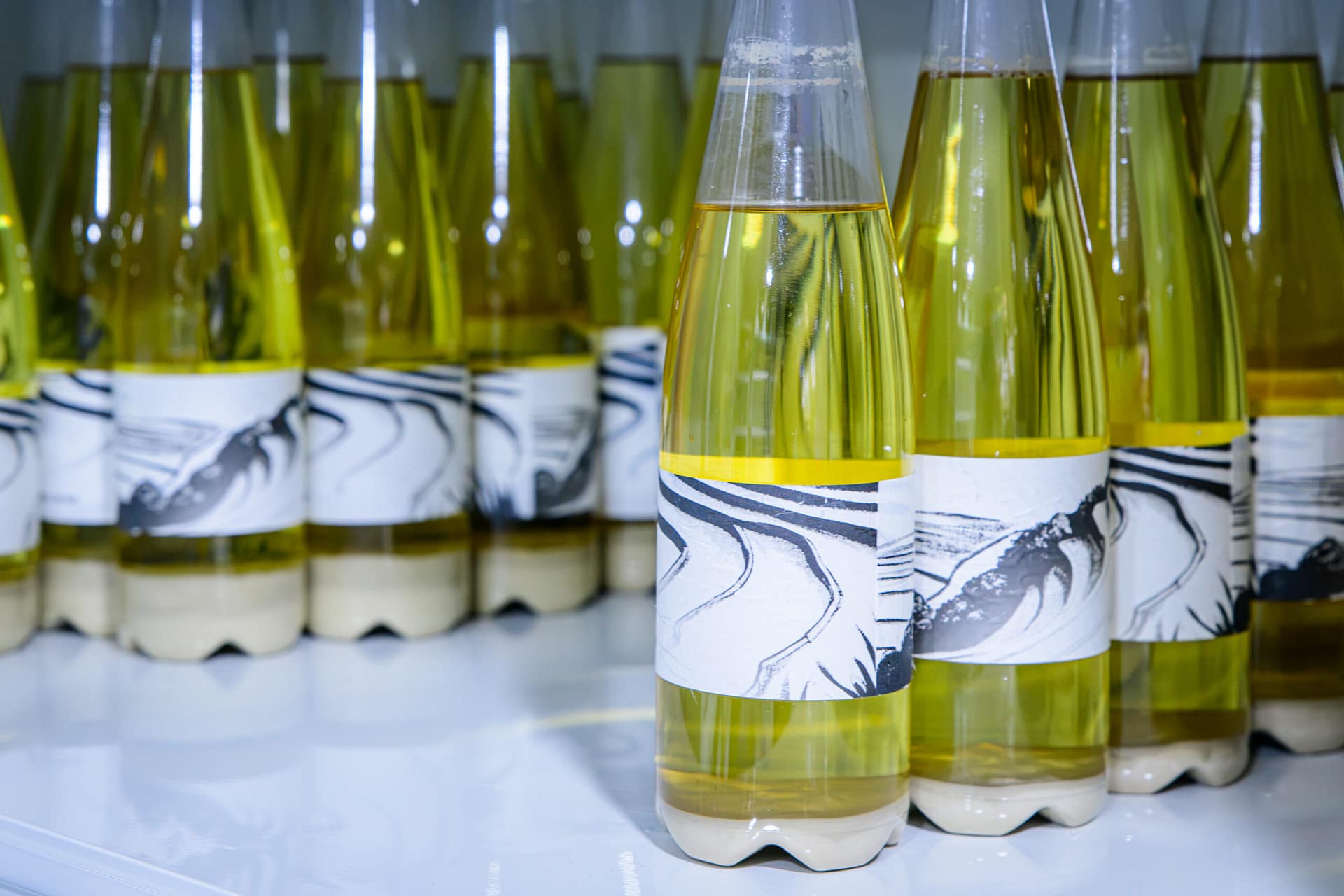
Walking through the equipment makes the process easier to picture.
Rice comes first, washed in the machine, then steamed until the grains soften. Once cooled, it goes into the fermentation tanks with nuruk, which carries the yeasts, moulds and other microorganisms behind the whole process. Enzymes from the mould break the rice starch down into sugars, while the yeasts convert those sugars into alcohol, both happening in the same tank. For Tiger Reserve, a second batch of steamed rice goes in partway through, which is what stretches its fermentation out and pushes the alcohol content further. When fermentation slows, both drinks move into cold storage, held between 2 to 4°C, where the flavour keeps developing quietly until Minkyu decides the time has come.
True to the spirit of craft-making, IIUM is all about experimentation, limited batches and a constant quest for improvement.
When I spoke with Minkyu and Jessie, IIUM was about to produce a limited batch of Makgeolli with green rice for a special event in Hanoi, and the last time I spoke with them, they were preparing a limited edition Magkeolli with fresh strawberries…
I haven’t had the chance to try either of those, but I certainly wouldn’t turn them down!
As I am riding home after the visit, I understand their main challenge will be to convince enough people to actually try their Magpie Sparkling, rather than judge it through the usual codes of Western fine dining.
Yes, it’s a plastic bottle.
Yes, it’s tricky to open.
Yes, the drink is cloudy and the glass looks messy after a couple sips…
But it’s also simply damn delicious…
When was the last time I got that excited about a drink?
Give it a chance and let me know what you think…
IIUM Sparkling Magpie is currently served at:
HO CHI MINH CITY:
Vietnam House Restaurant
The long bar Times square
Apero Bistro & Bar
SHARI Omakase & Izakaya
Jill Saigon
TwinDoves golf club
HANOI:
Onvit