
Words & Photography by Aurélien Foucault
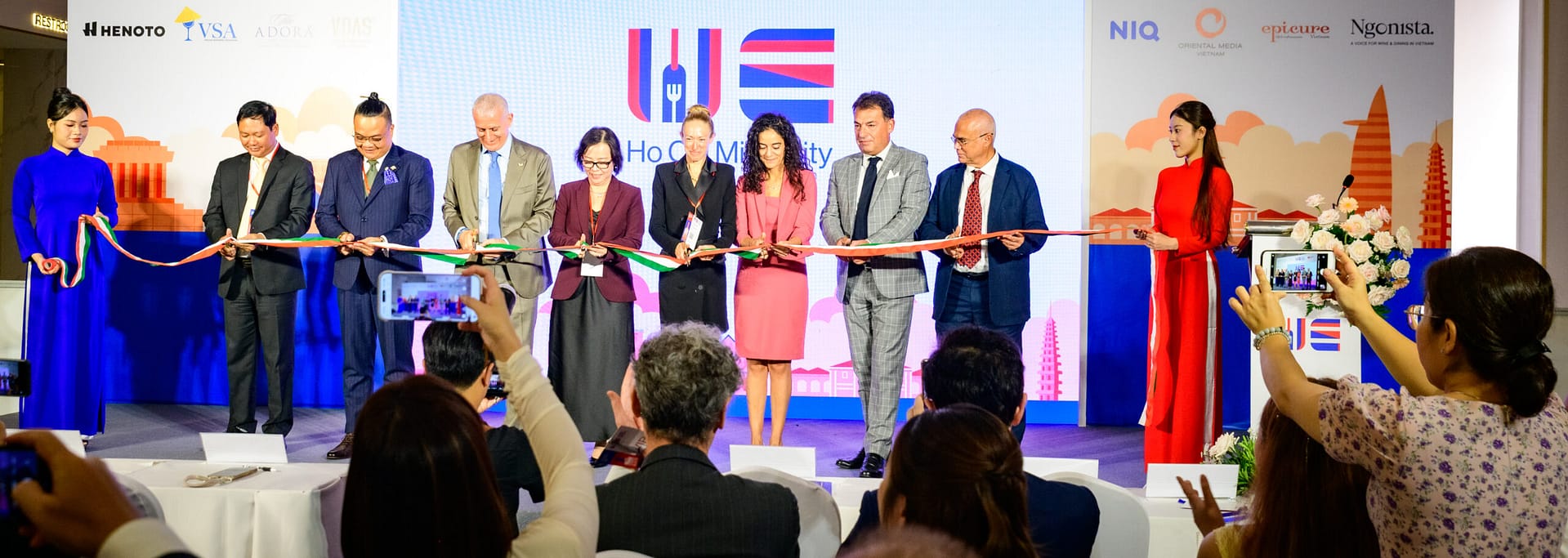
Ho Chi Minh City’s first Wines Experience Italian wine fair just concluded and here’s our quick take-away of 2 days of meetings with Italian producers and South-East Asian Industry panels and masterclasses.
The event, organised by United Experience (a joint venture between BolognaFiere Group and Fiere Italiane SEA, with local support from Henoto, VinExad, and Vietnam Sommelier Association), was quite ambitious, in trying to set up an intimate setting, and bringing together many actors of the industry. For an event of a modest size compared to the giants of the region such as Vinexpo and ProWine, it really felt like the organisers went all in and put their best efforts to make it happen, which is no small feat – especially considering the rather short time in which this was all put together.
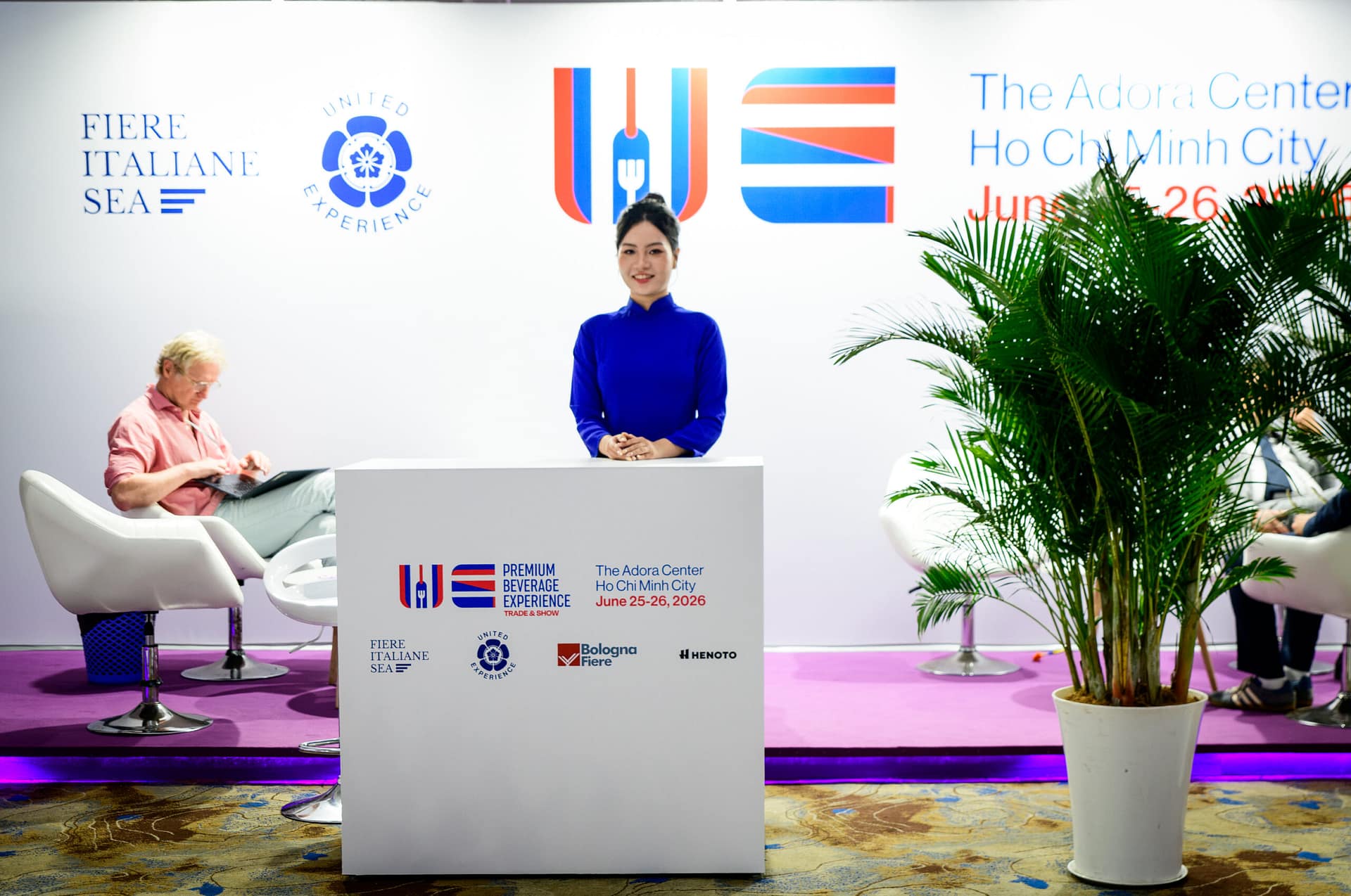
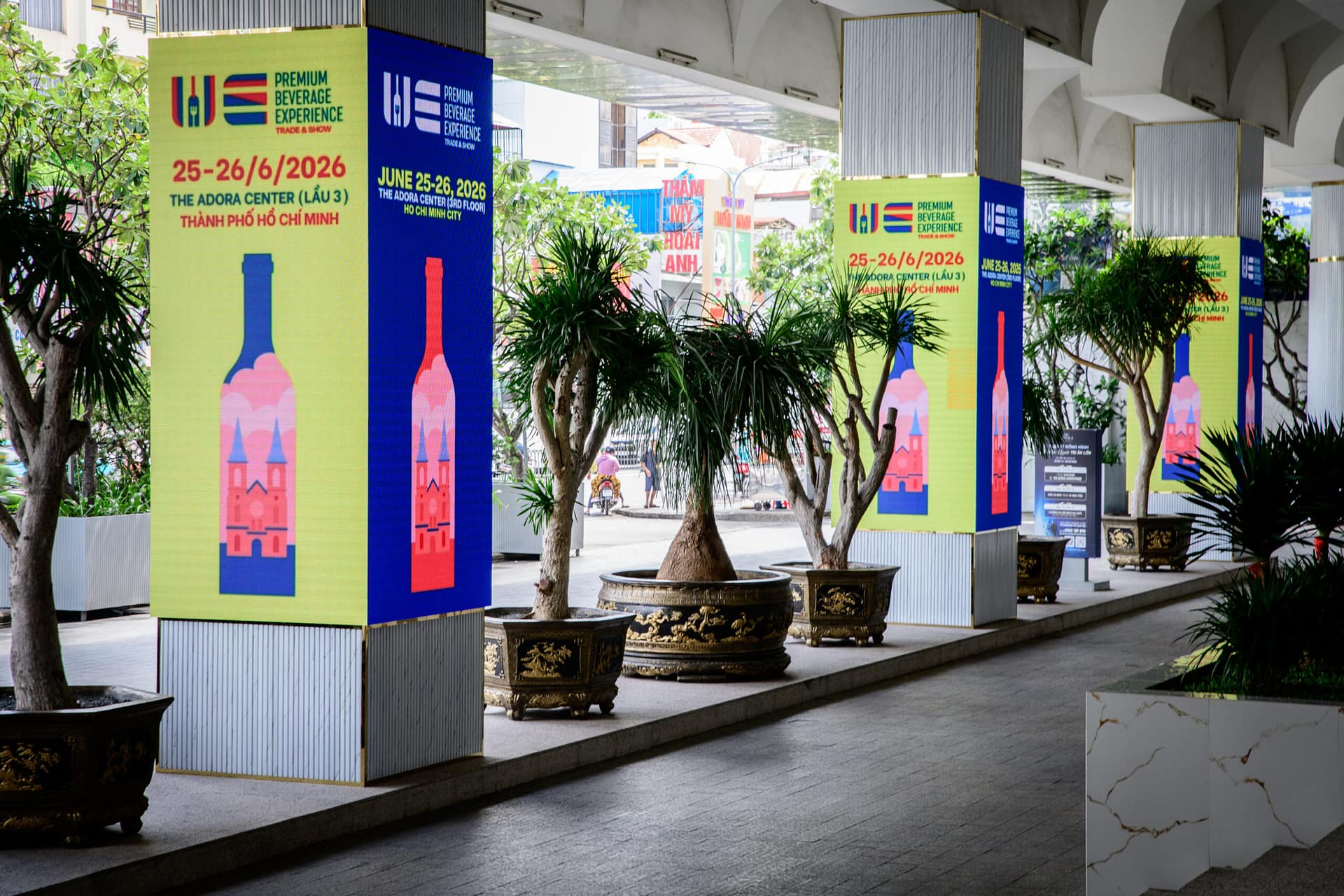
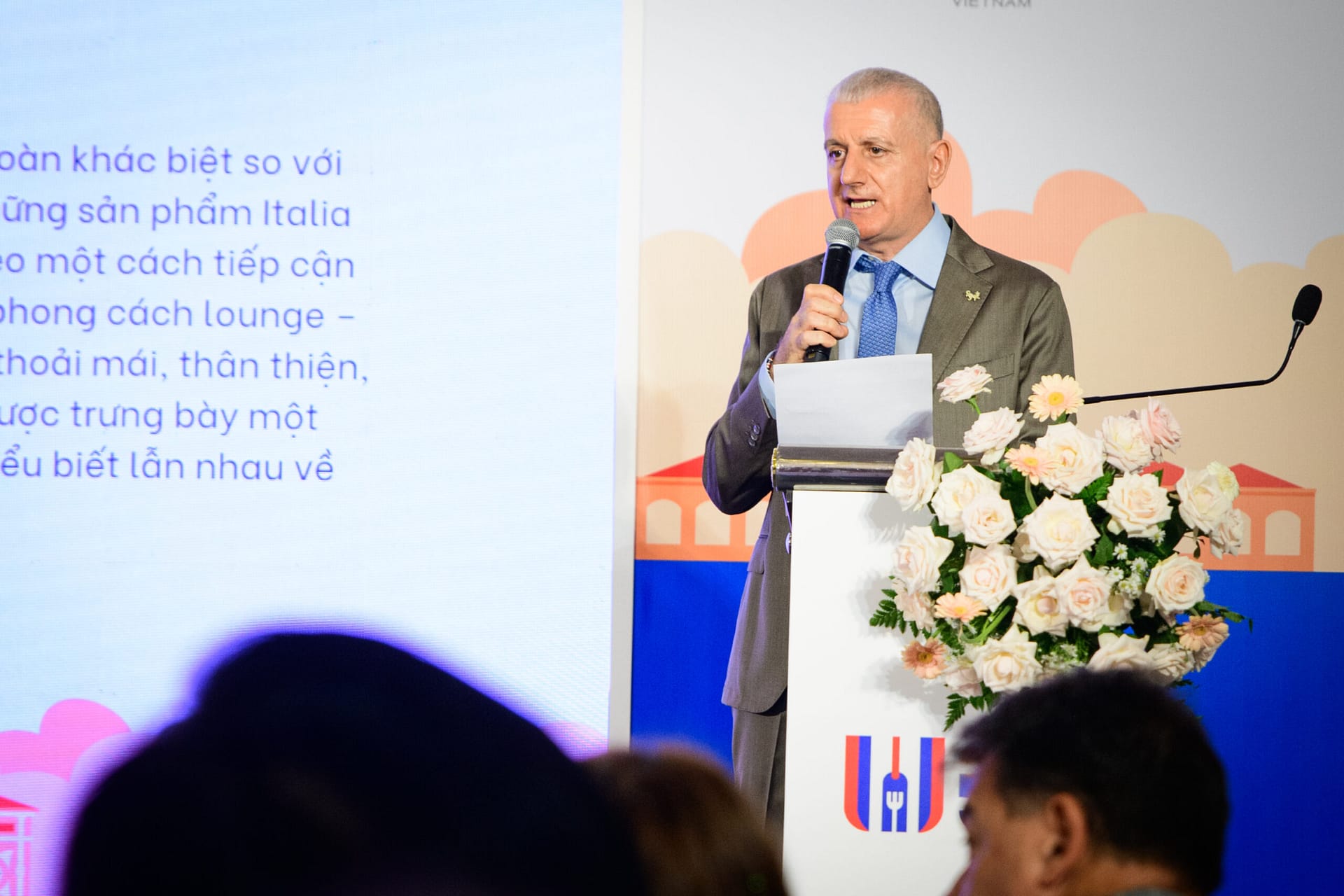
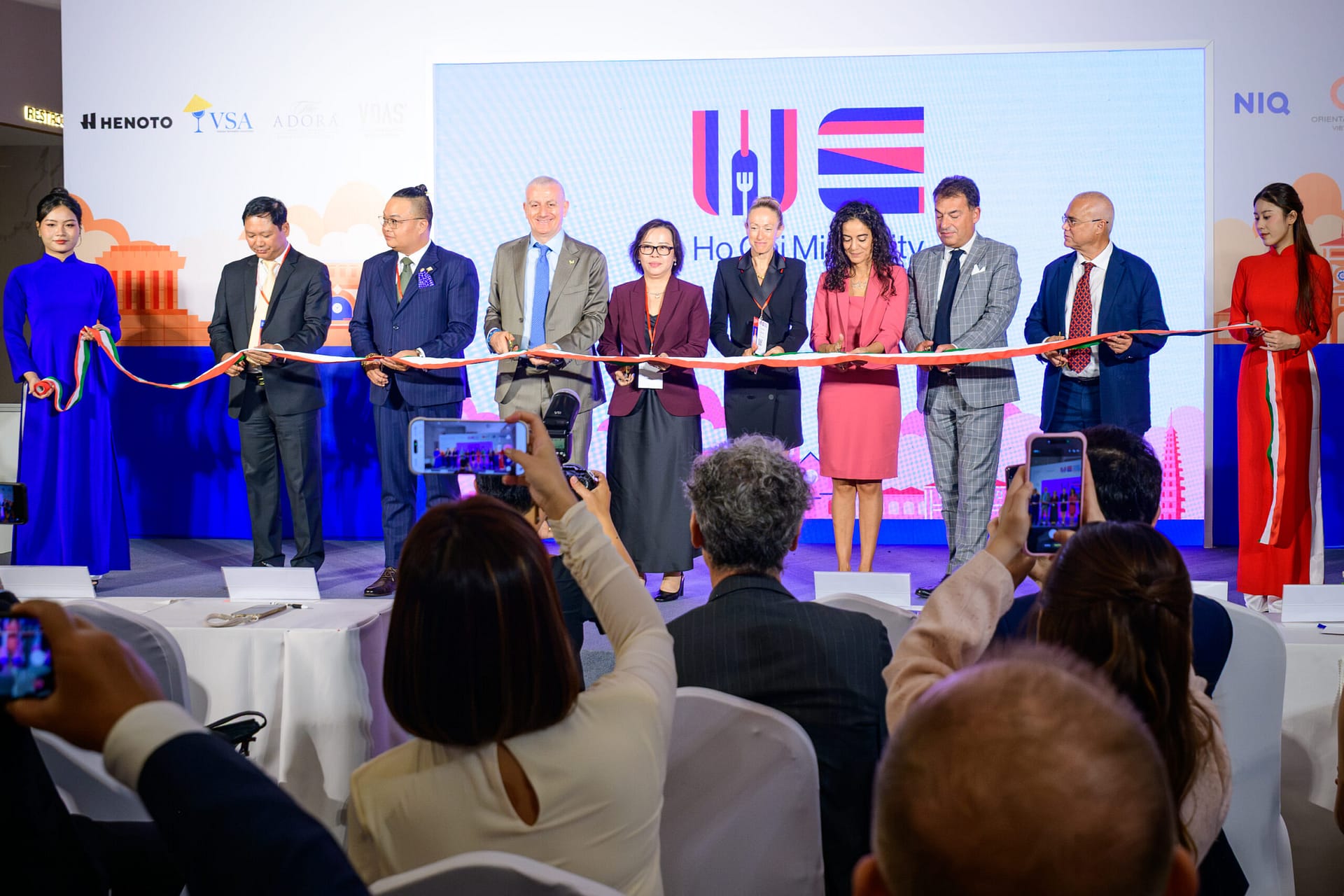

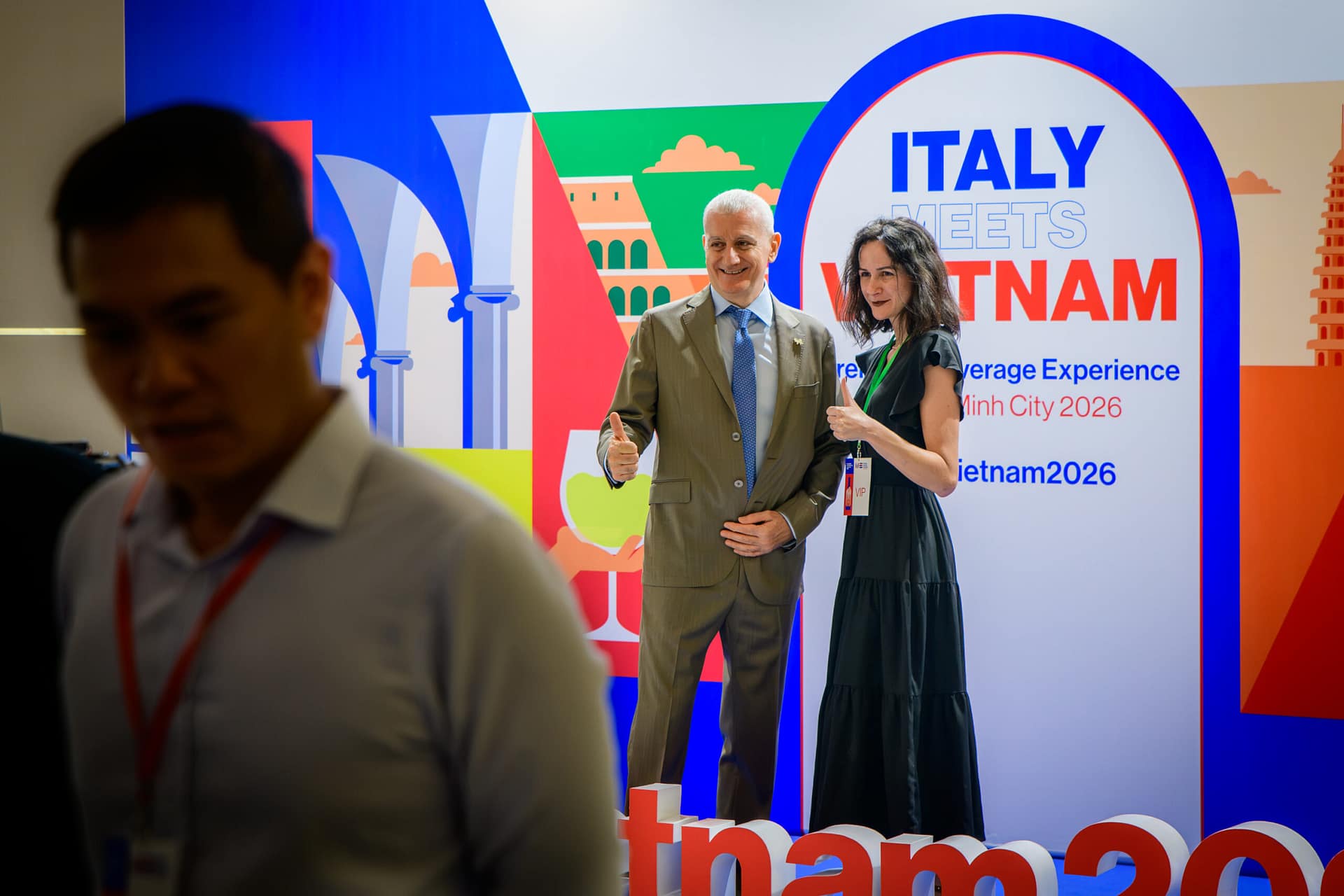
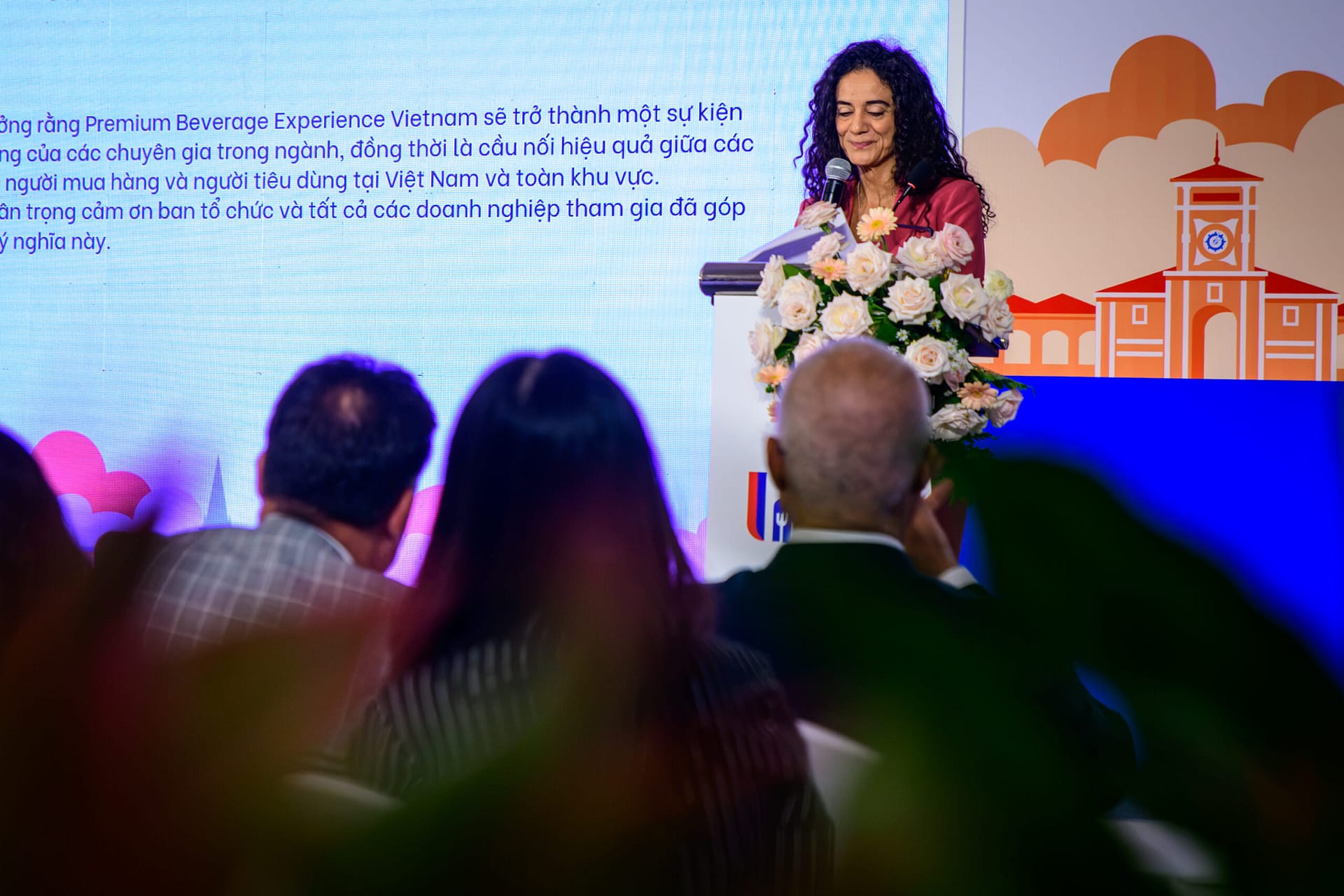
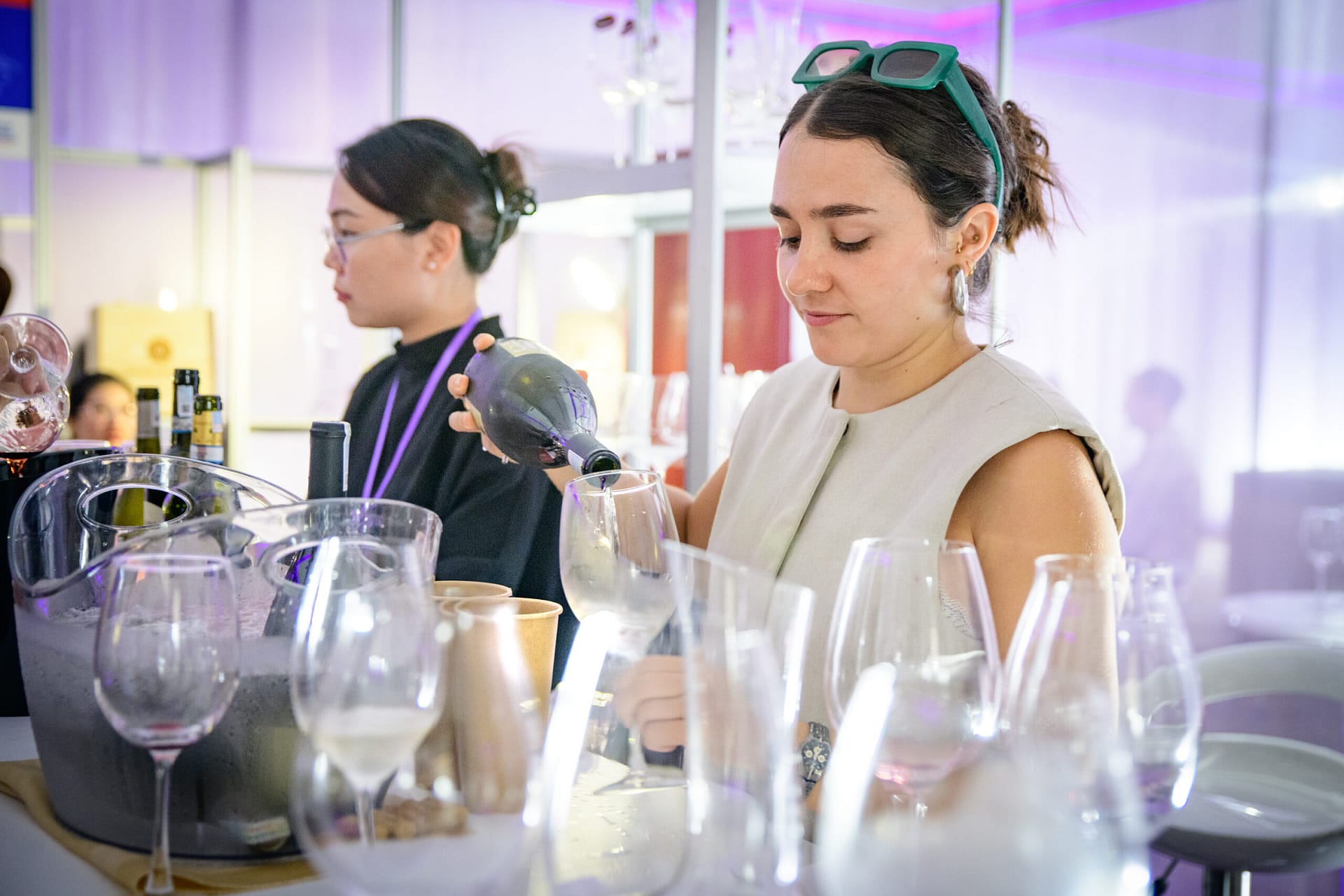
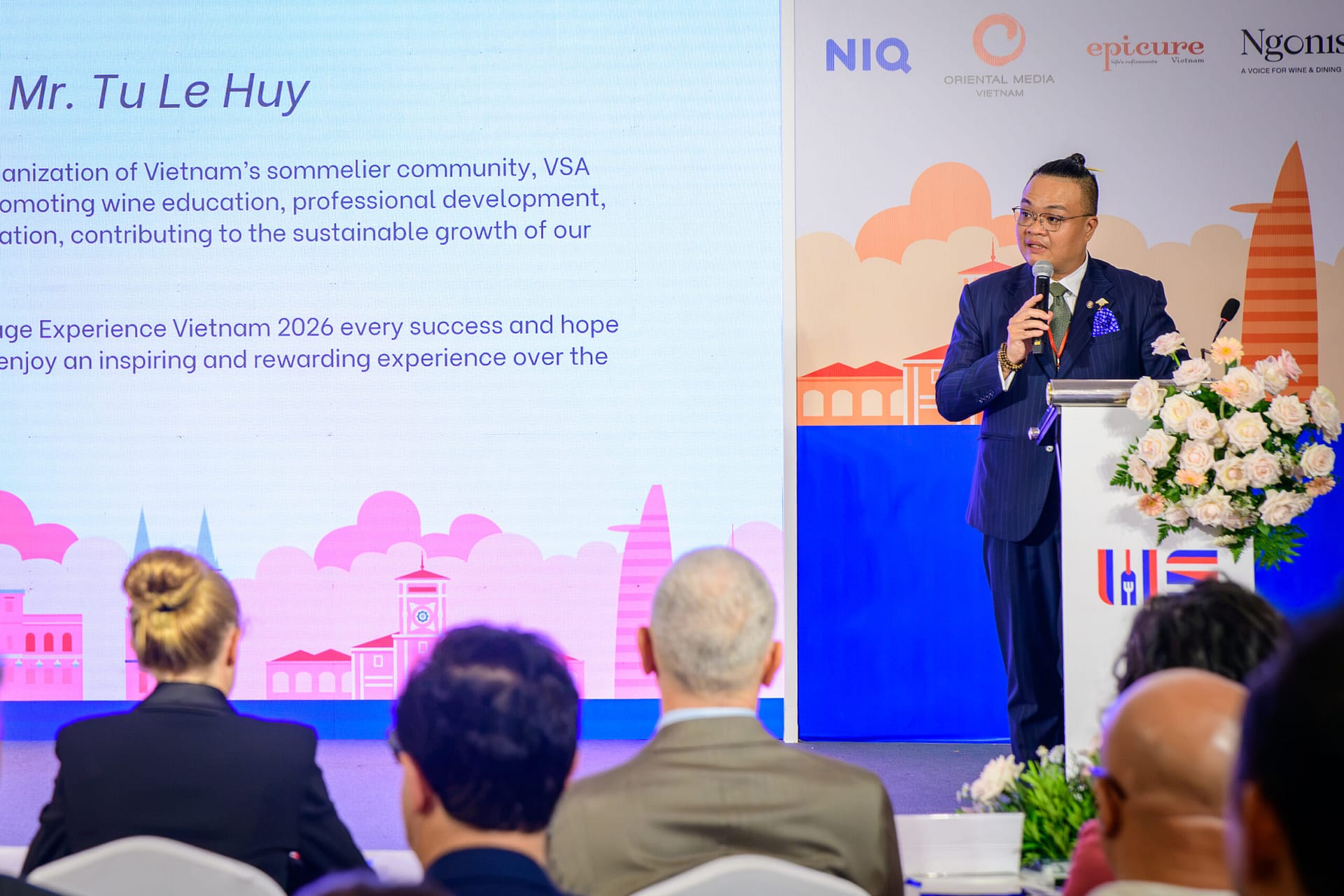
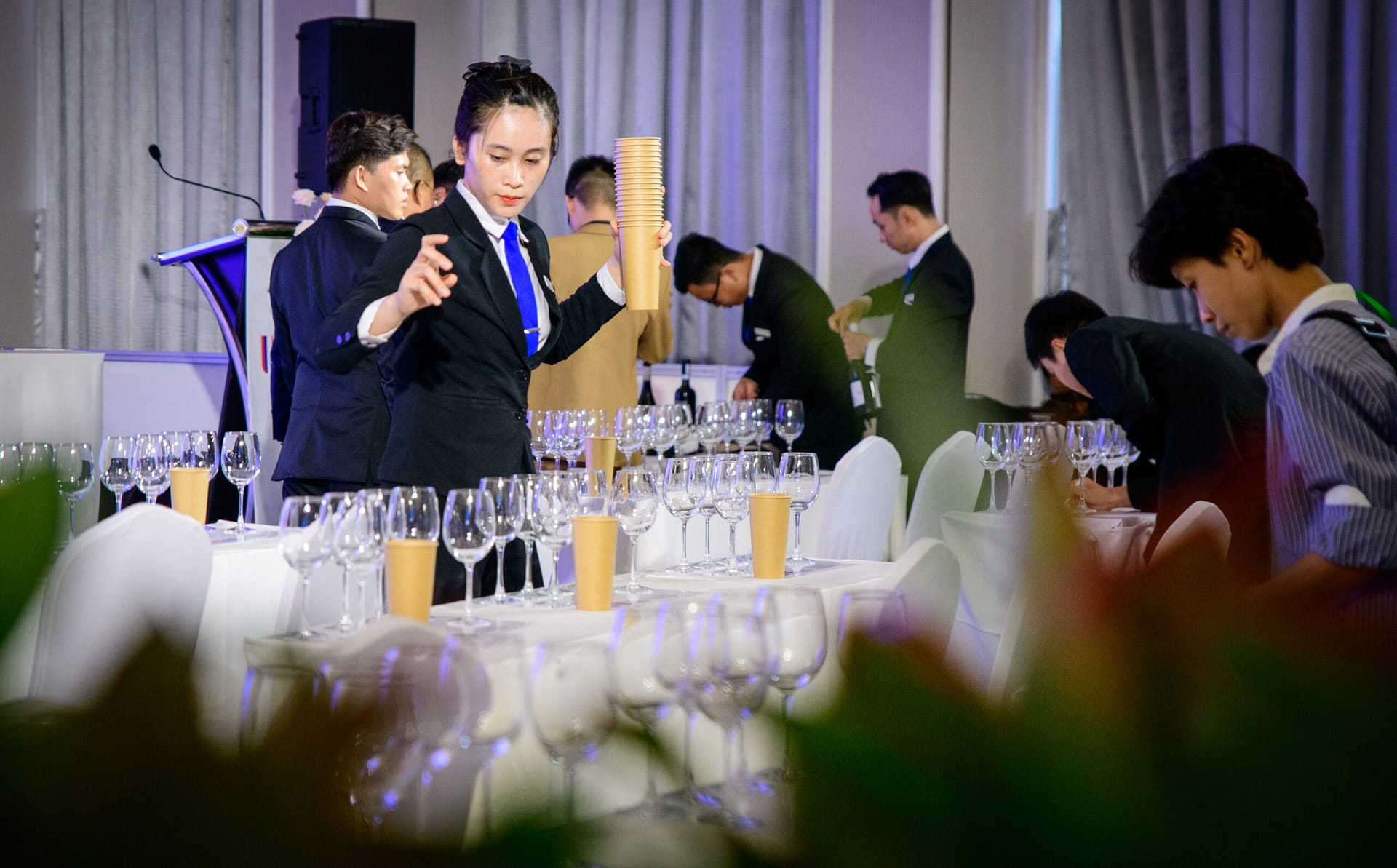
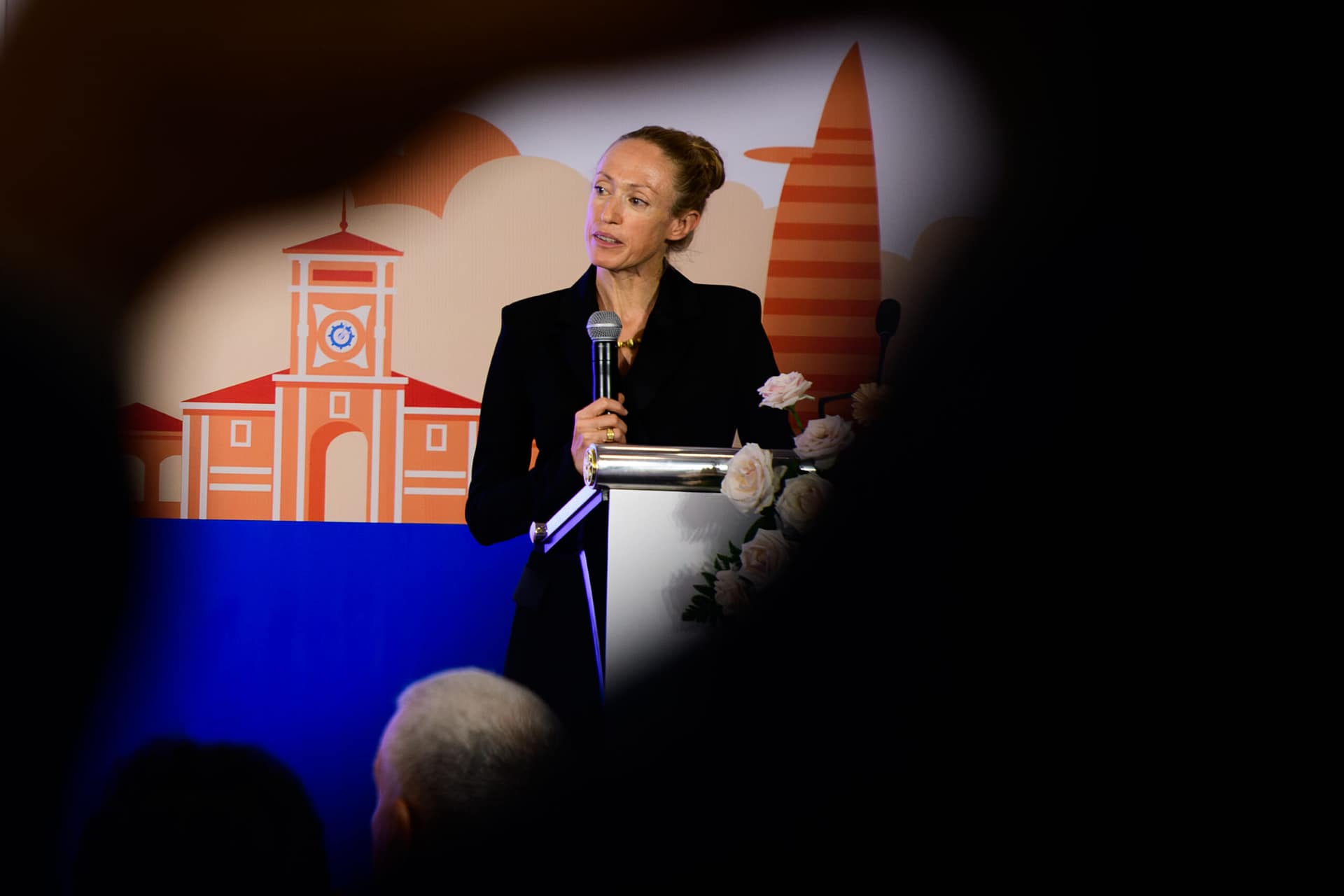
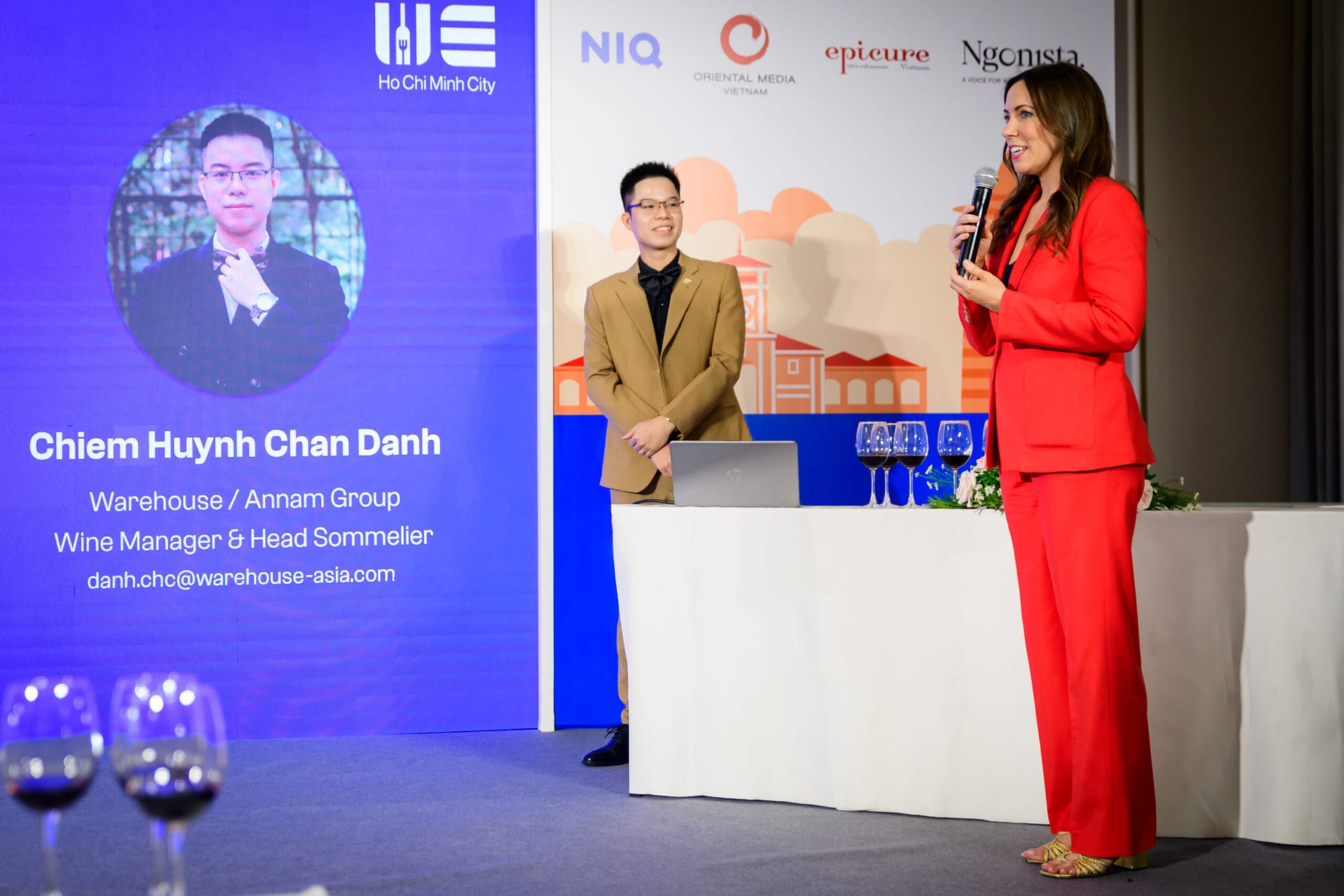
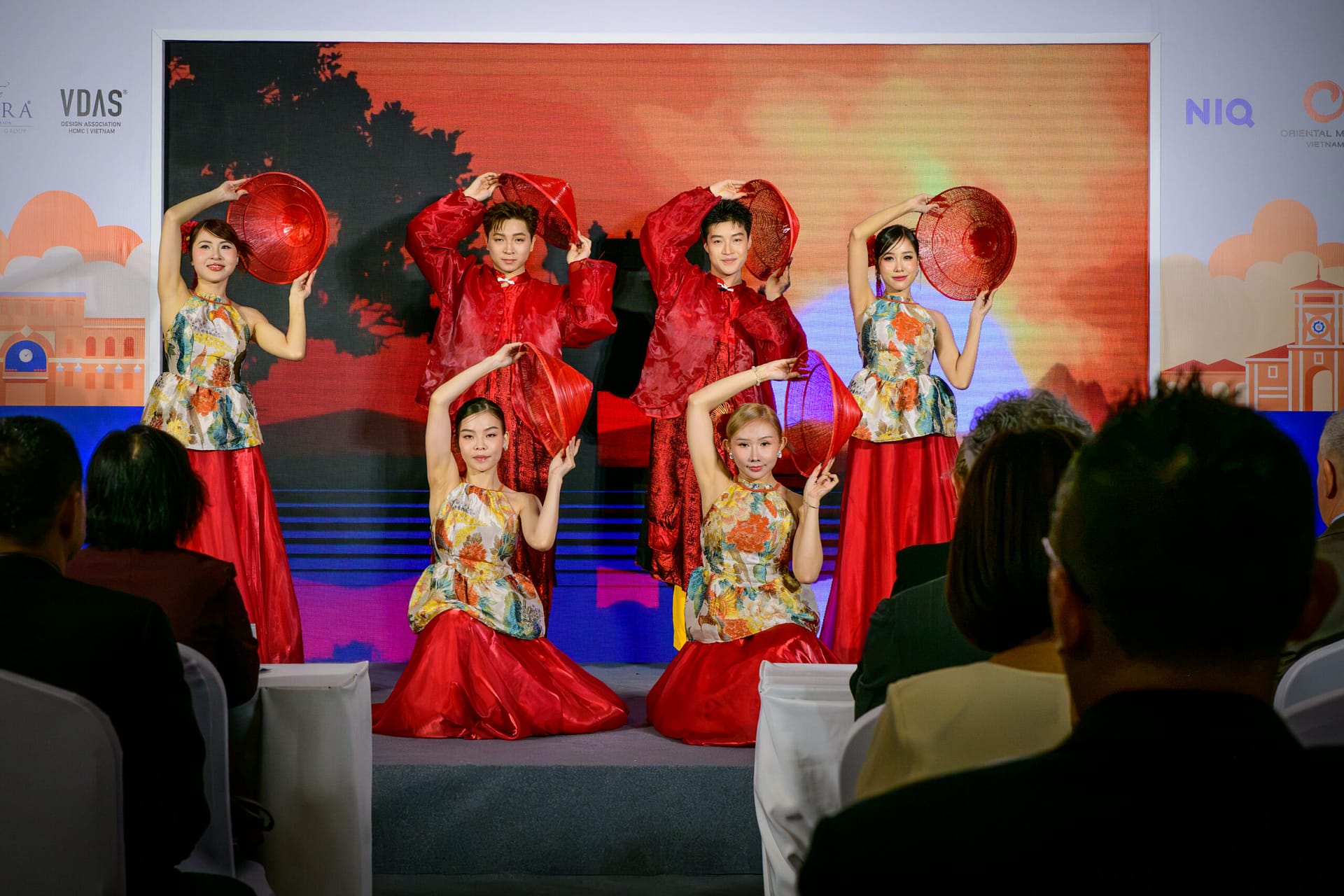
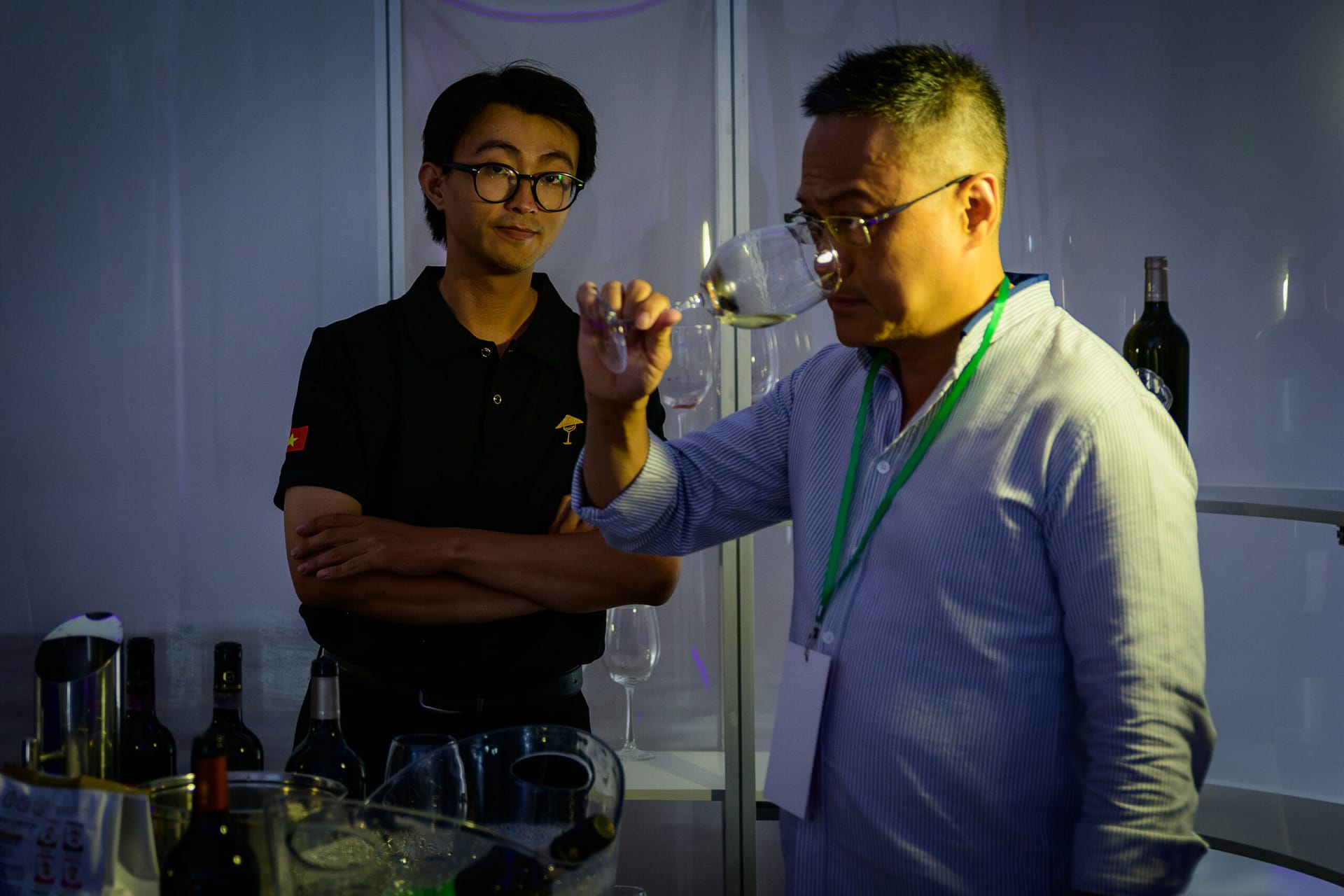
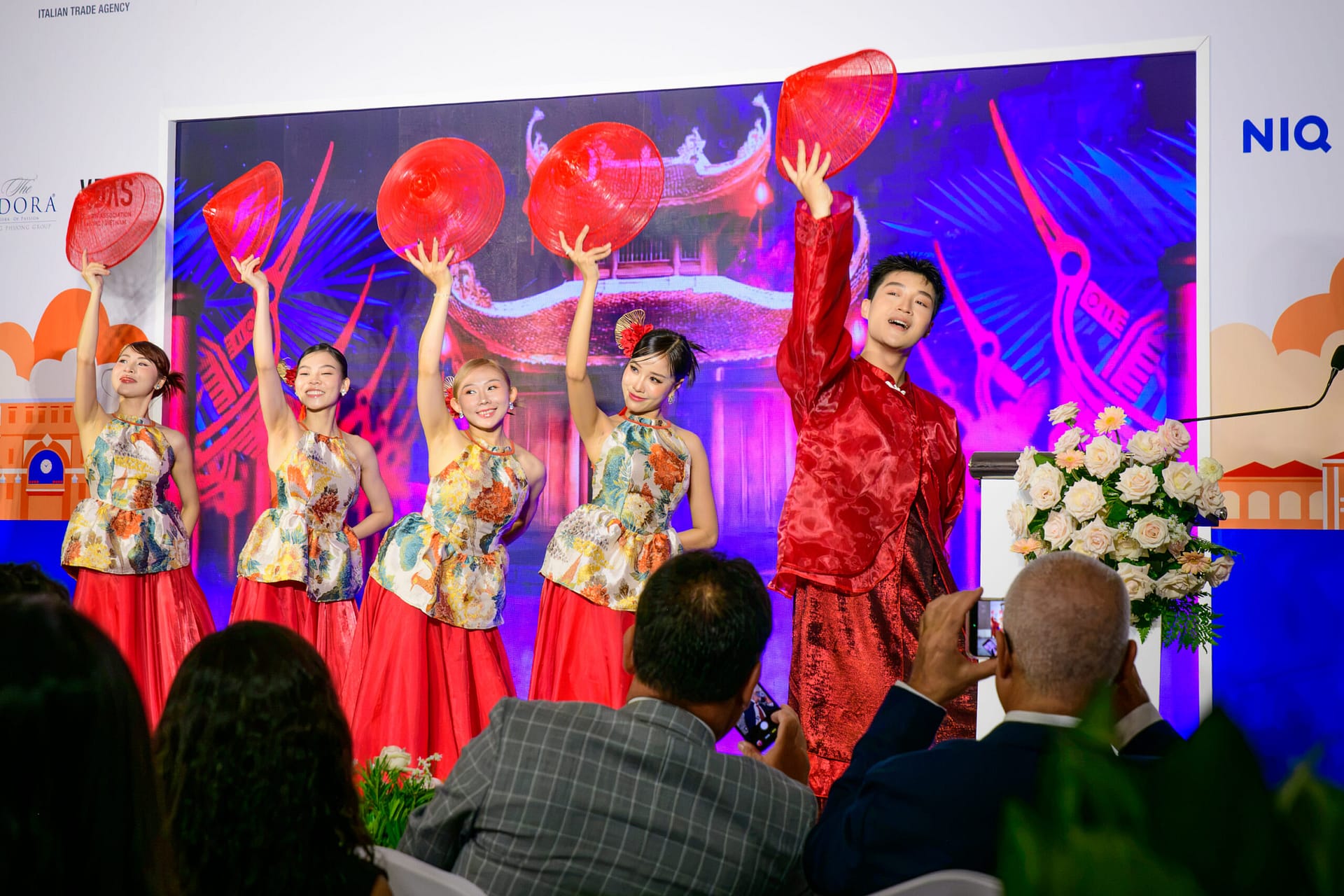
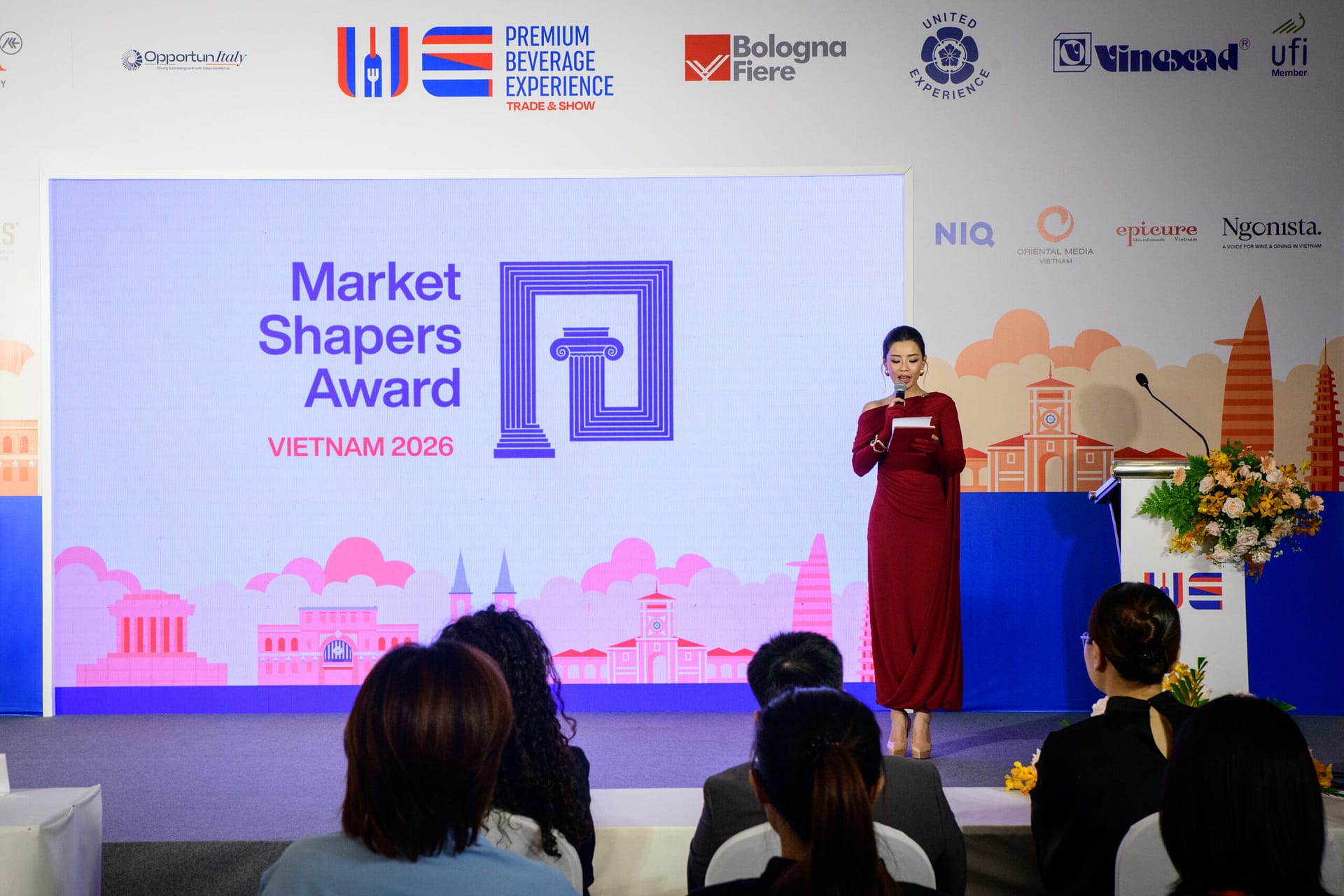
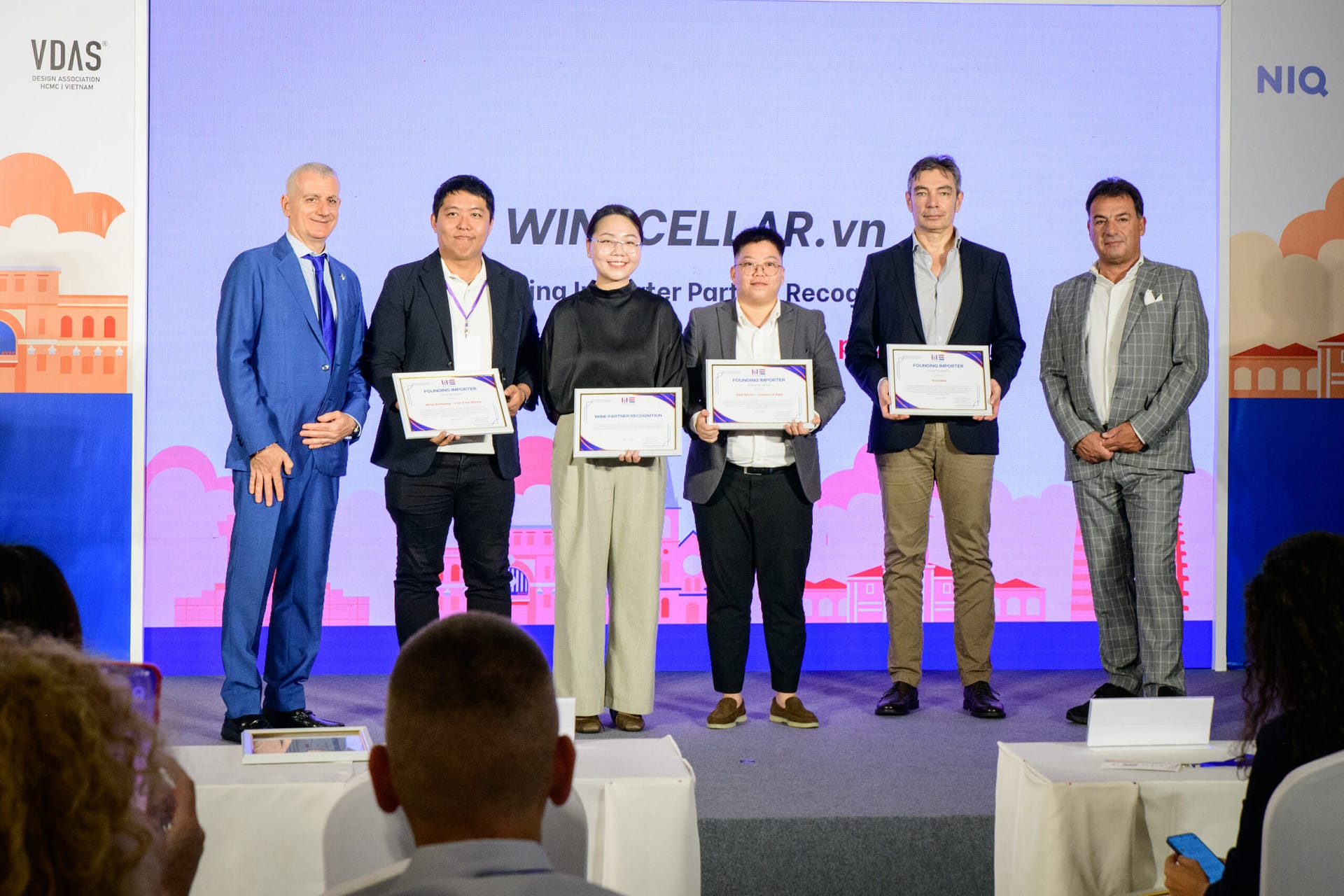
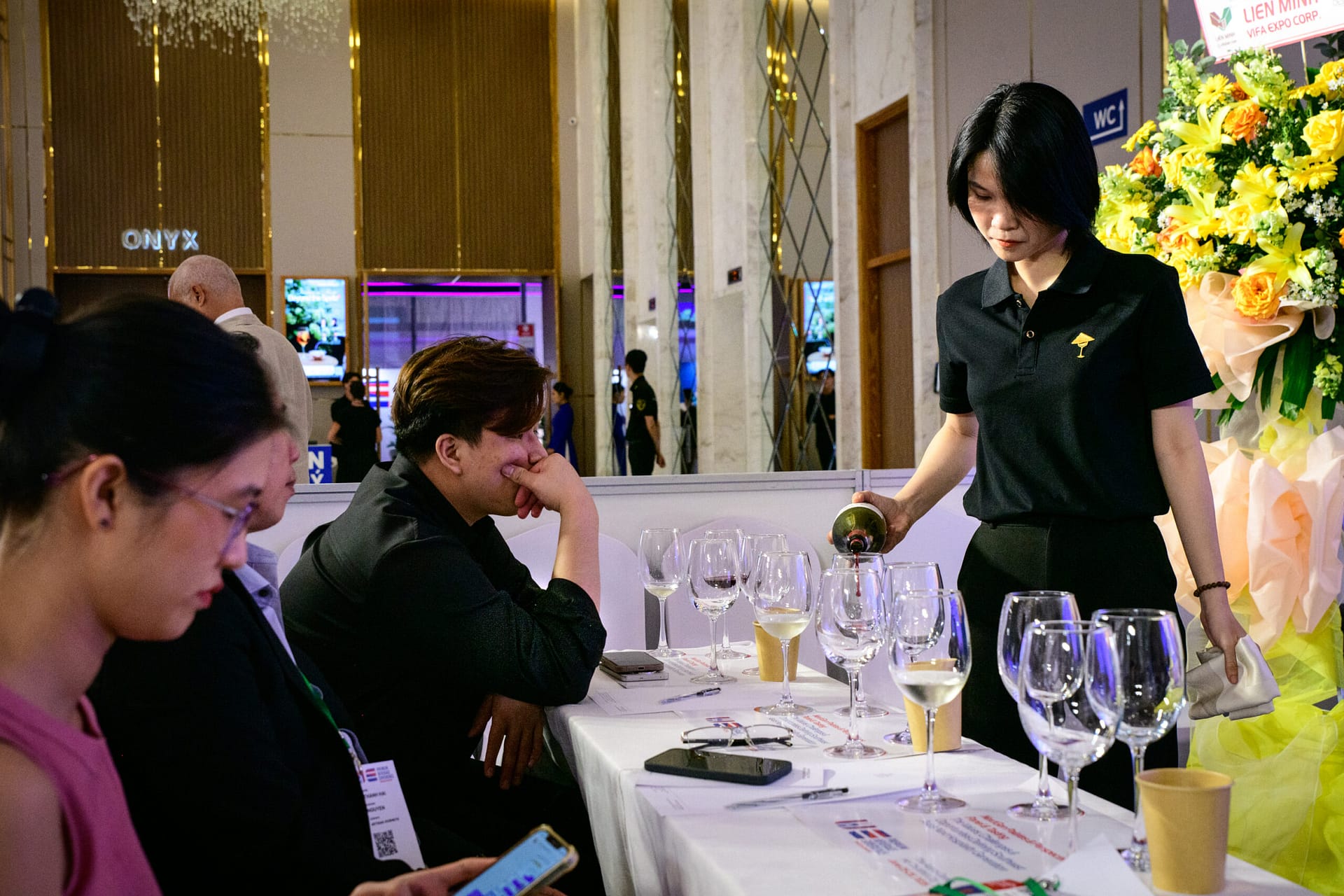
The first day of the event did experience some occasional hiccups and raised a few questions on its stability, but the second day came strong and somehow completely redeemed that initial impression with renewed energy.
What happened thanks to the programming, the cosy setting of the creatively designed booths, and the Women in Drinks networking event at the end of the first day was that it created a real proximity between all actors of the scene: guests, importers, producers, and sommeliers all bonded through joyful drinking, singing and plenty of laughter. That intimacy, forged with the knowledge of meeting up again the next day, built a strong foundation for the second day.
We have already written about the two Industry panels we attended (here and there), so here is a look at the producers that caught our attention.
Cantina Maria Faretra
First up, Maria Faretra, from Puglia. With a large friendly smile under a crown of curly blond hair, you can tell she’s happy to tell the world about her wines. The daughter and grand-daughter of viticulturists, she’s the first in the family to have decided to turn things around and start making wines with their grapes.
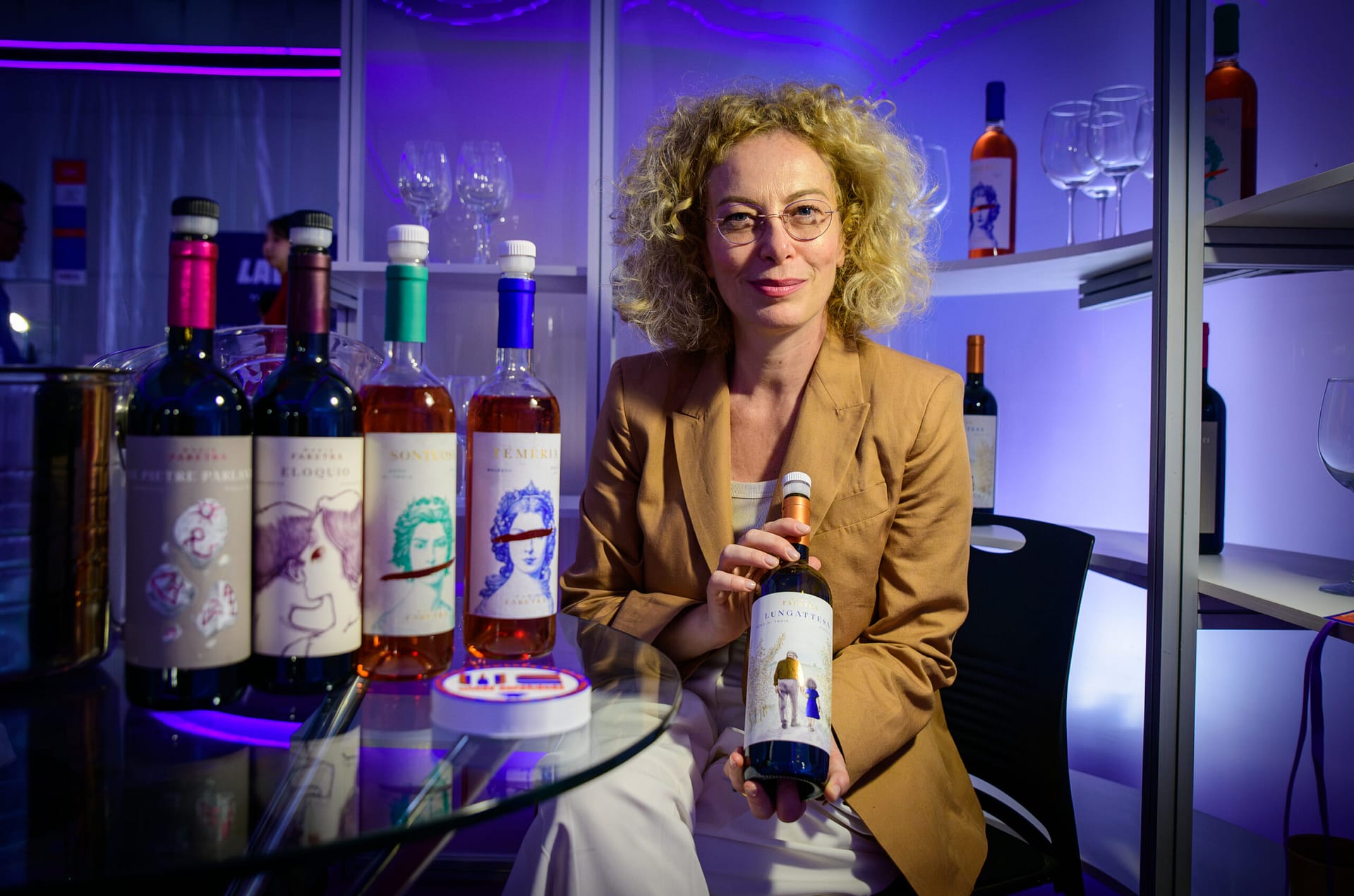
Travelling between her home in London and the family village of Orta Nova, she’s built the winery from scratch and a first line-up of wines made with respect for the land: organic methods, hand-picking and low-impact farming.
Confronted with the global image of rather heavy and tannic wines, Maria is going in the opposite direction – surprising with freshness and versatility. It’s not easy to convince consumers that Puglia is not all big and bold – especially given the strong place the region has occupied in the market, but once people get to try her wines – they’ll immediately understand.
I completely fell under the charm of her Malbec Rosé, Tèmeria. Very surprising, it shows strong, rich character, while retaining a fantastic freshness and lots of fruit. Light, colourful, not just an aperitivo but a real wine of pleasure, with notes of strawberries and a very light touch of vanilla – but without giving in to any sense of sweetness. I can’t recommend it enough. It’s a rosé you’ll remember and that’ll stop you in your tracks with an urge to look at the label.
I enjoyed her Malbec red as well, Eloquio, which also offers great freshness, with a touch of herbs, liquorice and a sensual body. Another surprise was the Le Pietre Parlanti (The Talking Stones), which is a Primitivo in a very light style, grown in a soil full of shattered limestone. It offers plenty fruit but also much pepper, and lots of pleasure.
These wines, all certified organic and vegan, really speak of the respect of time, family and terroir, without any complicated language. Immediately drinkable, and yet rich and colourful, they seem the perfect fit for modern drinkers.
Cantina Paltrinieri, Emilia Romagna
Another interesting meeting was with the dedicated winemaker, Alberto Paltrinieri, who’s been making Lambrusco with his wife Barbara since 1996, taking over the work started by his grandfather Achille in 1926 and continued by his parents Gianfranco and Pierina, in Cristo di Sorbara, in the province of Modena. This year marks the centennial anniversary of the winery and by speaking with Alberto, you feel the passion is still strong.
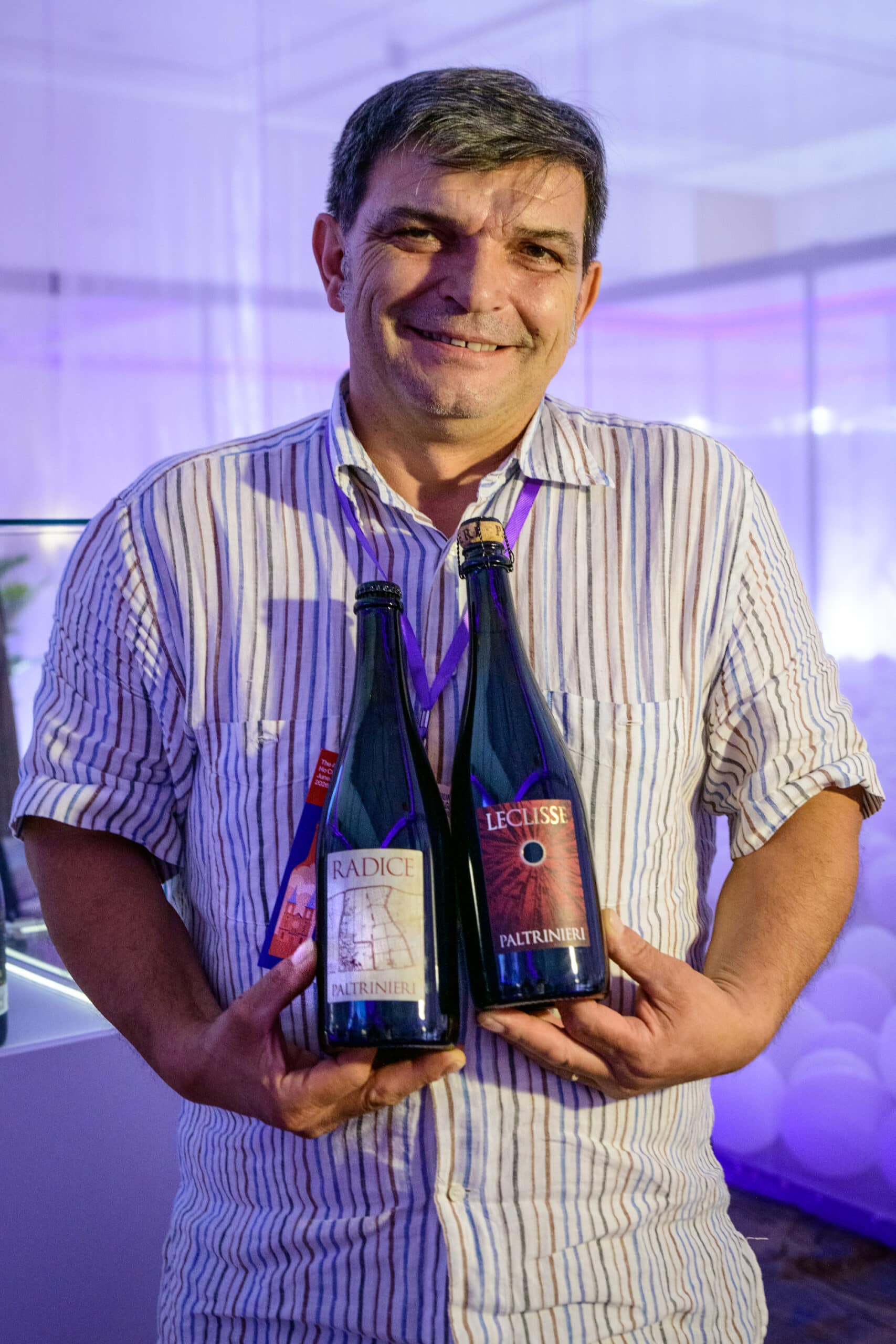
Lambrusco wines are made from 4 different grape varieties: Sorbara, Salamino, Grasparossa and Maestri and they can be found in Emilia-Romagna and Lombardy. Alberto mostly works with Sorbara and Salamino, which need to be planted together because Salamino is essential for pollinating the Sorbara grapes – which are excellent but suffer from a complex genetic code that causes uneven growth of the berries and a difficult pollination process.
Alberto and Barbara refined their work with Sorbara so much that they were the first to produce Lambrusco ‘Sorbara In Purezza’, which means it is made entirely of Sorbara. Cantina Paltrinieri offers a wide array of Lambrusco wines, ranging in colour from white to purple, and from the original Lambrusco ‘frizzante’ style made with the Charmat method, to ‘Spumante’, with the traditional method their son brought back from his time in Champagne, notably working alongside the Tarlant family. The labels of the bottles, designed by the artist Fabrizio Loschi, are truly unique and amplify how unique and well-crafted these Lambrusco are.
Lambrusco wines, which are almost absent from the Vietnam market, seem to be slowly rising in Southeast Asian markets and it actually seems natural, as these wines offer the refreshing fine bubbles of celebration, with flavours that can playfully handle a bit of spice, and peanut-based sauces.
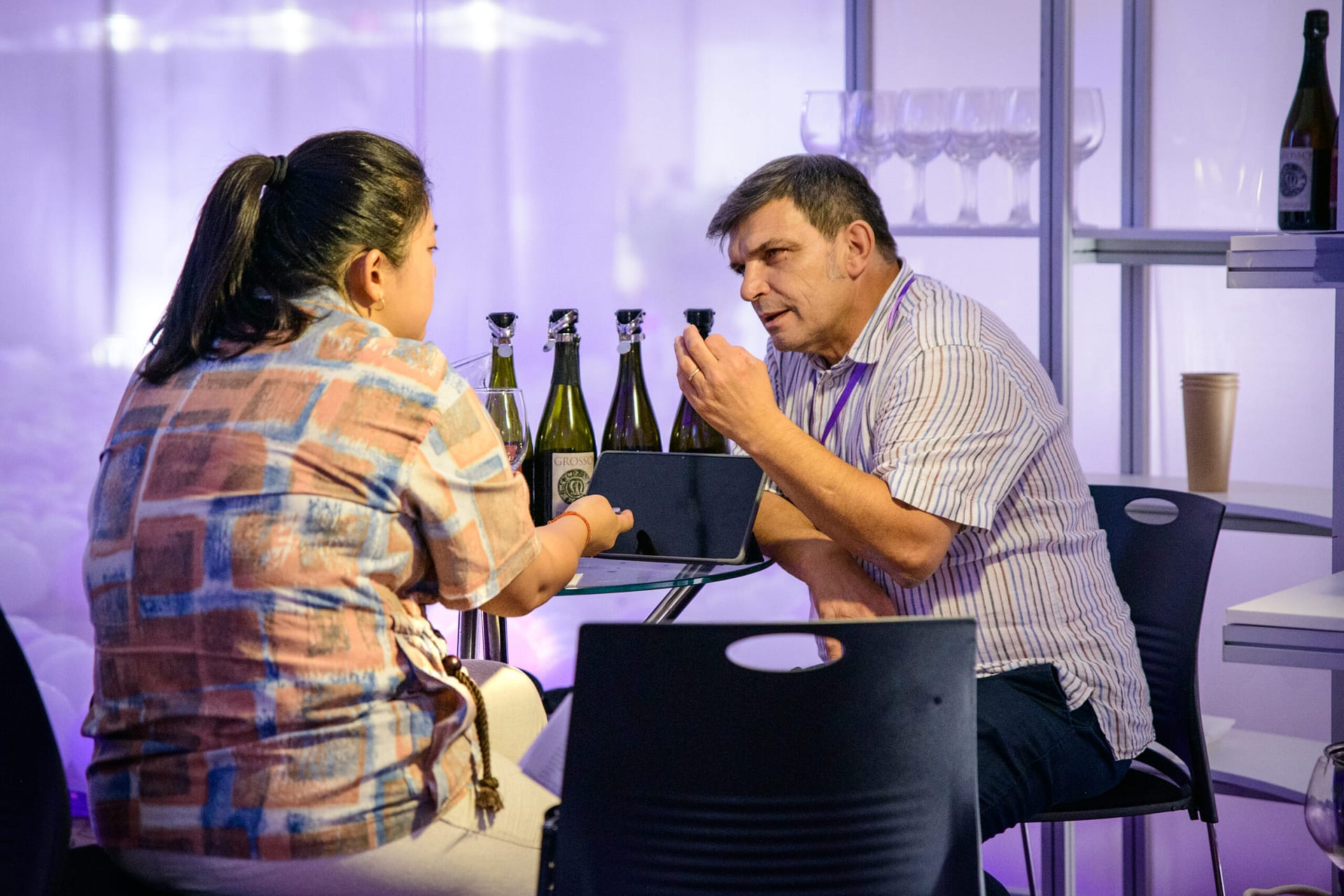
Paltrinieri wines were excellent across the range, with a particular mention for the super easy drinking Radice, a rosé frizzante that just screams to join any party, and the semi-dry Solco, with deep purple hue and an excellent balance between acidity and sweetness that will complement spicy dishes very well. These boutique wines are important to taste as the market of Lambrusco is often flooded with rather poor propositions and consumers need to be reminded of their potential.
The two faces of Prosecco: Conte Collalto, Conegliano Valdobbiadene
I was also lucky to happen at the booth of Conte Collalto, at a time when their export manager, Riccardo Poletti, was in a talkative mood. I was treated to a rich conversation on the state of Prosecco.
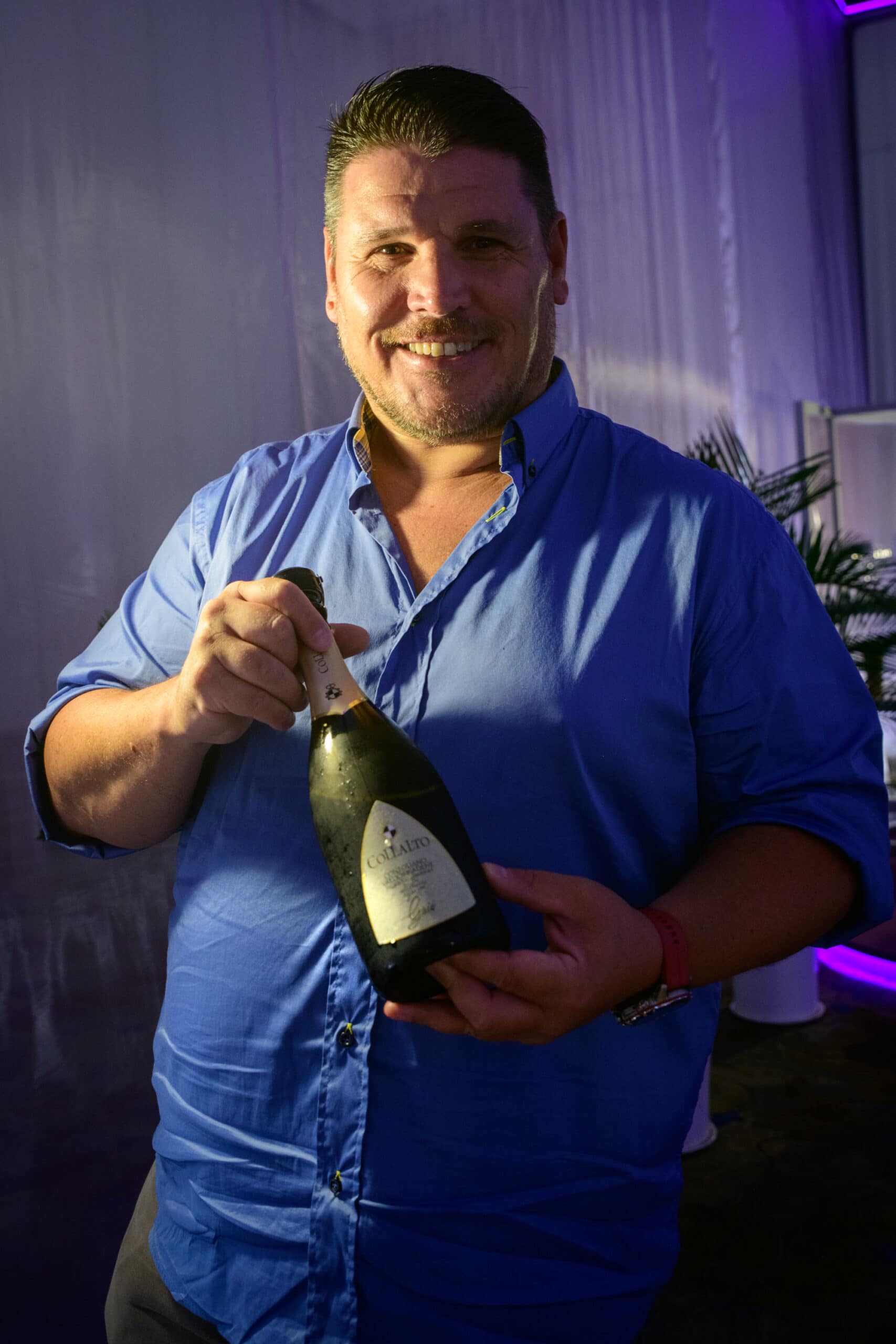
The first thing Riccardo established is that the name Prosecco covers two distinct realities. The Conegliano Valdobbiadene DOCG – a 25-kilometre strip of hills between the cities of Conegliano and Valdobbiadene, awarded UNESCO World Heritage status in 2019 for the singular morphology of its terrain – was the historical origin of Prosecco. Up until 2009, Prosecco could only come from that very special piece of land. Encouraged by the success of Prosecco worldwide, the Italian government extended the region of the appellation dramatically, thus creating a much wider production area across the Veneto and Friuli Venezia Giulia regions, this is what we now find everywhere labelled as Prosecco DOC.
To comprehend the issue, we need to take a look at the numbers. The original zone, the DOCG, produces around 100 million bottles per year – a capacity that’s been capped since new vineyard planting within the DOCG has been frozen for years. The DOC zone, which produced nothing in 2009, now produces some 667 million bottles annually. Of every eight bottles on the market carrying the Prosecco name, only one comes from the DOCG.
The consequence for DOCG producers are complicated. On the one hand, they owe to defend their denomination as the original Prosecco – of the highest quality -, but they now fear using the name and be confused with the mass produced DOC. Their wines, which cost more to produce, compete on shelves against a majority of bottles carrying the same name at significantly lower prices, thus twisting consumers perception of the worth of Prosecco.
Conte Collalto’s answer to this is to lead with the terroir name – Conegliano Valdobbiadene – rather than Prosecco, and to build understanding of the distinction through consistent, fact-based education. He was candid that the industry collectively failed to do this during two decades of double-digit annual growth, when commercial urgency simply wasn’t there.
The scientific basis for the distinction is well-documented. Within those 25 kilometres, nine distinct soil types have been formally identified, and 43 different microclimates have been named and mapped. The slope orientation shifts enough within 50 metres that vines on adjacent aspects can sit at different stages of the growing cycle simultaneously. Collalto, with over 150 hectares within the DOCG, uses this range to select specific plots for desired wine styles – adjusting for acidity and ripeness profiles from the vineyard upward.
Once I had fully understood the issue of Prosecco and the importance of educating consumers, Riccardo talked about a no-less interesting story – the incredible history of the Conte Collalto estate, that goes well beyond Prosecco. Official documents from the archives of Conegliano record the Collalto family’s presence in these hills from 958 AD, making them one of the oldest wineries in the world by most rankings. They grow 20 grape varieties across the estate, next to the 100 hectares of Glera necessary for their Conegliano Valdobbiadene wines.
What sets them apart from anyone else is their relationship with Incrocio Manzoni – a group of extremely rare crossing varieties created in the early twentieth century by the agronomist Professor Luigi Manzoni, whose 20 years of crossbreeding experiments were conducted within Collalto’s vineyards and cellars, with the support of the family and in collaboration with the School of Oenology of Conegliano. Of the varieties Manzoni developed, there are four that are still used today. Collalto cultivates and vinifies all four – a claim no other winery makes.
Of these very unique wines, I tasted the Incrocio Manzoni Moscato 13.05.25 and the Incrocio Manzoni Bianco 6.0.13. The first was in the form of a Rosé Spumante Violette Extra Dry – very lively, with notes of violettes and blueberries, this was a very surprising sparkling, both refreshing and deep. The second one was a still wine, a crossing of Riesling and Pinot Blanc and it offered an explosion of aromas, with some green apple, but also cashew nuts and a persistent note of Feijoa. Truly beautiful and unique.
The winery has managed to remain in family ownership throughout its history, and is currently in the hands of Princess Isabela Collalto. For anyone working in the Asian market, this is a producer that offers something really unique and an incredible story to back it up – certain to offer new experiences to most demanding consumers.
Conclusion
There were of course many other people we chatted with who deserve a mention, but our conversations were mostly casual and I did not delve deep enough in their wines to talk about them here – we’ll keep that for another time or the day we’ll have the chance to visit their estates.
All in all, Wines Experience HCMC proved to be a highly engaging, insightful professional trade event, that we hope will build on its positive momentum to grow and develop, by embracing the feedback of this first edition, and continuing to involve the local forces of the region. They succeeded in creating something special, which felt quite personal, and delighted many of those who decided to give it a chance and stick around for the two days.
CELLAR BRIDGE | cellarbridge.com | editor@cellarbridge.com | Words & Photography by Aurélien Foucault