
プロワイン東京2026
満載の第3版 発見と新たな地平とともに
文・写真:オーレリアン・フーコー

フランスとドイツは大規模なパビリオンを構え、膨大な数のワインを提供していたが、私がどちらかで過ごした時間は限られていた。プロワイン東京は、アジアではめったに表に出てこない産地へのアクセスを提供してくれたので、この機会にそれらのワインをテイスティングし、あまり知られていない産地についてもっと知りたいと思った。私にとって、それがこのイベントの最大の魅力だった:ウルグアイ、セルビア、グルジア、ルーマニア、ギリシャ、そして日本ワインそのものが、私の時間を最大限に活用し、皆と過ごす機会を得る理由だった。
ウルグアイのパビリオンには少し長くいたので、別記事で紹介する。以下は、プロワイン東京2026に関する私のメモの一部である。

ノーロー製品
プロワインはZEROコーナーで勝負をかけ、脱アルコール・スパークリングの「ワイン」を多数取り揃えた。
正直に言うと、脱アルコールワインにはまったく興味がない。
完成したワインからアルコールを取り除くことは、私にはまったく意味がない。エネルギーを大量に消費し、ブドウ果汁をアルコールに変えることだけが目的であった工程を、どういうわけかサーカスのようにひっくり返してしまう。 タバコを吸わない人のために、タバコのないタバコを作るようなものだ。
しかし、私は、味もよく、個性的で、ある種の気品があり、お酒を飲まない人にもティーンエイジャーのように感じさせず、食卓に同伴できる可能性を提供できるような、他の商品を一生懸命作っている人たちにもっと興味がある。そういえば、ワインバーで働いていたとき、ソーダを飲むためにワイングラスをくれたお客さんに力強く感謝されたことがある。
このような革新的な商品のひとつにスパークリングティーがあり、私はプロワイン東京で2つの興味深い提案を試飲した。
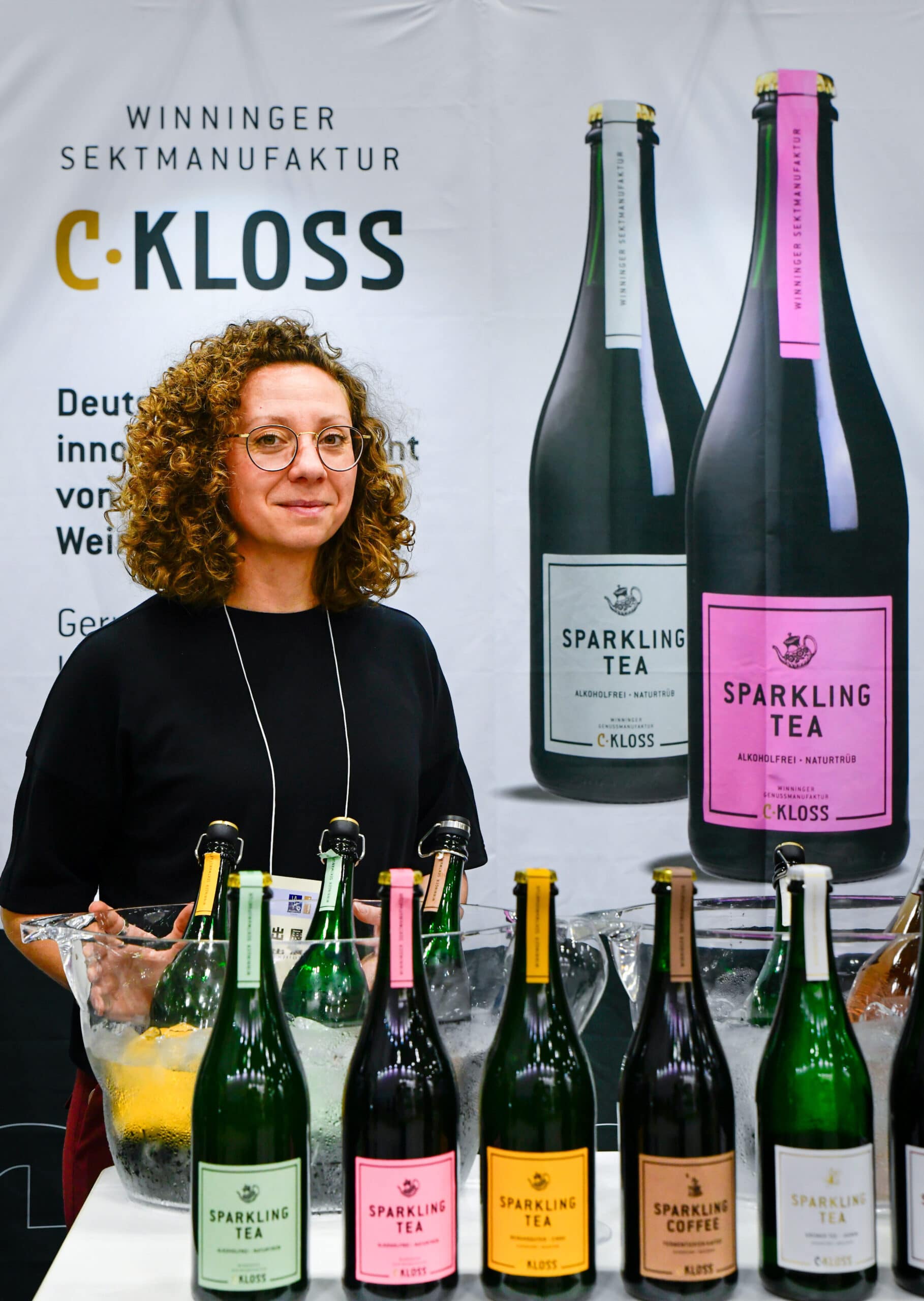
最初は C・クロースモーゼルのヴィニンゲンの生産者。1856年にフライブルク・アン・デア・ウンシュトルート(現在はロートカプヒェン・ムムグループの一部)に設立されたドイツ初のスパークリングワインメゾンのひとつ、クロス&フォルスターの共同設立者であるユリウス・クロスのひ孫にあたるクリスチャン・クロスは、2022年末に旧ゼクトケレライ・フォン・カナルを引き継ぎ、この事業を開始した。彼らのスパークリングティーは、アルコール漬けのワインとはまったく異なる論理で造られている。中央ヨーロッパのハーブ、果物、野菜、さらにはコンブチャなど、発酵させたその土地の素材だけで造られ、アルコールは一切使われていない。糖分は比較的低く(1リットルあたり30~40グラム、原料はすべて原料そのもの)、合成保存料は不使用で、2024年にはファルスタッフ価格品質賞を受賞している。
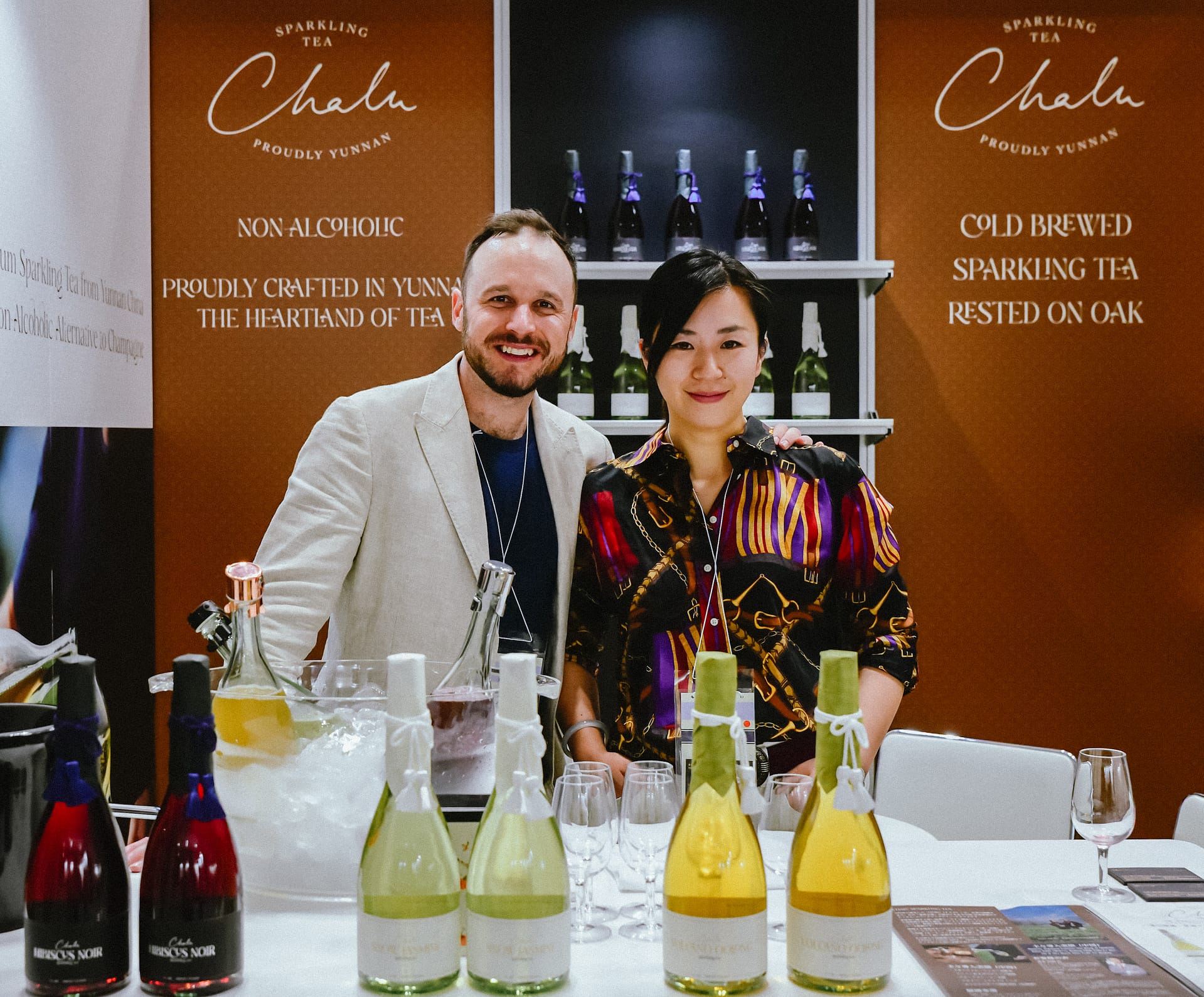
スノージャスミンは、「香り付け」と呼ばれる工程で、茶葉と新鮮なジャスミンの花を1:1の割合で常温で7回煎じる。
ボルケーノ・ウーロンは3種類のウーロン茶(緑茶、黄金茶、黒茶)で醸造されており、ストラクチャーと複雑さを備えている。街でグラスで買えるスパークリングワインの半分よりずっと楽しめる。
世界で最も古く、最も特徴的な茶産地のテロワールから造られた飲み物であり、真の個性を表現している。チャルーはすでに北京のミシュラン星付きレストラン2軒で提供されており、特に高品質の茶文化が浸透している市場では、注視に値する製品だ。
セルビアワイン
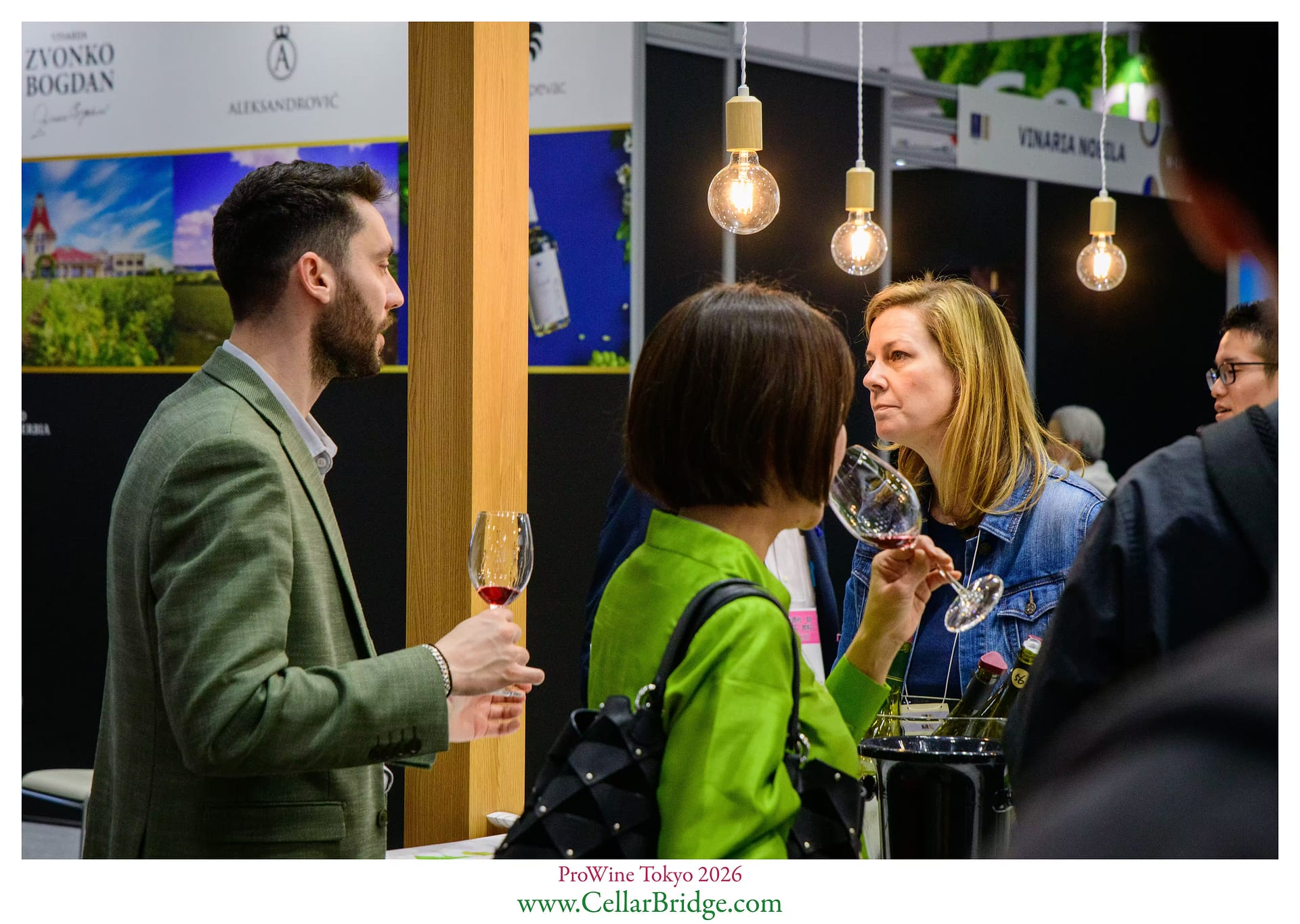
セルビアのパビリオンでは、ワインとスピリッツの両面で、セルビアが提供できるものを数多く取り揃えていた。6人の生産者が中央の大きなブースを共有し、陽気なエネルギーが渦巻いていた。

セルビアを「新興の」ワイン国と見る人もいるが、実際には旧世界の一部であり、何世紀にもわたってワイン造りを行ってきた。しかし、それには理由があり、旧ユーゴスラビア諸国におけるワイン造りの背景を理解することが重要なのだ。
チトーの指導の下、ワイン産業は完全に集団化され、ブドウ栽培者は収穫物を政府が設定した価格で国営協同組合にキロ単位で売ることを義務づけられ、個人生産は停止され、品質よりも量が優先された。ユーゴスラビアはチトーがスターリンと決別した後、集団化を解除し始め、1953年に集団化を正式に放棄したが、国営ワイナリーはその後もその支配力を維持した。共産主義の崩壊後、民間のワイン造りが再び合法化されたのは1990年代のことで、セルビアでは、家族経営の品質重視のワイナリーがやっと一世代を経たところだ。
ラスター・ワイナリー は、そのような時代に何が達成できたかを示す美しい例である。セルビア中央部のレヴァーチ地方に2013年に設立されたこのワイナリーは、セルビアのシャルドネとピノ・ノワールについて素晴らしい主張をしている。レヴァーチはシュマディヤの南部に位置し、ジュホル山からの涼しい気流を伴う大陸性気候のため、ブルゴーニュのマコネの温暖な地域に匹敵する。ラスタルは32ヘクタールの畑を所有し、1976年からのピノ・ノワールの古木が初期のリリースのバックボーンとなり、2016年にはシャルドネで初のムンドゥス・ヴィニ賞を受賞した。彼らのピノ・ソフィジン・イズボルは、セルビアのピノ・ノワールの評価において、デカンター誌の歴史上最高評価を獲得している。グラヴィティ・フロー・ワイナリー、フレンチ・バリックとハンガリー産オーク、厳格なグリーン・ハーヴェストなど、インフラはハイエンド。
BTワイナリーヴォイヴォディナ州フルシュカ・ゴラの斜面にあるベシュカのワイナリーは、より伝統的なアプローチと優れた固有品種を使用している。このワイナリーは、ミネラル豊富なパノニア海堆積土壌にあり、早飲みのラインと、最も樹齢の高い葡萄のみから造られ、オークで2~4年熟成させ、フィルターにかけずに瓶詰めされたプレミアム・セレクチヤの2つの異なる層を運営している。カサ・デ・オロ・プロクパックは傑出していたが、この地方で長い歴史を持つもうひとつの固有品種、タムジャニカも味わう価値がある。
ミラン・ザリッチ尊敬する国際的な審査員であり、ザリッチ蒸留所のオーナーでもあるミランがラキヤを持ち込んだ。蒸留所はセルビア西部のコジェリッチにあり、古いポヴレン・ブランデー・ハウスの敷地内にある。同社の洋梨のラキヤ「ニルヴァーナ」は、ラスベガスで開催されたWSWAコンベンションでダブルゴールドを受賞し、2020年にはブリュッセルで開催されたコンクール・モンディアルによるスピリッツ・セレクションで世界のトップ10に入った。年間約100万本のボトルを生産しているが、その味はとても素晴らしく、まだ日が浅かったので吐き出さなければならなかったことを後悔した。
ポドラム・ペバックセルビア中部のクヴェトイェヴァツ村に本拠を置くアレクサンダル・スタンコヴィッチは、創業者でマスター・ディスティラーのアレクサンダル・スタンコヴィッチが率いる家族経営で、9つのワイン・ラベルとともに20種類以上のラキヤとリキュールを製造している。彼らの代表作は、食用の23カラットの金箔で仕上げたカリン・ブランデー、ズラトニ・ペヴァック(Zlatni Pevac)である。
ズヴォンコ・ボグダン・ワイナリー ズヴォンコ・ボグダンは、セルビアの伝統的な古都の歌を歌う有名な歌手であり、画家、詩人、そして2008年からはワインメーカーでもある。65ヘクタール、13のラベル、40万本以上の生産量を誇るこのワイナリーは、ヴォイヴォディナ最北のワインカントリー、スボティツァ近郊のパリッチ湖東岸に位置し、静かにセルビアで最も名高い生産者のひとつとなっている。彼らのキュヴェNo.1は、2018年、2019年、2021年と3年連続でデカンター・ワールド・ワイン・アワードの金賞を受賞した唯一のセルビアワインである。
アレクサンドロヴィッチ・ワイナリー トポラ近郊のオプレナクで75ヘクタールのブドウ栽培に携わるアレクサンドロヴィッチ氏は、このスタンドで最も長い記憶を持つ人物だ。一族とブドウ栽培のつながりは1903年まで遡り、曽祖父のミリオス・アレクサンドロヴィッチがこの地域初のワイン生産者協同組合の設立に貢献した。第二次世界大戦後、王室セラー・マスターのジヴァン・タディッチはカナダに移住し、アレクサンドロヴィッチ家がオプレナックの伝統を復活させていることを知り、かつてヨーロッパの宮廷で供されていたセルビア王室御用達ワイン、トライアンフのオリジナル・レシピを送った。近代的なワイナリーは2000年に建設され、現在では年間30万本以上を生産している。
これらすべてのワイナリーは、セルビアワインが現在アジアのバイヤーの検討対象外であるにもかかわらず、品質がそこそこあり、価格も見合ったものであるため、すぐにでも変わる可能性があることを示すのに大いに役立った。
ルーマニア
日本ワイン
私も日本ワインについてもっと知りたかったのだが、数少ない参加ワイナリーは会場の一番奥にあり、表示も不明瞭だった。しかし、ブースにひっきりなしに人が訪れていたところを見ると、彼らの関心度は高いようだ。

長野県で特に印象に残ったのは ドメーヌ・ドゥ・ユノハラ長野県の日本アルプスワインバレーから。
デラウェアとナイアガラのブレンド(2025年)はとても爽やかで、キャンディーや新鮮なイチゴの香りがあり、水のように澄んでいた。人前でワインを飲んでも嫌な顔をされない方法がやっと見つかった!
マスカット・ベーリーAも興味深く、軽く、通常のベリーの香りに加えてマンゴーのニュアンスもあり、とても飲みやすいワインで、友人が訪ねてきたときにいつでも開けられるのを待っていた。サッパリしていて甘すぎない、上質のシードルも素晴らしい。
同じく長野から、 保坂恭子 デラウェア2023は、青イチジクとメロンのタッチがあり、デラウェア・オレンジ2024は、熟した桃とグリーンアーモンドのヒントにナッツのフィニッシュがあった。2022年のマスカット・ベーリーAは、ブラックベリーのヒントはあったが、水っぽく凝縮感に欠けると感じた。
マロ・ワインズまた、美しい樽熟成のシャルドネ2023はエレガントで、力強さの中にもフレッシュさが感じられた。ピノ・ノワールはフレッシュなピンクプラムのニュアンスがあり、控えめな個性が光り、フィネスと繊細さを兼ね備えていた。
にも非常に感銘を受けた。 菊華ワイナリー (九州・熊本)の樽熟成メルローは、長く続く洗練されたフィニッシュと黒胡椒のニュアンスで、非常にエレクトリックだった。これは私が味わったどのメルローとも全く異なっていた。
ジャンシス・ロビンソンMWによるビデオ・マスタークラス。 日本ワインの現状ロビンソンが自ら選び、評価したワインは、ビデオを見ながら試飲することができる。
大胆なニューヨーク・ワイン
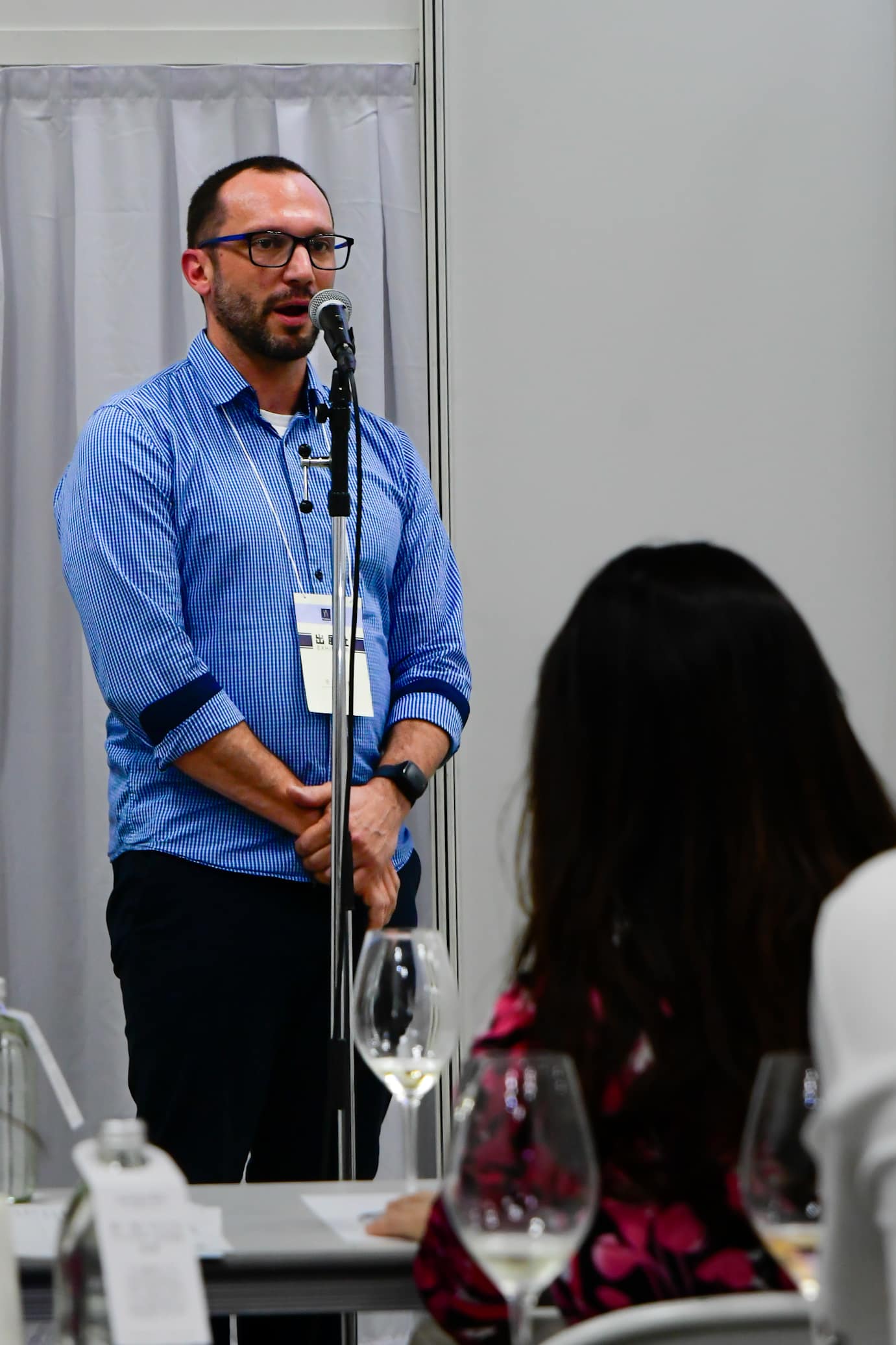
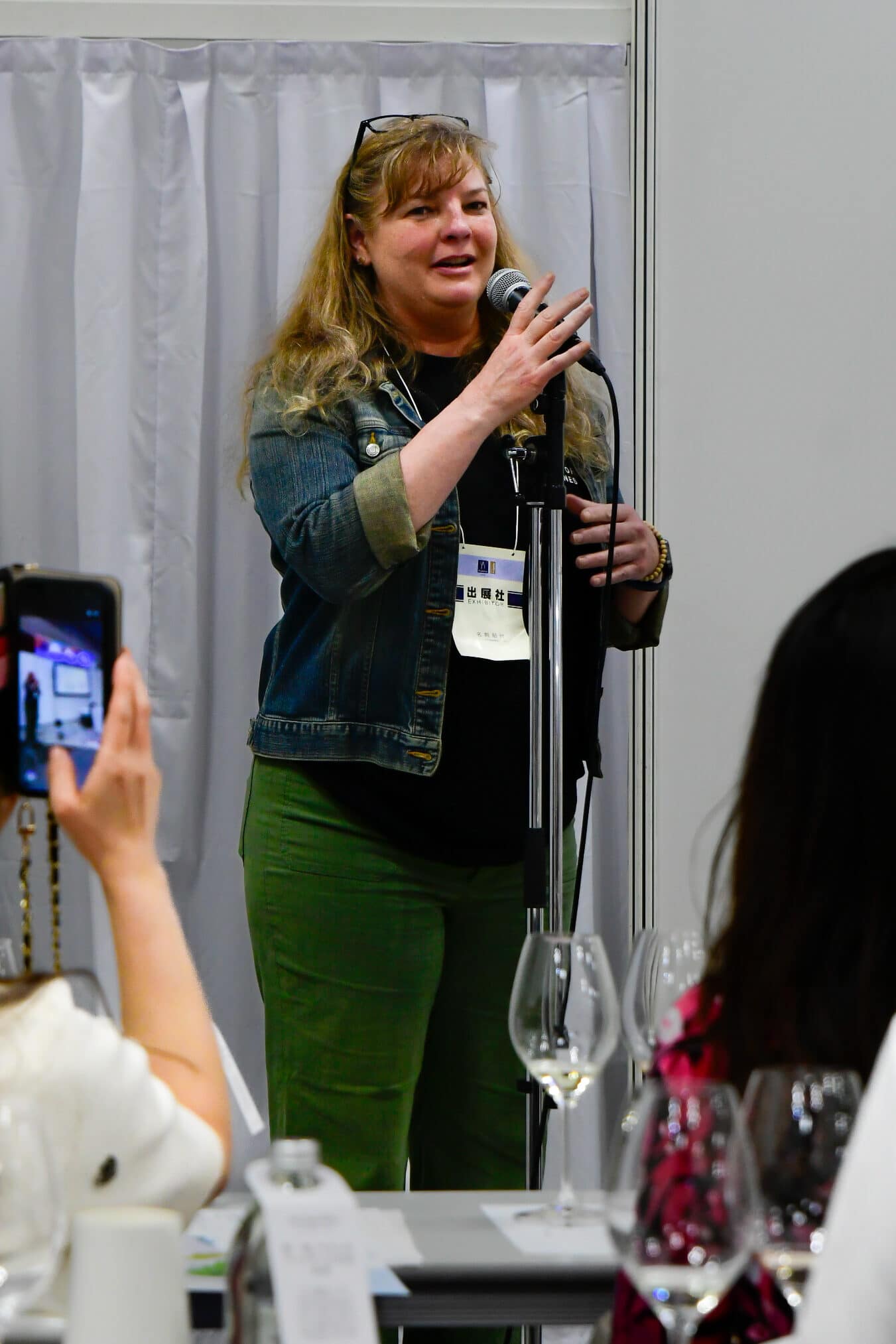
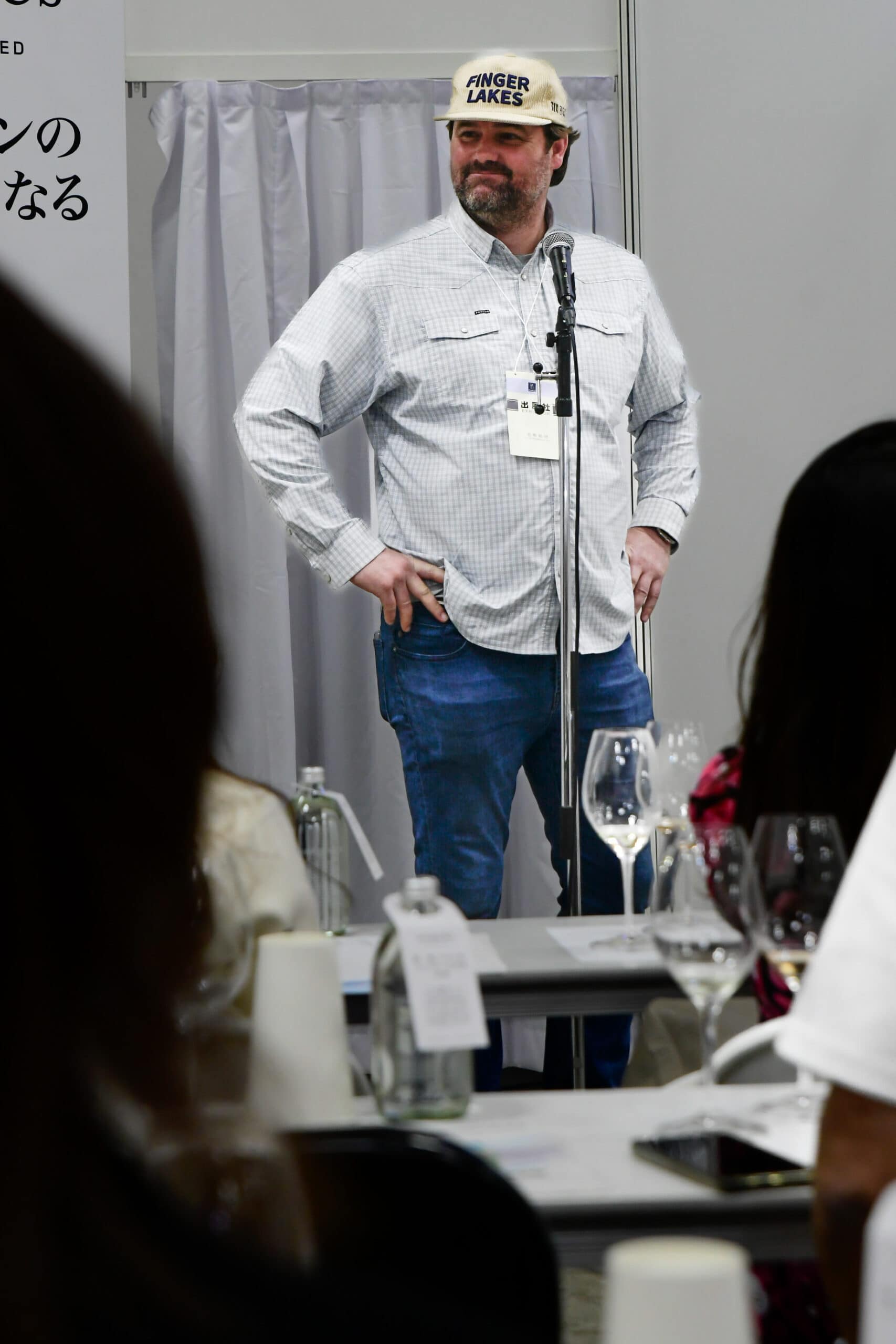
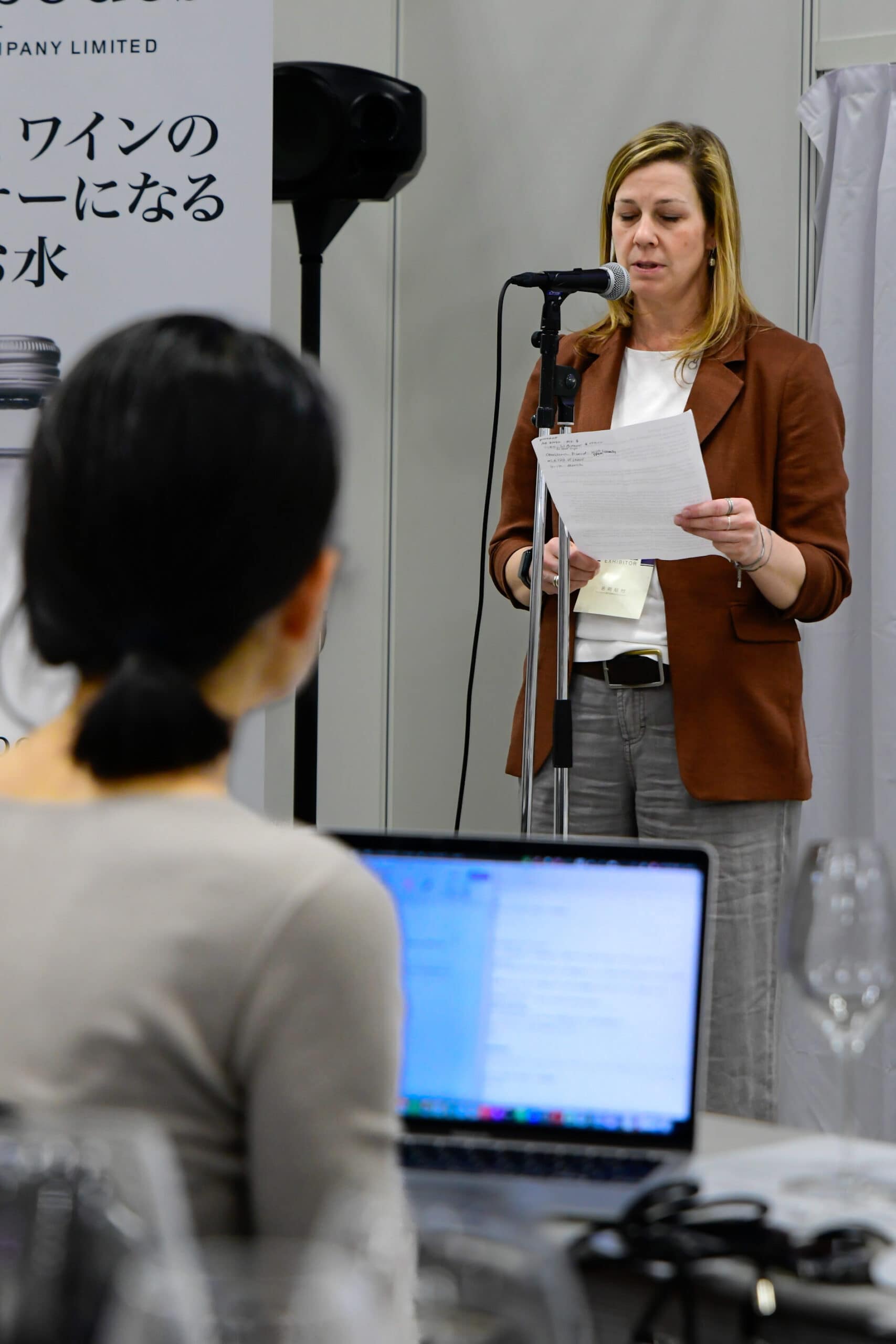
1985年にニューヨーク州法で設立されたニューヨーク・ワイン&グレープ・ファウンデーションは、"Bold NY "のポジショニングでブースを出展。
フィンガー・レイクス出身でコート・オブ・マスター・ソムリエの資格を持つNYWGFのプログラム・ディレクター、カイル・アン・パリチェック氏は、カユーガ湖のワイナリーを2軒所有するデイブ・ピタード氏とともに代表団を率いていた: ボタンウッド・グローブ ロムルスで シックス・エイト・セラーズ のナショナル・セールス・ディレクターであるケリー・アシュフォードは、オービットで次のように語った。 フォックス・ラン・ヴィンヤーズ のマリオ・マッツァがいる。 マッツァ・ショータウクア・セラーズ エリー湖で。
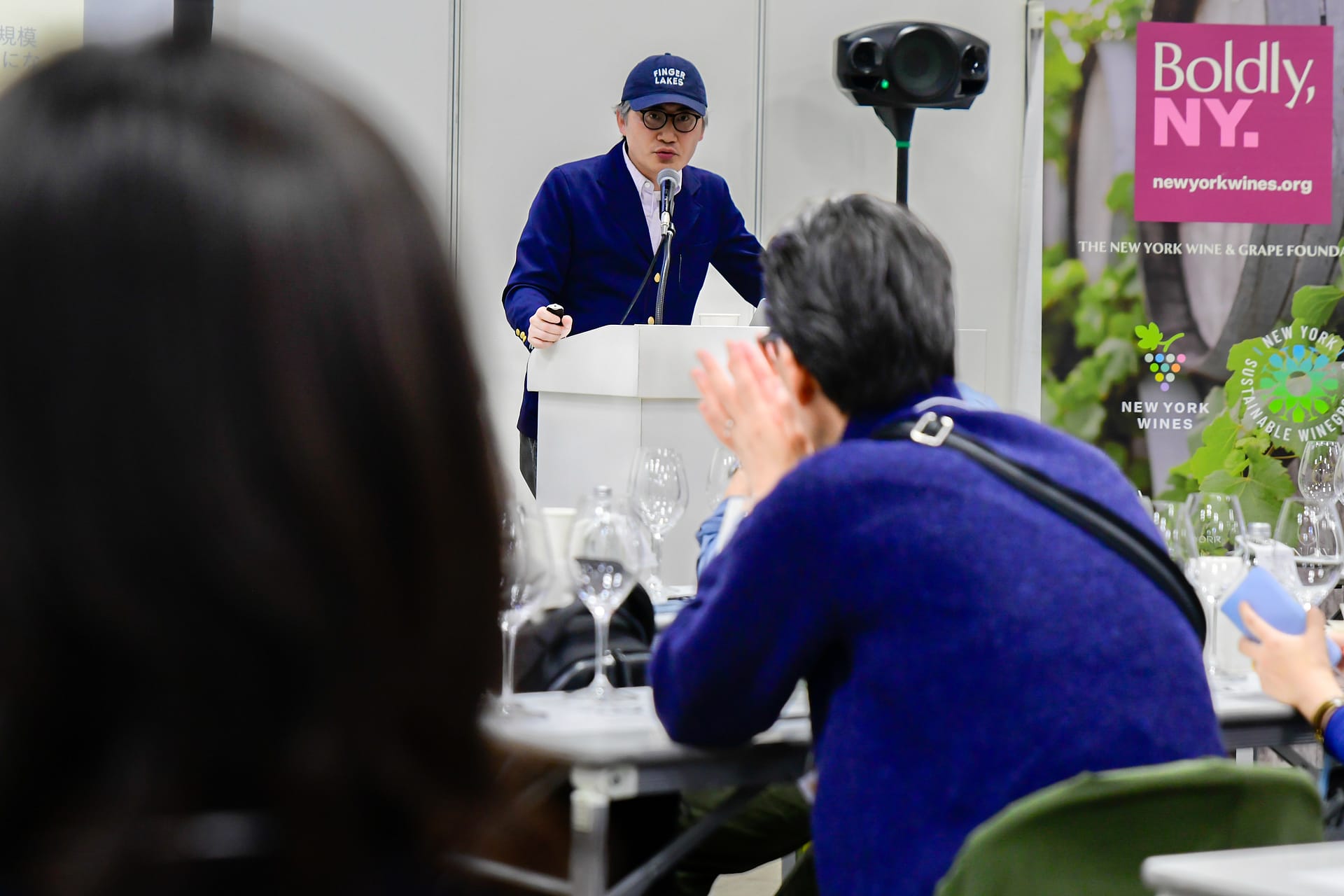
NYWGF日本事務所の別府武則氏によるマスタークラスは、最も急速に発展しているワイン産地のひとつであるにもかかわらず、アジアではまだほとんど知られていないこの産地について、有益な情報と味を提供してくれた。冷涼な気候のフィンガー・レイクスから海洋性気候のロング・アイランドまで、7つのAVAにまたがり、約40種類のワイン品種を扱っている。そのうちの3つはアメリカ原産のブドウで、コンコード、ナイアガラ、カタウバという、アメリカの農業の歴史に深く根ざしていながら、ヨーロッパのワイン造りの伝統とはかけ離れた品種である:この3品種の中で最も広く栽培されているコンコードは、ワイン用ブドウとしてよりも、ウェルチのグレープジュースやアメリカのピーナッツバター&ゼリーサンドイッチのゼリーの原料としてよく知られている。しかし、ニューヨークはヴィティス・ヴィニフェラ種(Vitis vinifera)へと意図的にシフトしている最中である。ヴィティス・ヴィニフェラ種は、最も骨格のしっかりした、熟成に耐えうるワインを生み出す品種である。その中で最も人気があるのは、リースリング、シャルドネ、メルロ、そして現在ニューヨーク州の「公式」赤ワイン用ブドウとして提案されているカベルネ・フランである。
メイド・イン・アキタ(談志工房製)
様々な種類のボトルが所狭しと並べられた小さなブースの奥で、私はかなり感動的なストーリーを見つけた。 メイド・イン・秋田 (made-in-akita.com) – a curated platform representing sake, beer, cider, and spirits from Akita Prefecture.

“Geographically, Akita is not easily accessible from major cities like Tokyo or Osaka,” explains Takuya Iwata, the founder. He originally came to Akita intending to acquire a brewery, but after meeting with the locals and taking in the spirit of the place, something shifted. “While it is one of Japan’s leading regions for producing high-quality goods, it remains overlooked, and the population is declining faster than anywhere else in the world. Seeing industries struggle in such an environment made me realise something – I felt a strong urge to take these products to the world on behalf of the producers who work tirelessly to create them.” Akita is indeed the prefecture with the highest proportion of elderly residents in Japan – 38.6 per cent of its population is aged 65 or older – and faces a projected population loss of 41 per cent by 2045. It is ホーム to generations of talented sake and beer artisans, but those artisans were ill-equipped to adapt to modern forms of trade and export. Rather than extract a single asset, Iwata and his CMO Shohei Nagashima decided to build around the situation and become the bridge that would bring Akita’s products to the outside world. メイド・イン・秋田 now provides the export platform, the curation, and the international positioning that these producers would otherwise have no practical pathway to achieve. Iwata’s stated ambition leaves little room for ambiguity: “When people hear ‘Japan,’ they think of a special country. ‘Tokyo’ brings to mind a cutting-edge metropolis, ‘Kyoto’ represents tradition, and ‘Kobe’ is synonymous with world-class steak. I want to create a world where hearing the name ‘Akita’ immediately triggers the thought: ‘That’s where the best drinks in Japan come from.'”
At their booth visitors could sample sake from multiple Akita houses, a gin called Taiheizan GIN No 65, and apple cider and sparkling pear under the brand mia, presented with the modern look of natural wine. An interesting find was oga. GOSHADO, a wild sour ale brewed on Oga’s rugged coast using sea salt and native microorganisms in the style of a Belgian lambic – a brand created by Danshiko Lab themselves, based on a product originally crafted by a local brewer they invest in, and completely rebranded for the international market. It is exactly the kind of product the project is built around: exceptional local craftsmanship, reshaped into something that travels.
Their flagship sake range is OKD, from Okuda Sake Brewery founded in 1673 – a house that has been making sake through the entire arc of modern Japan, from the Edo period through two world wars and the collapse of the Soviet Union, and is now reaching international trade buyers for the first time. Alongside it sit Dainagawa Junmai Ginjo, Chitosezakari Junmai Daiginjo, Okuda’s Chiyomidori, and Chokai Homare – each a distinct producer from across the prefecture, each representing a different facet of Akita’s brewing tradition. Everything I tasted was top quality – and I can’t recommend them enough.
GREECE: NOSTIMIA AND ALPHA ESTATE

The Greek Chamber of Commerce in Japan and the importer ノスティミア - 有限会社ノスティミア – organised a masterclass on Greek wine, to be delivered in Japanese. Since I don’t speak Japanese, Marina Fragkis, who has been the company’s chief buyer since joining in 2020, ran me through the same tasting in English and I am so grateful to her for being so generous with her time.
Nostimia was started by her father in 2001, when there was simply nothing Greek in the Japanese wine market. Marina studied biology in the UK and decided to join the family company at 22. She now travels to Greece once a year to visit their suppliers and bring her first-hand experience and their stories back for the Japanese trade. Today, Greek wine accounts for 0.43 per cent of all wine imported into Japan – and that’s a situation it encounters often with the countries it exports to and that will only change with more educational work and the creation of opportunities for consumers to experience these wines.
We tasted four. A single-variety Assyrtiko (2024), by Karavitakis winery in Crete, kept at low temperature after harvest, macerated, then fermented in stainless steel. Assyrtiko has a tendency to retain acidity even in very hot climates like Crete, which gives it a citrus and mineral profile with real persistence.
ΑιΩ Marbled Malagouzia 2024, by Sacred Mountain winery in Halkidiki: aged in tanks built from marble: the marble’s micro-porosity allows slow micro-oxygenation, which the winemaker uses deliberately to smooth the texture. The result is round, floral, and expressive – white peach, herbs, fresh acidity – with a softness that is specific to this winemaking choice.
The third was the single variety Xinomavro “Hedgehog” 2023 from Alpha Estate in Amindeo, grown on sandy soils over limestone, surrounded by lakes that moderate the continental climate of north-western Macedonia. Light-bodied and elegant, with a slim structure, fresh acidity, red fruits and tomato.
The fourth wine was Thelema 2021, a 50/50 blend of Mavrotragano and Xinomavro from Zin Ideos Winery, in Halkidiki. Full-bodied, the two grape varieties were vinified separately then matured for 18 to 24 months before blending. Mavrotragano originates in Santorini, where it had nearly disappeared before being revived – it brings coffee, smoke, red fruits, and minerality to the blend. Rich and layered, this is a wine that works on its own as much as with food.
Next to the lovely family-owned importers of Nostimia, I was happy to find the only Greek winery I had had the chance to try in Vietnam: Alpha Estate. Founded in 1997 by viticulturist Makis Mavridis and oenologist Angelos Iatridis, their 220 hectares in Amyndeon are entirely privately owned, and the daughters of both founders – Angeliki Iatridou and Emorfili Mavridou – are now actively part of the team, carrying the project into its second generation.

Amyndeon sits in the far northwest of Greece, close to the borders of Albania and North Macedonia, hemmed in by three mountain ranges, as far from the coast as Greece can be and with a fully continental climate – cold winters, dry summers, with wide variation between day and night temperatures. It is possibly the coolest place in Greece to grow grapes. The vineyards themselves lie on a plateau between 600 and 700 metres of altitude, on soils so sandy that phylloxera was never able to invade. One plot, Barba Yannis, dates back to 1919 and still shows ungrafted pre-phylloxera specimens producing on their original roots.
Their range covers both indigenous varieties such as Malagouzia, Assyrtiko and Xinomavro, and international ones. Their higher tier, sourced from single vineyards and single blocks, 特徴 on its labels the animals known to visit these particular plots. I was particularly impressed by their single block wines, such as their Assyrtiko ‘Aghia Kiriaki’ and their Malagouzia ‘Latipes’, which both demonstrated excellent balance and splendid notes of stone fruits, as well as a certain creaminess I would have loved alongside some grilled octopus and lemon chicken.
Some of Alpha Estate’s wines are currently available in Vietnam through Warehouse and the Annam Group.
GEORGIAN WINES
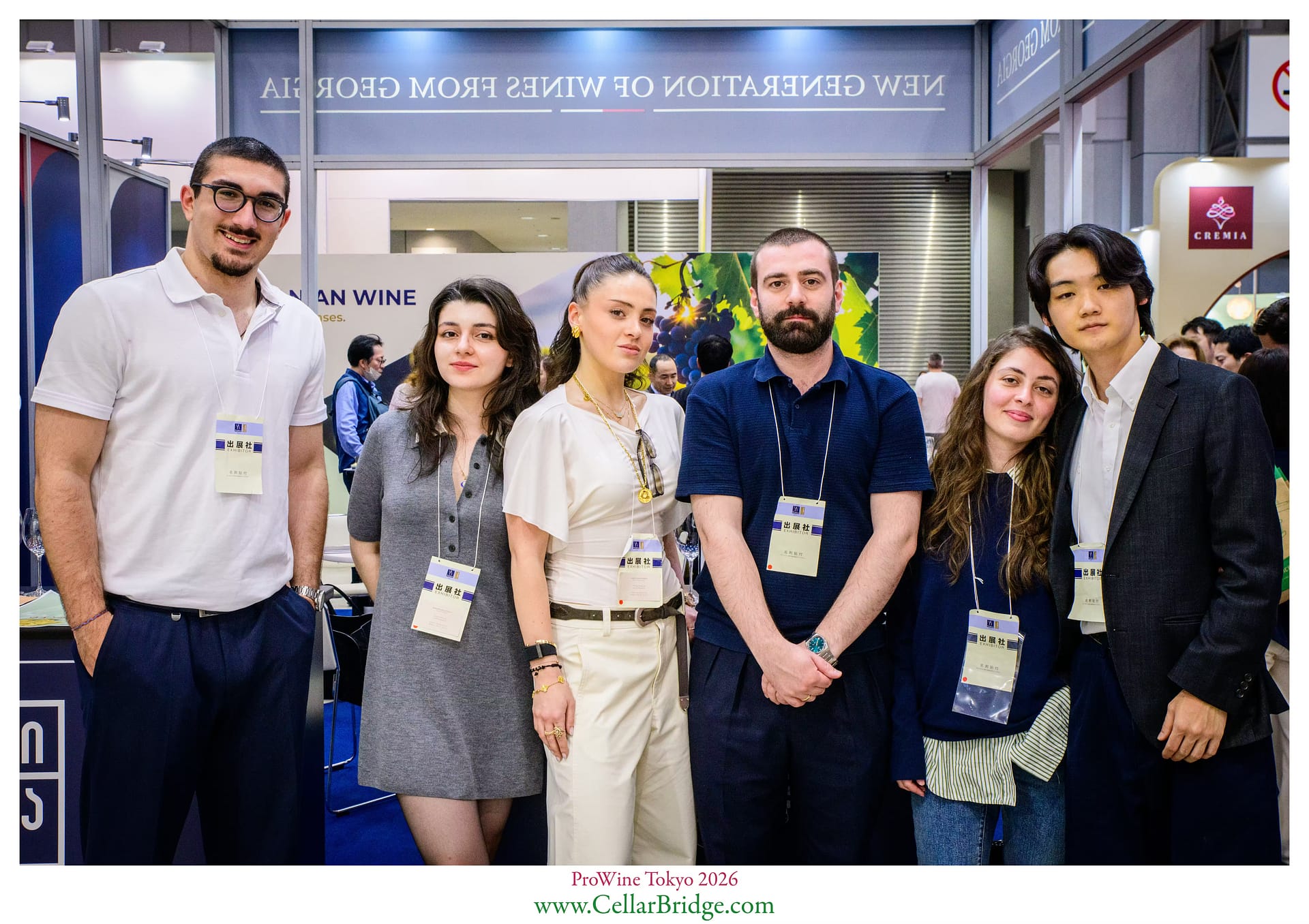
The Georgian pavilion was one of the biggest draw for me, mostly because of my personal attachment to the country and their wines. The booth was shared by 7 ワイナリー: Binekhi, Brother’s Avaliani, Gurgenidze family, Mesaubre, Bimbili, Royal Ikalto, and Vine Era.
A masterclass they called “New Generation Wines from Georgia”, was led by David Tamarashvili (CEO and Owner of Vine & Wine group) and Konstantine Tchanturia (Sommelier of the Binekhi team).

As most people know by now, the country of Georgia currently holds the title of the cradle of wine, with its winemaking history extending approximately 8,000 years.
The country boasts more than 500 identified native grape varieties across 29 distinct microzones. David Tamarashvili, put that figure into perspective with characteristic precision: the diversity of a single small western Georgian region like Racha or Adjara exceeds what most countries can claim in their entirety.
That framing matters, because the international market still tends to reduce Georgia to Kakheti, Saperavi, and Qvevri – which are definitely parts of its hallmark but remains only a small part of what the country has to offer.
The masterclass was accompanied by a tasting of no less than 8 wines.
We started with Binekhi Winery, founded in 1994, and their Khikhvi Qvevri. Khikhvi is an ancient Kakhetian white grape – low-yielding, aromatic, with a signature of ripe yellow fruit, apricot, and citrus blossom that makes it particularly well-suited to skin-contact winemaking. With skin contact for two weeks during fermentation, followed by a further six months of maceration, it demonstrates the characteristic structure that confuses first-time drinkers: deep amber colour, honey and dried apricot on the nose, and a tannin grip on the palate that comes from the seeds and skins.
David Tamarashvili then presented Vine Era’s Sauvignon Blanc Qvevri, with full inclusion of stems, seeds, and skins, fermented at 14 to 15 degrees Celsius over several months. Such a refreshing and unexpected take on Sauvignon Blanc which bears very little resemblance to the well-known Loire Valley or New Zealand Sauvignons. The grapes at harvest were at their best: 25 brix sugar, 6.5% acidity and a pH of 2.8 – a quality raw material that gives the winemaker considerable room to work.
The third wine came from MESAUBRE winery – whose name translates from Georgian as “talk to me”. A lovely Kakhuri Mtsvane from Akhmeta, 2022 vintage, from 16-year-old vines, with full stem, seed, and skin inclusion.
We then had a dry Rosé from Ortomeli winery, made from Chkhaveri – a grape native to the western regions of Adjara and Guria, with naturally pinkish skin that can yield white, pink, red, or sparkling wine from a single variety – a technical versatility well appreciated by winemakers.
The fifth wine nearly brought me to tears. Binekhi winery presented their Saperavi Reserve Qvevri: fermented in large oak vats, aged two years in French oak, then held a further five years in bottle before release. In Georgia, Saperavi is somehow as ubiquitous as Cabernet Sauvignon in the rest of the world. You’ll often stumble over very average quality, if not plain poor versions. But when you find a great one, you stop and smile. Even though it is sometimes easy to forget, Saperavi really can be that good. And Binekhi managed to make one just like that.
The sixth pour was Vine Era’s Mukuzani Saperavi – Mukuzani being one of Kakheti’s most celebrated PDO microzones, reserved exclusively for dry Saperavi. Another superb wine from a very new winery whose modern architecture is, by Georgia’s current standards, genuinely striking: unapologetically contemporary and yet fitting perfectly in its natural environment.
The seventh wine was Bimbili’s Aleksandrouli Reserve 2020. Aleksandrouli is most widely known as one half of Khvanchkara, Georgia’s celebrated semi-sweet PDO from Racha. Here it was made dry – a less common choice that puts the grape’s natural character front and centre: soft tannins, lively acidity, and bright red fruit without the sweetness most drinkers associate with the variety.
We concluded with the Avaliani Brothers and their Usakhelauri. The name means “nameless” in Georgian – a grape so particular that locals felt it could not be compared to anything else. It grows on steep slopes between 400 and 700 meters in Lechkhumi, near a handful of villages, and most attempts to cultivate it elsewhere have failed. Yields are tiny, harvesting entirely by hand, and fermentation stops naturally as cellar temperatures drop in winter, preserving residual sugar without any intervention. Annual production is typically measured in hundreds of bottles, therefore placing it in a higher price range – well worth the cost if you find a good one. I once had an unforgettable one in a supra in Lechkhumi and I still regret to this day not having been able to purchase a couple bottles – the winemaker made it for his family only and wouldn’t sell it. If you visit Georgia – go on the hunt for the grape with no name!

Final Impressions




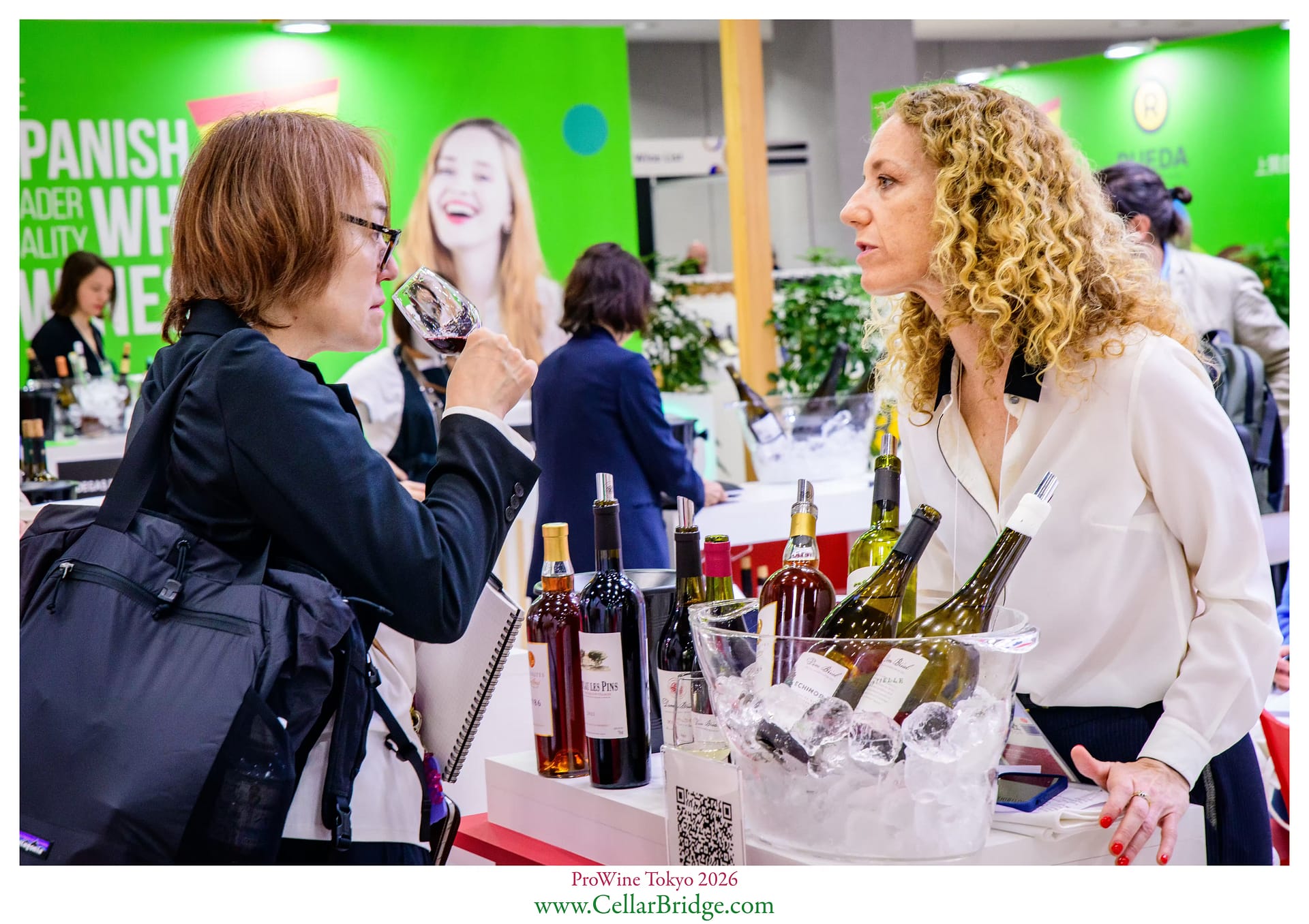
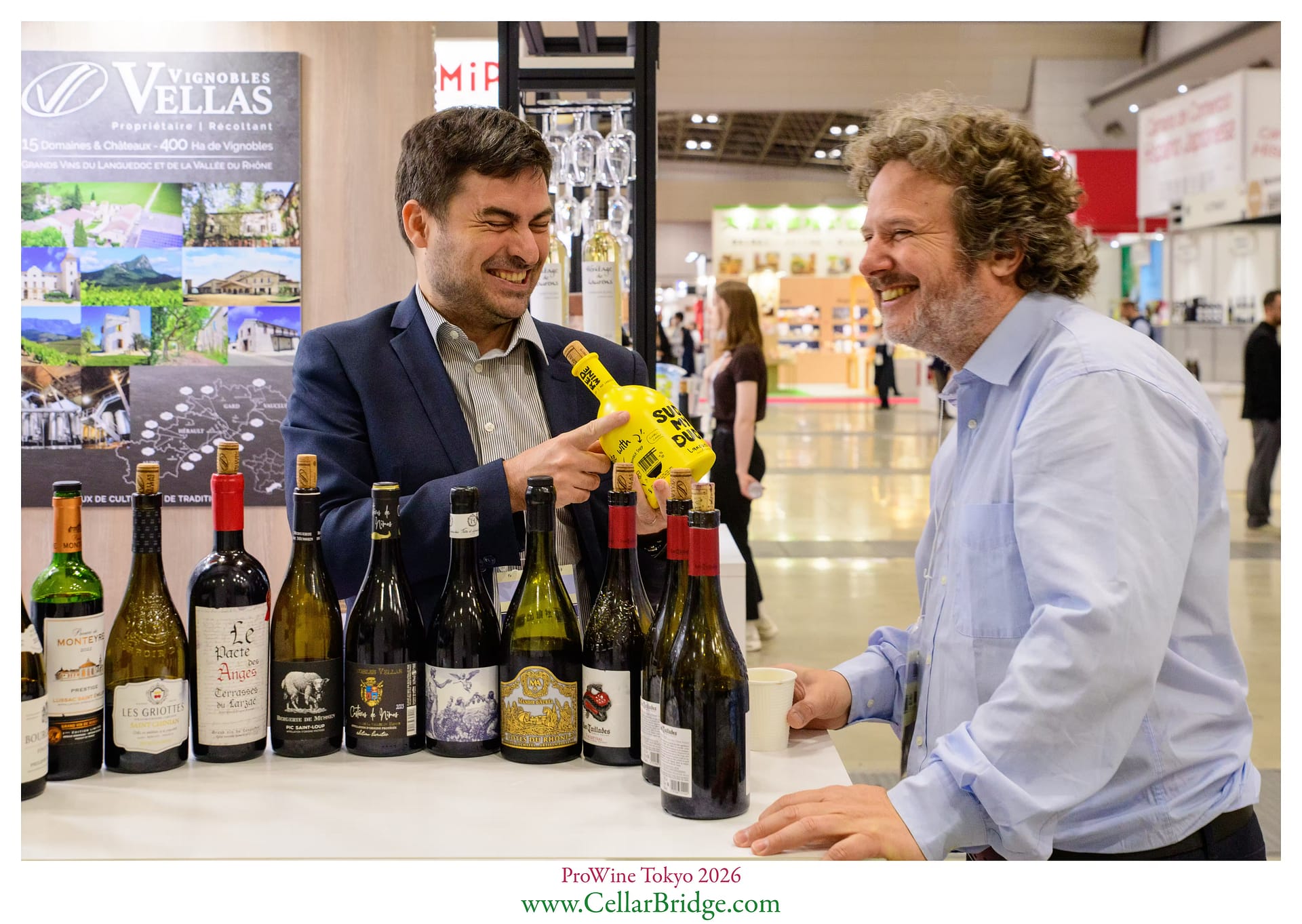
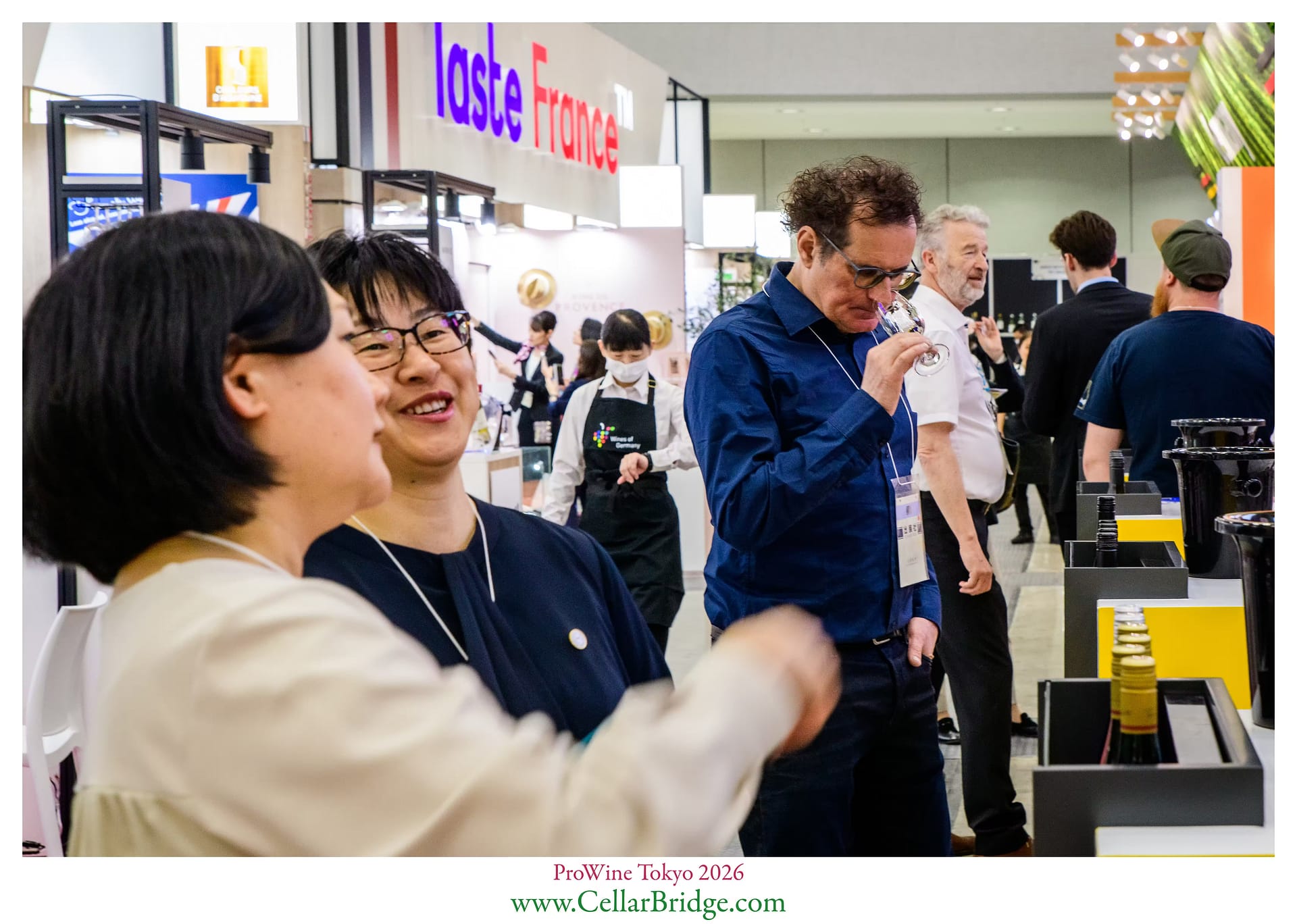


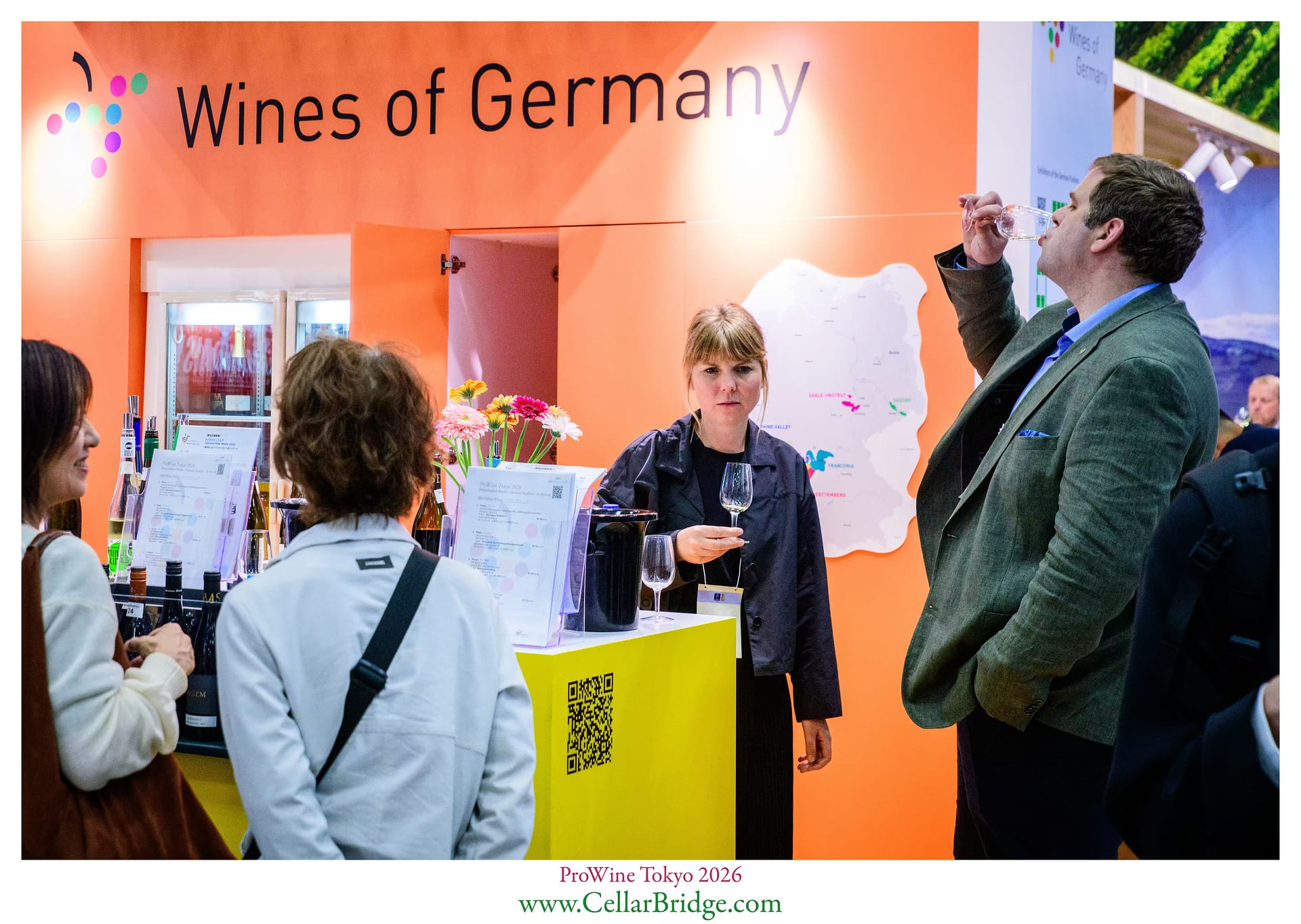
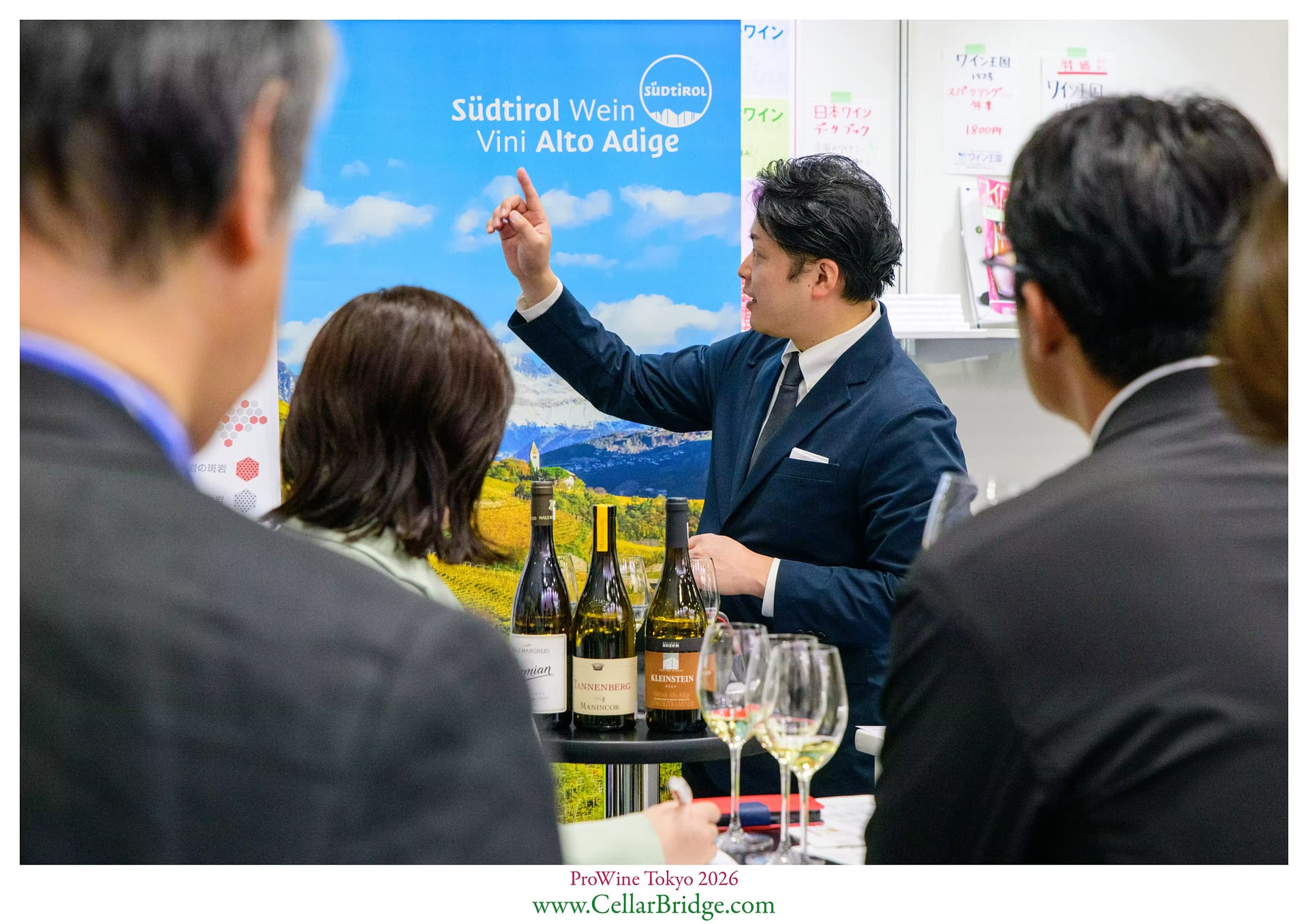

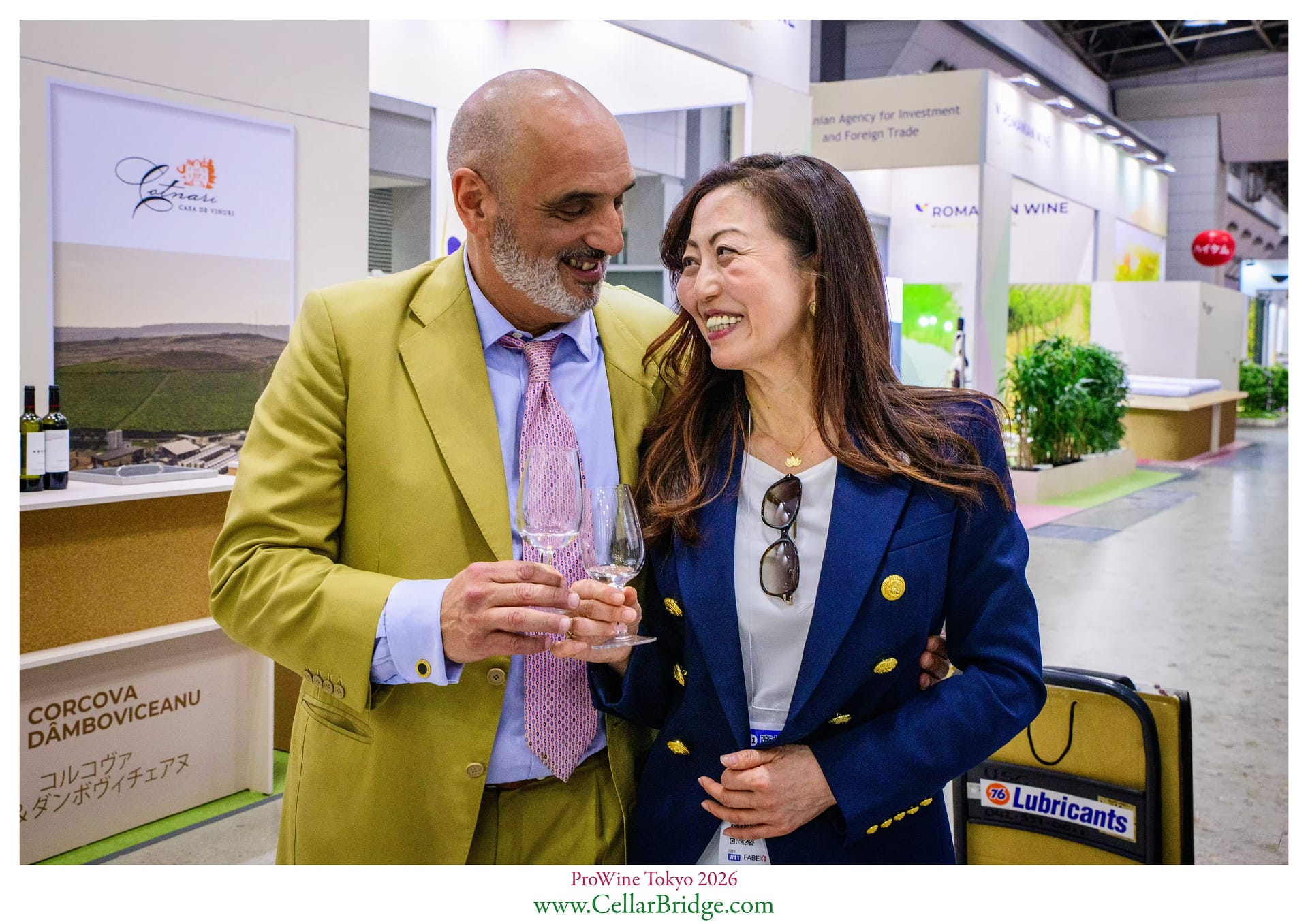
The venue itself may not be as sexy as some of its competitors and the language barrier in masterclasses is a genuine obstacle (even with the translation app that was provided, it was hard to follow), but one couldn’t ignore the genuine effervescence that was at play. What I witnessed was real communication: people taking the time to taste and ask questions, camaraderie between the producers, and plenty of smiling faces, from the opening hours till closing time. And the most important to me was access – to Georgian winemakers who do not show up in Singapore or Hong Kong, to Serbian producers building serious relationships in unfamiliar territory, to Greek wines rarely as present in other Asian fairs and to boutique projects like メイド・イン・秋田 and チャルー Sparkling Teas. These were 3 intense days but I would gladly have stayed double that long – and doesn’t that say it all?
It’s all about showing up, creating connections and opening your horizons and on that front – プロワイン東京2026 aced it.