
Words & Photography by Aurélien Foucault
Cellar Bridge Magazine is mostly focused on the human stories behind wine and spirits, and this never-ending journey down the rabbit-hole where our love for beverages takes us.
It’s on one of these journeys that we stumbled upon an interesting product, developed by a Taiwanese-Chilean tandem based in London: an electronic wine aerator that is unique in the world as it is absolutely contactless: KAIROS.
Uh, we thought. Does this actually work, or is it like those ionic air purifiers, where owners convince themselves it works because they’ve already paid for it?
Intrigued, I contacted the team at Kairos and Jyun-Chun Huang, co-founder, to chat about the product and ask whether it was available in Vietnam.
It wasn’t yet, as they are first rolling out on the European market, but he was open to a collaboration. I offered to write about the device on the condition that I would actually road-test it with various wine professionals in the city, and that I would write it up as it was. If the sommeliers thought it worked, great. If they thought it didn’t, I would tell it like it is.
Showing full confidence in their product, they accepted the challenge and sent me the first unit to ever land in Vietnam!
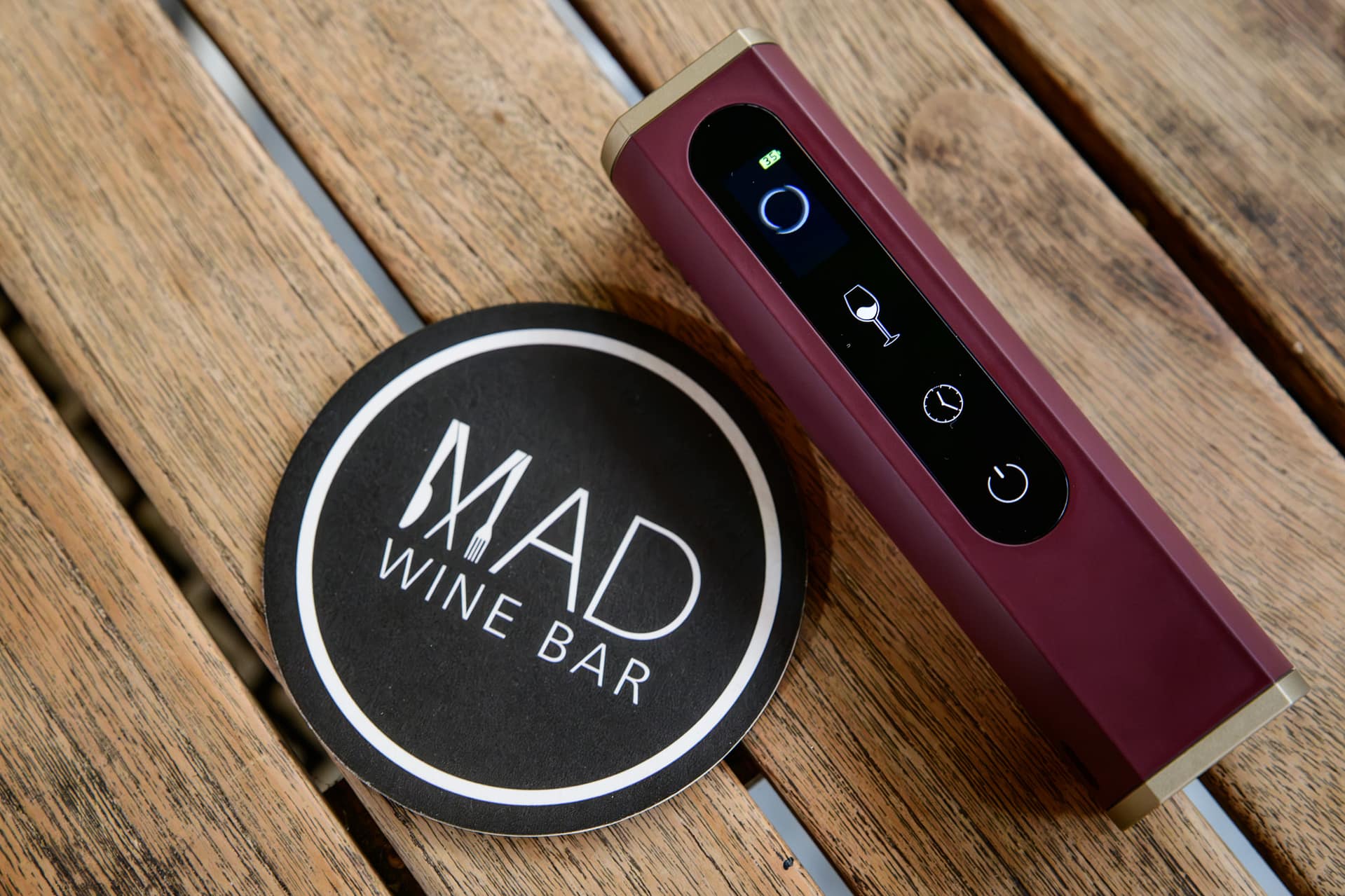
After a month of pondering what the “Ex” in FedEx stood for, I finally received the Bordeaux-coloured version of the Kairos Aerator. Protected by a fine packaging “à la iPhone,” the unit looked and felt great. Sturdy, with a high-quality plastic casing, it was minimalistic, with a surprising blend of modern and classic. Intriguing enough to strike a conversation, but discreet enough to focus on what really matters: the wine.
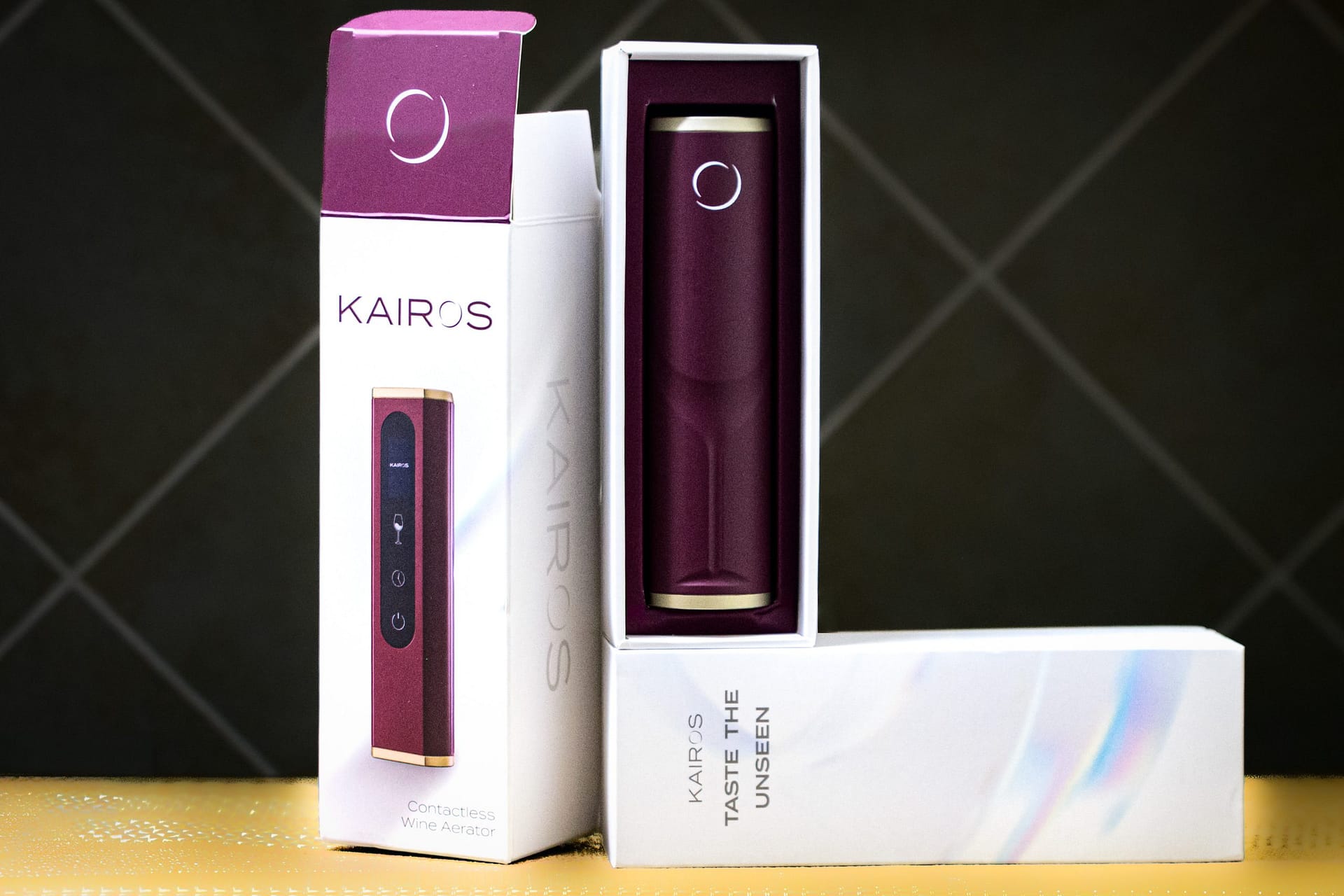
Before diving into the road-test, let’s talk about what Kairos is and what it’s meant to do.
Equipped with an mmWave silicon chip, the device is built on radio frequency and space-related engineering, with emissions safely kept at only 1% of that of a Wi-Fi signal. According to Kairos, it directs a millimetre-wave signal at the oxygen surrounding the wine, accelerating oxidation without ever touching the liquid, thus aerating the wine at about 60 times the speed it would otherwise take.
One minute of Kairos, the company says, equals roughly an hour of decanting.
Imagine that: you’ve got friends coming over for dinner. You’ve already planned to decant the wines in time for the meal, and everything’s going well, until you realise an extra bottle wouldn’t go amiss. Or the discussion suddenly reminds you of that Châteauneuf-du-Pape you’d love to share with your guests. But uh-oh, no time to carafe it now, it needs to be drunk now! And ta-dah, that’s when the Kairos steps in. In one minute, you’ve suddenly added an hour of decanting to your 10-year-old bottle, and everyone can enjoy it right away at its peak.
This was the original idea behind Kairos. Now let’s take this on the road!
Test 1 – Mowe Wine Space
Our first stop is Mowe Wine Space, a lovely wine bar, hidden on the second floor of a house in an alleyway off Phạm Viết Chánh, one of the hotspots of Ho Chi Minh City’s nightlife.
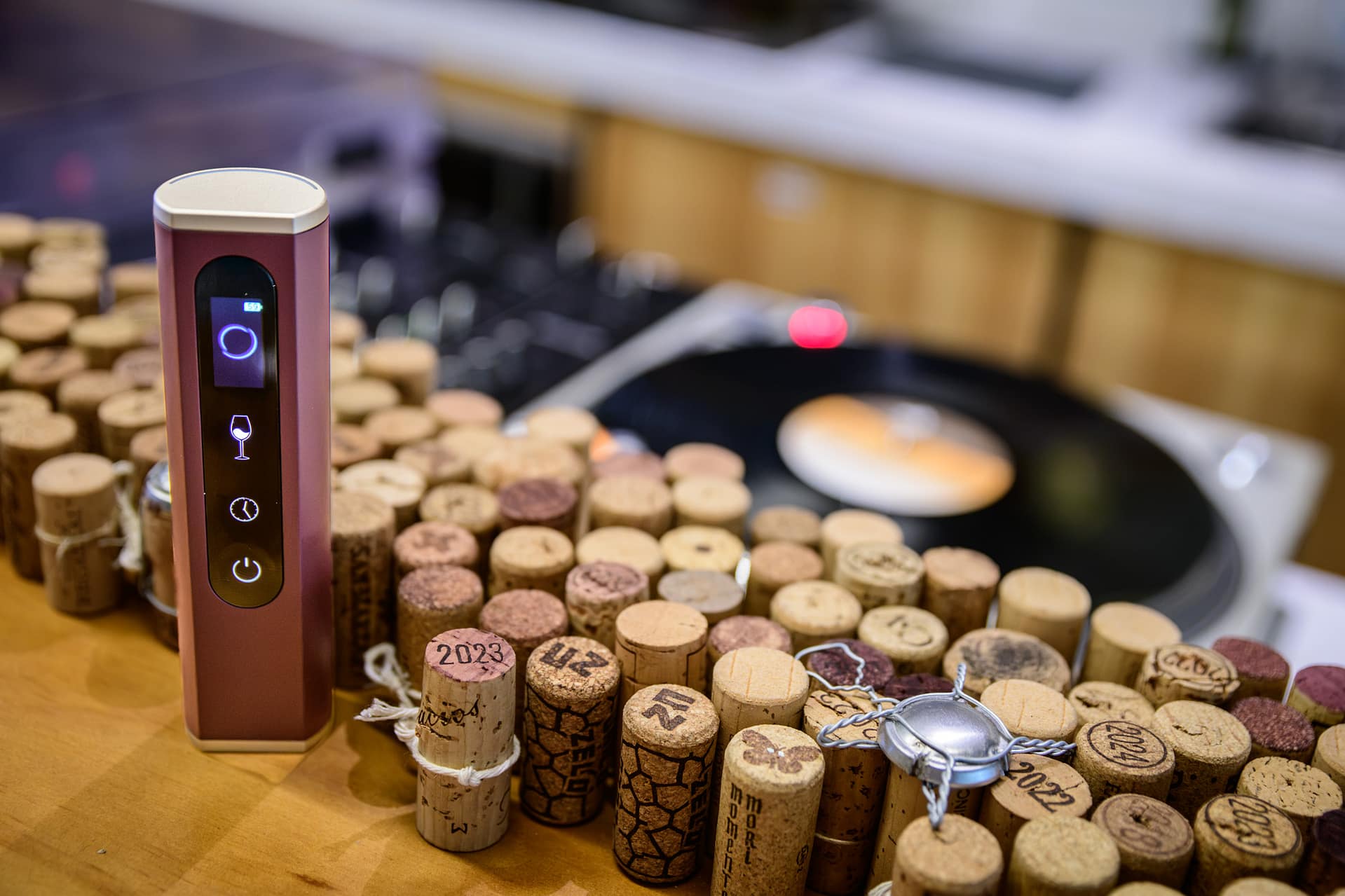
This is a small but cosy space with over 50 wines by the glass and an expansive wine menu, run by one of the coolest girls in the city: Anne Pham (Phạm Hoàng Ngọc Anh). To me she represents the young Vietnamese generation of wine lovers. She is passionate, always eager to try new things, and with an insatiable desire to learn, without the attitude or the complexes classically associated with the white male-dominated wine world. On top of this very cool wine bar, she also runs BLUISH, a laid-back coffee shop dedicated to the love of vinyls, with its own record store on the second floor. Told you, she’s very cool.
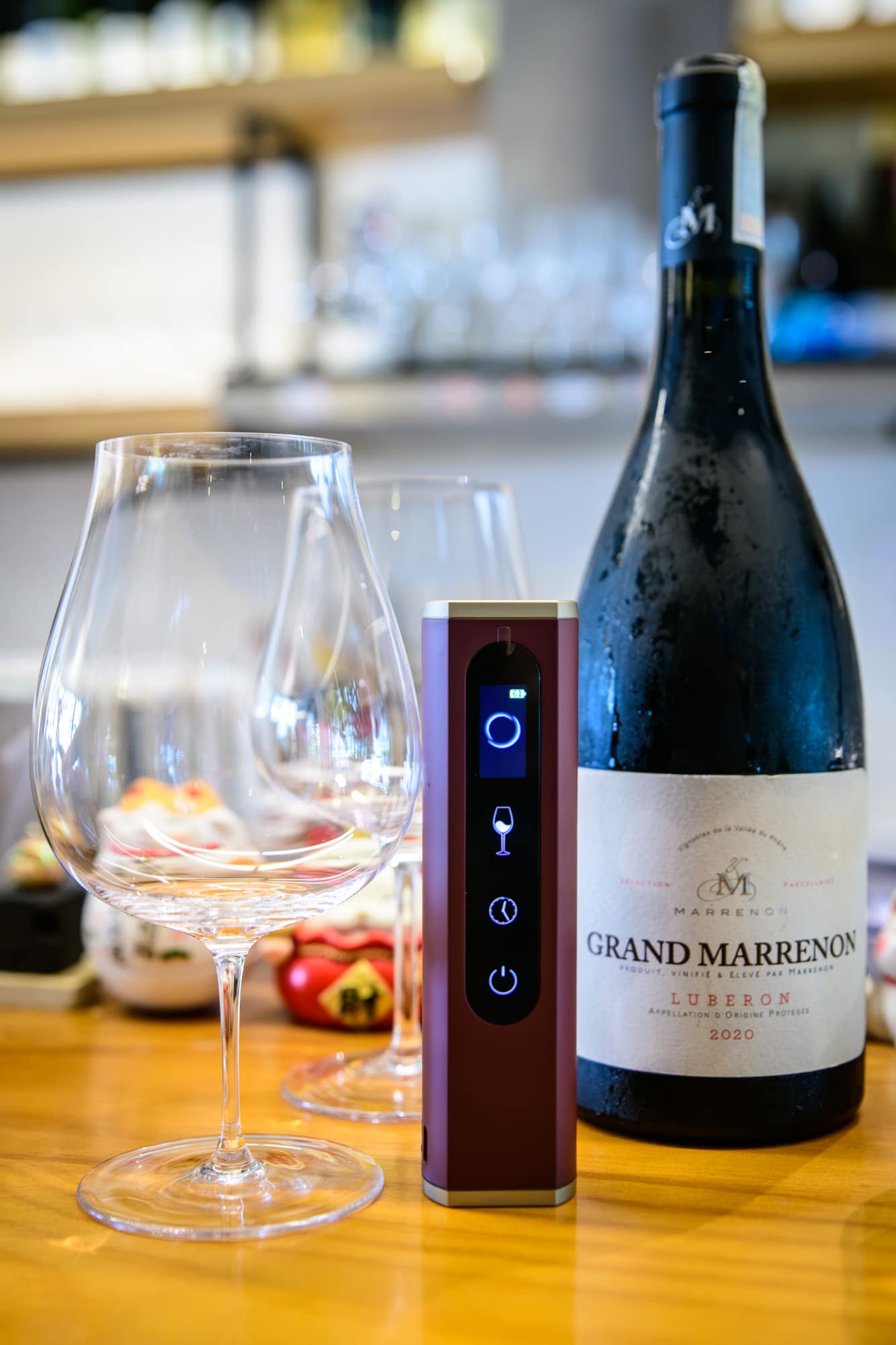
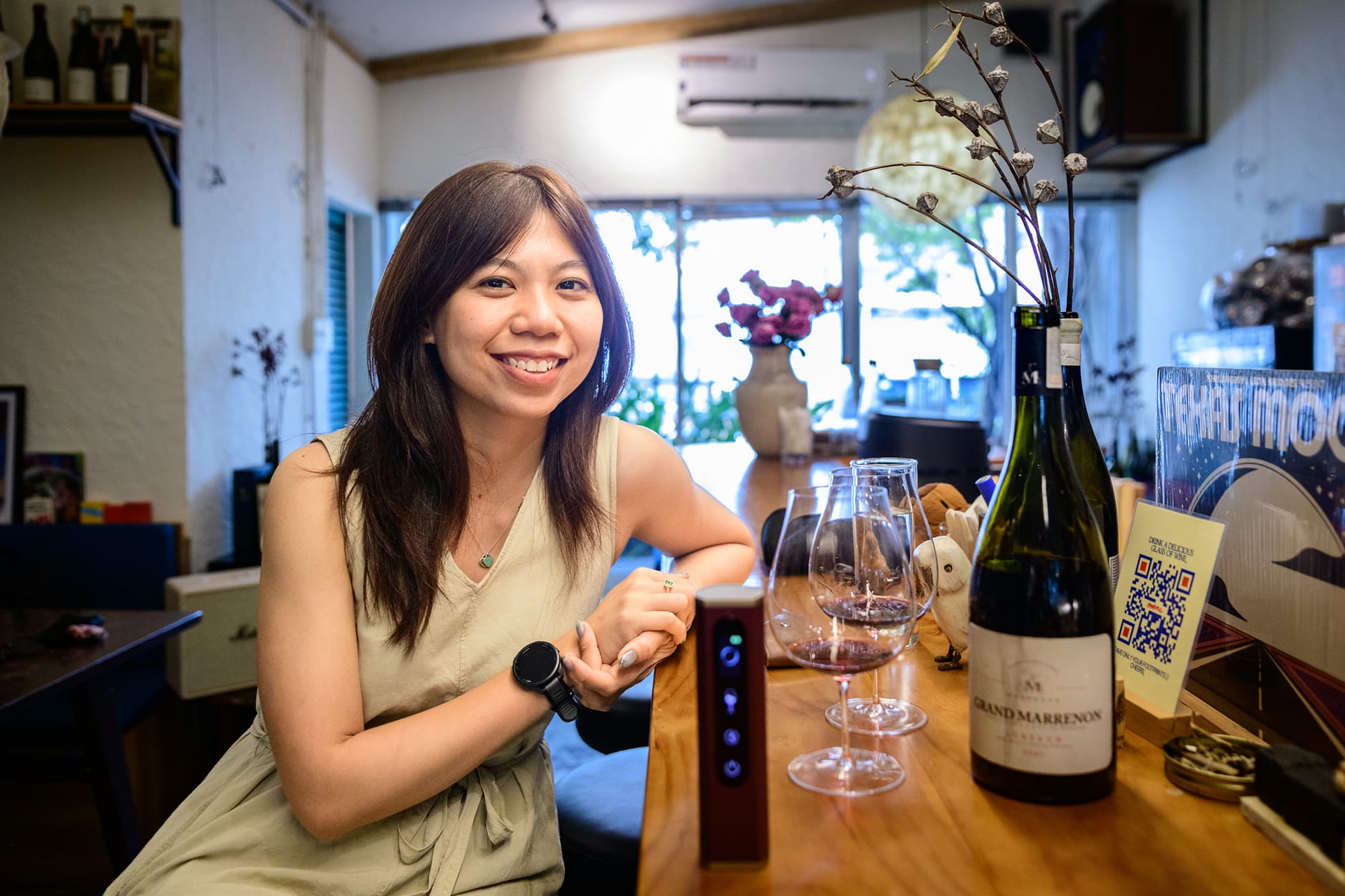
For this first test, I brought a bottle of Grand Marrenon, Luberon 2020, purchased from Parcelles in Ho Chi Minh City. This blend of 80% Syrah and 20% Grenache is a powerful wine, rich in fruit, which I thought would have potential to decant.
After opening up the shop and turning on the AC to rescue us from a terribly hot day, Anne quickly picked out a record and placed it onto the record player to provide the soundtrack to our wine tasting: Texas Moon, by Khruangbin & Leon Bridges.
We poured a reference glass and one we’d use the Kairos with.
A little too eager to show the effects right away, I set 60 seconds, the equivalent of a full hour of decanting.
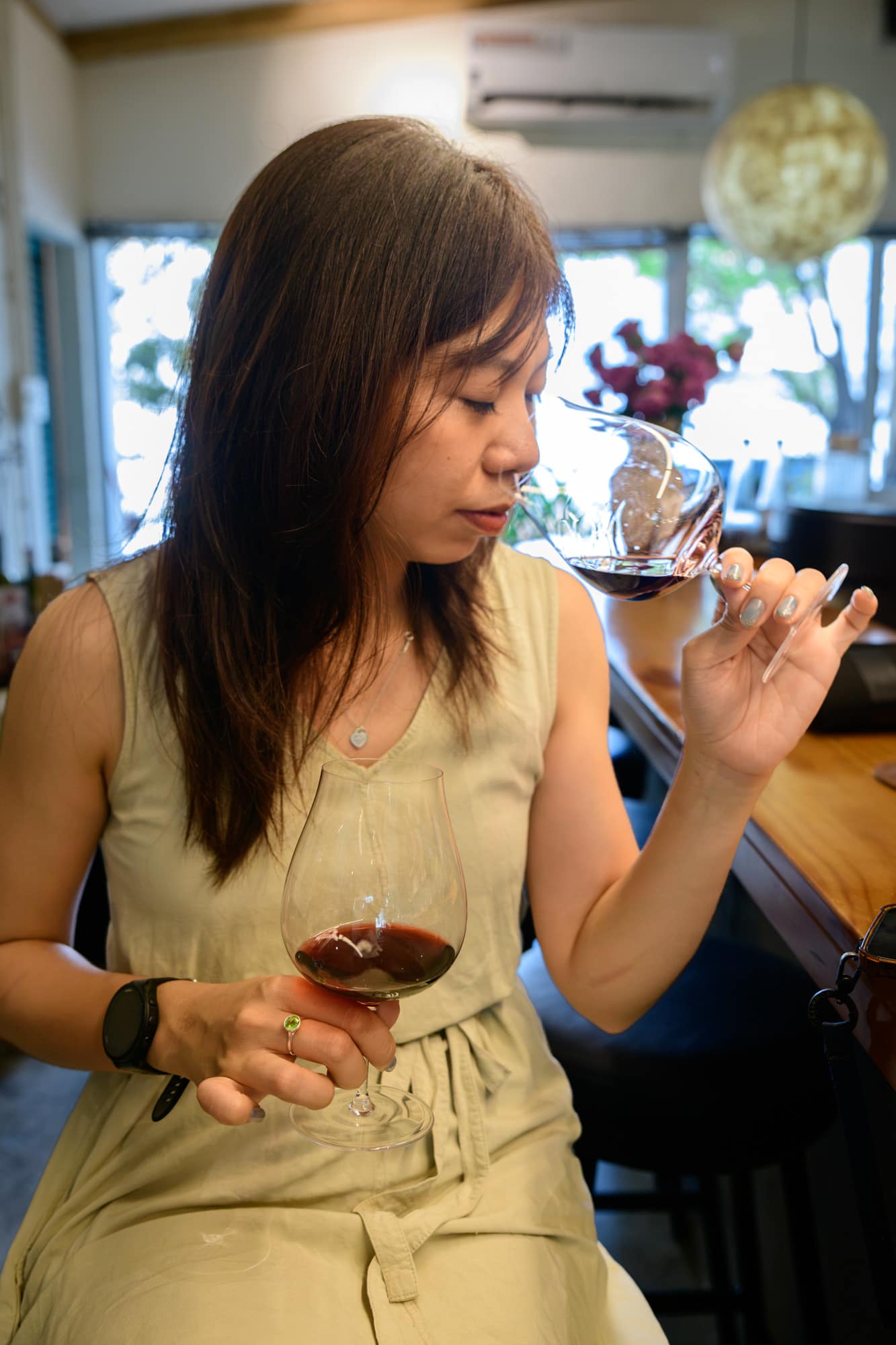
Anne took both glasses, taking a deep sniff at each of them, and her reaction was immediate: “Oh, it has definitely changed! That’s for sure.
In the first glass, we feel plenty of red fruit, the fruit is bright. With the second glass, the berries become darker, with a deeper intensity.”
Upon tasting, we could also see an obvious difference, especially in the tannins, which had softened considerably, all within 60 seconds. However, Anne was not convinced the wine had improved.
She felt it had been over-decanted, and had become a little too flat for her taste.
So we poured two more glasses and went for a 15-second Kairos treatment instead. “There you go!” she said. “Now we’ve got a much better balance. We’ve got red fruit, we’ve got dark fruit, and the acidity feels just right.”
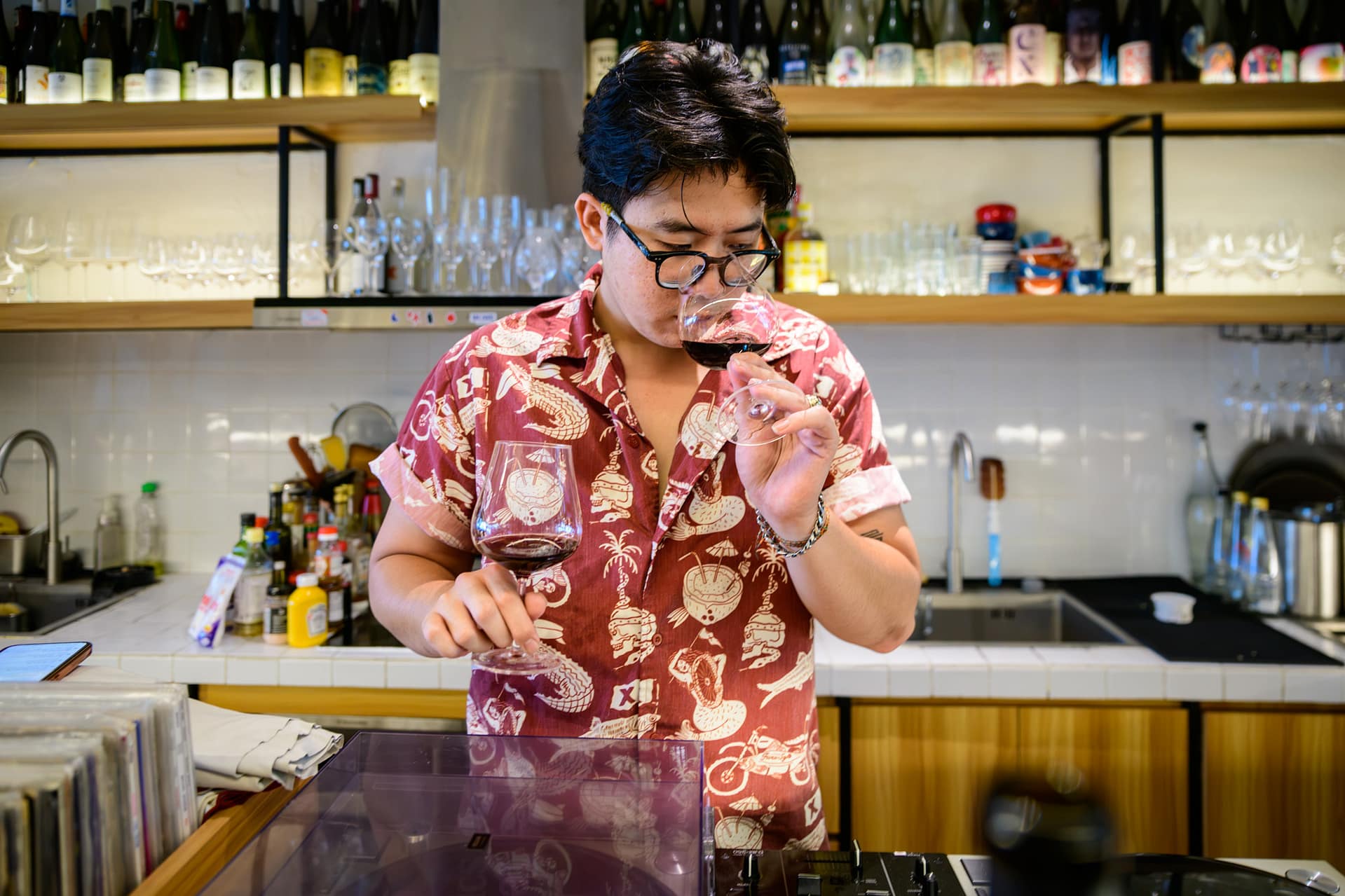
Of course, the best decanting time is also a very personal thing, but it clearly showed an impact on the wine, and both Anne and her barman Khoi agreed.
Relieved with these first results, I was looking forward to the next tests.
Test 2 – Lửa Wine Bar
Now on to our next destination: Lửa wine bar, with Yu Yamamoto, the first MICHELIN-selected sommelier in Vietnam, whom our readers will be familiar with since we’ve already published a full interview with him.
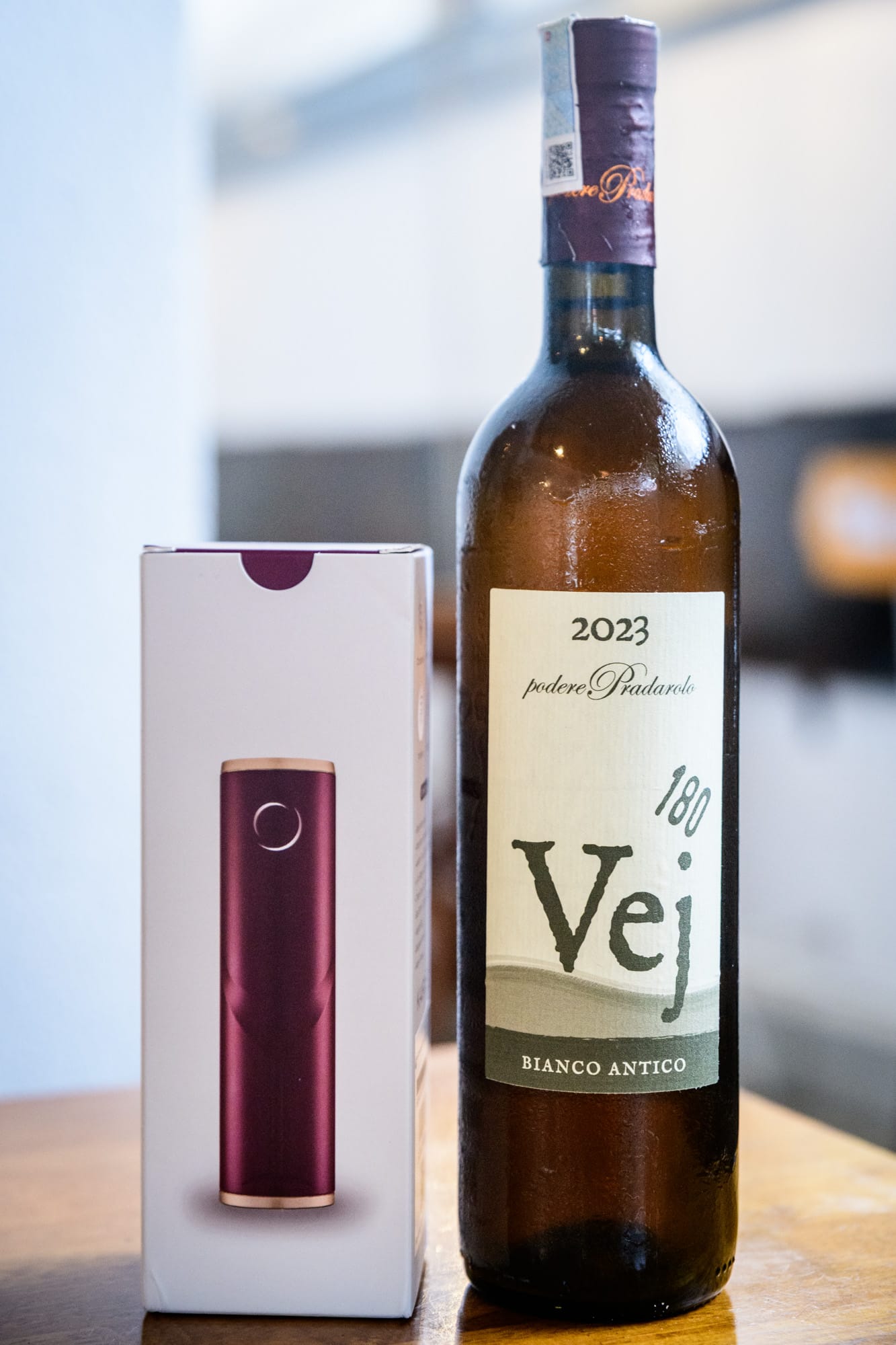
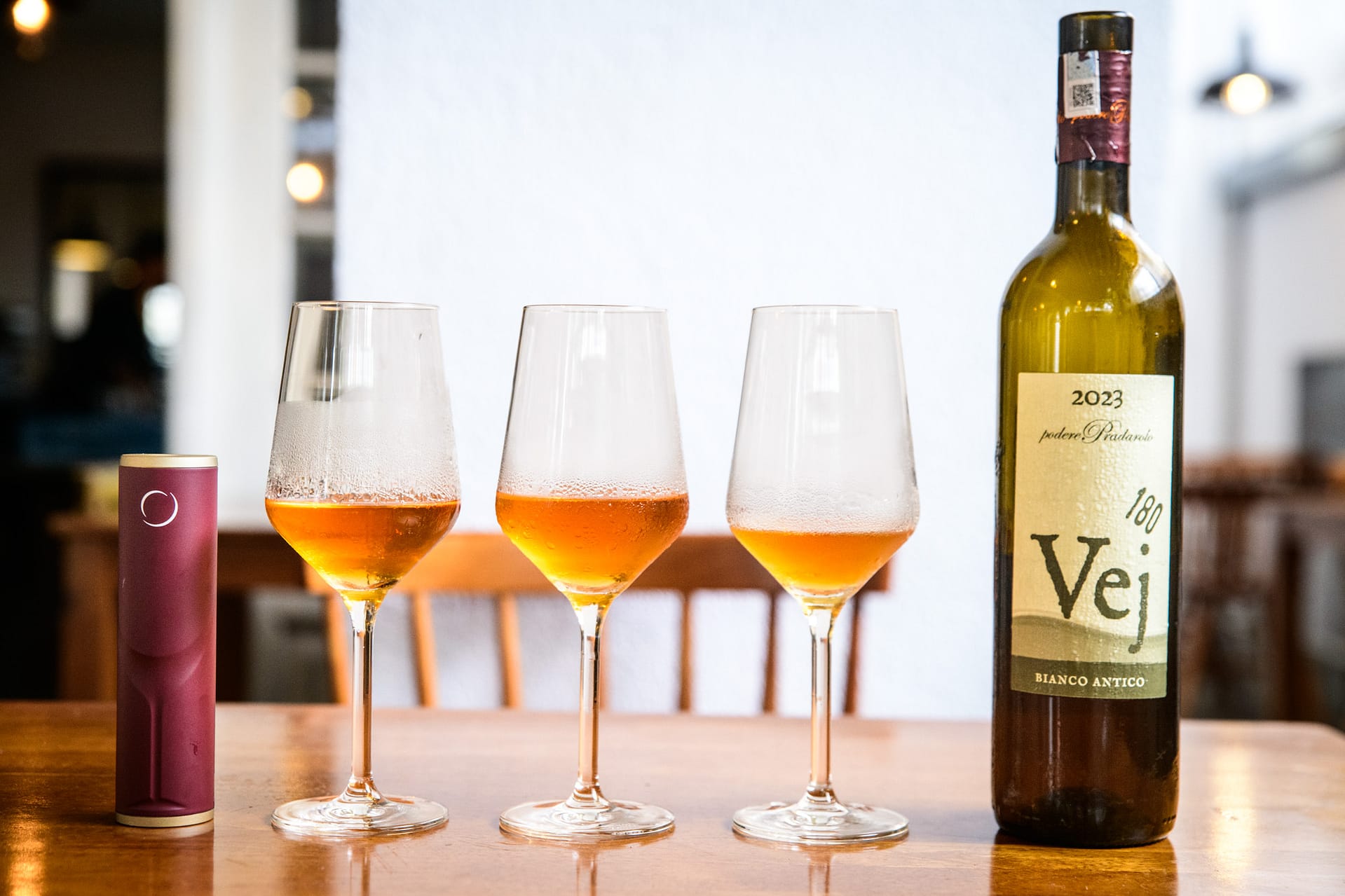
For this session I opted for something very different, and after venturing into the Lửa Bottle Shop, I picked the Vej 180 2023, a bianco antico by Italian winery Podere Pradarolo.
This is an amber wine made from Malvasia, with 180 days of skin contact.
Even though it’s a white grape, the prolonged skin contact makes it a very tannic wine, and I thought it would be interesting to try with the Kairos aerator.
We sat down in Lửa’s courtyard and Yu made sure we had plenty of glasses and a spittoon. He then opened the bottle, and this time we set three glasses side by side: a reference glass, another with 15 seconds decanting, and a third with 60 seconds.
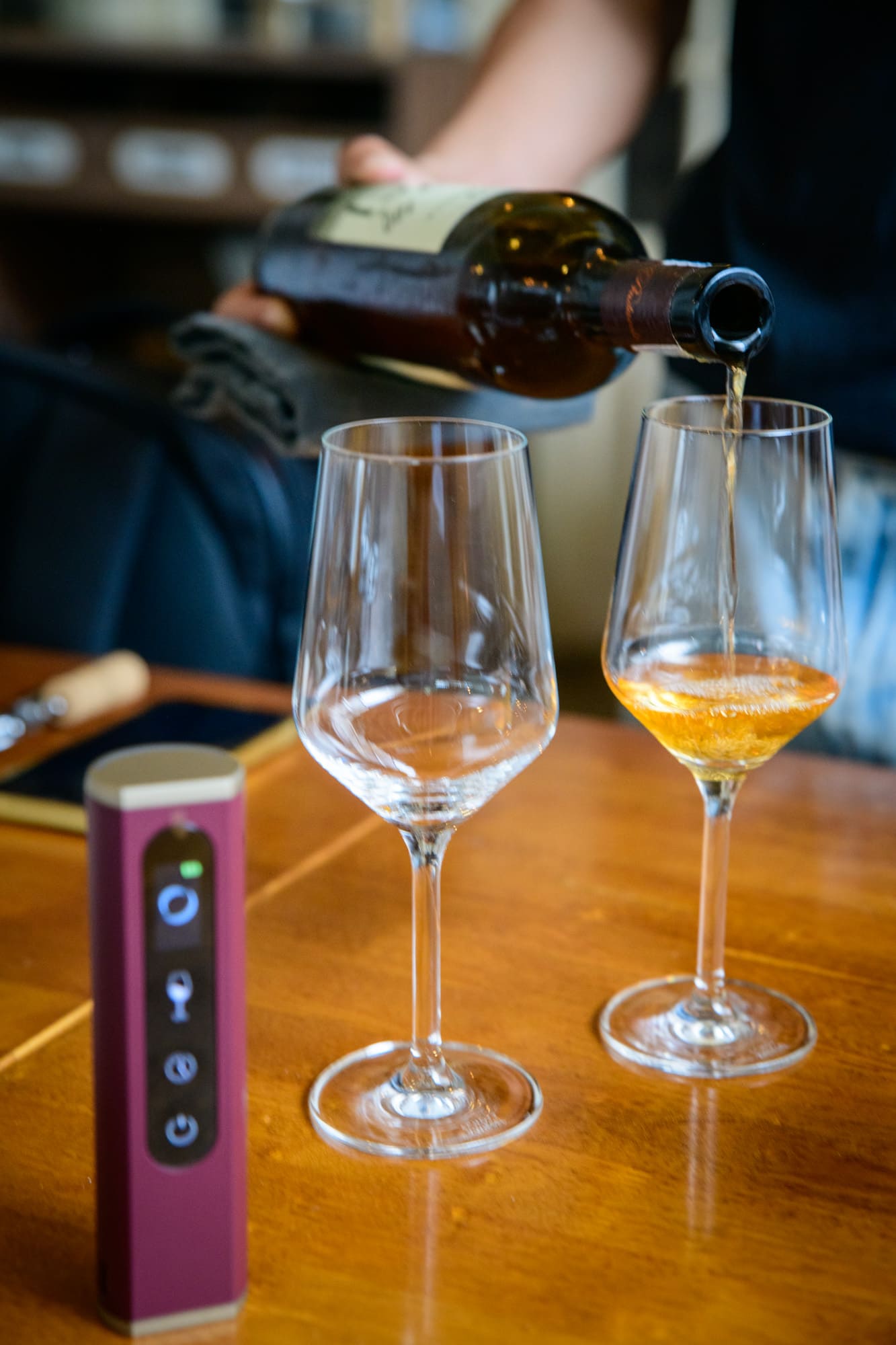
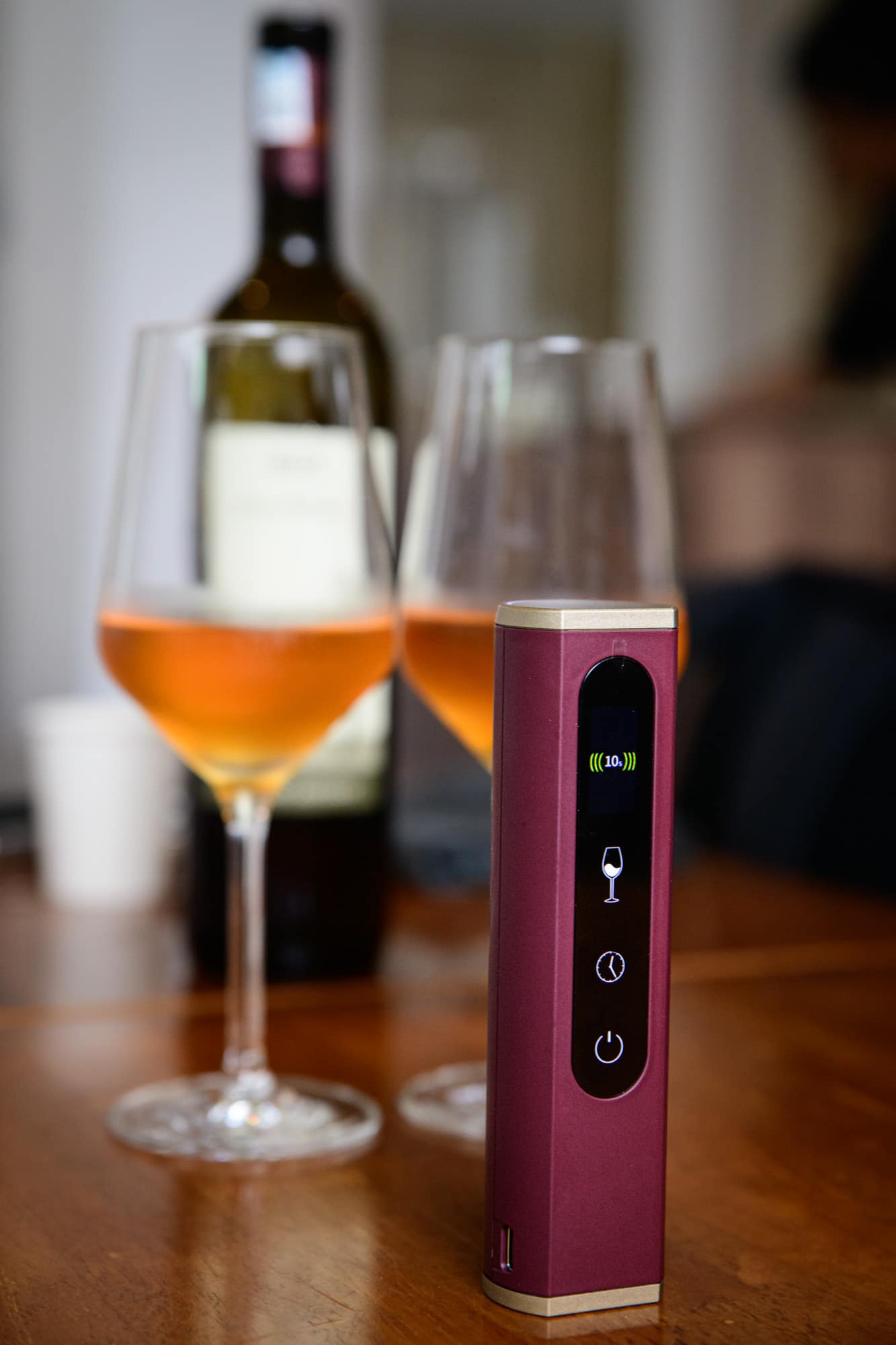
Right from the start, just as he brought his nose to the glass, he exclaimed: “Oh, it has obviously changed… it has definitely changed.” Taking the glasses one by one, he smelled each carefully.
“When we compare the first and the second, we can definitely see that the second one is more rounded. It’s no longer only stone fruit, and the acidity is more integrated than in the first one. In the third one, after an hour’s equivalent decanting, the rough, slightly vinegary smell from the beginning has vanished, and the character of the tannins has changed as well. They’re now much softer.” Flavours had opened up a lot more too, with notes of apricot much more apparent.
Yu seemed to be having fun with the machine. He went into the kitchen and came back with another bottle, with a beautiful, minimalist label. “I opened this one yesterday with Coravin. It’s a Spanish Garnacha from Priorat, full-bodied, we can try this!”
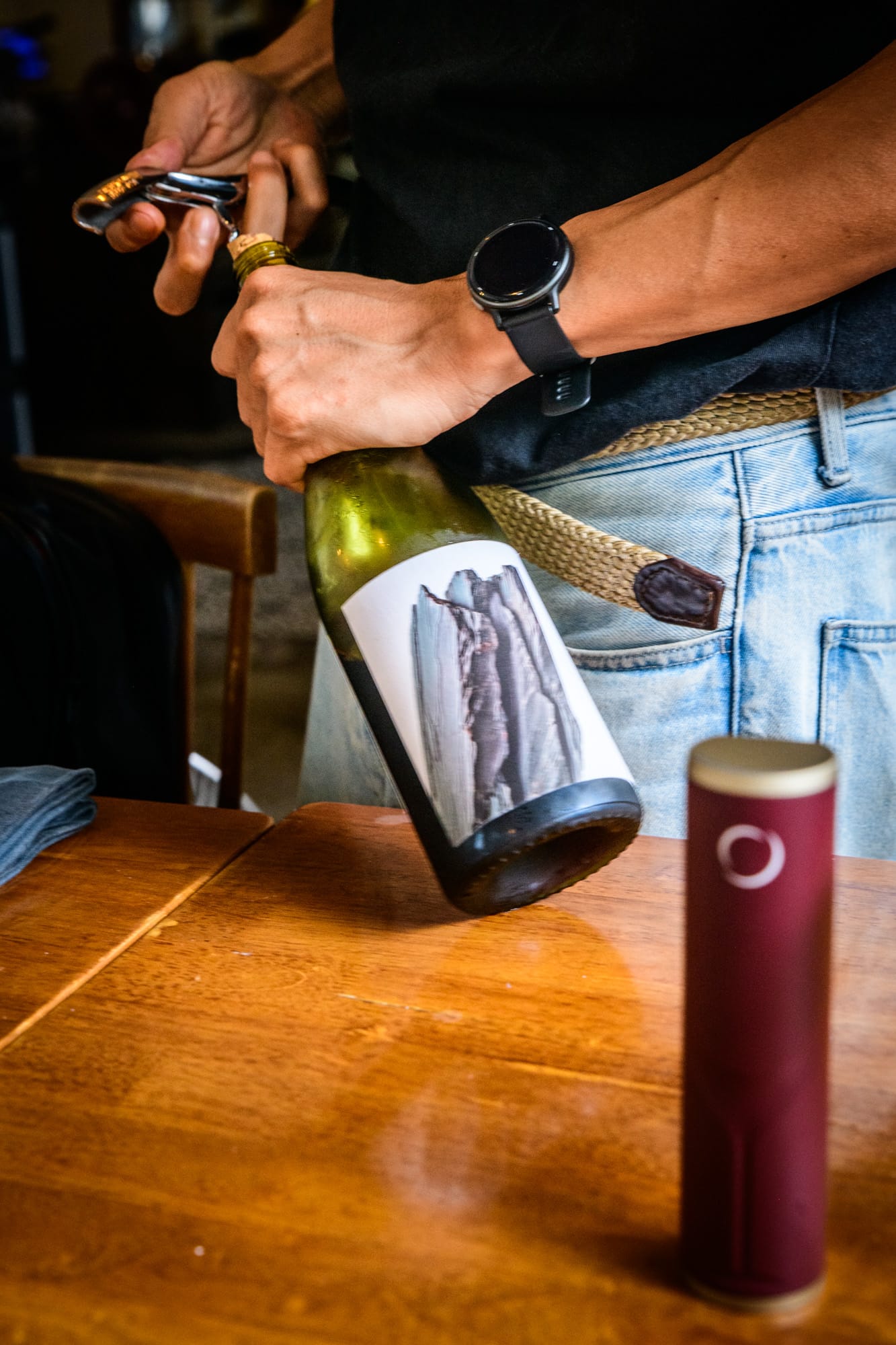
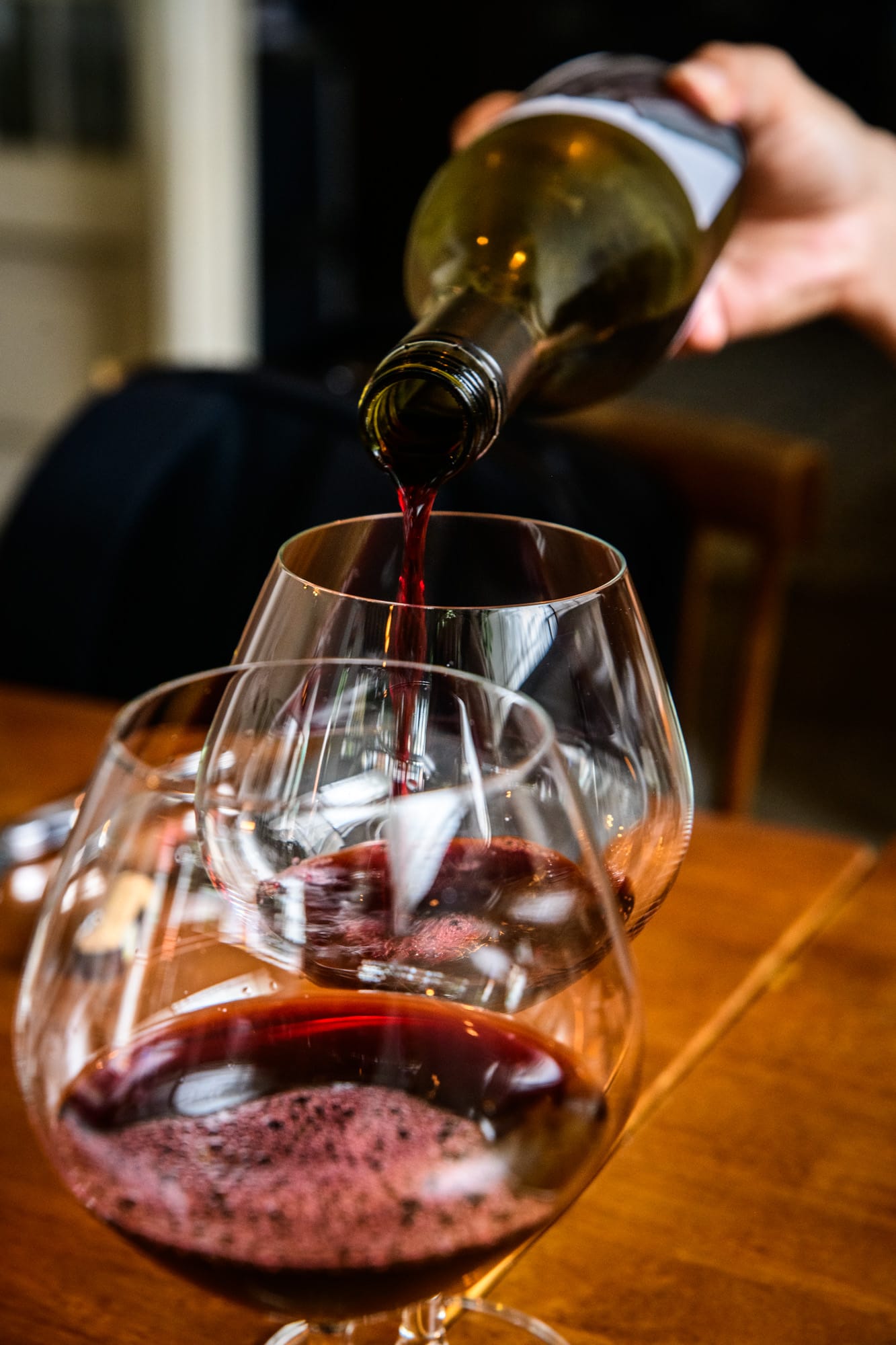
Yu opened the bottle of Humilitat 2022, a grenache-carignan blend from Les Vinyes Forer Massard, currently imported and distributed by Enoteca. He poured two glasses, one for reference and one with 30-second treatment with the Kairos. Tasting both carefully, he noted: “There’s a noticeable difference. When I taste the first one, I can feel the tannins are somewhat unbalanced. After using this machine, it’s more integrated and more silky. The tannins got thinner, softer.”
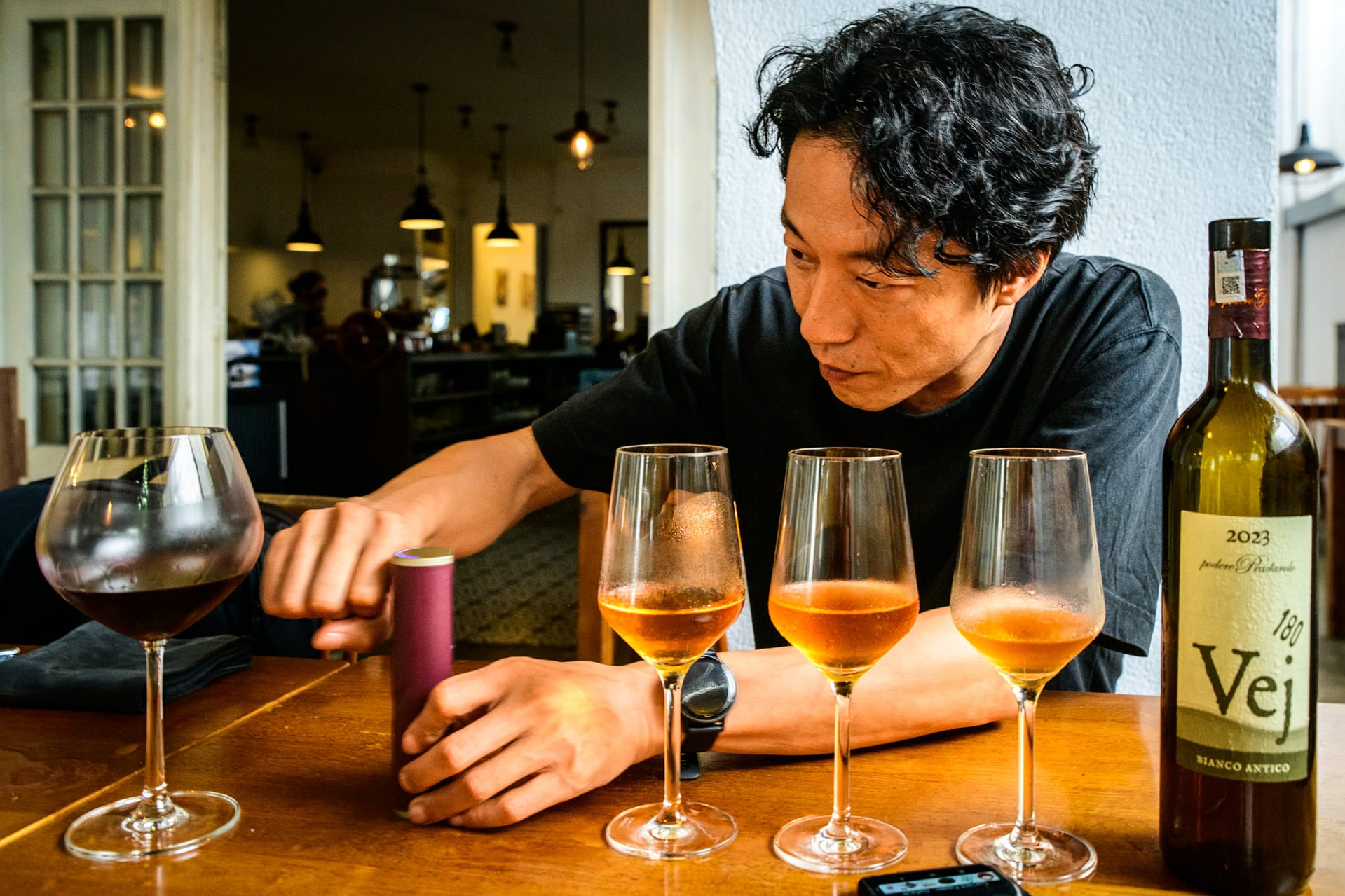
Discussing the versatility of the Kairos aerator, Yu mentioned its potential for wine tasting and wine students: “Sometimes when I open a strong, full-bodied wine, the first sip and the second sip are totally different. Even when doing blind tasting, sometimes it’s hard to grasp the flavour when the bottle’s just opened, so using this machine can be much better. If I give it 30 minutes, it can be in great condition right from the start, so the flavours can reveal themselves. Especially for full-bodied reds or aged wines, like Barolo, Bordeaux, or from Toro or Rioja. For Champagne, it can also help reveal more complex flavours, without losing any of the bubbles.”
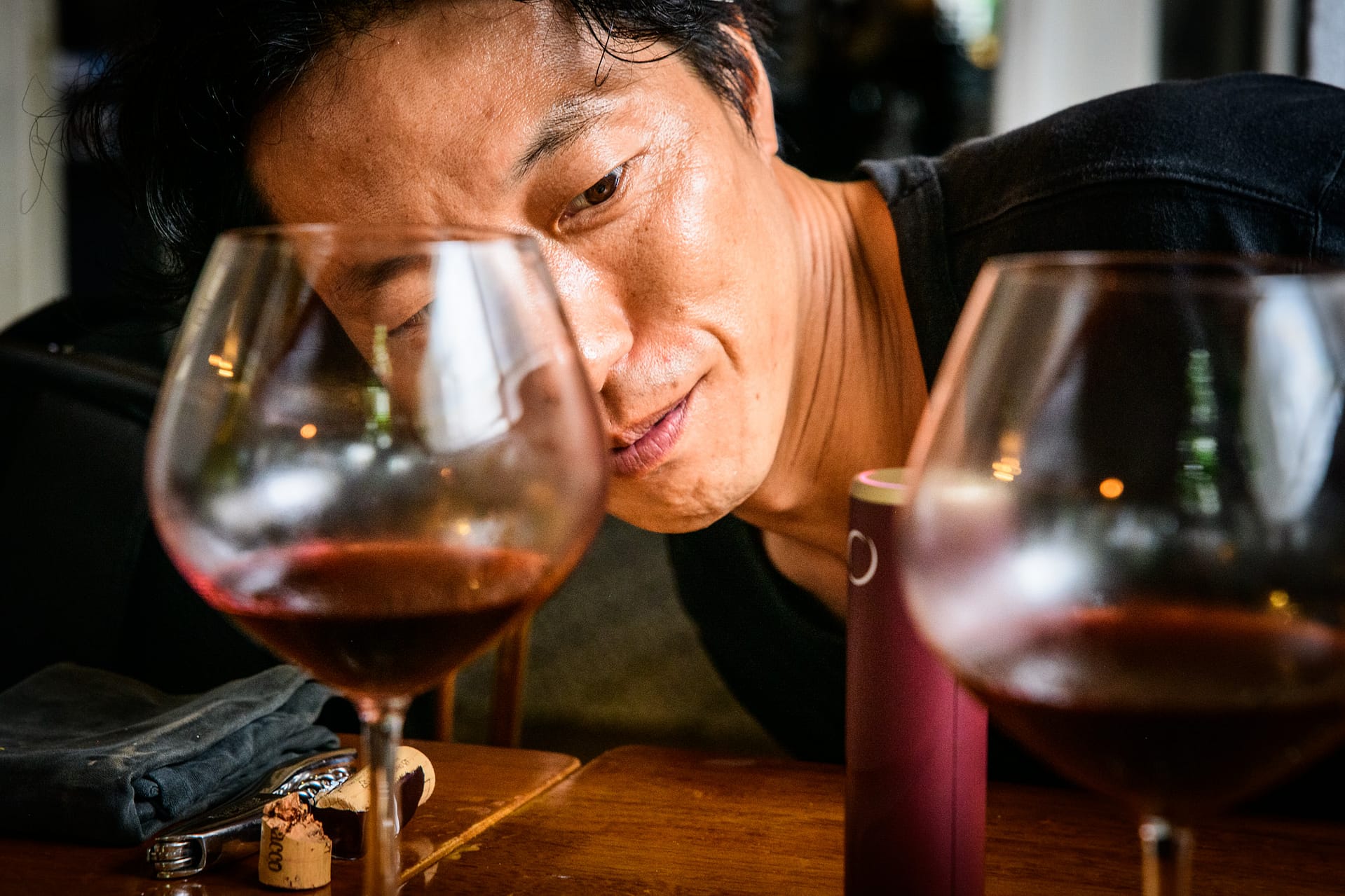
Indeed, and it’s also great for big whites, which can decant without getting warm.
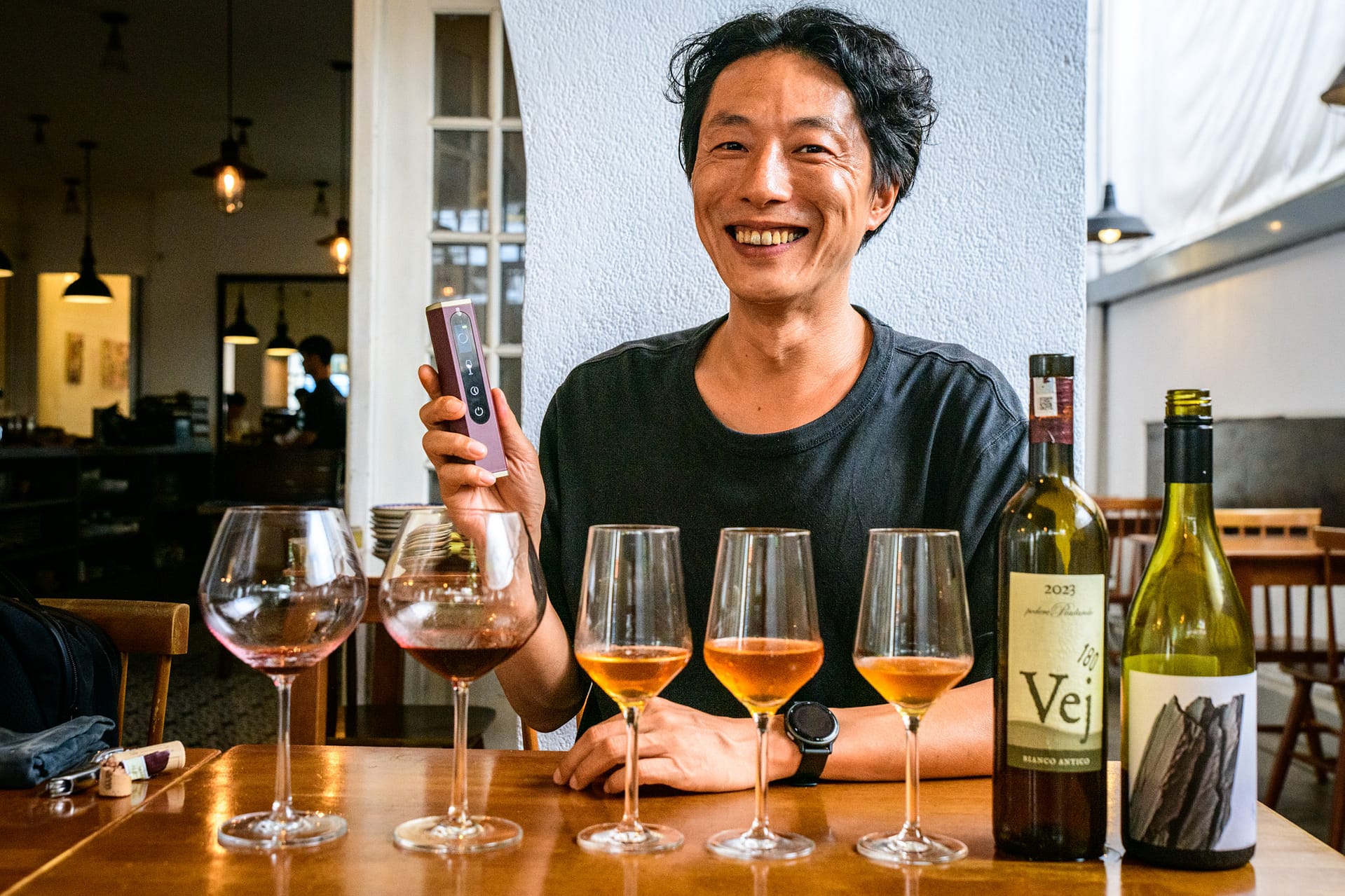
Test 3 – Mad Wine
For our last challenge, I headed to one of the city’s top wine bars, listed on Star Wine List, Mad Wine Bar & Eatery, in the heart of Thao Dien – Ho Chi Minh City’s relaxed, expat-favourite neighbourhood. Run by Certified Sommeliers Casper Gustafsen and Mary Vu, and chef Camilla Bailey – currently a contestant on Top Chef Vietnam 2026 – the bar offers a lovely courtyard, excellent service, and a selection of 35 wines by the glass, drawn from a cellar of over 550 labels. This year, it was also the recipient of a Best of Award of Excellence by Wine Spectator.
There I got the chance to sit down with co-owner and Sommelier Mary Vu (Vũ Phúc Bảo Nhật), dubbed Saigon’s “Blind Tasting Queen” by our colleagues at Ngonista.
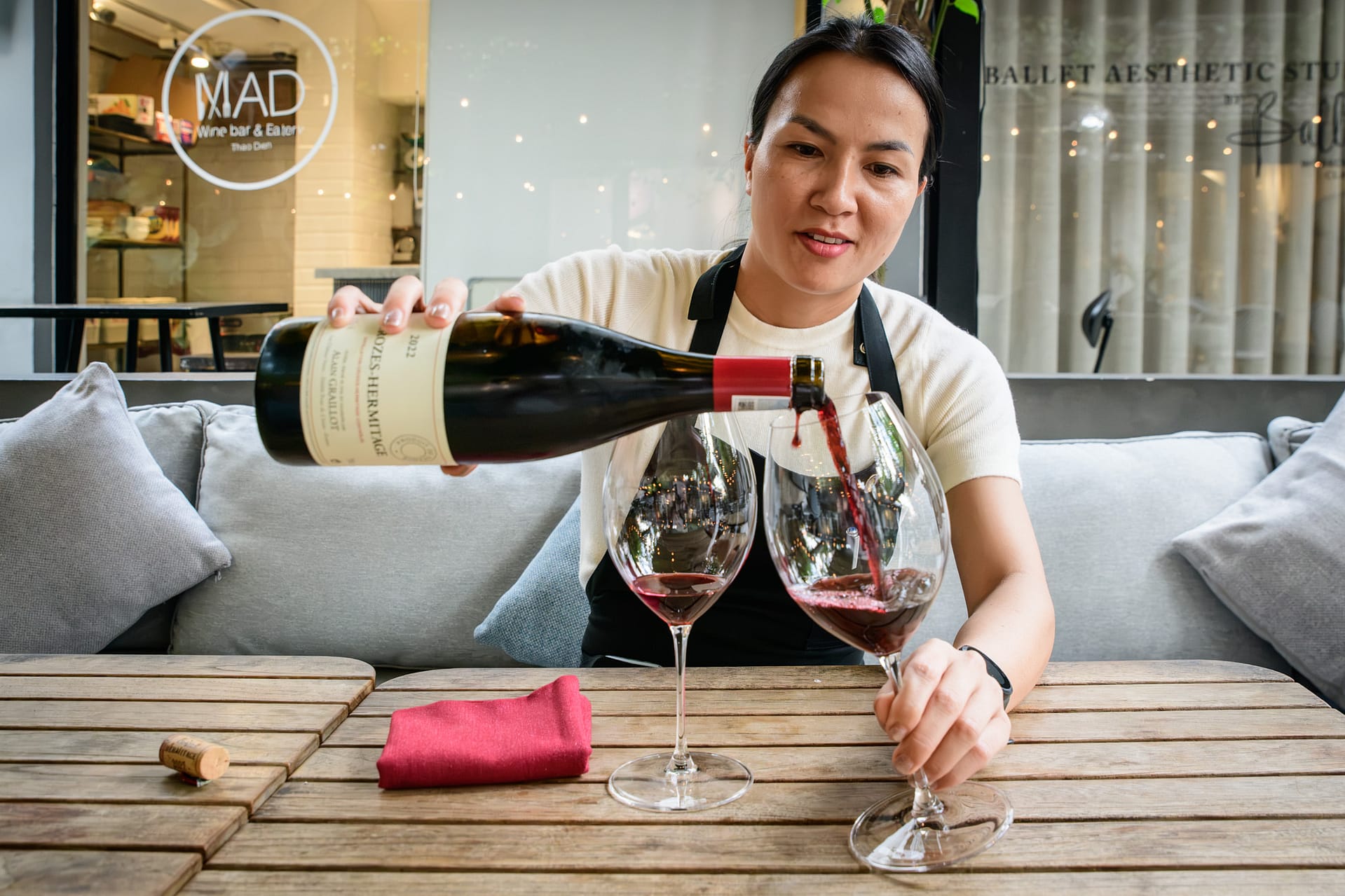
For the test, Mary generously opened a bottle from their own cellar, a Crozes-Hermitage 2022 by Alain Graillot, one of her favourite producers from the Rhône Valley. This one, she says, is 100% Syrah, hand-harvested, produced with minimal intervention, carbonic maceration and biodynamically farmed.
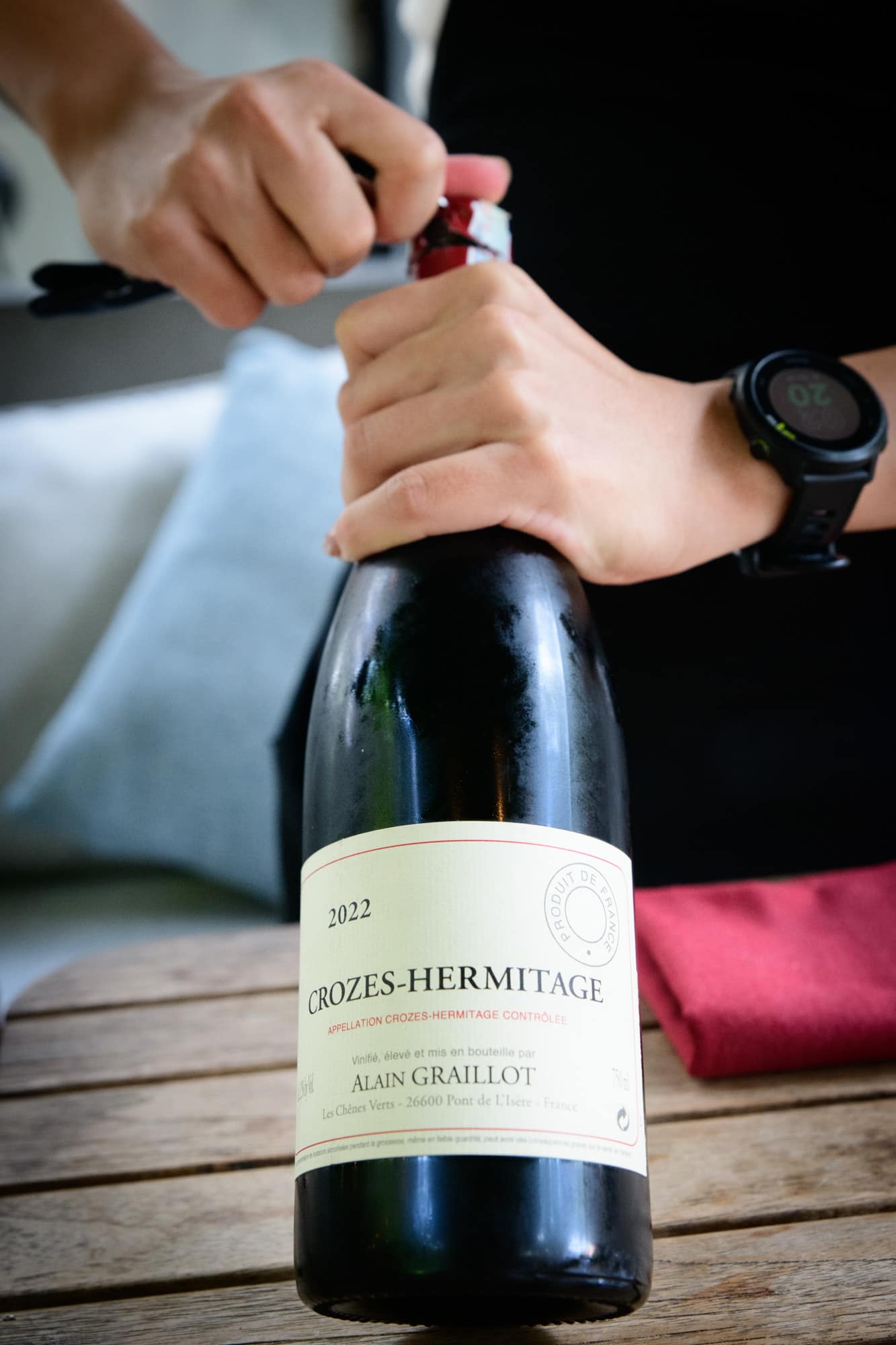
We started with a reference glass and one with 15 seconds Kairos treatment.
Mary handled this nearly like an exam, nonchalantly displaying impressive professional expertise.
“Glass #1, not decanted. Since it was just opened, it’s still a bit reductive for me, a bit closed, a bit funky. Some mulberry. And some spice as well. Some white pepper, but it’s not that pronounced. It’s a bit hidden, very elegant. And then I swirl it. More red and black fruit, with a bit of tomato leaf…”
We then moved to glass #2: “The first thing I smell is brighter fresh fruit. Still the scent of tomato leaf. The pepper here is actually more dominant. It’s actually nice, because normally in modern winemaking, it’s quite difficult to catch the pepper in the Syrah from the Rhône, especially after such a short decanting. This second glass is more elegant, more ripe. More herbs, dry leaves, very interesting.”
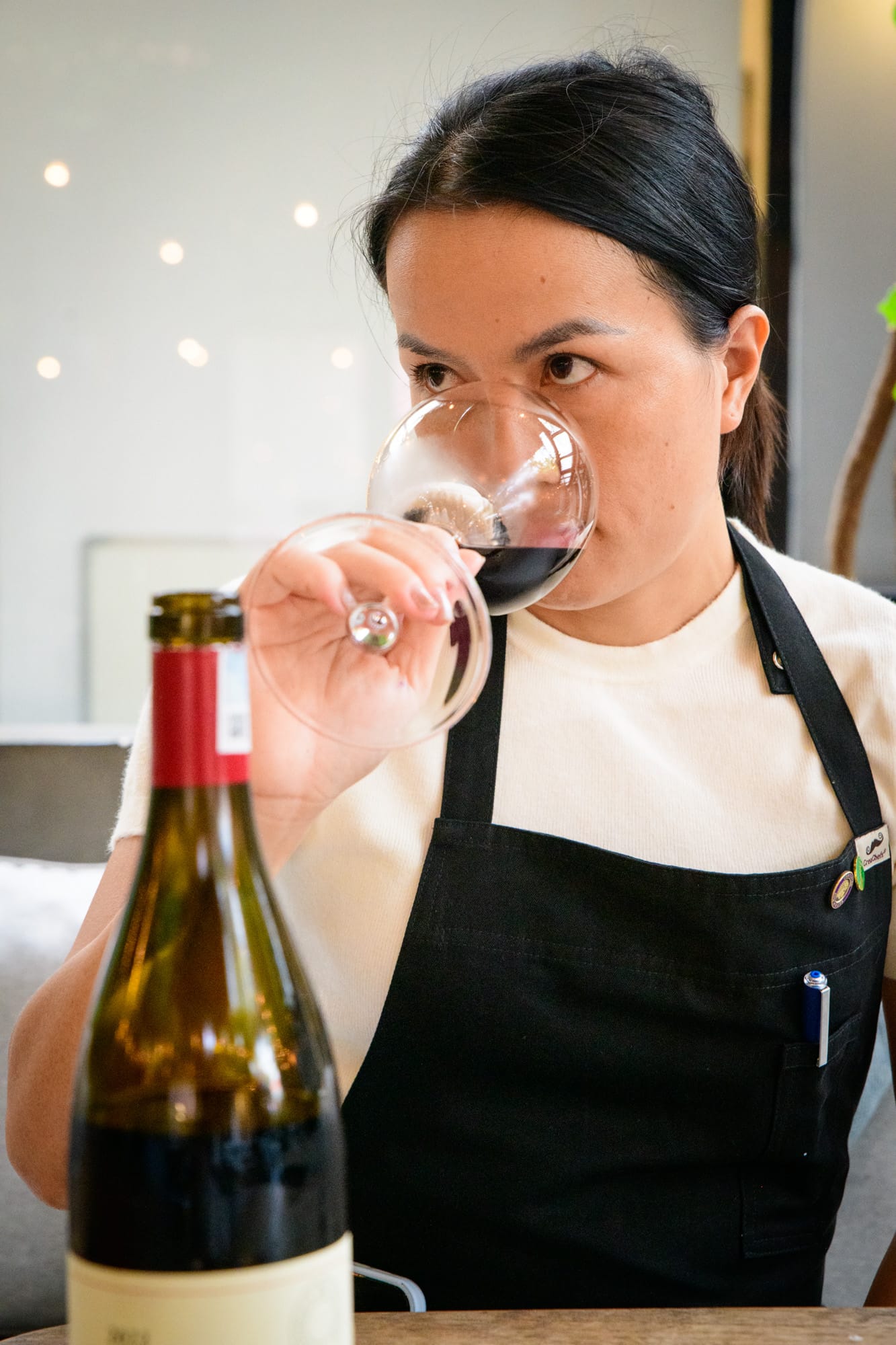
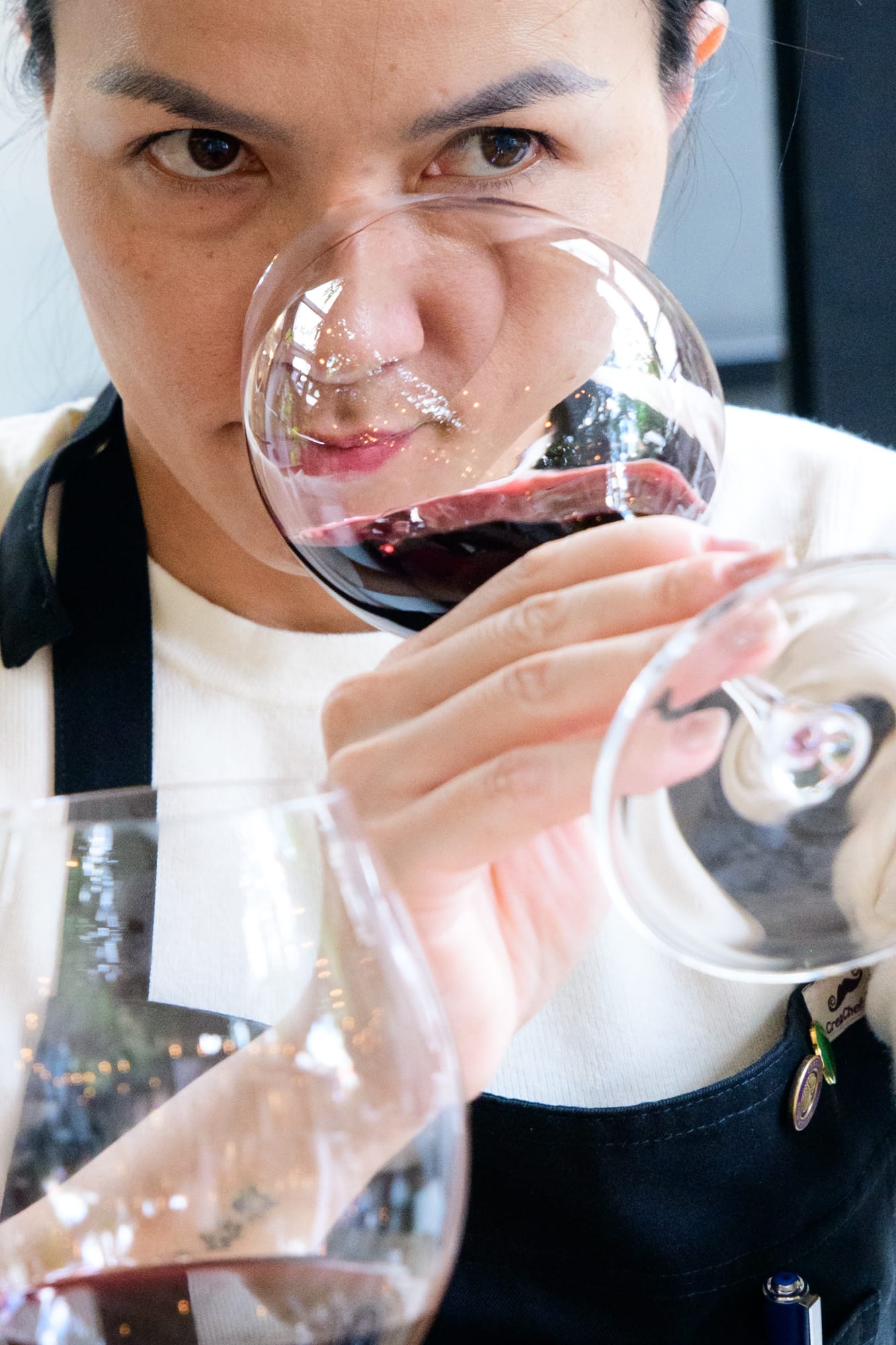
She takes a sip: “Fruit quality is crazy, eh. So much more bright red fruit here than in the first glass. The tannin here is more integrated. In the first glass, you feel the acidity first and the tannins later. Here, after decanting, you feel the tannins and the acidity go well together, it’s more balanced, and the tannins stay a bit later. The finish in glass two is more pleasant.
“Now we’re looking at glass #3, 30 minutes. The aromas are more developed now, more pepper. In glass two, I mentioned the fruit first and pepper second, but here pepper comes first, with some tertiary aroma and dry leaves. In glass two, acidity and tannins are together, but the pepper is still a bit outside. In glass three, they’re all better integrated. Now we need to confirm that by the palate: yes, glass three is better integrated, the acidity, the fruit, the tannins and the pepper all work together. In terms of body, I feel like two is medium-full, and three is closer to medium. In glass three, the fruit is riper, more concentrated.
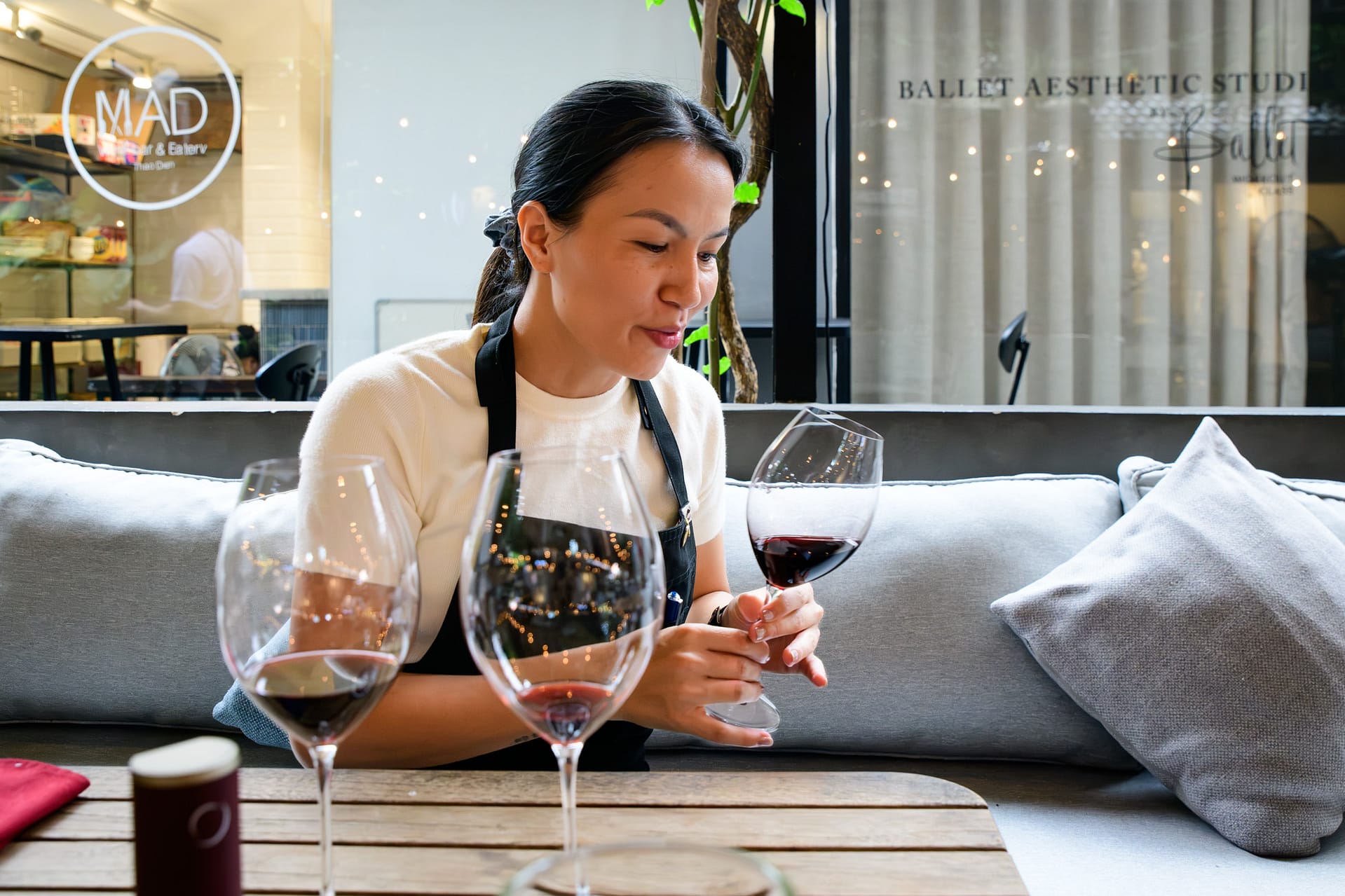
“I think for this one, 30 minutes is the right time. I would only use more time for really big, tannic wines, such as a Barolo, Châteauneuf-du-Pape or a Super Tuscan.”
The Verdict
We keep on chatting for a bit, before Mary has to get back to her busy schedule, and as I leave Mad Wine Bar, I realise the founders of Kairos were right to be confident about their product. There’s no doubt this is a very cool piece of technology, one that can reliably speed up decanting time and enhance the tasting experience.
I can see it being particularly useful for wine students, as well as for staff training, since it allows you to immediately understand the effect carafing and aeration can have on a wine. It’s also potentially a great tool for determining the ideal decanting time for a particular bottle.
It’s still a rather niche product, but I believe it could be a good addition to any wine bar or restaurant looking to optimise its by-the-glass service (Champagne included), ideally paired with a Coravin, and even more so for producers and distributors at wine tastings, where very tannic wines could shine immediately and reveal their true colours in a matter of seconds.
Kairos is not distributed in Asia yet, but the Kairos team is already in talks with a partner in Vietnam – people interested can register their interest HERE and you will get a 15% discount if you mention you came from Cellar Bridge Magazine. Retail price in Vietnam is yet to be determined, but for reference it is currently going for 150-199 GBP in the UK.
And if anyone’s willing to try it for a tasting, feel free to contact us!