Words & Photography by Aurélien Foucault

The UNSIGNED Booth
One pavilion where I ended up spending a lot of time was all the way to the back of the fair, where plenty winemakers shared a rather small booth completely covered with bottles, all united under the brand UNSIGNED. – a concept dedicated to natural and low-intervention producers who might otherwise be absorbed into the background noise of a large exhibition. Run by Judy Kendrick and Ana Sofia de Oliveira, the platform began life in 2015 as Wines Unearthed before their rebranding as it expanded beyond its original UK base. At Vinexpo Asia, UNSIGNED brought together 19 producers from 10 countries – Argentina, Austria, Chile, France, Georgia, Hungary, Italy, Portugal, Slovenia, and Spain – all of them seeking distribution, half of them producing under 200,000 bottles a year, and all of them certified sustainable, organic, or working with regenerative viticulture.
Borett & Friends
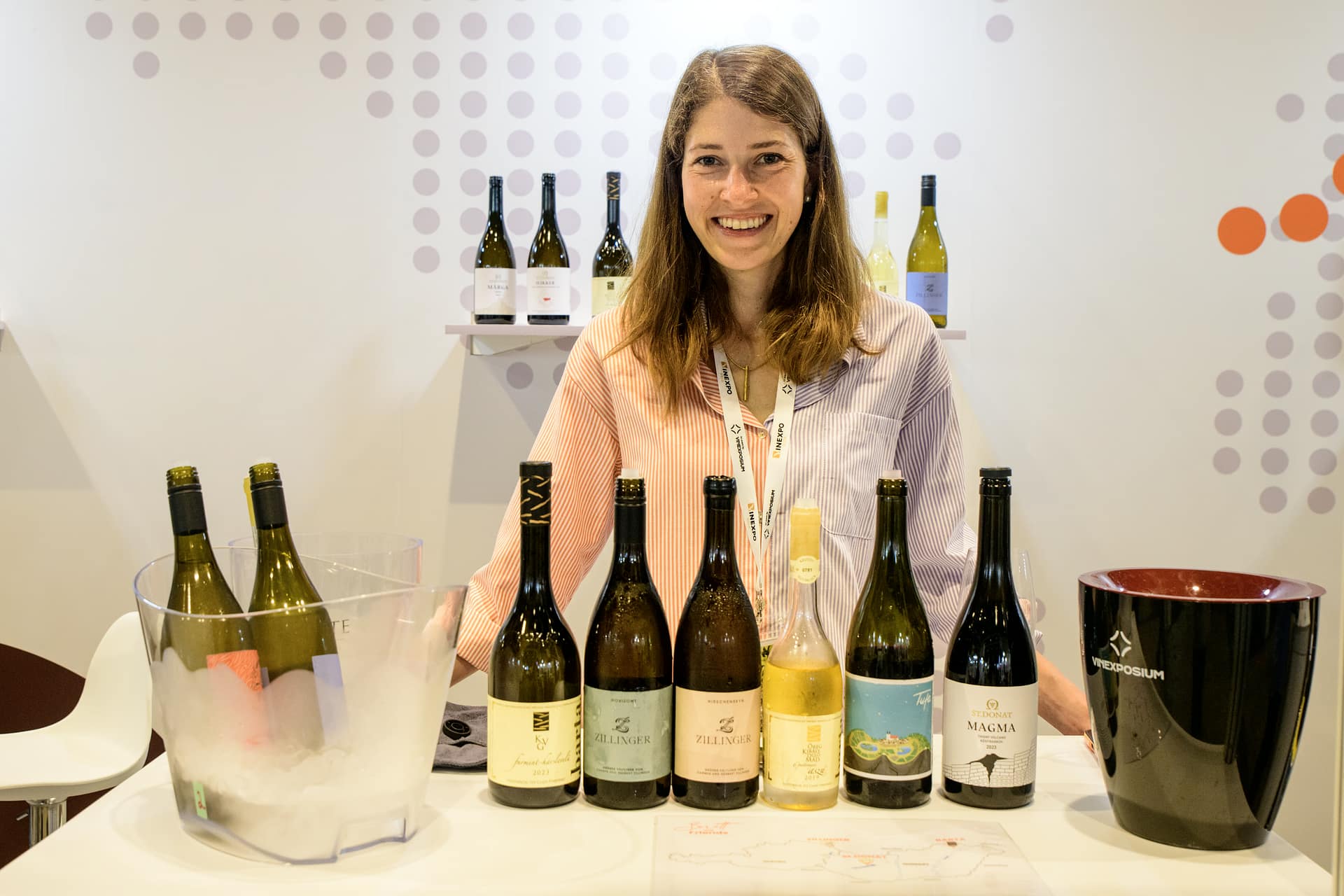
Maria Antoanett Crab, who represents Borett & Friends within the UNSIGNED framework, brings together small, family-owned organic wineries from across the Pannonian Basin: St Donat Estate and Barta Pince in Hungary’s Balaton and Tokaj regions, and Weingut Zillinger in Austria’s Weinviertel. St Donat, a 13-hectare estate run by winemaker Kovács Tamás, produces around 25,000 bottles a year; Barta, also 13 hectares under Tóth Ádám, makes about 10,000; Zillinger, the largest of the three at 16 hectares and 40,000 bottles, is run by Herbert and Carmen Zillinger. Up for tasting were grapes as varied as Furmint, Olaszrizling, Kékfrankos, and Hárslevelű from Hungary and Grüner Veltliner and Welschriesling from Austria – all certified organic or biodynamic, and produced with the same approach and philosophy that unites these winemakers: a dedication to letting the terroir speak and a careful restraint that was reflected in the wines – all in tension and minerality.
Alpamanta
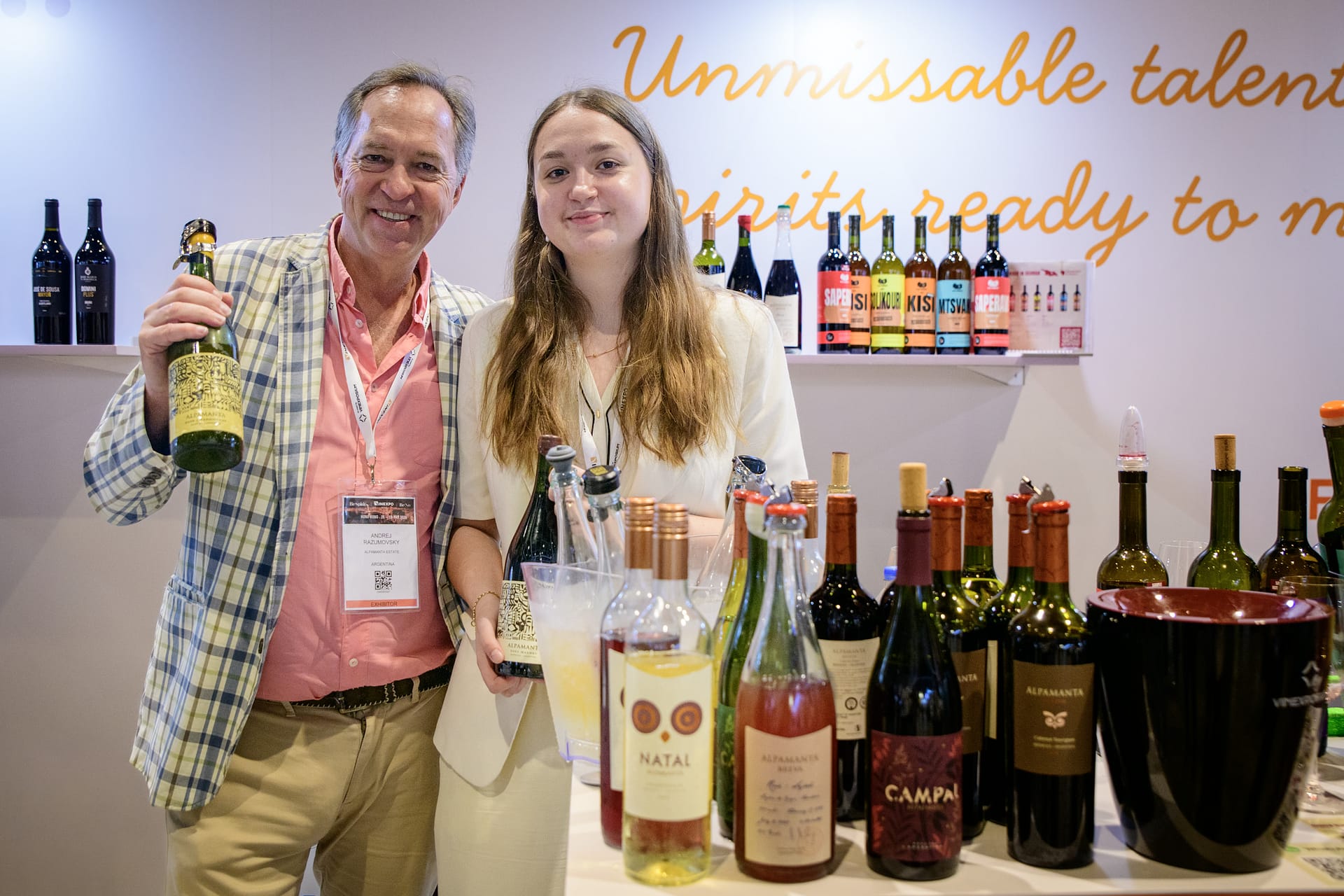
Another striking encounter was the one with Andrej Razumovsky, owner and CEO of Alpamanta, Argentina’s first certified biodynamic winery, founded in Ugarteche, Luján de Cuyo. The name comes from Quechua, meaning roughly “love for the land,” and Andrej – a pioneer of regenerative farming in Argentina – truly honours it. Thirty-five hectares produce around 125,000 bottles a year across a wide range – Malbec, Cabernet Sauvignon, Cabernet Franc, Chardonnay, Sauvignon Blanc, Merlot, Petit Verdot, and Grüner Veltliner – all certified sustainable, organic, biodynamic, and vegan. The combination of biodynamic practice, high-altitude Mendoza viticulture, and the talent of winemaker Florencia Moreno produces wines with a precision that is increasingly hard to find in Argentine exports built for volume, and the recognition has followed: Alpamanta took global gold for sustainable practices at the 2024 Best Of Wine Tourism awards, and was named Organic Initiative of the Year by The Drinks Business. I have a hard time recommending a particular wine as I tried so many of them, from pet-nat to serious reds, and I was left with a deep respect for their consistent quality.
Zavec Family Estate
Another first for me, Slovenian wines – which I had heard so much about from my good friend and possibly Slovenia’s best living photographer Matjaž Tančič.
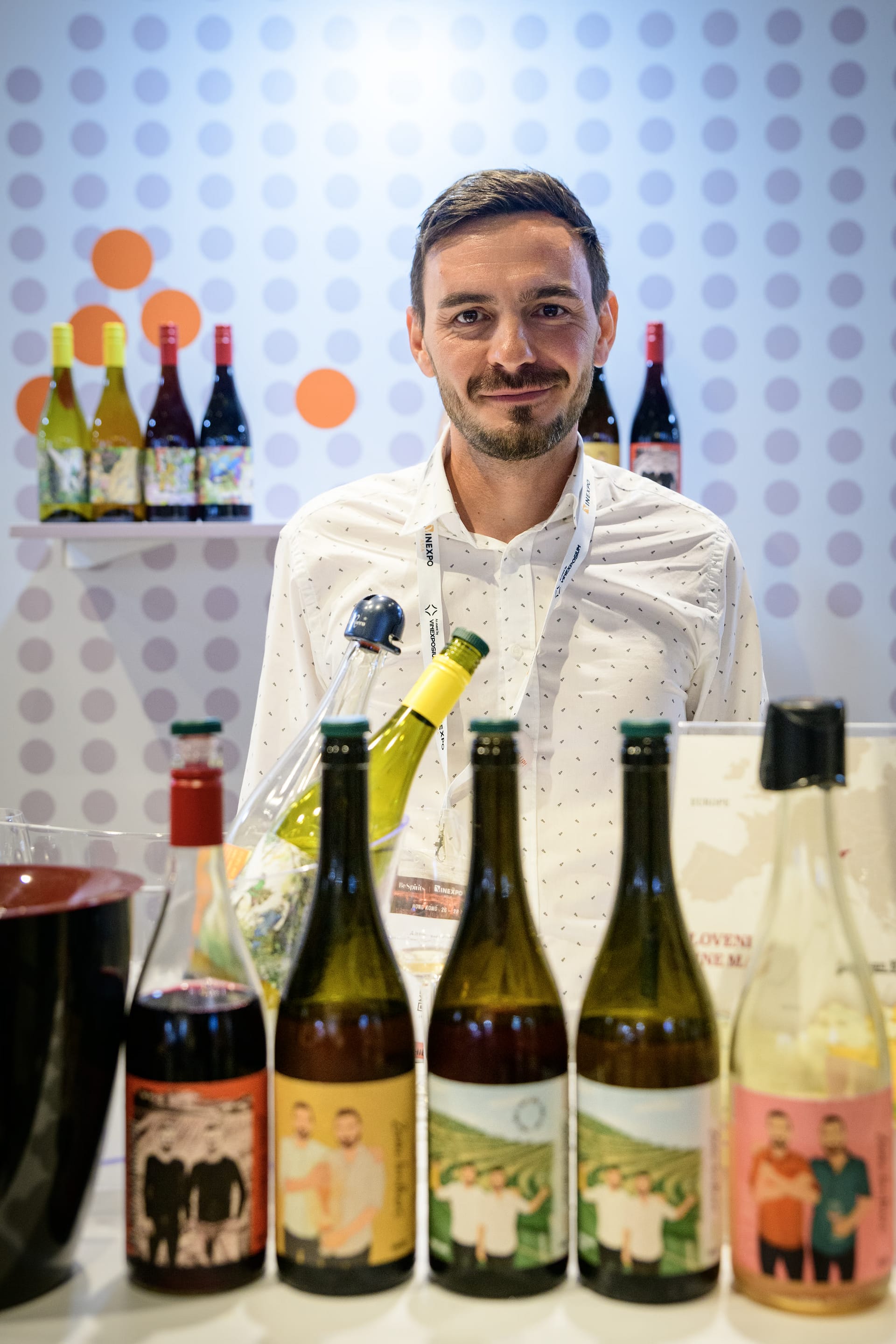
Aleksander Zavec, one half of the Zavec Brothers Family Estate in the Haloze hills of Štajerska Slovenija, poured me a glass of Sauvignon Blanc I still remember weeks later and a rosé pétillant naturel that showed surprising complexity. The estate cultivates 30 hectares to certified sustainable and vegan standards, producing about 30,000 bottles annually, with a focus on skin-contact and natural sparkling wines.
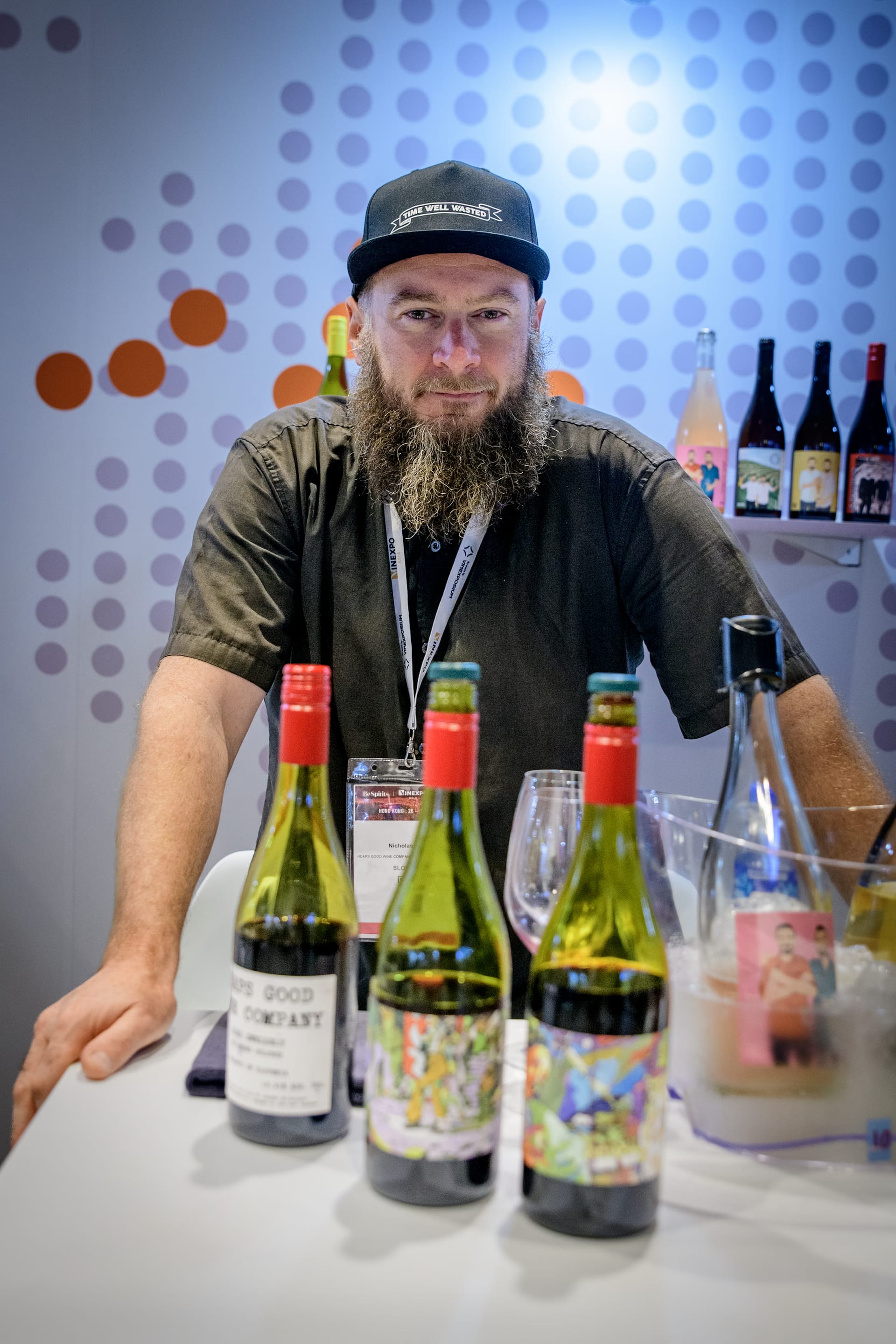
Heaps Good Wine
His booth neighbour, Nicholas Gee of Heaps Good Wine was also showing Slovenian bottles – a beautiful amber wine made from 75% Sivi Pinot and 25% Laski Rizling, and his pet nats would also deserve to be taken along to a barbecue near you! Gee is a New Zealander who has been making wine in Štajerska Slovenija since 2010, on a small, family-run, 4-hectare property certified vegan and farmed under regenerative viticulture, producing around 20,000 bottles a year with minimal intervention across Chardonnay, Pinot Gris, Welschriesling, Pinot Noir, Blaufränkisch, Zweigelt, and Syrah. His labels are also absolutely superb, and I’d recommend checking the artist out on his website.
Tezi Winery
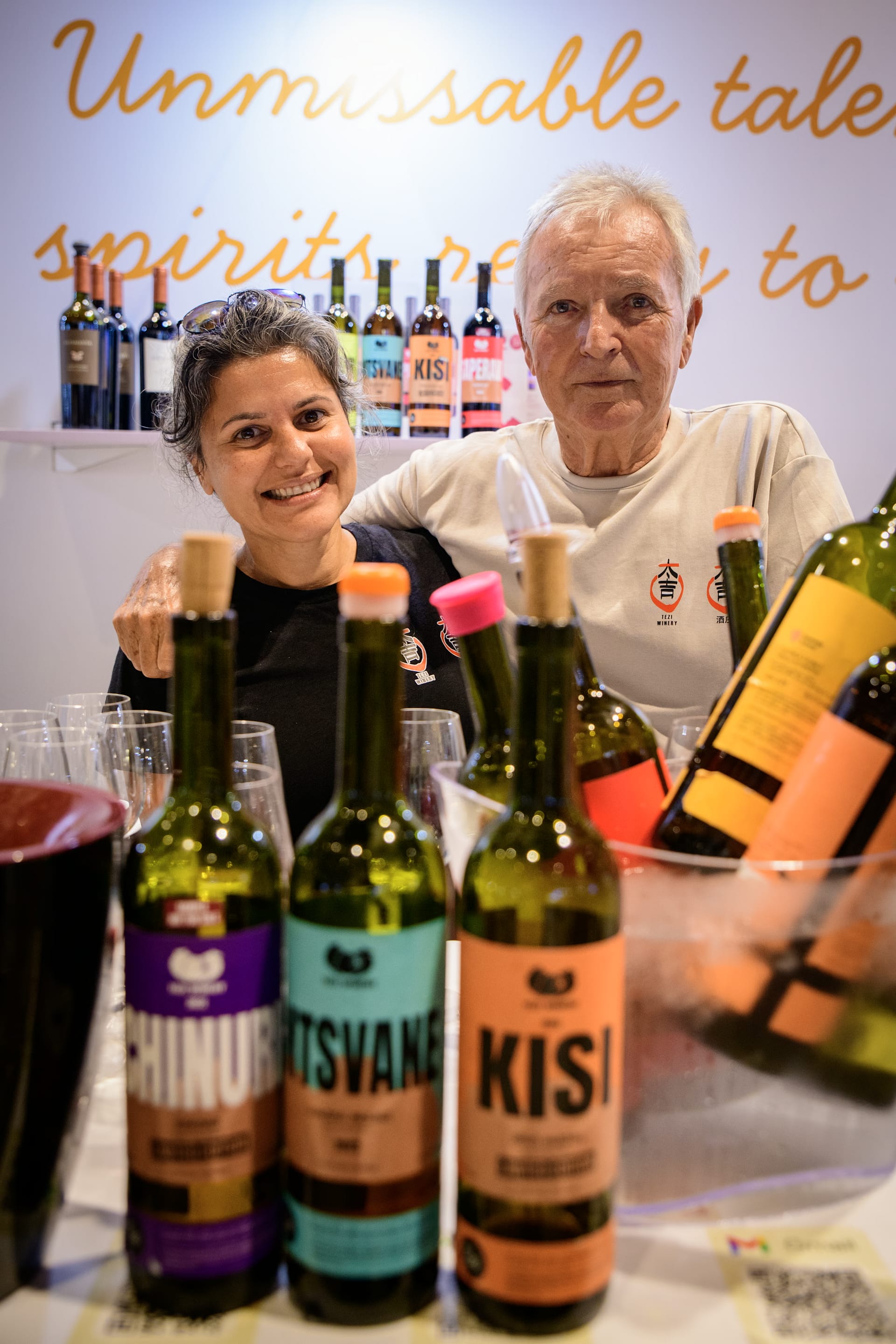
Peter Evans and Dareen Al Saad, the warm and colourful co-owners of Tezi Winery in Georgia, happily poured glasses of their wines with the confidence of people who love their wines so much you get scolded if you dare ask for the spittoon. Based in Kartli, Tezi wines are made by winemaker Ioseb “Soso” Abduhelashvili from 1.5 hectares of estate vines but also sourcing grapes from across Georgia’s wine regions, producing around 40,000 bottles a year from a wide range of indigenous varieties – Chinuri, Kakhuri Mtsvane, Kisi, Rkatsiteli, Saperavi, Tsolikouri, Tsitska, and Tavkveri among them – hand-picked from organic farming and made using traditional methods.
Their wines picked up gold medals across five different bottlings at the 2025 Asia Wine Trophy, with earlier vintages also recognised at the International Qvevri Wine Competition and Saperavi International.
I felt right at home with these Georgia lovers and even reunited with an old Tbilisi friend who was giving them a hand, the legendary David Dukashvili, owner of the great wine bar Chaduna. Tezi was sadly out of Rkatsiteli after doing Raw Wine in China so I couldn’t try the wine I consider the perfect benchmark to evaluate winemaking, but I loved their wines and believe their Kisi from Akhmeta fell for me as well, as we couldn’t get enough of each other during these 3 days.
Given the quality of the wineries represented by UNSIGNED, I’d recommend everyone to keep them on their radar as their selection really is top notch.
A Beautiful Opportunity: Tunisian Wines
The ‘Gronchons’ (a word I use for those who turn their nose to any wines not coming straight out of Bordeaux, Burgundy or Napa Valley) might be surprised to learn viticulture in what is now Tunisia dates back to the Phoenicians and the Carthaginian civilisation. Some of the earliest recorded evidence of organised wine production in the Mediterranean comes from this part of North Africa, several centuries before Christ. According to legend, Carthage itself was founded around 814 BC by Elyssa, a queen of Tyre known to the Romans as Dido, who fled west with the Phoenician knowledge – viticulture included – that took root in the soil she claimed. Word has it women have stayed close to that thread ever since: the Tunisian grape harvest has long relied on the eye and hand of rural women. The Romans continued and expanded the tradition, and for centuries North Africa was a significant wine-producing region for the empire. The Arab conquest of the 7th century reduced but did not eliminate viticulture, and the French protectorate from 1881 onwards brought a major revival, with French settlers planting extensively across the Cap Bon peninsula, the Mornag plains, and the hills of Zaghouan and Bizerte. And given what I have tasted at the Tunisian Wine pavilion, it is high time they enter the international conversation. Here’s the take-away from my meetings with two of their wineries.
Kurubis
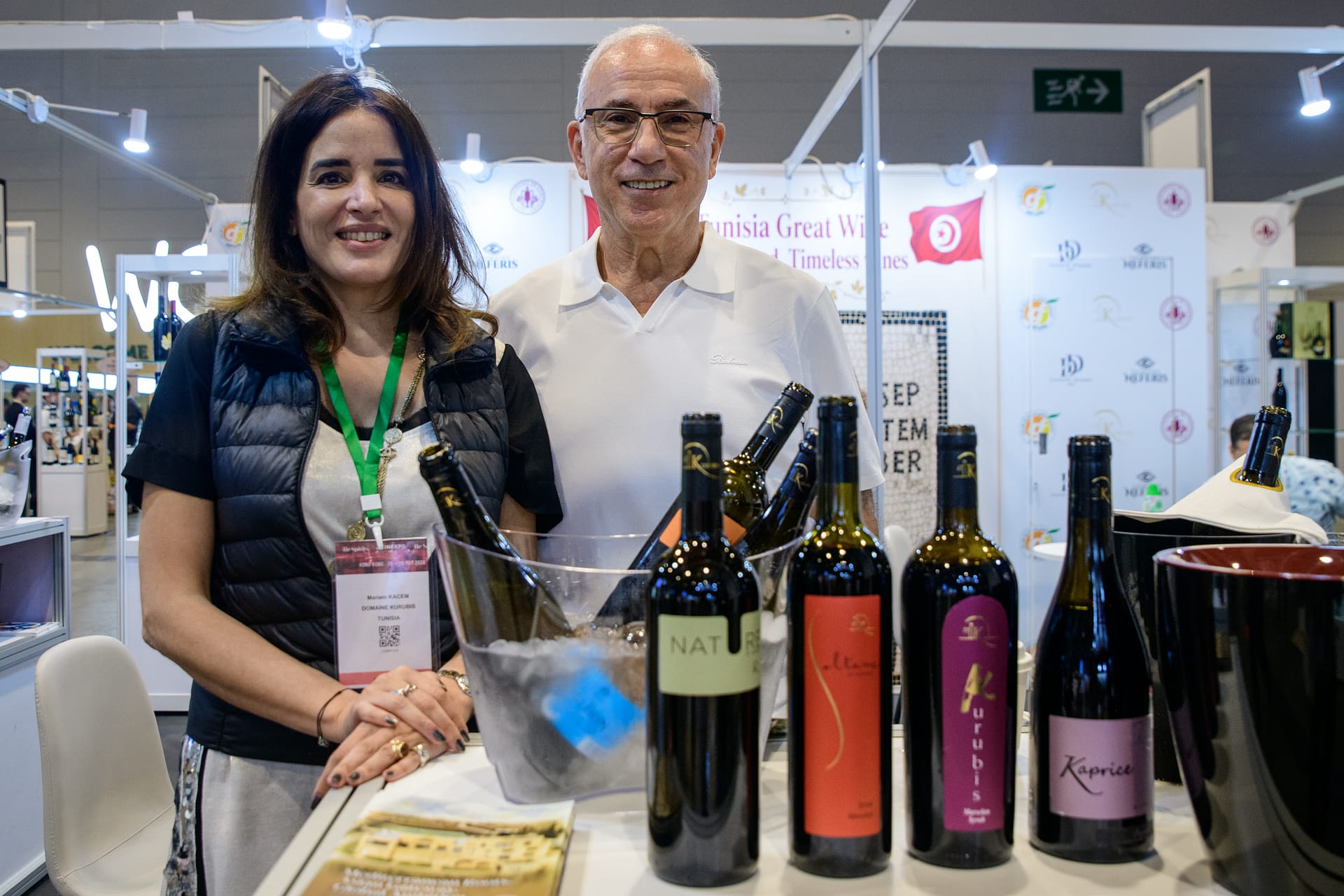
Kurubis Tunisia – named after the ancient Carthaginian city of Curubis on the Cap Bon coast – was founded in 2005, the result of a meeting between Rached Lagha, a landowner from Korba, and Didier Cornillon, a French oenologist looking to work outside France. Their vineyards carry the AOC Mornag designation and sit on infertile, mineral soils close enough to the sea to moderate the heat, sheltered from the sirocco winds that can damage vines further inland. Maryem Kacem, Marketing Director & Sales at Kurubis, presented their large range of wines with much pride and love.
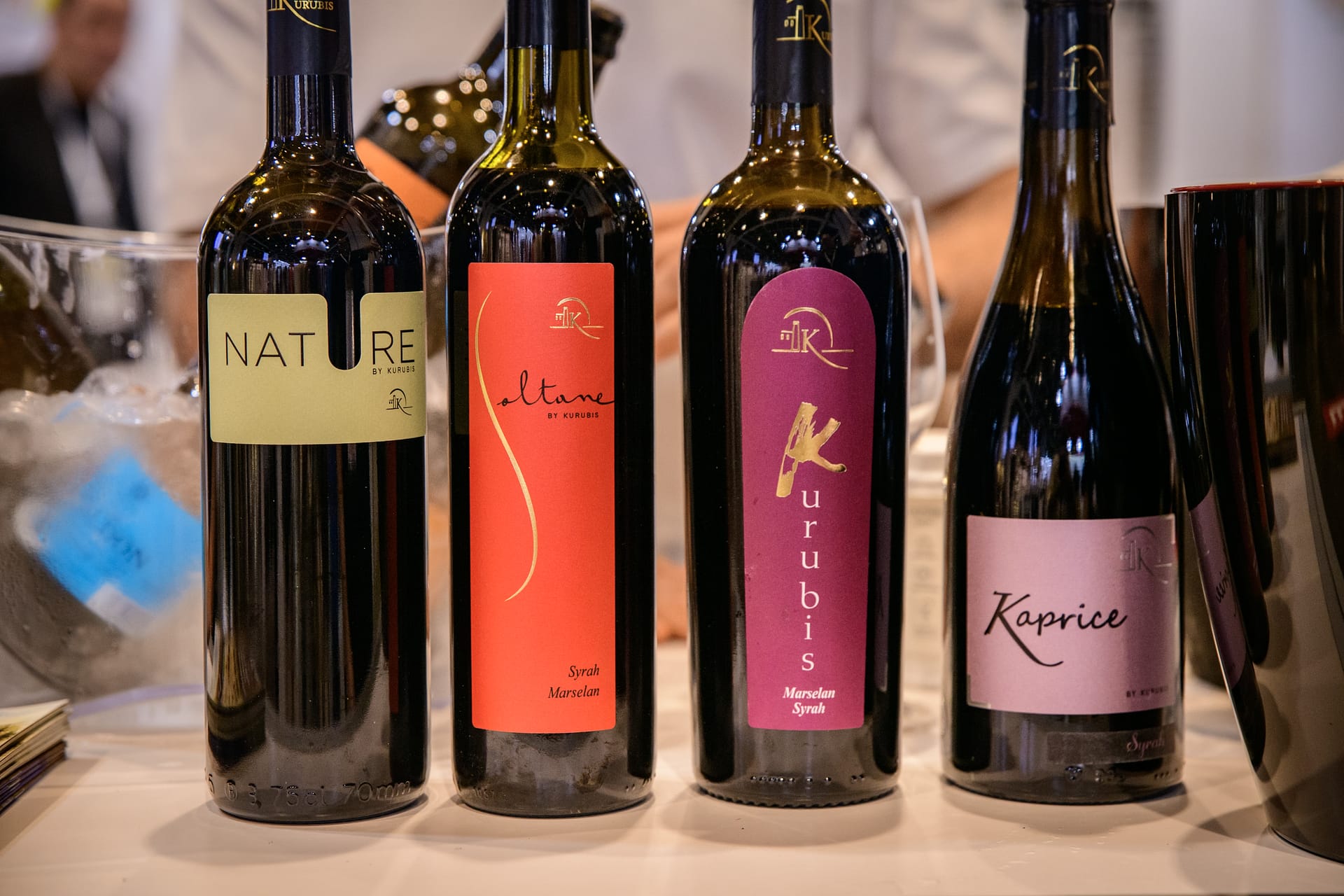
Among them, their natural wine aptly named Nature by Kurubis, a 100% Syrah, scored highest among Maghreb wines in the Dutch De Grote Hamersma guide; Onno Kleyn, wine critic for De Volkskrant, wrote that despite his usual scepticism toward natural wine, this one knocked him off his rocker – and although I’d have used different words, I’d say he wasn’t wrong. Their orange wine – the first in North Africa according to Maryem – Origine by Kurubis, is fermented in ovoid tanks and carries notes of rose, orange blossom, and saffron. The approach is modern and turned towards experimentation and the wines show character without trying to impress.
Domaine Neferis
Rached Kobrosly, technical director at Domaine Neferis, offered a slightly more classic line-up. The estate takes its name from the ancient Carthaginian city of Neferis, about thirty kilometres from Tunis, and their vineyard was planted in 2000 on the hills of Khanguet in Grombalia – on the same ground where Tunisia’s first French vineyard was planted in 1878. Two hundred hectares of Syrah, Carignan, Cinsault, Grenache, Chardonnay, and Muscat d’Alexandrie grow on clay-limestone soils near the coast, at around 150 metres, with the kind of day-to-night temperature swing that helps achieve great balance between acidity and ripeness. The reds are rich and structured, and their Rosé Magnifique was true to its name: a Cinsault and Grenache blend in the Provence style – it stood out with a real balance between character and easy drinking.
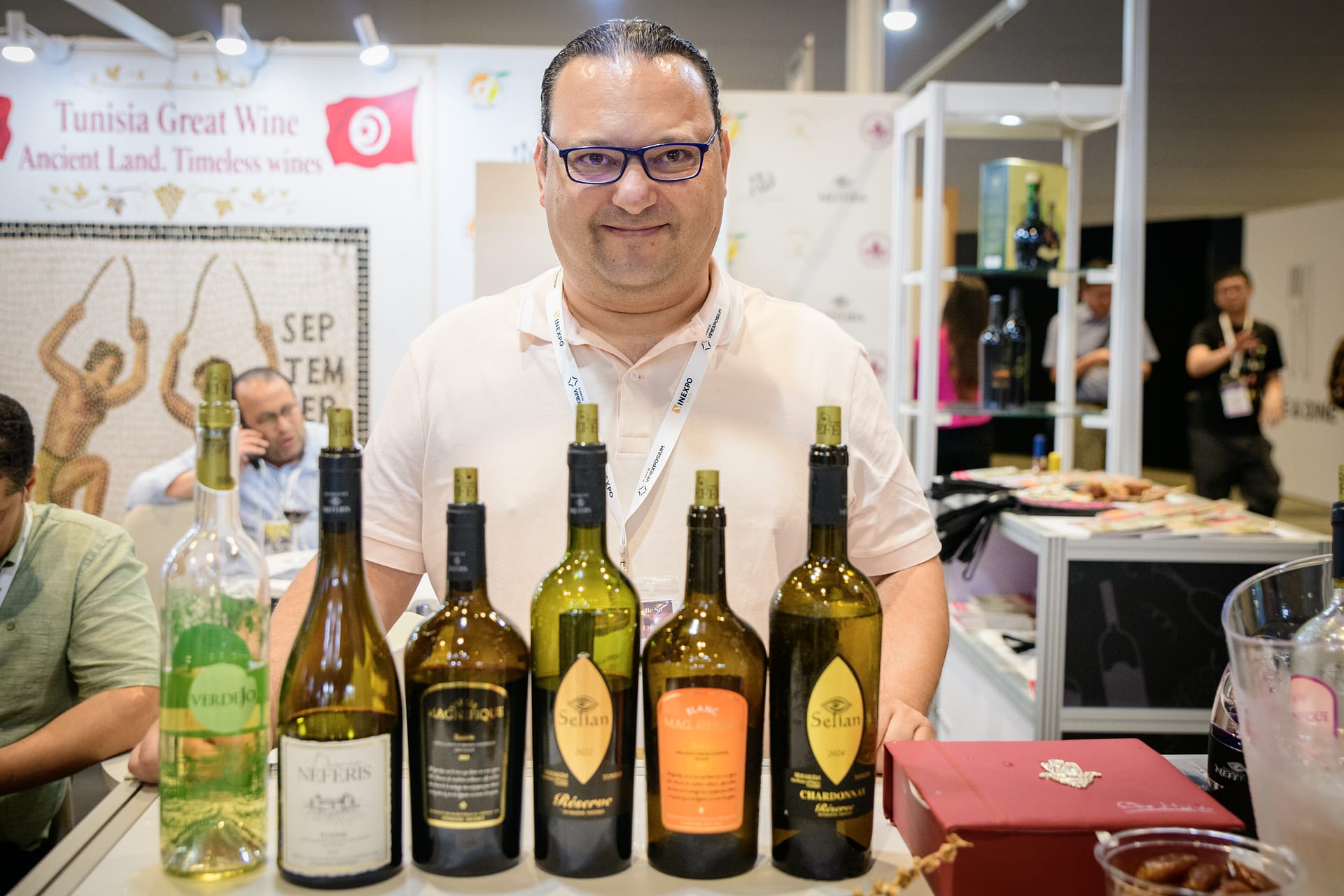
With these two wineries, I feel lucky that my first experience with Tunisian wines was of such quality and can only recommend checking them out with an open mind. As with most wines from less-recognised wine regions, their perception will only change once more people have had the chance to actually try them for themselves.
This is Part 2 of a three-part dispatch from Vinexpo Asia 2026 in Hong Kong. Part 1 covers the show’s record numbers and the producers I discovered on the main floor, from Etna to Tasmania. Part 3 looks at the off-site tastings, spirits and sake beyond wine, and what’s next for the show.