Words & Photography by Aurélien Foucault
In the first part of this report, I highlighted the wineries that caught my attention. Here, the focus shifts to the distilleries and the different ways producers rethink categories too often taken for granted.
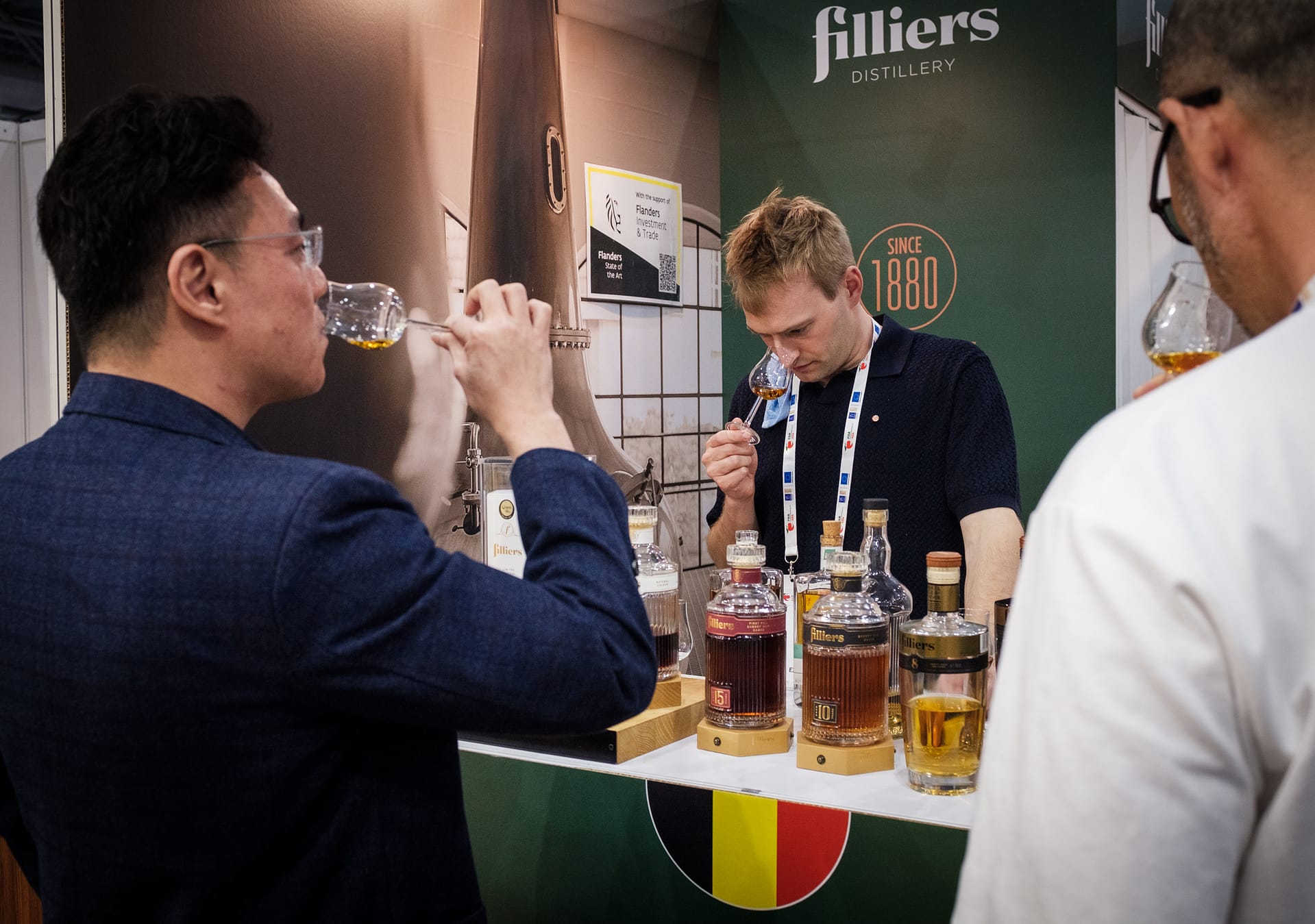
Distillerie Filliers:
Six Generations in East Flanders
Of all the spirits on offer, this great house of Belgian distilling was a true highlight.
The Filliers family has been distilling jenever in Bachte-Maria-Leerne, near Deinze in East Flanders, since the eighteenth century, and Benoit Filliers – master distiller and sixth generation of the family line – now runs the operation.
Jenever – or genever – is a grain-based juniper distillate and the direct ancestor of what would later become London Dry Gin. It remains the national spirit of both Belgium and the Netherlands, though it still struggles to compete with gin on the global cocktail circuit, partly because it is less familiar and requires a little more explanation. Filliers today produces three distinct categories – jenever, gin and whisky – with a separate distillery for each. Their Filliers Dry Gin 28 uses 28 botanicals in addition to juniper and was first made in 1928 by third-generation distiller Firmin Filliers. Their whisky, sold under the Goldlys label, was the first double-distilled Belgian whisky ever produced.
Their barrel-aged jenever programme – with expressions matured for up to 21 years – is an exciting playground of complexity. There is real depth, real character, and something that spirits specialists and cocktail bars should find especially compelling, as it opens the door to plenty of creativity. I really enjoyed seeing the linear progression of their taste along with the ageing and I think there would be plenty interest in the South-East Asian Market.
Archipelago Gin by Full Circle Craft Distillers
Another spirits producer that really caught my attention was Archipelago Gin, presented at the fair by Jessica Constantino, Regional Trade Director at Full Circle Craft Distillers.
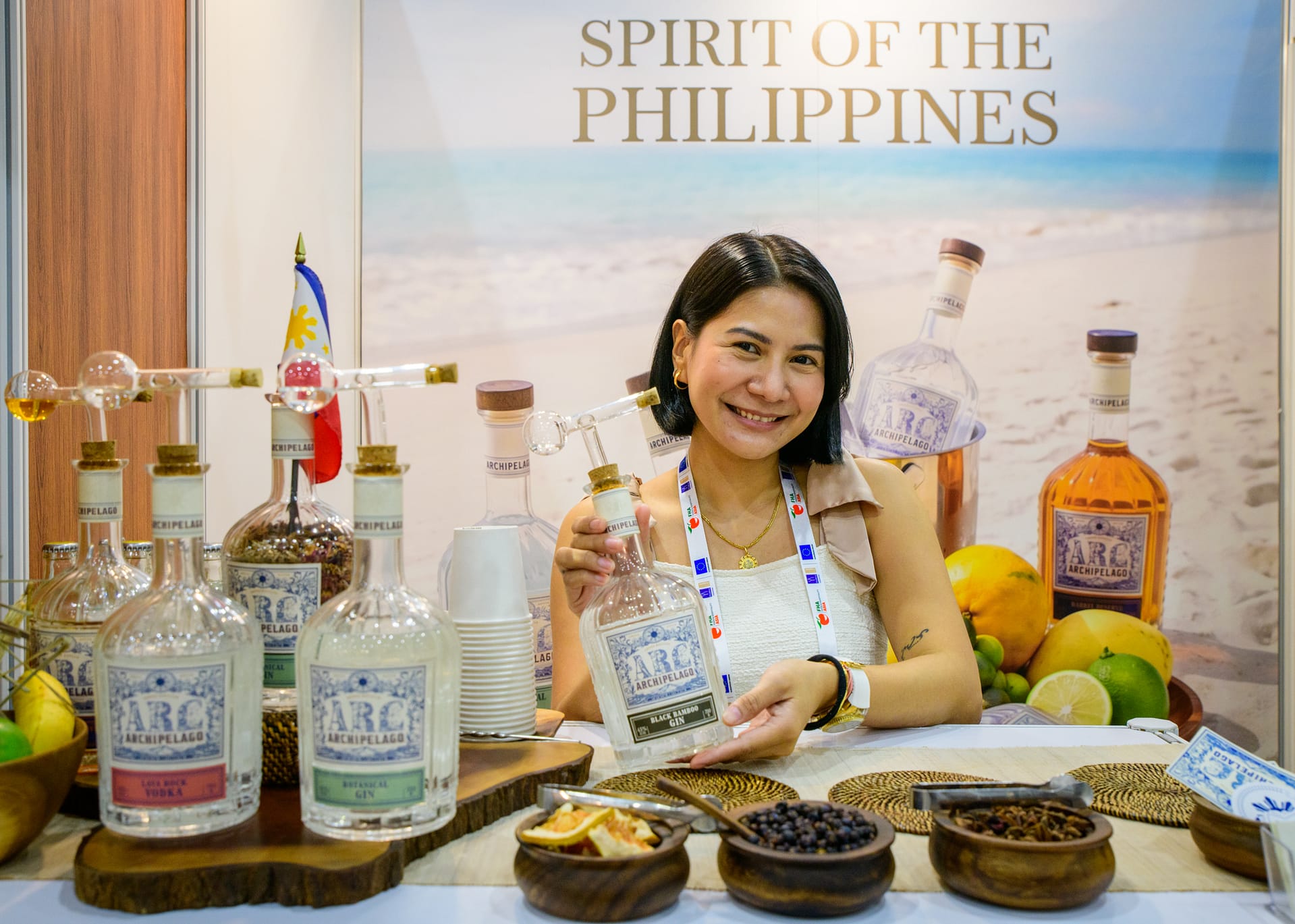
The brand comes from the company’s distillery in Calamba, Laguna, a family-founded Philippine operation created in 2018 by Matthew and Laurie Westfall, with a clear ambition: to prove that the Philippines can stand on the global stage with truly world-class craft spirits.
What makes Archipelago stand out is their botanical story. Their flagship gin is made with 28 botanicals, 22 of them sourced in the Philippines, drawing from across the islands in a way that gives the spirit a real sense of origin rather than some vague tropical mood board.
Pomelo, dalandan, mango, jasmine, ylang-ylang, pine and native citrus all make appearances in the wider narrative around the gin, and the result is not gimmicky exotica but something very coherent and simply delicious. In a category so crowded with interchangeable labels, Archipelago actually had something to say.
With a selection of various gins, including a beautiful Black Bamboo Gin, a reserve Gin as well as a Vodka, this once again confirmed that South-East Asian spirits are getting it right, with perfect branding and excellent products.
Domaine de la Flaguerie
I was also very pleased to come across Domaine de la Flaguerie, which I discovered in conversation with Jean Olivier Petrich. This family estate from Le Bessin in Normandy has been rooted in the land since 1835.
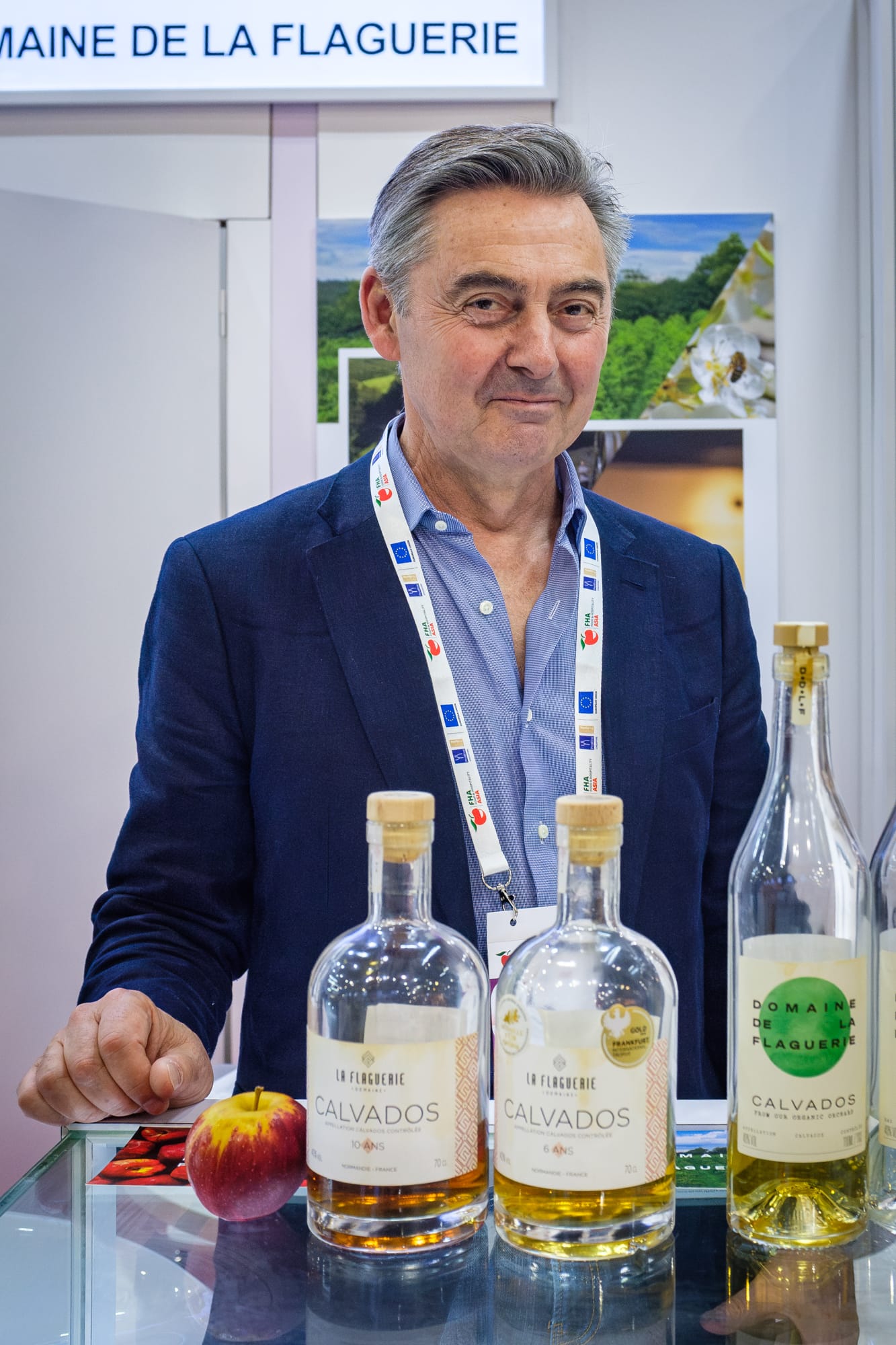
After so much wine, and spirits from around the world, I found some comfort in one of my favorite spirits from my homeland: Calvados.
The estate works with organic orchards – more than 40 hectares, with thousands of apple trees and dozens of varieties – on the clay-limestone hillsides of this part of Normandy. Apples are gathered only once they have fallen naturally, then gently pressed and slowly fermented into cider before distillation in a column still. The spirit is aged in French oak, and the whole approach is guided by a search for precision rather than force.
Too many people still think of Calvados as either old-fashioned or vaguely severe, but in the right hands it can be one of the most expressive fruit spirits in Europe and Le Domaine de la Flaguerie are helping Calvados shed its dusty image without stripping it of its soul.
Their style strikes me as fresh, articulate and versatile, with younger expressions showing bright apple character and older ones moving into deeper, spiced and gently baked notes. They also produce cider, Pommeau de Normandie and other orchard-based drinks, but Calvados is clearly the emotional centre of the estate. What I appreciated most is that they seem to understand exactly what the category now needs: not reinvention for its own sake, but a more open, contemporary way of presenting a traditional product that can still be fiercely relevant. Jean Olivier Petrich has this clearly in mind, as he explains that some of their range are aimed at the cocktail scene, which is a valuable approach to help Calvados enter the global market.
Tequila Masterclass
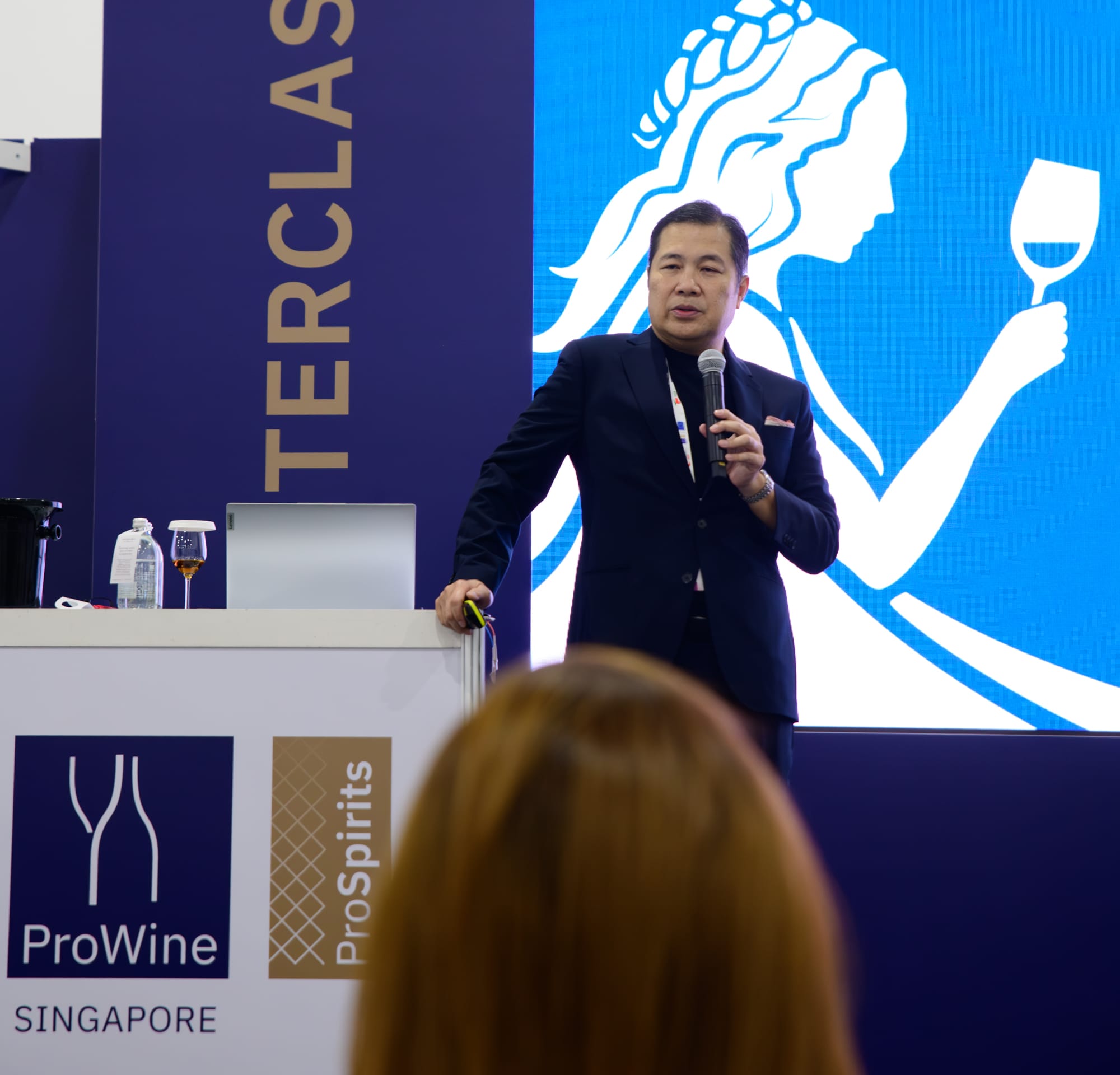
I came to the tequila masterclass hoping to learn more, and we were treated to an entertaining session by the enthusiastic Brian E. Werner, managing director of East West.
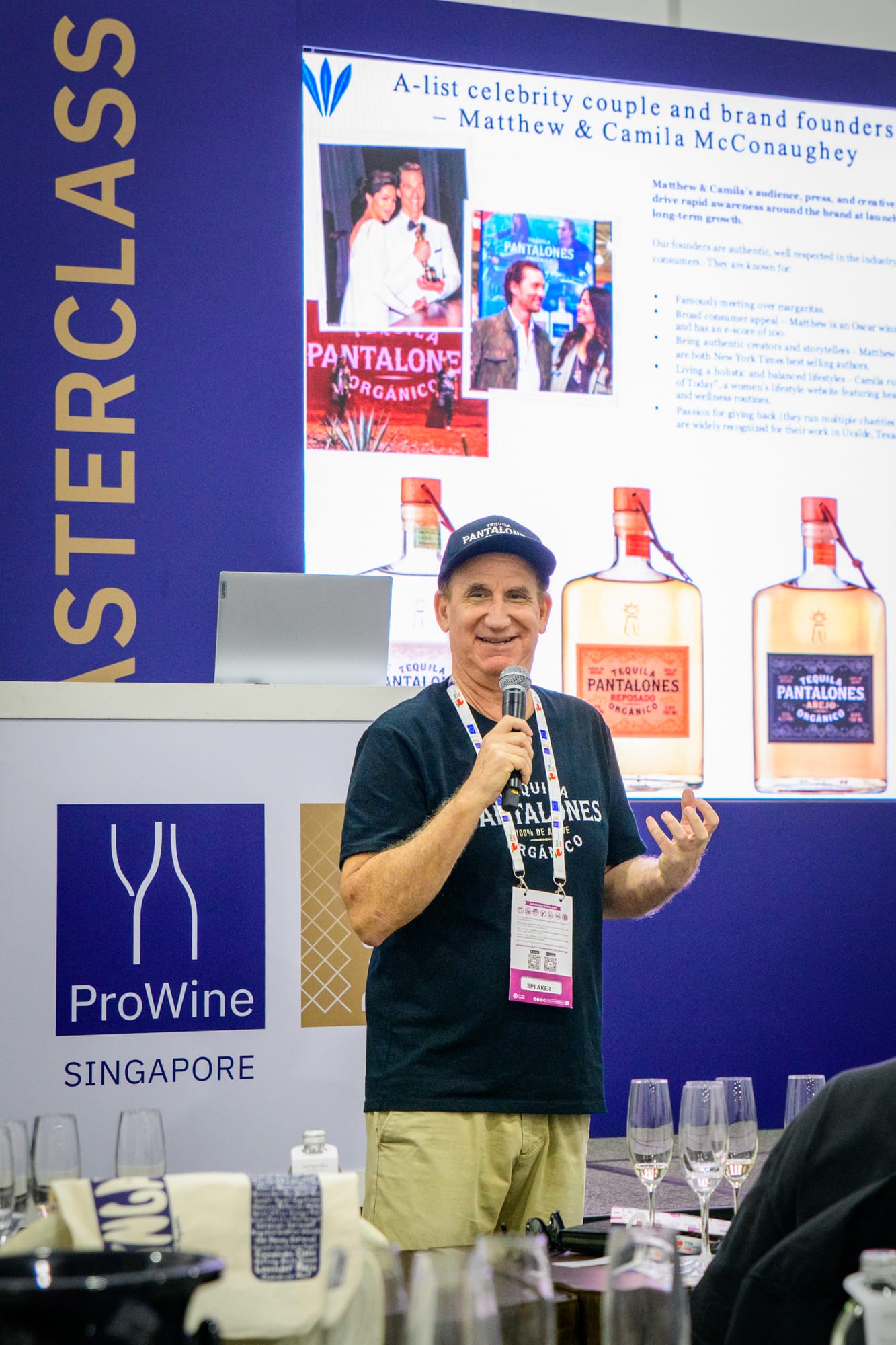
Here are a few takeaway notes for anyone curious about tequila and mezcal.
The basics first: tequila must be made from blue agave grown in specific regions of Mexico, primarily Jalisco. The agave takes seven to nine years to mature. The piña – the heart of the plant, weighing anywhere from 50 to 100 kilos – is harvested once and only once. The plant dies after producing its seed spike. Every bottle begins with the death of a plant that took nearly a decade to grow.
As for ageing categories: Blanco is unaged, or aged for less than two months, with raw agave character front and centre; Reposado rests in oak for two to twelve months, with the barrel beginning to add vanilla and spice; Añejo spends one to three years in oak and moves into whisky-like territory in terms of complexity; Extra Añejo, aged for a minimum of three years, is where the agave has almost receded into something else entirely.
The regulatory framework is tighter than many people assume. The CRT – Consejo Regulador del Tequila – certifies and monitors every bottle that leaves Mexico. A four-digit NOM code on each bottle identifies the producing distillery. There are currently around 2,270 tequila brands on the market, representing more than 4,300 individual expressions, but they are made at only about 135 approved distilleries. The CRT’s own data shows that 97.8 per cent of all tequila produced comes from multi-brand distilleries, meaning the same facility is bottling dozens of apparently distinct labels. In other words, much of what looks like brand diversity is in fact a very small number of distilleries producing for dozens – sometimes hundreds – of labels.
Taken as a whole, ProWine Singapore proved a rich and rewarding fair, full of discoveries and thoughtful exchanges. the organisation ran smoothly throughout, with a friendly and dynamic ProWine team and plenty of lively pavilions, even those I have not mentioned here, such as the Champagne bar and the excellent cocktail bar.
This was my first visit, and it is an edition that leaves me genuinely looking forward to next year.
CELLAR BRIDGE | cellarbridge.com | editor@cellarbridge.com | Words & Photography by Aurélien Foucault