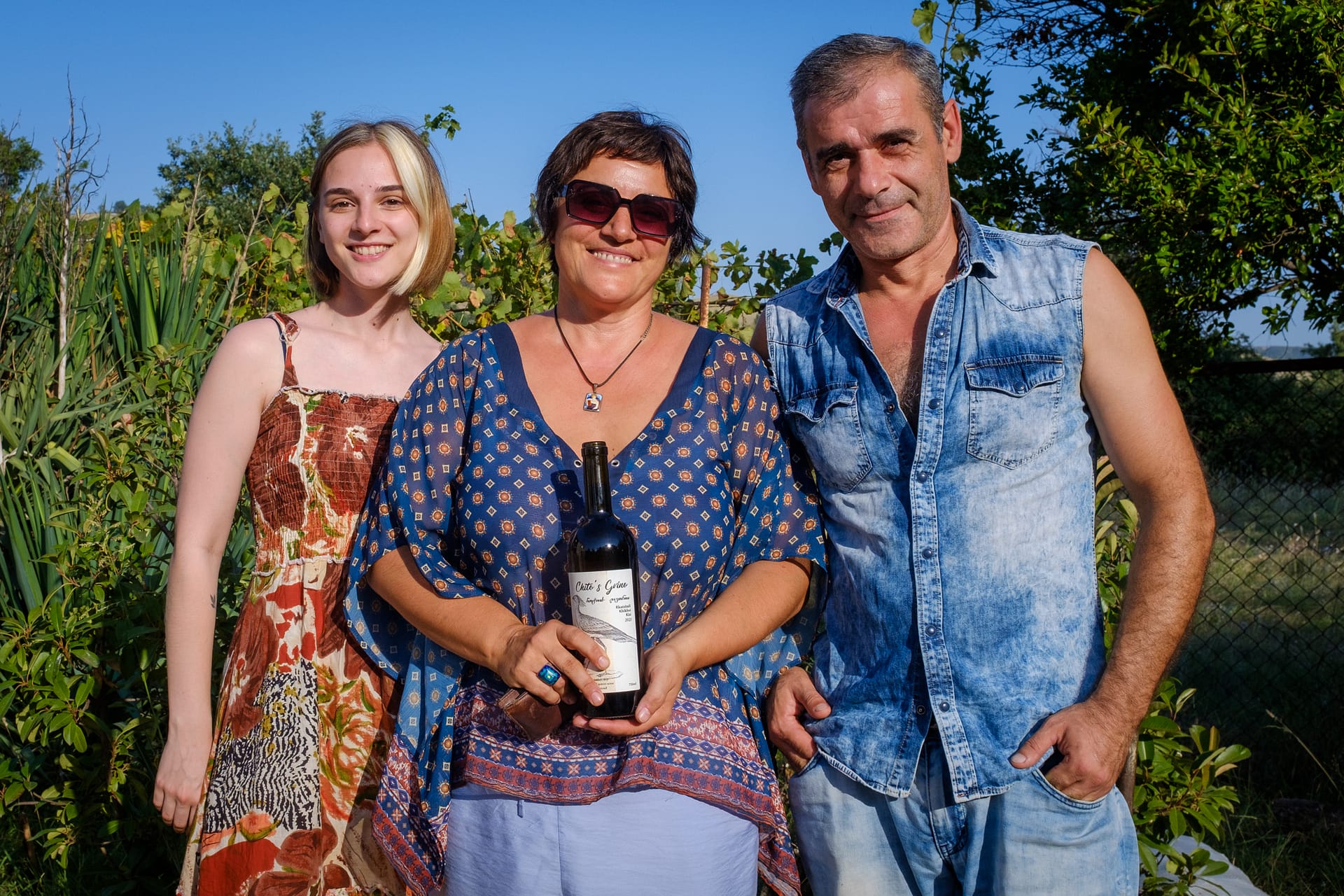
Chito’s Gvino:
Independence and Harmony
Words & Photography by Aurélien Foucault
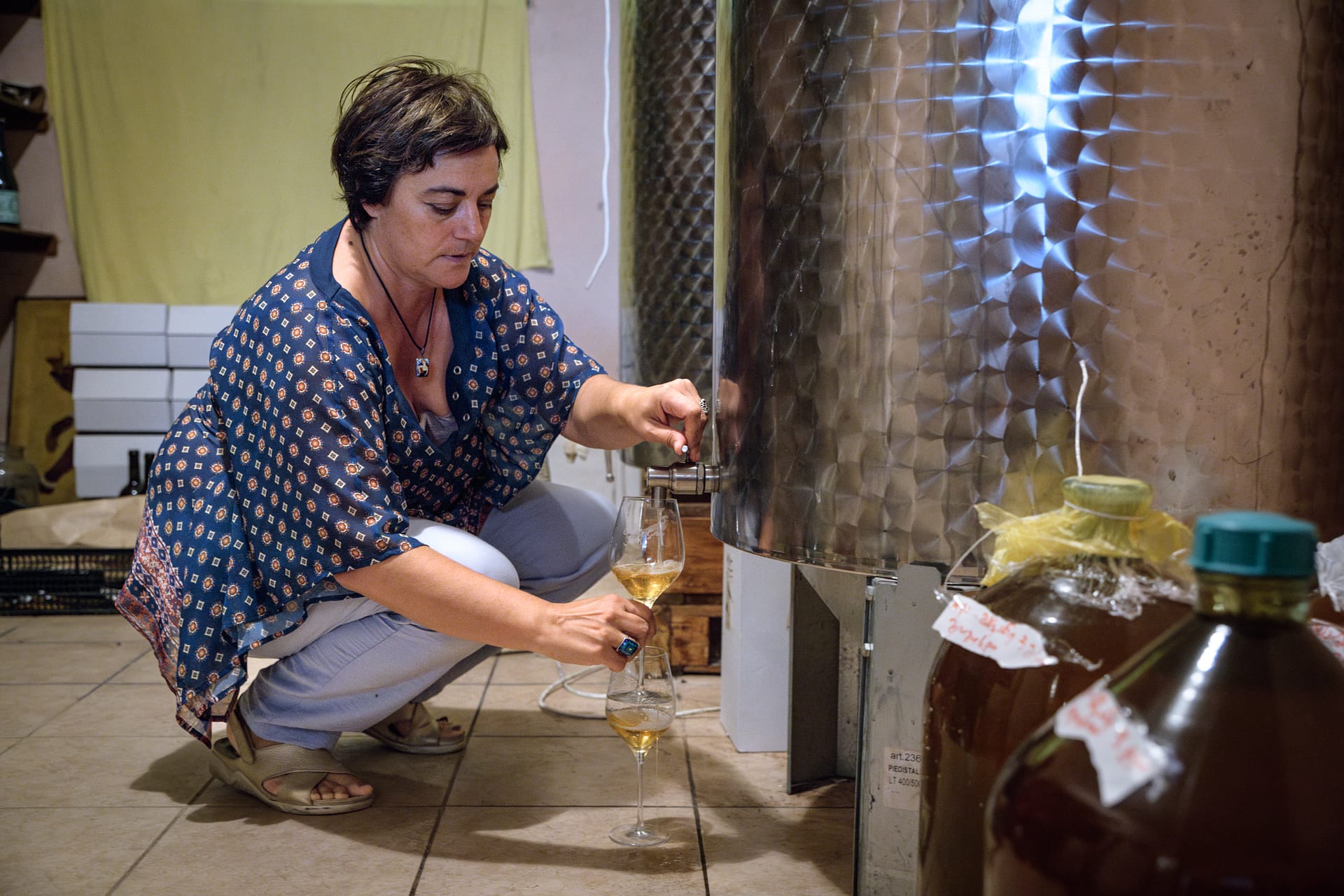
Chito’s Gvino, Kakheti, Georgia
Annual average production: 4,500 bottles/year
Export share: 97%
Nino, 55, is Georgian by birth but spent much of her life in Russia, where she worked as a professional pianist. It was a serious career, a life shaped by discipline, by the pursuit of something internal – maybe a quest for harmony.
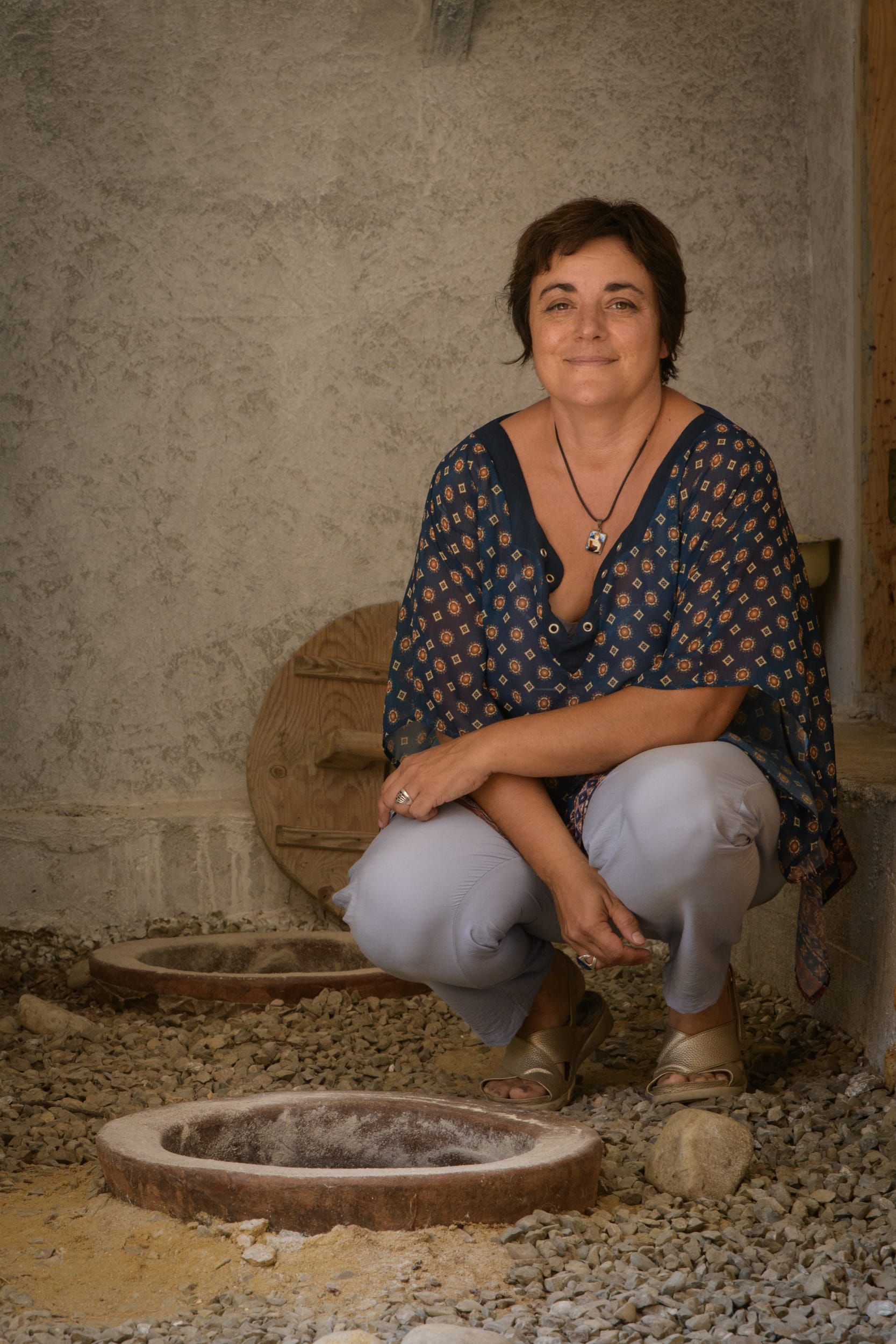
After returning to Georgia, she began working as a wine tourism guide in 2010, and was quickly drawn into the world of natural wine alongside its pioneers, the team behind Gvino Underground, and the late, deeply mourned Soliko Tsaishvili. Soliko was more than a reference; he was her mentor, the man who took her under his wings and taught her about the natural approach to winemaking, and the philosophy of life that comes with it. She speaks of him with boundless admiration, and it’s obvious that his influence had a lasting effect not only on her wines but also on who she became as a maker.
Though she had lived most of her life in the city, a longing for quiet and nature led her to leave it behind and settle in the countryside to make wine of her own. The first bottles came in 2017.
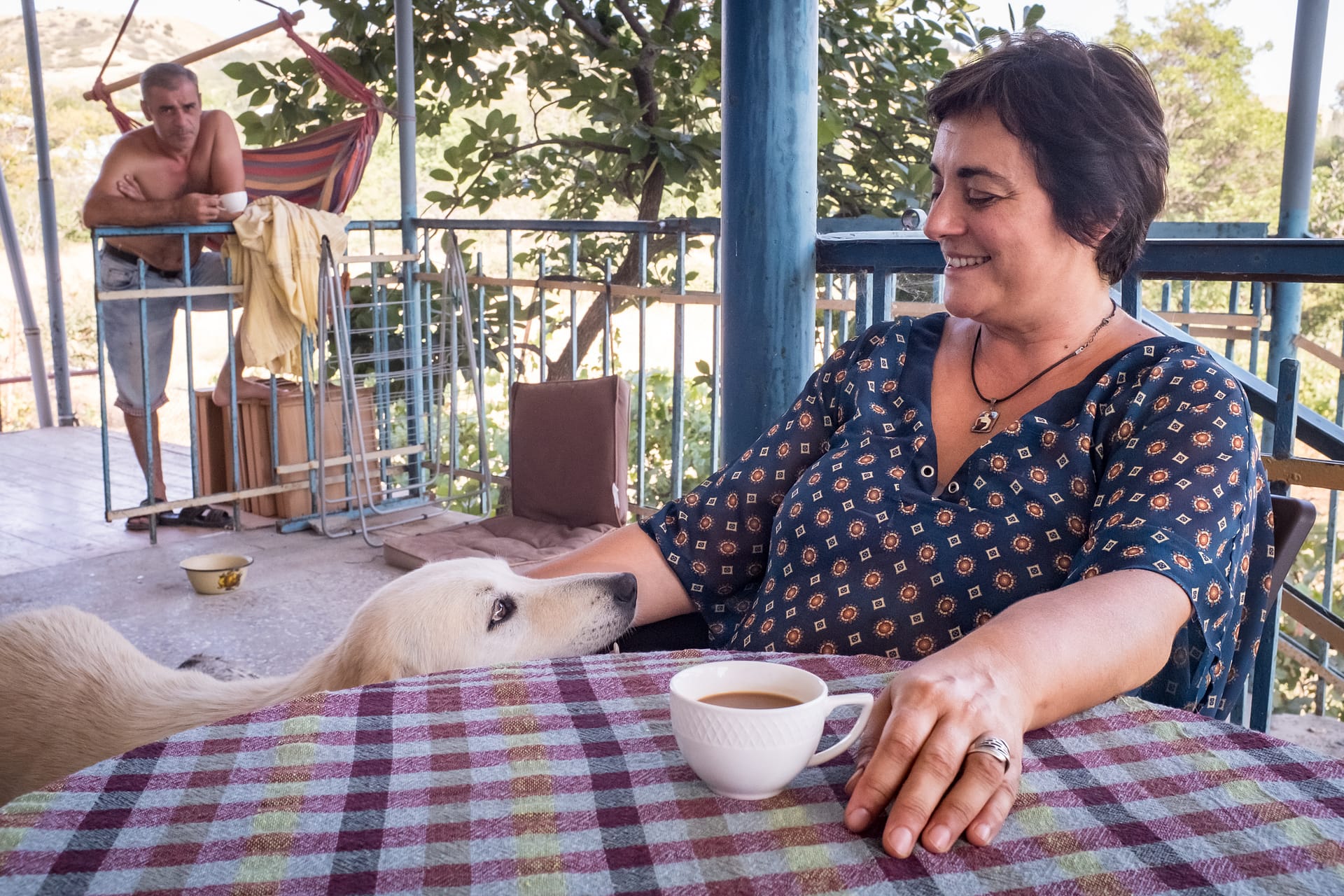
As she picked me up in her car in the center of Tbilisi and drove me to Martkopi — a small village about thirty minutes outside of Tbilisi, our conversation was effortless, as if we already knew each other. Her relaxed and friendly demeanour makes her approachable and natural, qualities also shared by the wines I would later enjoy. Nino cares deeply about drinking well; not pretentiously, but with discernment. « I prefer not to drink than to drink bad wine », she laughs.
Chito’s Wine is a natural Kakhetian wine, made in qvevri, without compromise. In her village, surrounded by her husband Vano and an ever-growing pack of rescued street dogs — who roam the premises freely and with obvious contentment — Nino tends to her wine with rare precision. She does everything herself, without shortcuts nor intermediaries.
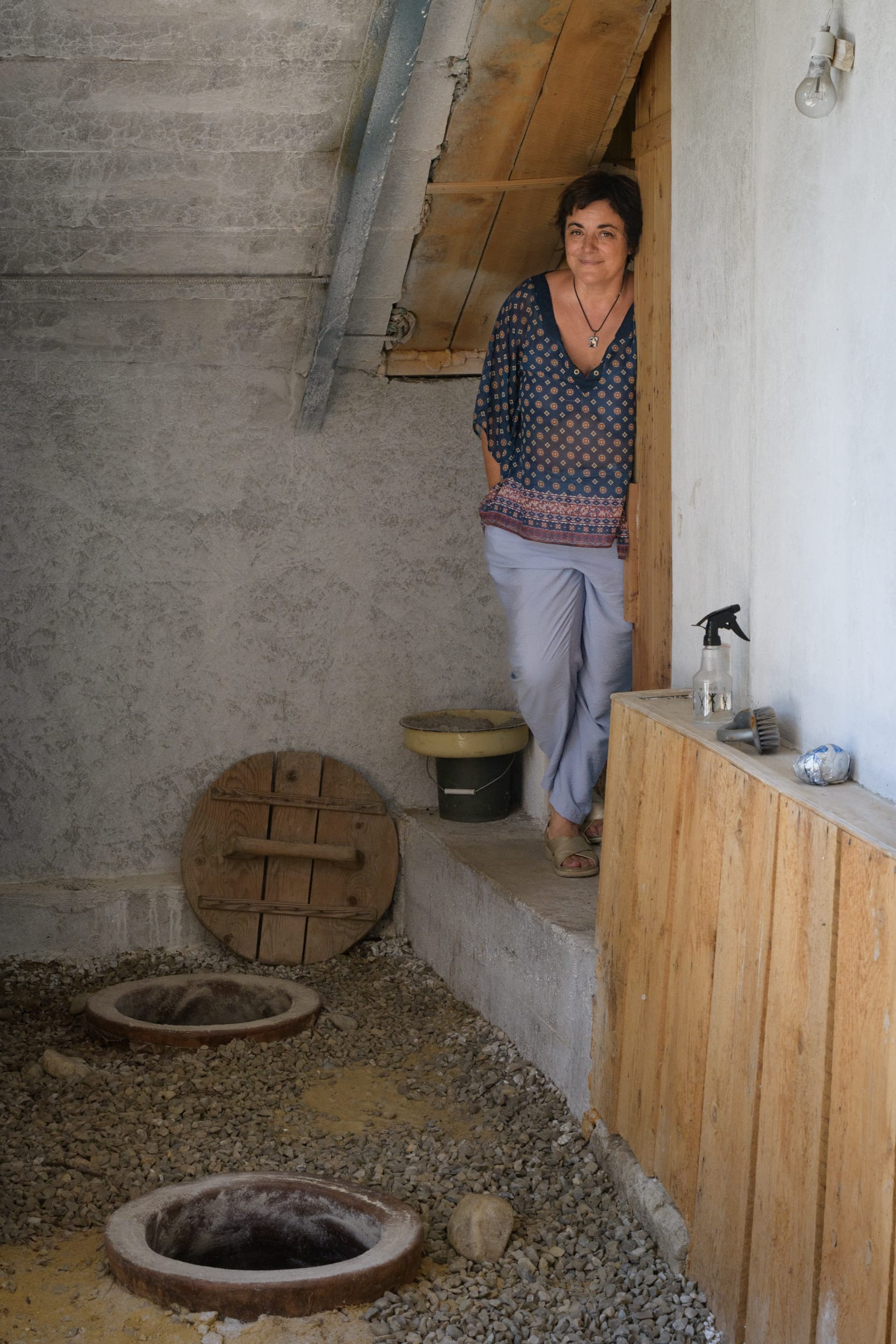
The process is as traditional as it gets. Fermentation happens with full skin contact inside the qvevri, where the wines spend seven to nine months maturing naturally, with wild yeasts, no fining, no filtration, no added sulfur. The result is wine that carries the full weight of its origin — nothing added, nothing taken away.
Her rkatsiteli is beautiful: rich, with an elegant body and a perfectly balanced acidity that keeps everything alive and moving. The saperavi is refined, quietly expressive, its fruit showing freedom and nobility. The absence of wood allows it to really shine for what it is.
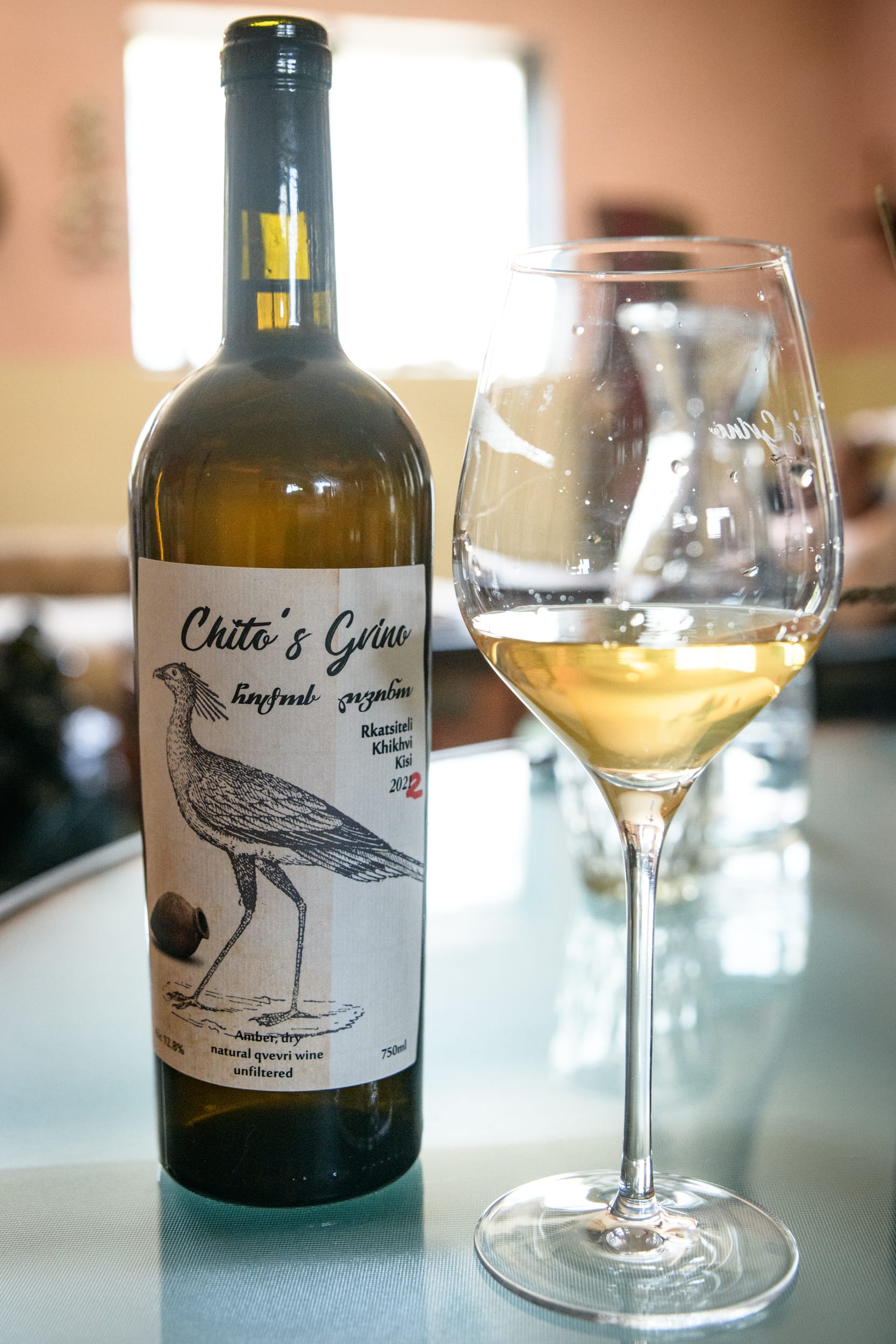
There’s something in the way she runs the place – the rescued dogs, the refusal to compromise, the respect for process – it’s a coherent worldview, miles away from that dichotomy often witnessed at larger estates, where the talk of the vineyard gets crushed over spreadsheets.
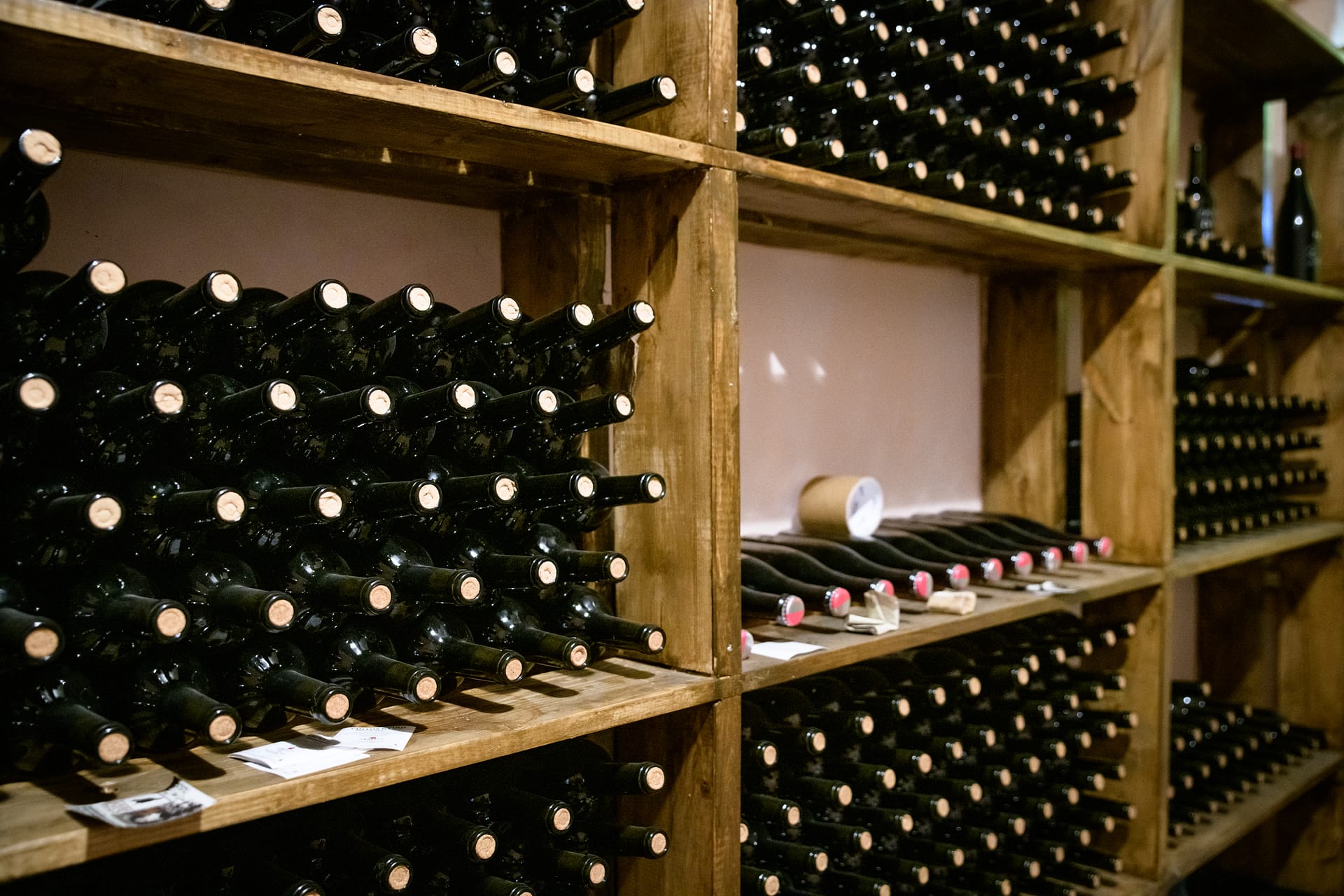
Her production is small, but the quality is exceptional. She reserves 97% for export — partly because the bottles are priced beyond what the local market typically absorbs, and partly because she believes her wine will find a more appreciative audience abroad. She’s not wrong. Her wines have found their way to France, Denmark, Israel, and Latvia, and even in New York, miles away from her quiet house in Martkopi.