
ProWine Singapore 2026
Part 1:Wineries
Words & Photography by Aurélien Foucault
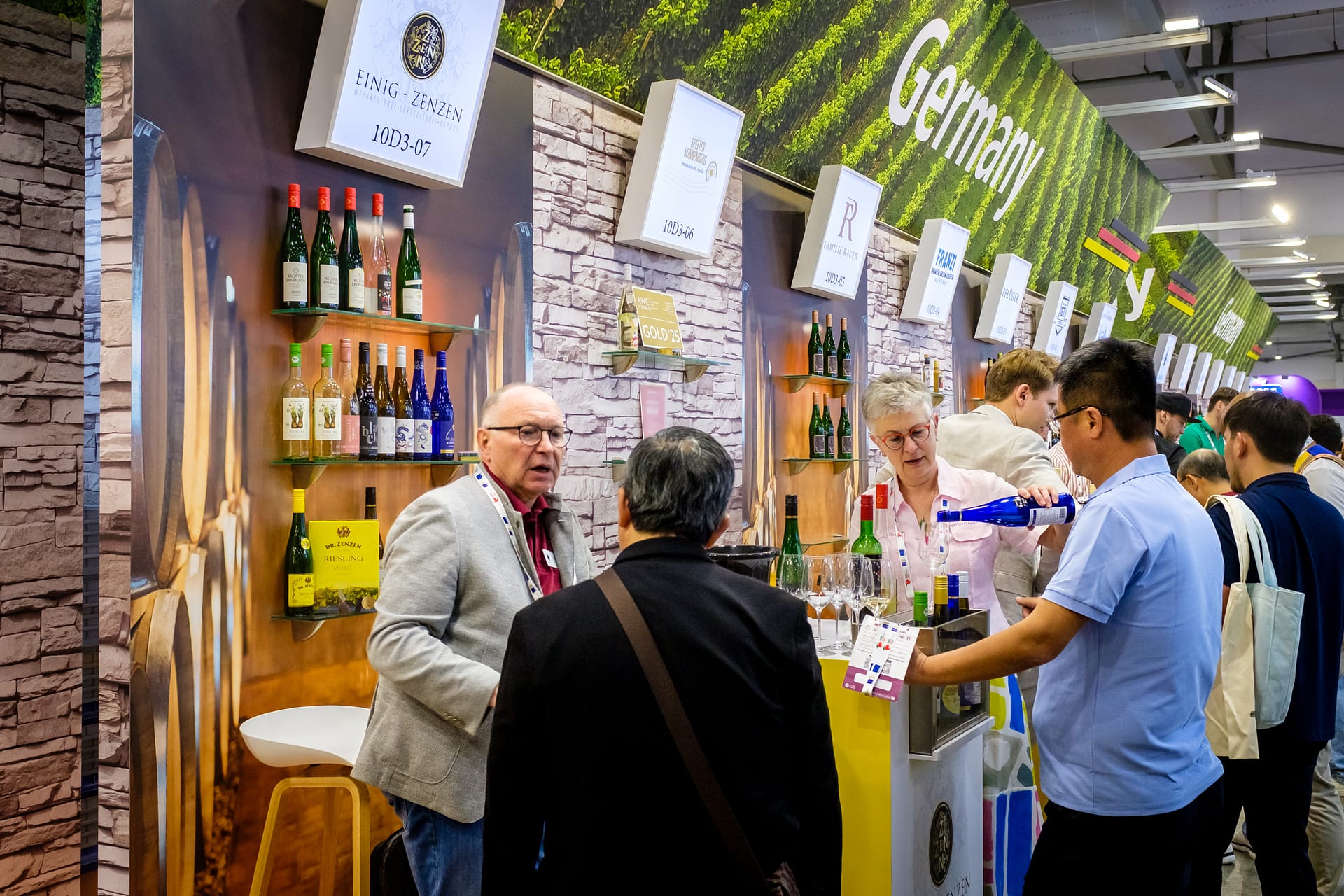
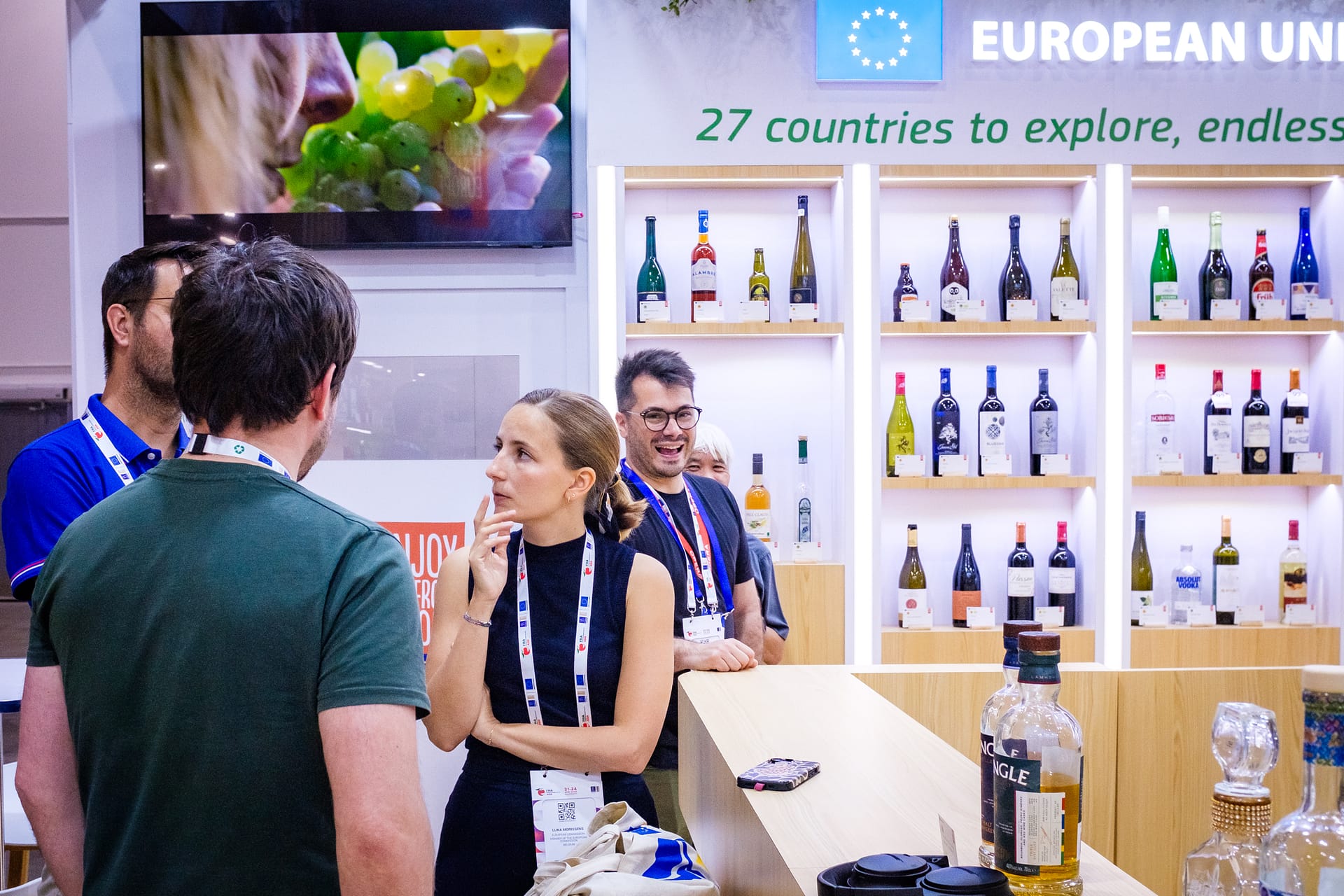
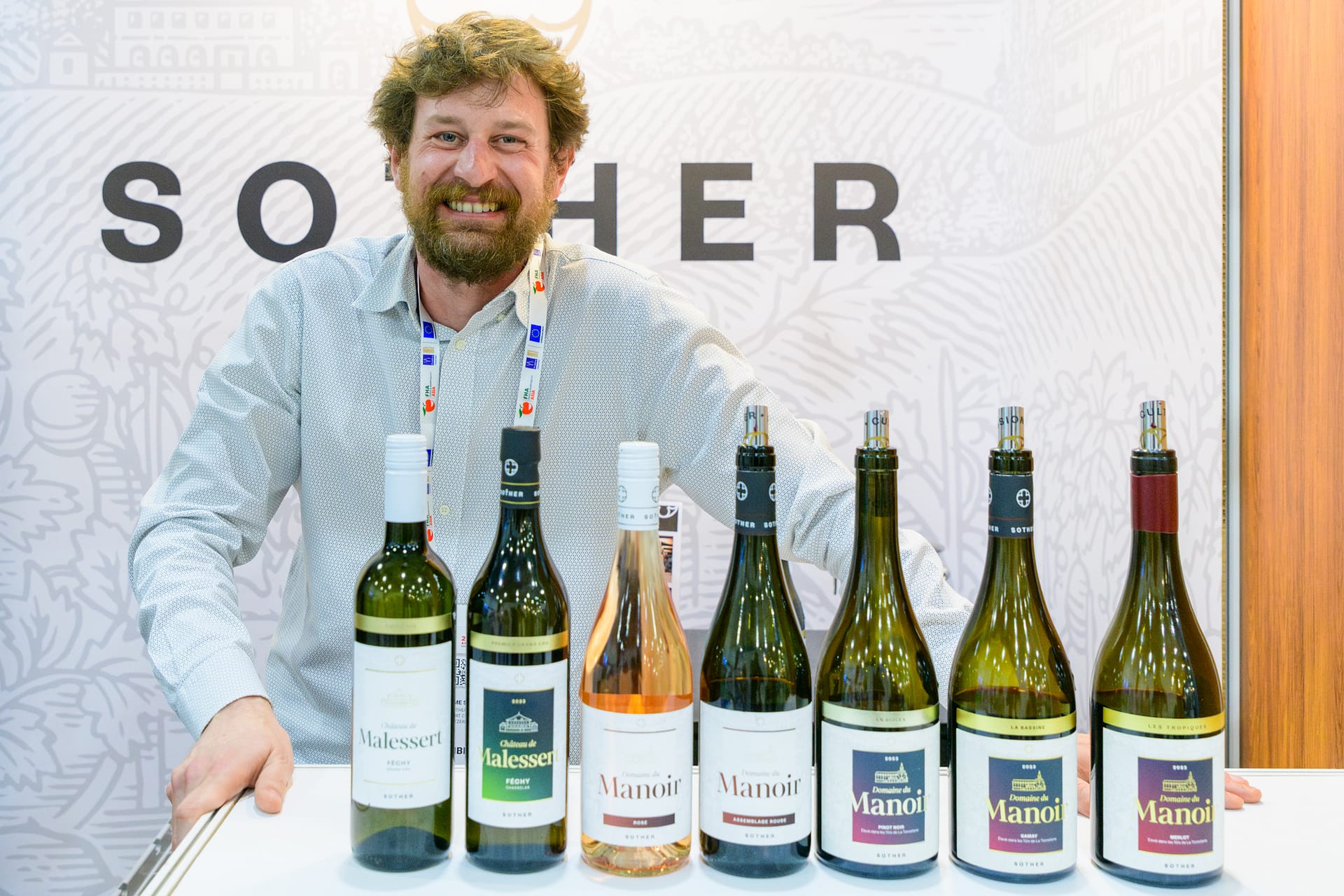

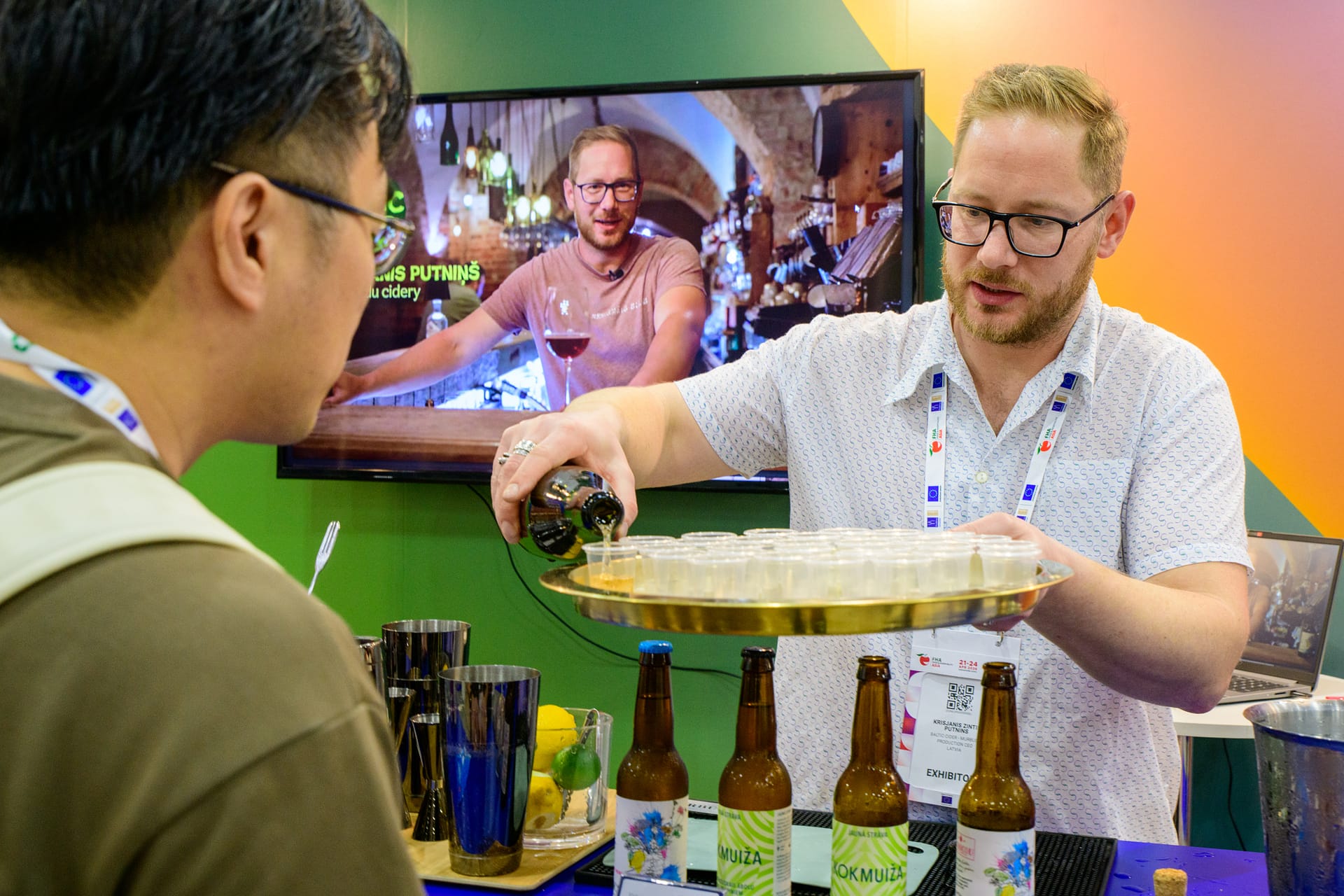
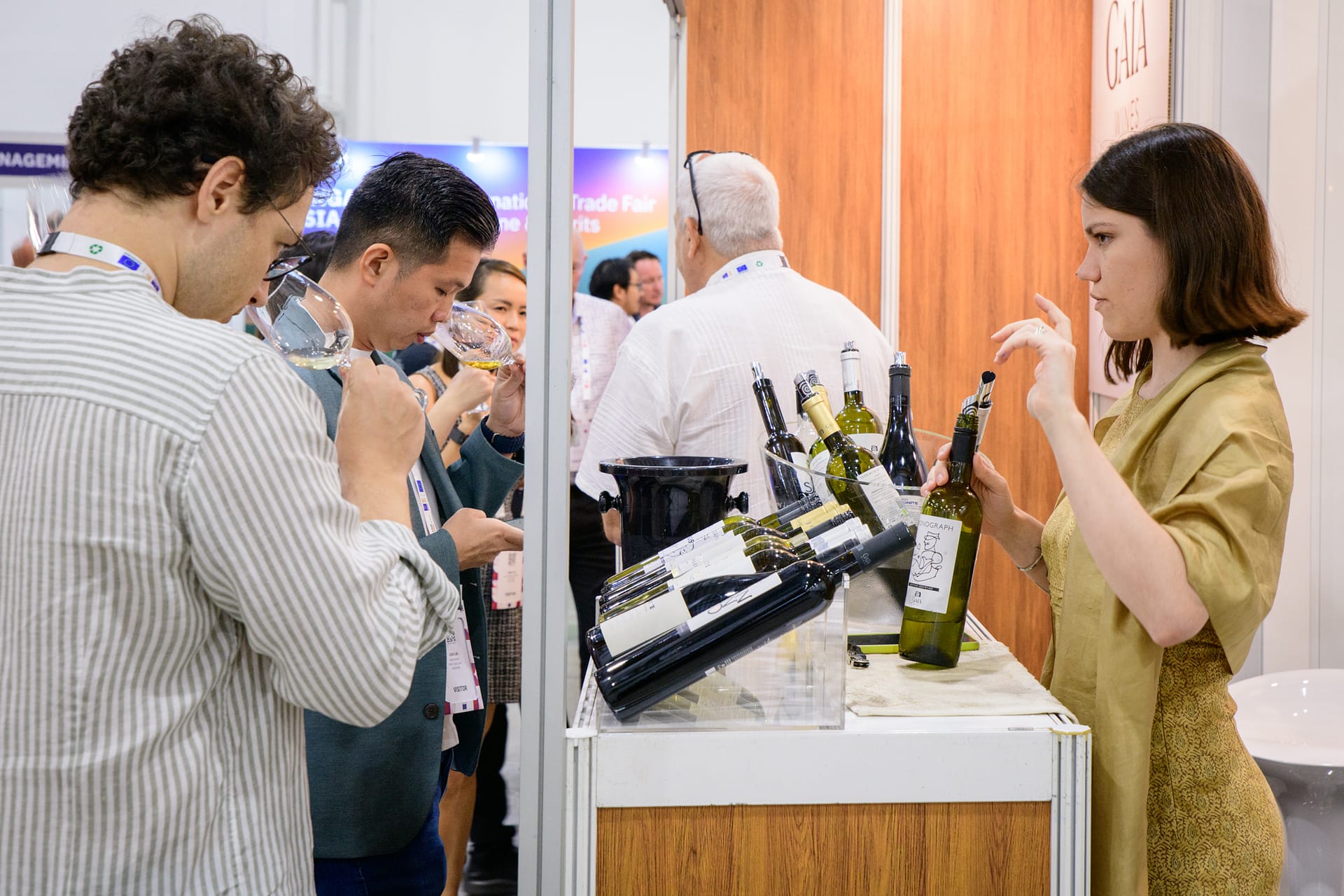

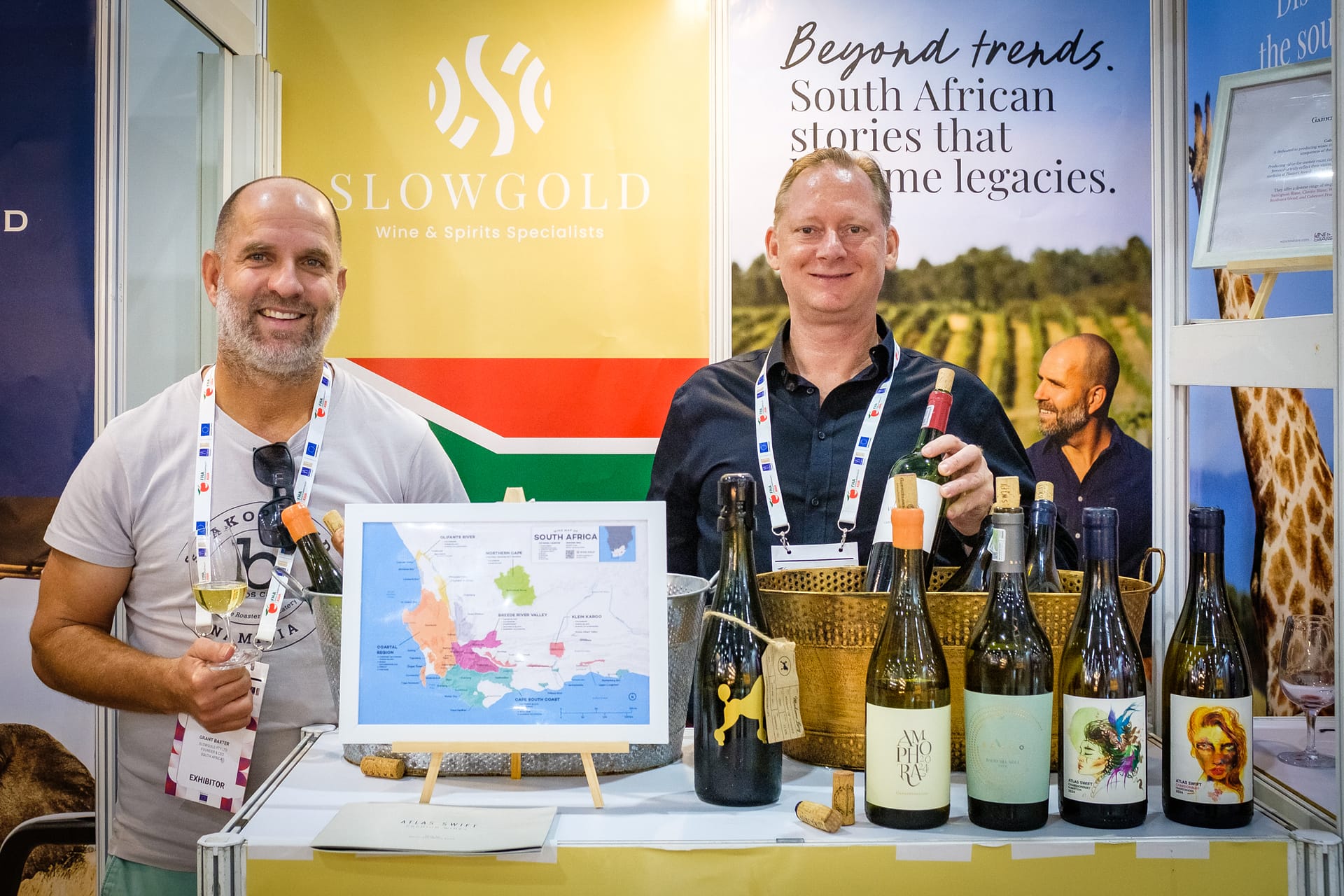
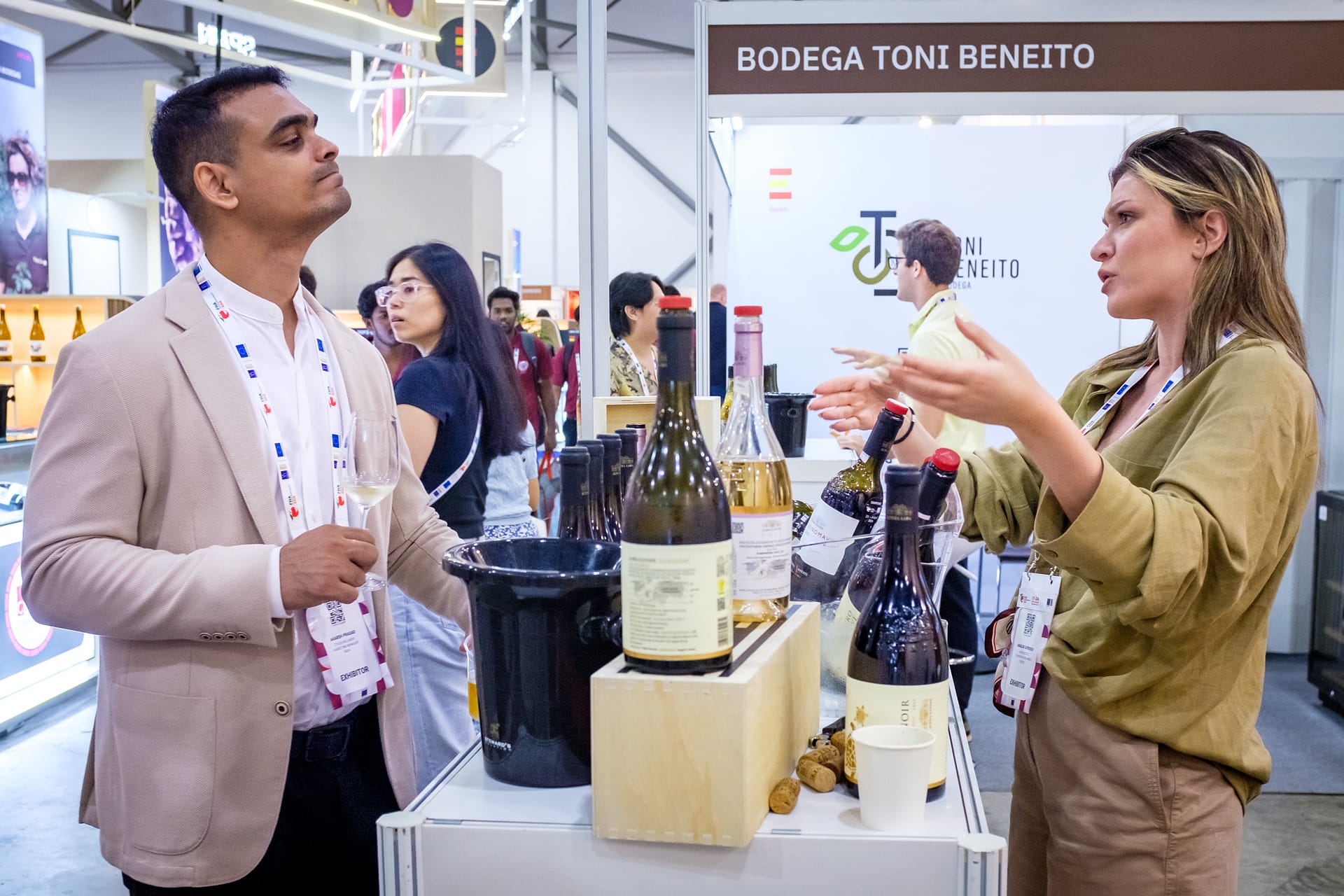

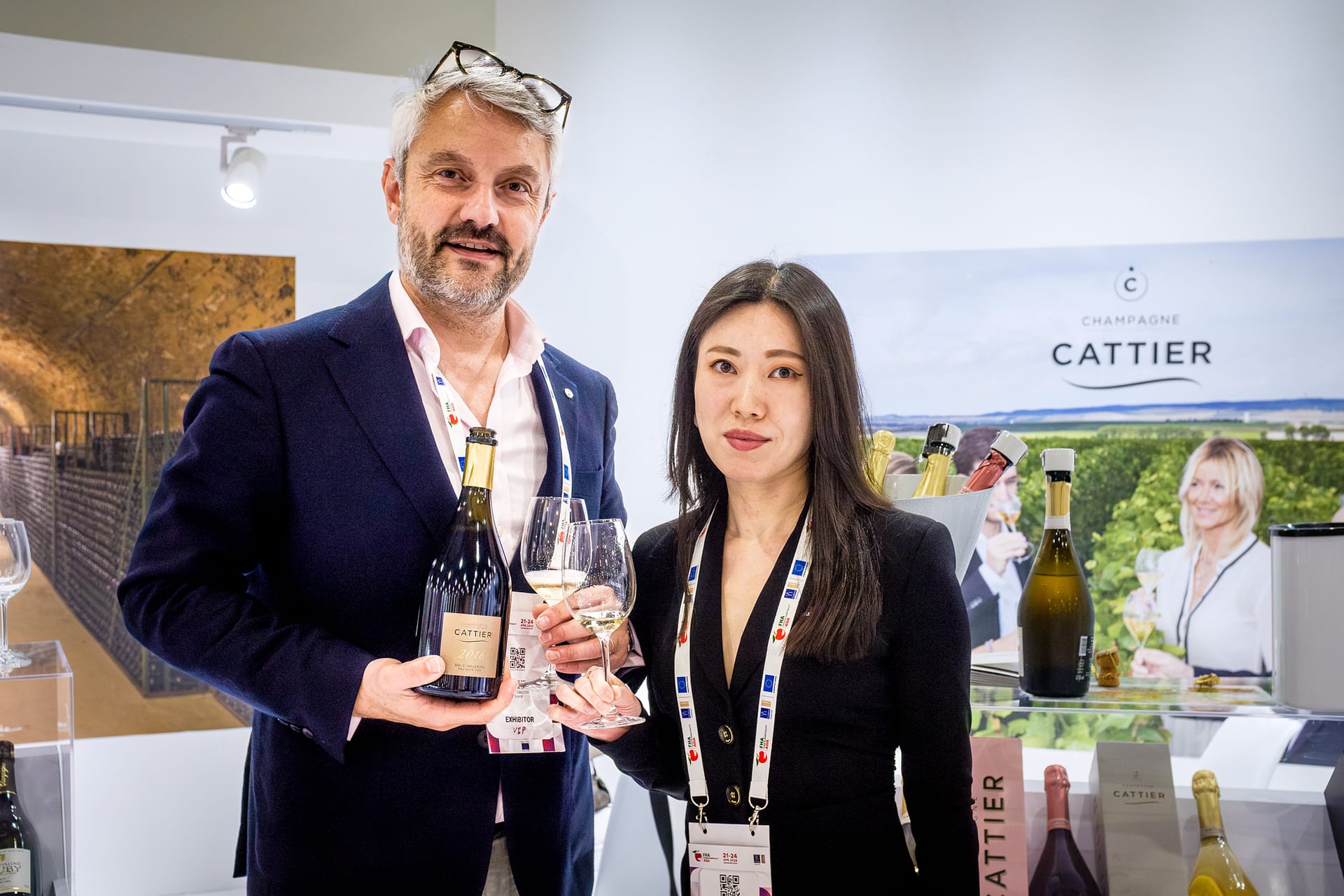
ProWine Singapore 2026 was held from 21 to 24 April at Singapore Expo in Changi, a vast exhibition complex strategically positioned at the end of an MRT line and directly connected to the airport. This sixth edition brought together more than 200 exhibitors from 24 countries.
Spain and Germany came out in force, with China and France close behind. There was also an appealing European Union bar, pouring drinks from most member states – a fun way to send your taste buds travelling and try drinks from unexpected places. Luxembourg sparkling, anyone?
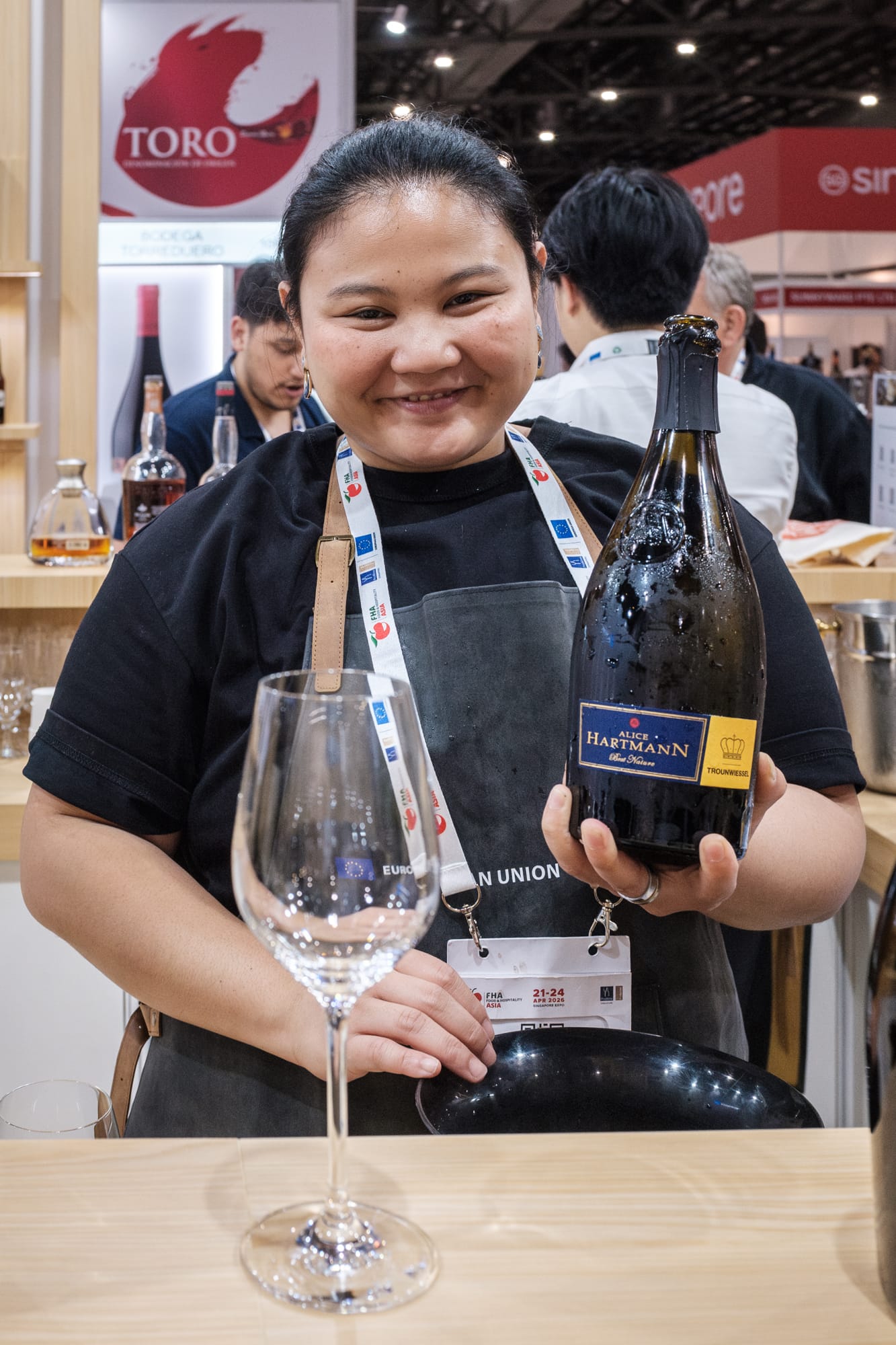
We met too many interesting people to mention them all, but here are a few of the wineries, people and conversations that I wanted to share with our readers.
INDIAN WINERIES
I was keen to learn more about Indian wine, which had been on my radar for some time but which I had not yet had the chance to explore firsthand, and India had an entire block at ProWine Singapore, with top spirits and several wineries on show.
The operation was backed by APEDA – the Agricultural and Processed Food Products Export Development Authority, a body under India’s Ministry of Commerce and Industry – represented at the fair by Harpreet Singh, Assistant General Manager.
The Indian government has made the promotion of food and drink exports a formal priority, and wine is fortunately part of that effort. Since 2024, India has been reducing export taxes on alcoholic products in a concerted attempt to open new channels, and the figures reflect that push: the Indian wine market is currently valued at USD 229 million and growing at around 16 per cent annually, with projections placing it at USD 892 million by 2033. And yet it still accounts for less than one per cent of India’s total alcohol consumption, which gives a sense of its staggering room for growth.
On the export side, the UAE is the dominant destination, receiving four times more Indian wine than the second-largest market, Hong Kong. The UAE, the Netherlands and Hong Kong together account for close to half of all Indian wine exports by value. Singapore, Japan and South-East Asia appear to be the next frontier, as evidenced by India’s strong presence in Singapore.
Sula Vineyards
India’s largest wine producer, Sula Vineyards was represented by the eloquent Sahil Misra, Global Brand Ambassador and Global Head of Exports. I had never tried the wines before, but I was well aware of the brand, not least because of its recent acquisition of the Chandon winery in India, which promises exciting things to come.
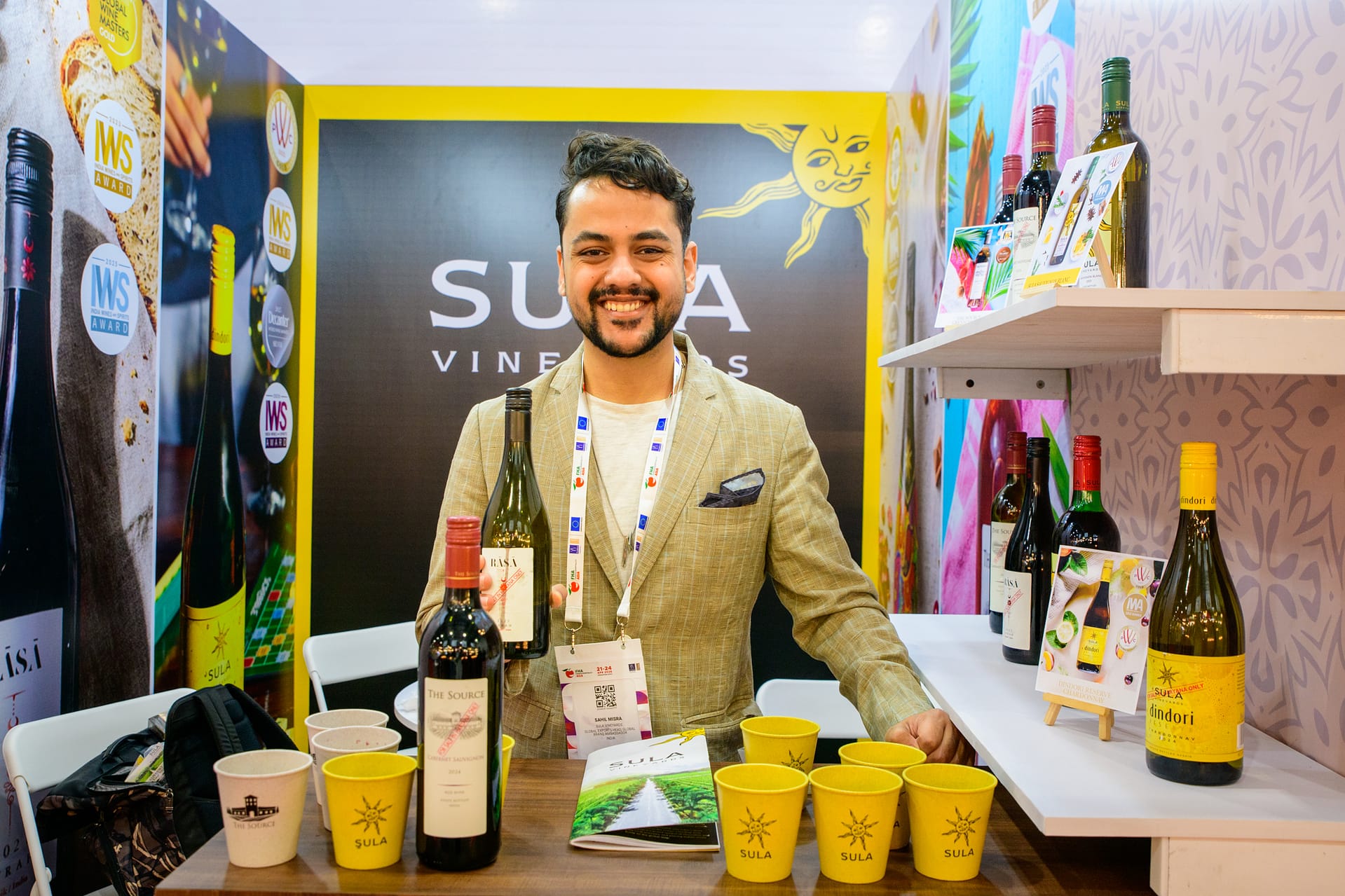
Sula was founded in 1999 by Rajeev Samant, who left Oracle in Silicon Valley and returned to his family land in Nashik to plant Sauvignon Blanc and Chenin Blanc with the help of eminent California winemaker Kerry Damskey, at a time when Indian wine was barely a category. Fewer than ten commercial wineries were operating in the entire country in 1999, and total domestic wine sales were still only around 600,000 cases a year as late as 2005. Today, there are more than 110 commercial wineries in Maharashtra and Karnataka alone, and Sula produces over three million cases annually and exports to more than 30 countries. Its Nashik estate receives over 300,000 visitors a year, and the winery claims to be “Asia’s most visited vineyard”. The portfolio spans Chenin Blanc, Sauvignon Blanc, Riesling, Zinfandel, Shiraz and more – all international varieties that Sula helped introduce to India – and the estate has been one of the key forces in putting the Nashik Valley on the world wine map.
From the wines I tried at the show, I was impressed by the consistent quality of the range, from the everyday table-wine classics to the top-of-the-line: the Shiraz Rāsā, which was really beautiful and which I would love to revisit over dinner.
Kasura Wines
I was very happy to meet Tushar Kute, founder and director of Kasura Wines, a young winery presenting its first vintage. Tushar came from a background in real estate, with the idea of building a consumer brand rooted in Indian agriculture and craftsmanship, which over time grew into a serious commitment to winemaking and the wider drinks business.
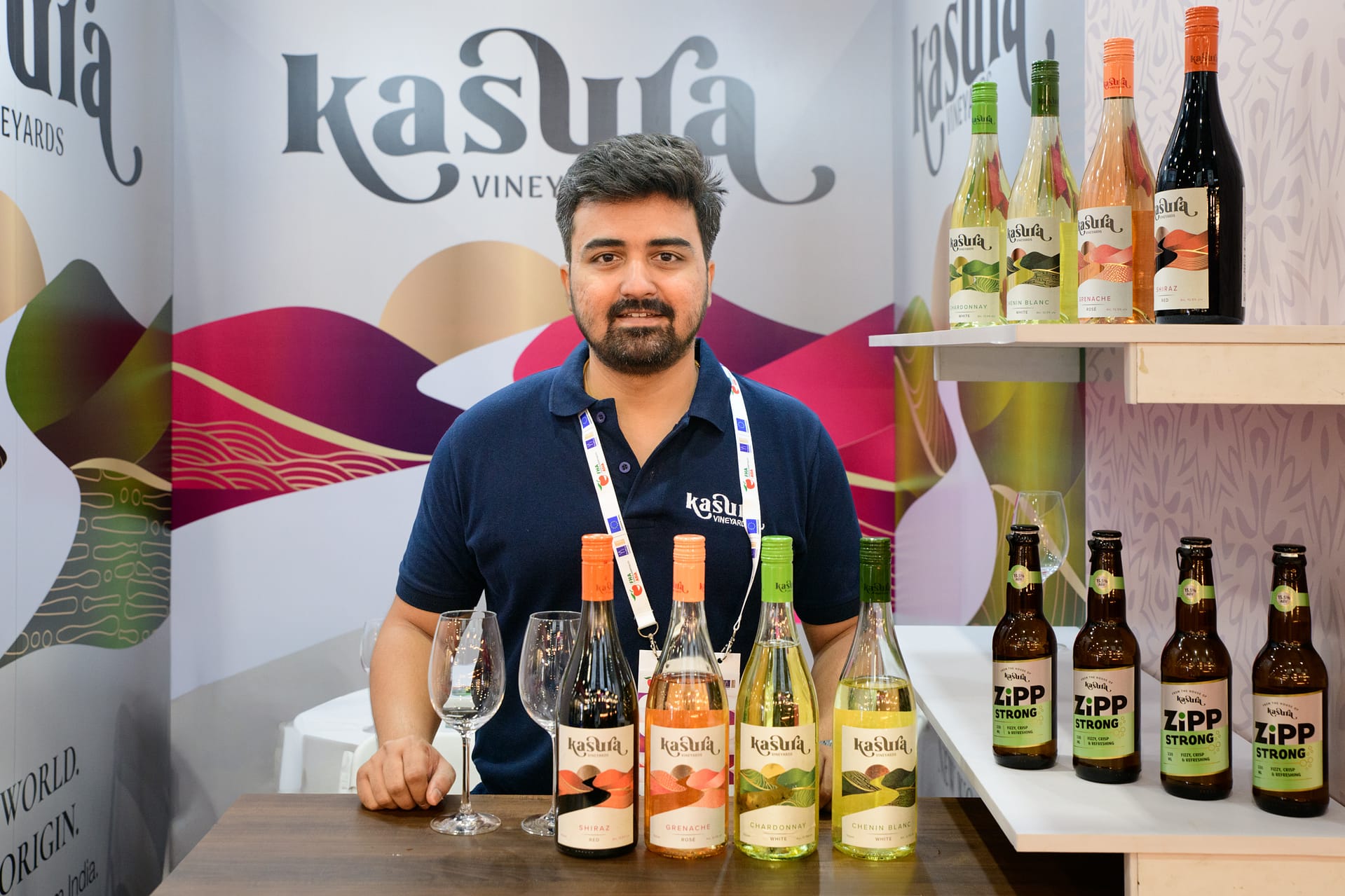
Chatting with him made me root for them. There is always something moving about seeing someone build a winery from scratch, driven by passion and a desire to do things properly.
The choice of place is personal – Jalna is Tushar’s home region – but it is not only sentimental. He and his team saw real viticultural promise there: a climate and soil profile suited to grape growing, along with the chance to build something distinctive away from India’s more established wine areas and to help shape a new wine identity within Maharashtra.
Their head winemaker is an Indian professional with international training and experience, and her approach blends classic winemaking with a modern reading of the Indian palate and local growing conditions.
The Kasura team is working hard to bring their wines up to international standards and, from what I tasted, I would say they are on the right path. At the moment, they offer a single line of four varietal wines – a red, a rosé and two whites – and you can tell they are a labour of love. I was especially taken by the whites, which showed good balance and exotic notes.
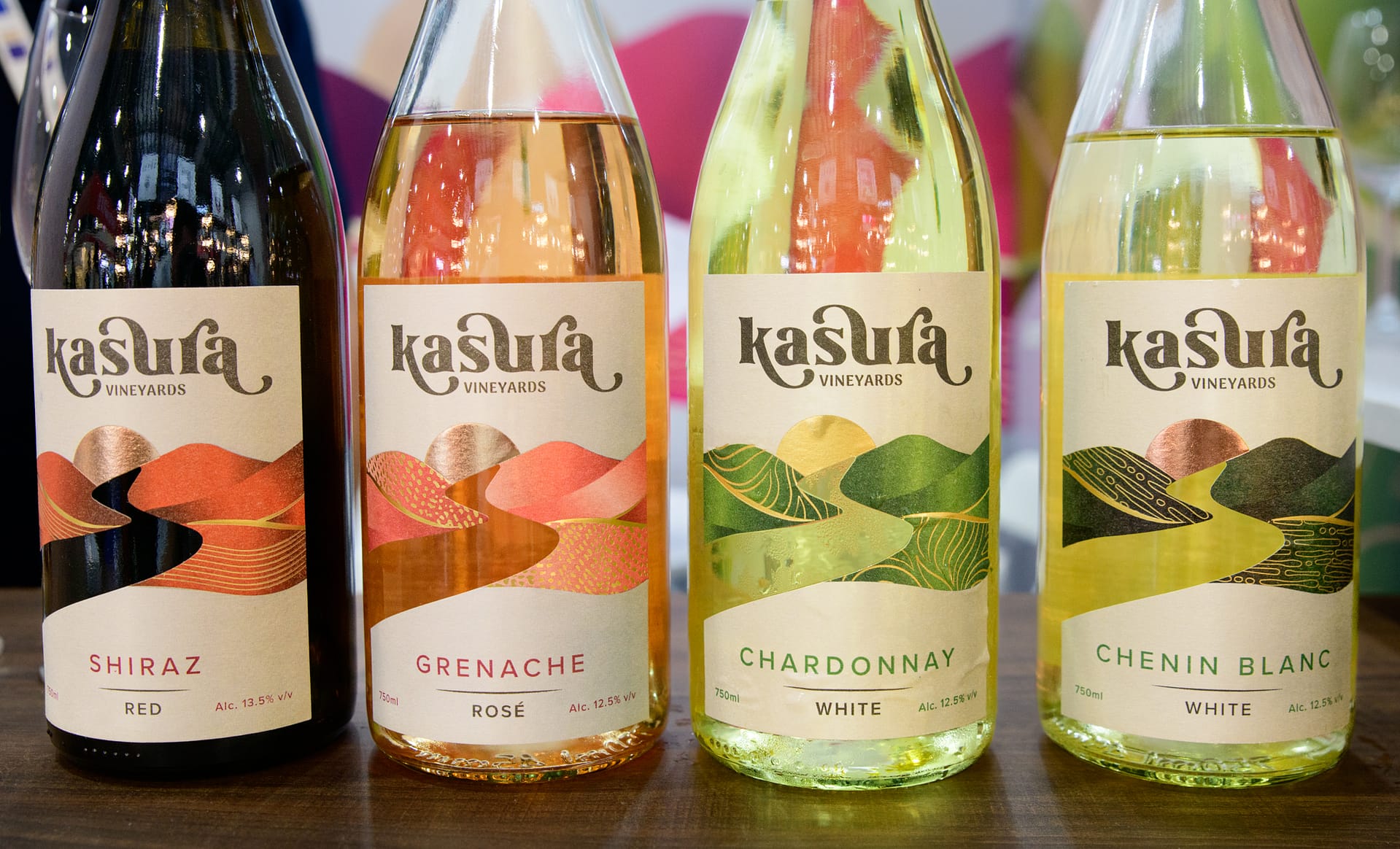
The label represents the Kasura River, whose level is known to fluctuate dramatically, just as it does when the bottles gradually empty.
Fratelli Wines
Fratelli is one of India’s best-known premium producers, and Sheetal Kakade, Senior Manager for Export and Travel Retail, offered friendly and enthusiastic insight into this unusual company.
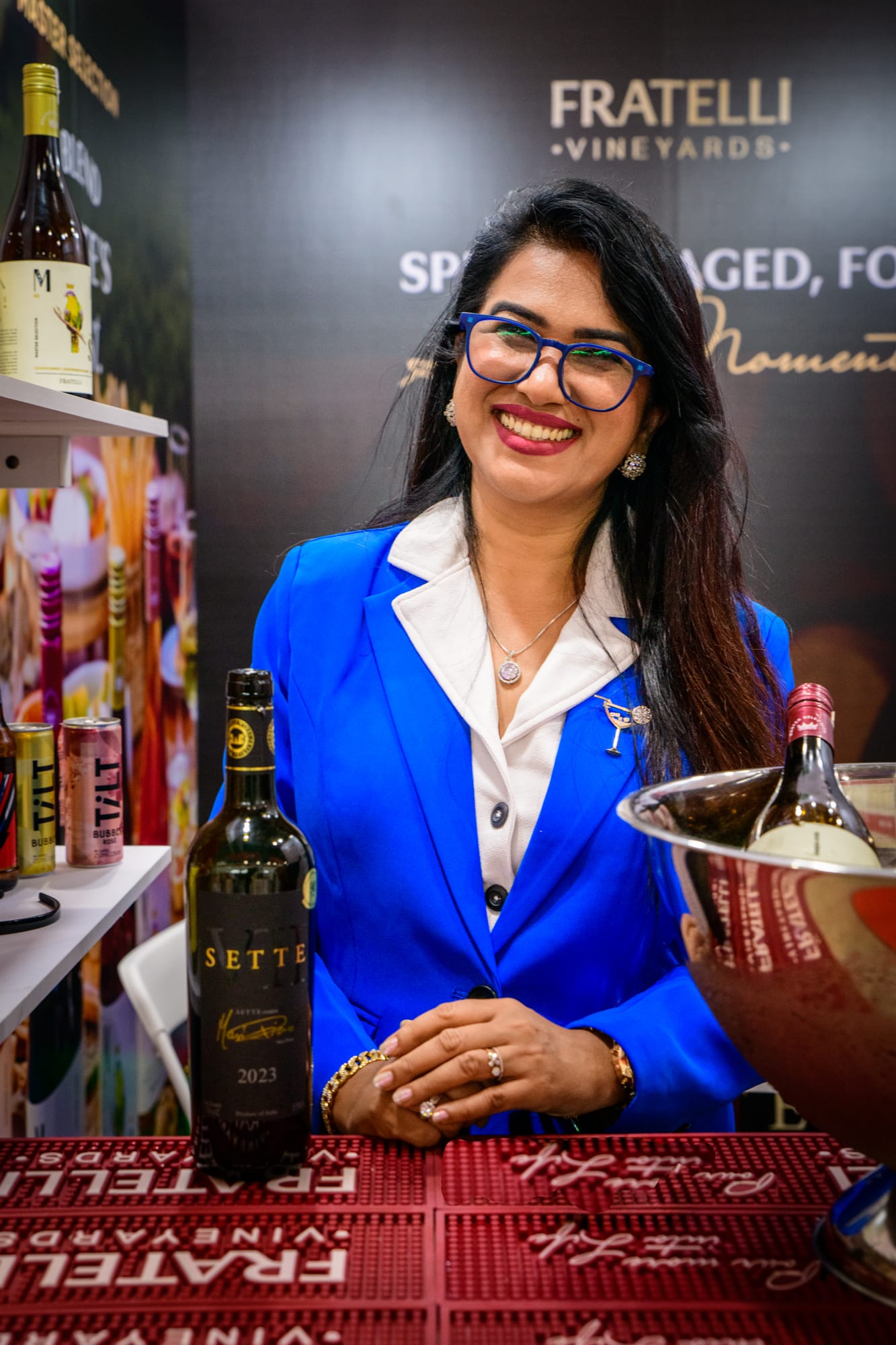
Fratelli was established in 2007 as a joint venture between the Sekhri and Bhargava families from India and the Secci brothers from Italy, and that Italian heritage shows in the wines, which tend towards structure and restraint in a way that sets them apart from some domestic competitors. The estate lies in the Akluj region of Maharashtra, where it grows Sangiovese, Cabernet Sauvignon, Sauvignon Blanc, Chardonnay and Chenin Blanc. It has a broad selection of labels, covering a wide range of budgets and occasions.
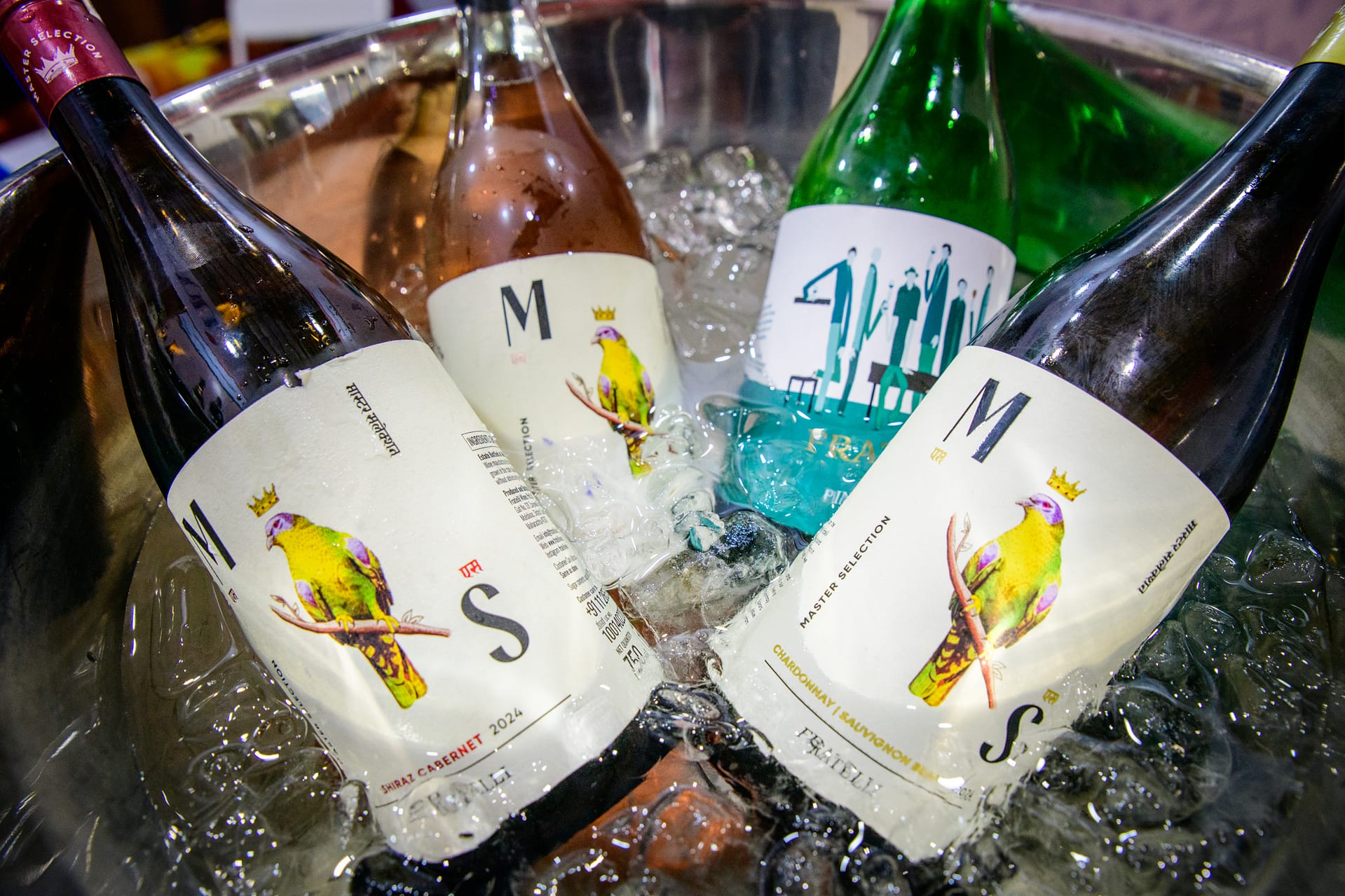
Its most celebrated label is J’Noon, a collaboration with Jean-Charles Boisset, the French-Burgundian vintner and proprietor of the Boisset Collection. The partnership began in 2016, when Boisset visited Fratelli’s Akluj estate and was captivated by a wine he tasted from the barrel. J’Noon launched in 2018 as an ultra-premium range grown on Fratelli’s estate vineyards on the right bank of the Nira River. The name comes from the Urdu word junoon, meaning passion. Sadly, this particular wine was not available at the booth, but I did taste the rest of the range and was particularly taken with the wines from the Master Selection, as well as their signature red blend, Sette, sourced from low-yielding vines. This is one to bring to dinner with serious wine lovers and serve blind. Be ready to surprise people.
I really enjoyed discovering these three producers, from different regions and terroirs but with the common goal of bringing India into the international wine map and they also demonstrated the ability to adapt and think outside the box the ‘old world’ finds so hard to outgrow. For example, they already offer wines in small format 33cl bottles, for casual drinking between friends — something I’ll admit I shrugged at but seems to actually be a smart way of reaching those who’ve been neglected by a somewhat elitist and clunky wine industry.
UNITED HUNGARIAN WINERIES
I was already somewhat familiar with Hungarian wines after documenting a wine cruise along the Danube, but I was eager to delve deeper, so I was delighted to find the booth of United Hungarian Wineries and its representative extraordinaire, Zsolt Féher.
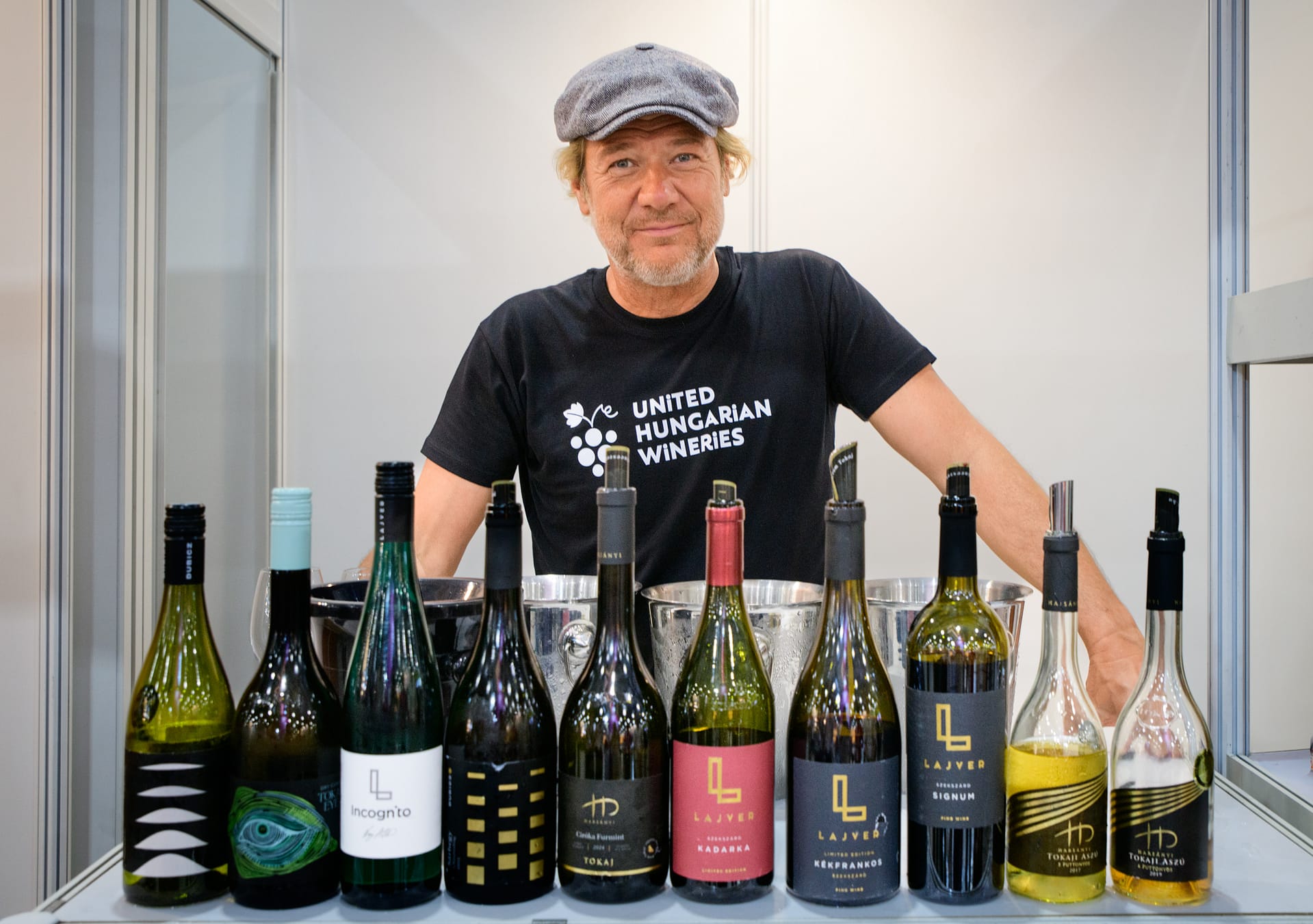
Zsolt is quite a character, and many brands would be hard-pressed to find someone with this mix of passion, energy and street-cat charm. This was evidenced by the long line of visitors coming to his booth, often for a second visit.
Hungarian wine has the same problem as other lesser-known wine-producing nations trying to break into Asian markets: a single boutique producer from a region nobody has heard of isn’t going to get a distributor meeting. But three regions – Szekszárd, Mátra, Tokaj — stand a stronger chance.
Zsolt himself was behind this “union”, founded in 2022 to bring together three estates from Hungary’s most distinctive wine regions, and he runs it with a philosophy rare in business. Like the musketeers, it is “One for All and All for One”: interested buyers need to order from all three wineries or there is no deal. It can be a hard bargain, but one he believes is necessary if the union is to last. “And in the end, the clients are always happy,” he told me, “because with our diverse offering, they can cater to all sorts of buyers and help people discover the diversity of Hungarian wines.”
Lajvér Winery – Szekszárd
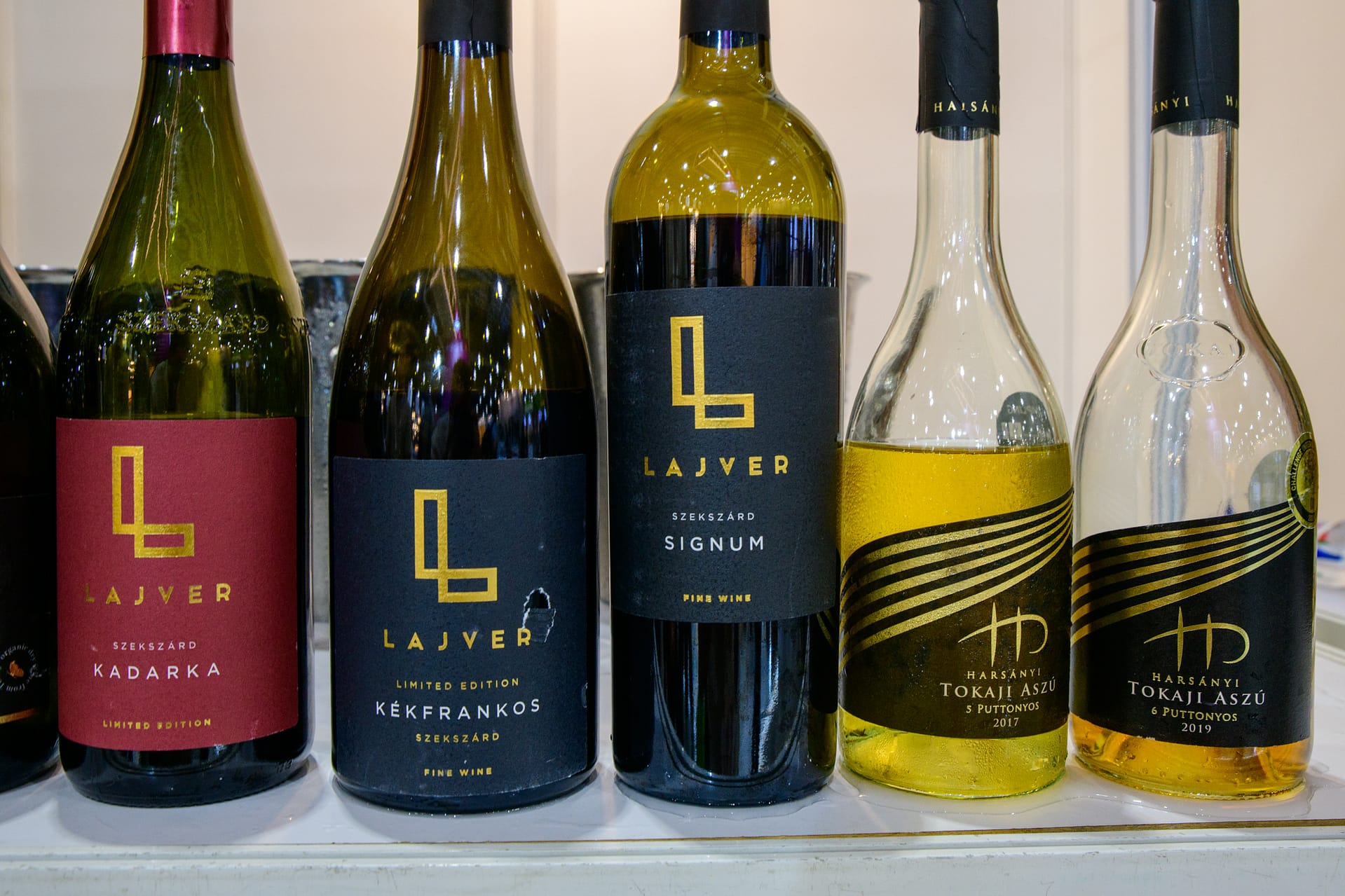
Lajvér comes from Szekszárd in southern Hungary, on loess and red-clay soils near the Danube. In this region, better known for red wine, the key grape is Kékfrankos – known as Blaufränkisch in Austria – which finds a warmer, riper expression here than it does further north. For me, however, Kadarka takes the crown. This indigenous red grape, aromatic and light-bodied, is wonderfully versatile and gives winemakers an ideal playground, appearing in all three colours: blanc de noir, rosé and red.
Lajvér also poured a superb Bikavér (Bull’s Blood), the traditional blend of Cabernet Sauvignon and Merlot complemented by native Kékfrankos and Kadarka: SIGNUM was spicy, oaky and still unmistakably Hungarian in spirit.
Lajvér has 26 hectares and produces around 400,000 bottles a year.
Dubicz Winery – Mátra
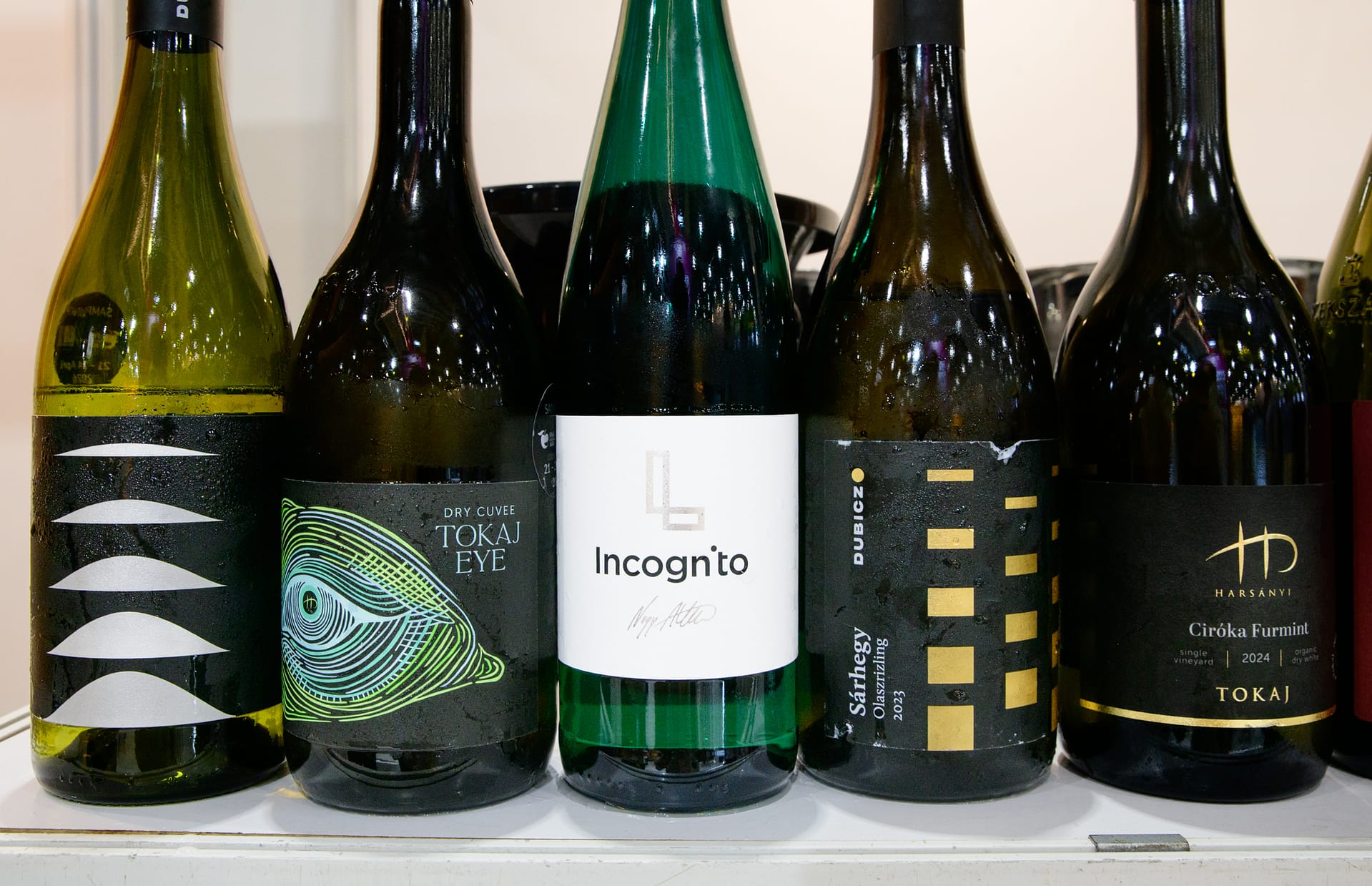
Dubicz operates in the Mátra wine region of northern Hungary, a hillside area dominated by white grape varieties such as Sauvignon Blanc, Olaszrizling (Welschriesling), Irsai Olivér, Cserszegi Fűszeres and Chardonnay. With 114 hectares and 400,000 bottles a year, it is the largest of the three estates in the group. The volcanic soils of the Mátra hills lend the whites a lovely minerality, which I found particularly seductive in their Premium Irsai Olivér, a very interesting grape I would love to encounter more often. In this expression it offered hints of pear and even a touch of mint on the nose, before unfolding into almost saline, juicy peach. Their Olaszrizling – aged in barrels made from five different oak types – was also delicious: fresh, flavourful and perfect as an aperitif.
Harsányi Winery – Tokaj
Harsányi is the Tokaj member of the group, and Tokaj needs little introduction: one of the world’s great sweet-wine regions, home of Aszú, made from botrytis-affected grapes and described in the eighteenth century as the “wine of kings and the king of wines”. Today, however, Tokaj’s dry wines are finally gaining the recognition they deserve, and dry Furmint and Hárslevelű are now serious contenders that wine lovers should watch closely. Harsányi’s Ciróka Furmint was a delight: medium-bodied, with a fine sense of tension, notes of green apple and citrus, complemented by elegant minerality and a creamy, almost flinty finish. I would happily buy a case of it.
Harsányi has 17 hectares and produces around 80,000 bottles a year.
MY SPANISH SELECTION
Spain was widely represented, and many wine regions even had their own pavilions, including Toro, Valencia and Castilla y León.
Here are two producers that caught my attention – and a little piece of my heart.
Casa Los Frailes – Valencia
The Casa Los Frailes booth drew me in with the friendly demeanour of export sales manager Daniel Villanueva and the simple, charming design of the labels.
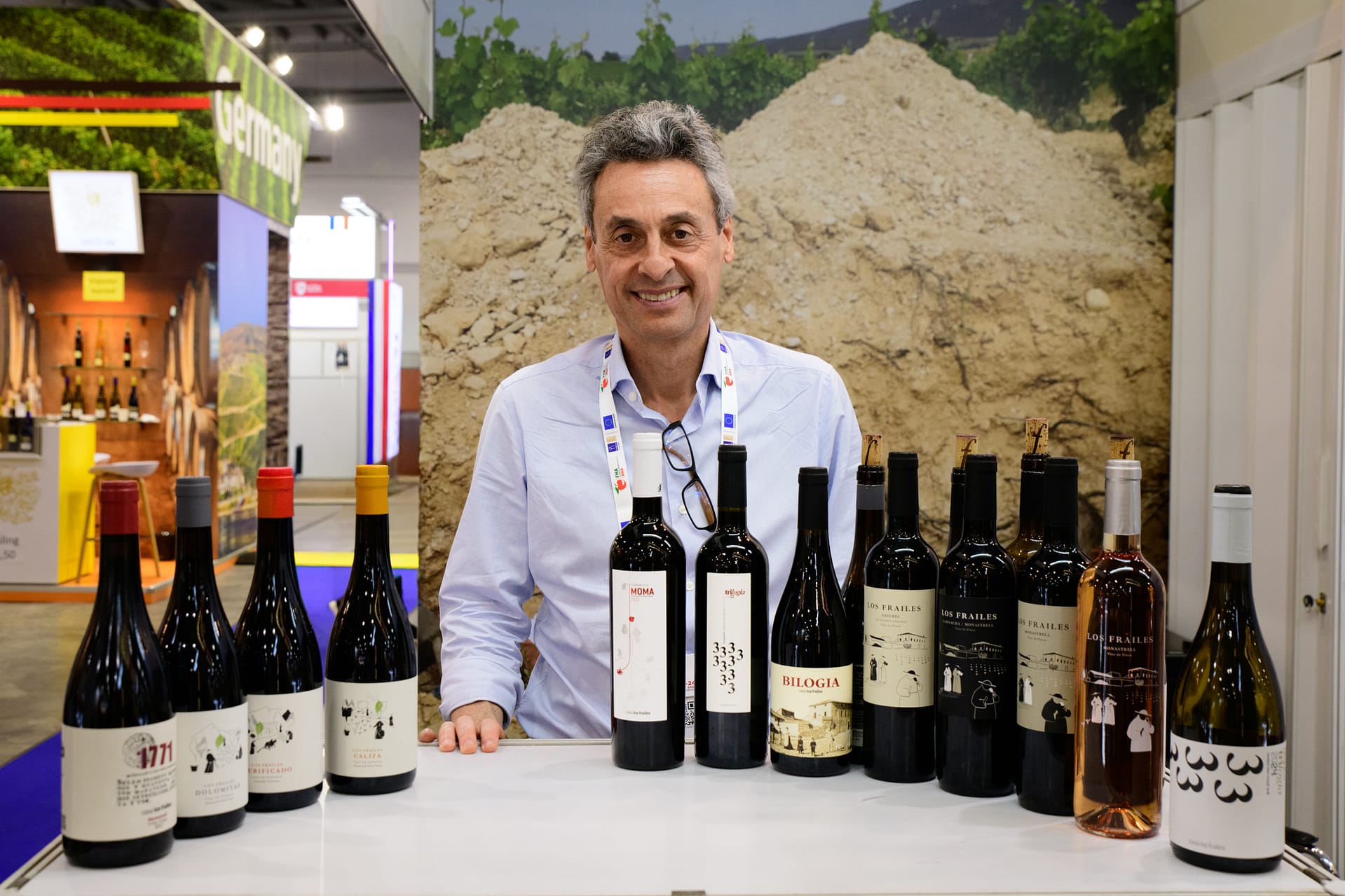
Casa Los Frailes is based in Fontanars dels Alforins, in the interior of Valencia.
The estate has been in the Velázquez family since 1771 and the family is now in its thirteenth generation. The name honours the Jesuit friars who made wine there for two centuries before them – frailes means friars – and the property was one of the first estates in Spain to gain organic certification, in 2000.
The 162-hectare estate sits at 650 to 700 metres above sea level, where the Mediterranean heat is sufficiently tempered to give the wines a freshness that few coastal Valencian estates enjoy. Monastrell is the dominant red variety, alongside Syrah, Garnacha and local white grapes. The estate believes strongly in terroir identity, and many of their wines are built around that idea. The wines I tasted had a je ne sais quoi that won me over immediately. I was particularly taken by the Bilogía and Trilogía blends.
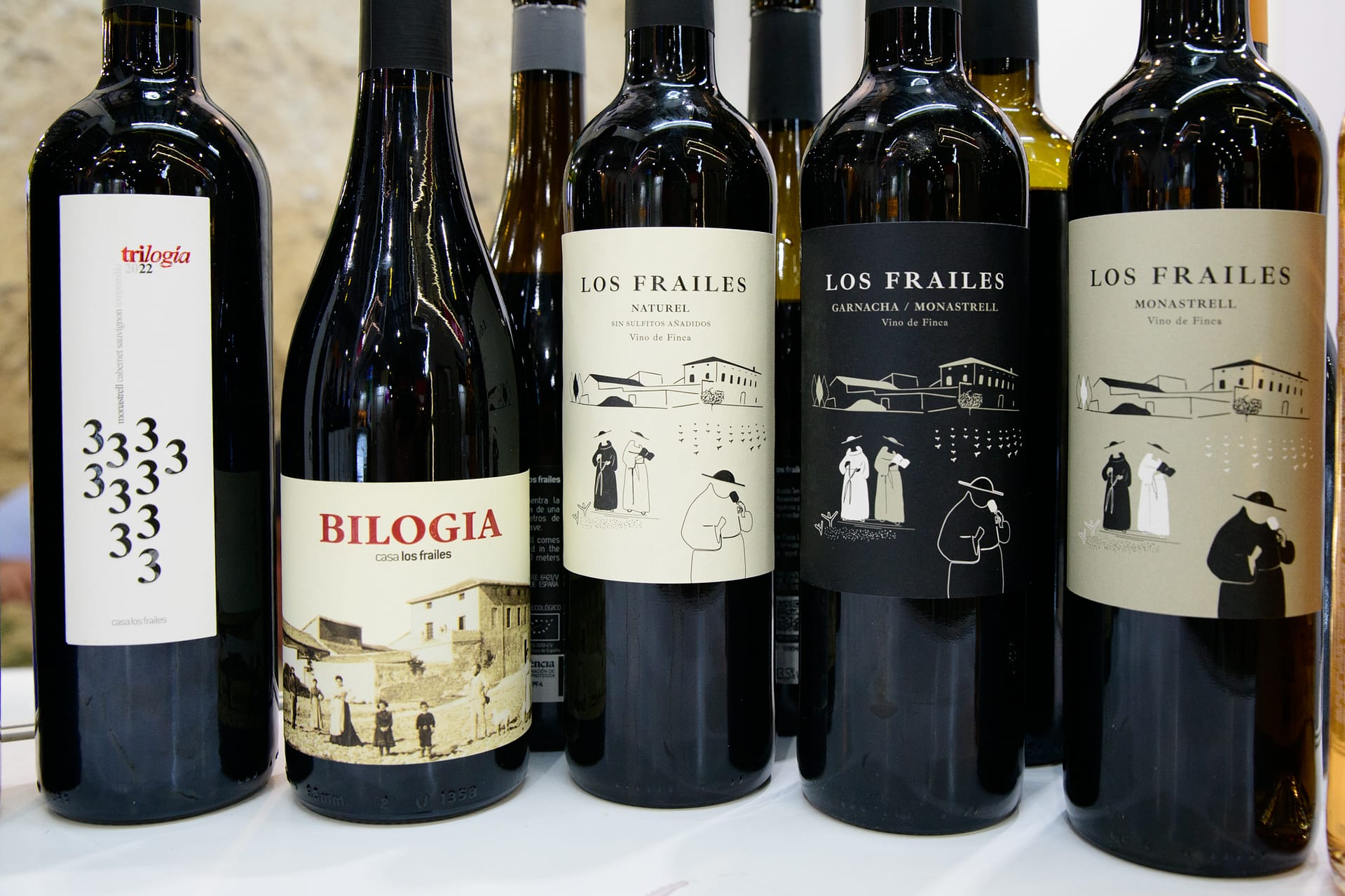
Bilogía is half Monastrell, half Syrah: the Monastrell comes from La Encina, a parcel of 30-year-old bush vines at 650 metres on sandy red limestone, while the Syrah comes from Via Augusta, a parcel of white rendzina over limestone bedrock at 660 metres. Both are harvested by hand and vinified separately, with a three-day cold soak at 2°C before fermentation in stainless steel, followed by 18 days of post-fermentation maceration for the Syrah and 22 for the Monastrell. Trilogía is 40 per cent Monastrell, 40 per cent Cabernet Sauvignon and 20 per cent Tempranillo, aged for a year in Hungarian oak, which gives a softer, sweeter spice than French oak. Its first vintage was 2004, marking the debut wine of the thirteenth generation.
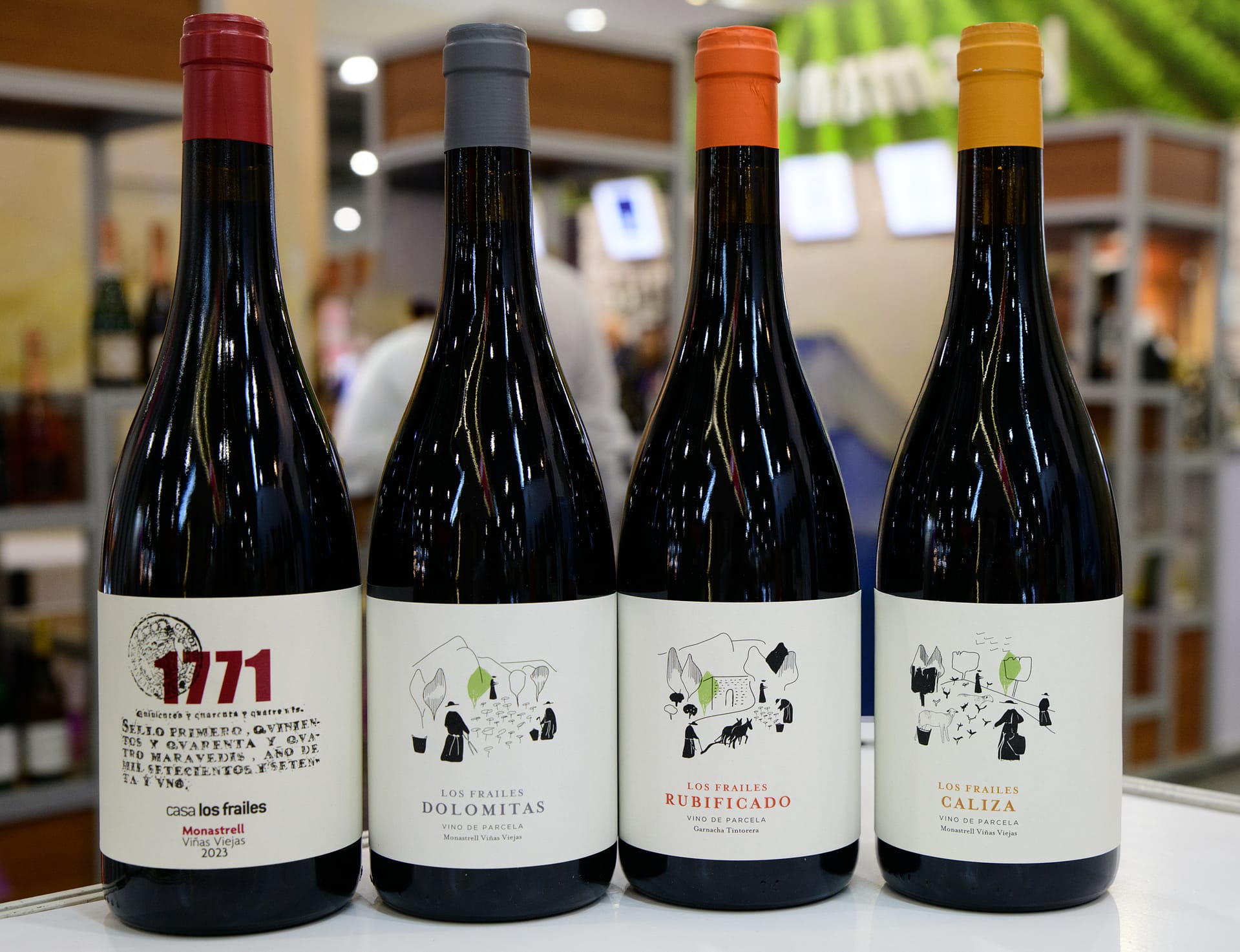
Both wines draw on the same parcel-by-parcel soil mapping used for the family’s three single-vineyard Monastrell wines: Caliza, Dolomitas and Rubificado. These three are perfect case studies in the influence of terroir and would deserve a proper comparative tasting for any wine student.
Clan del Vino – Castilla y León
Behind a simple booth, one could not help noticing the radiant smile of young winemaker Irene Arranz Pascual. Together with her partner, Fernando de Frutos Velasco, they have built a brilliant bodega in Castilla y León, and the wines feel like a true reflection of their attitude: solar, energetic and with an assumed sense of rebellion.
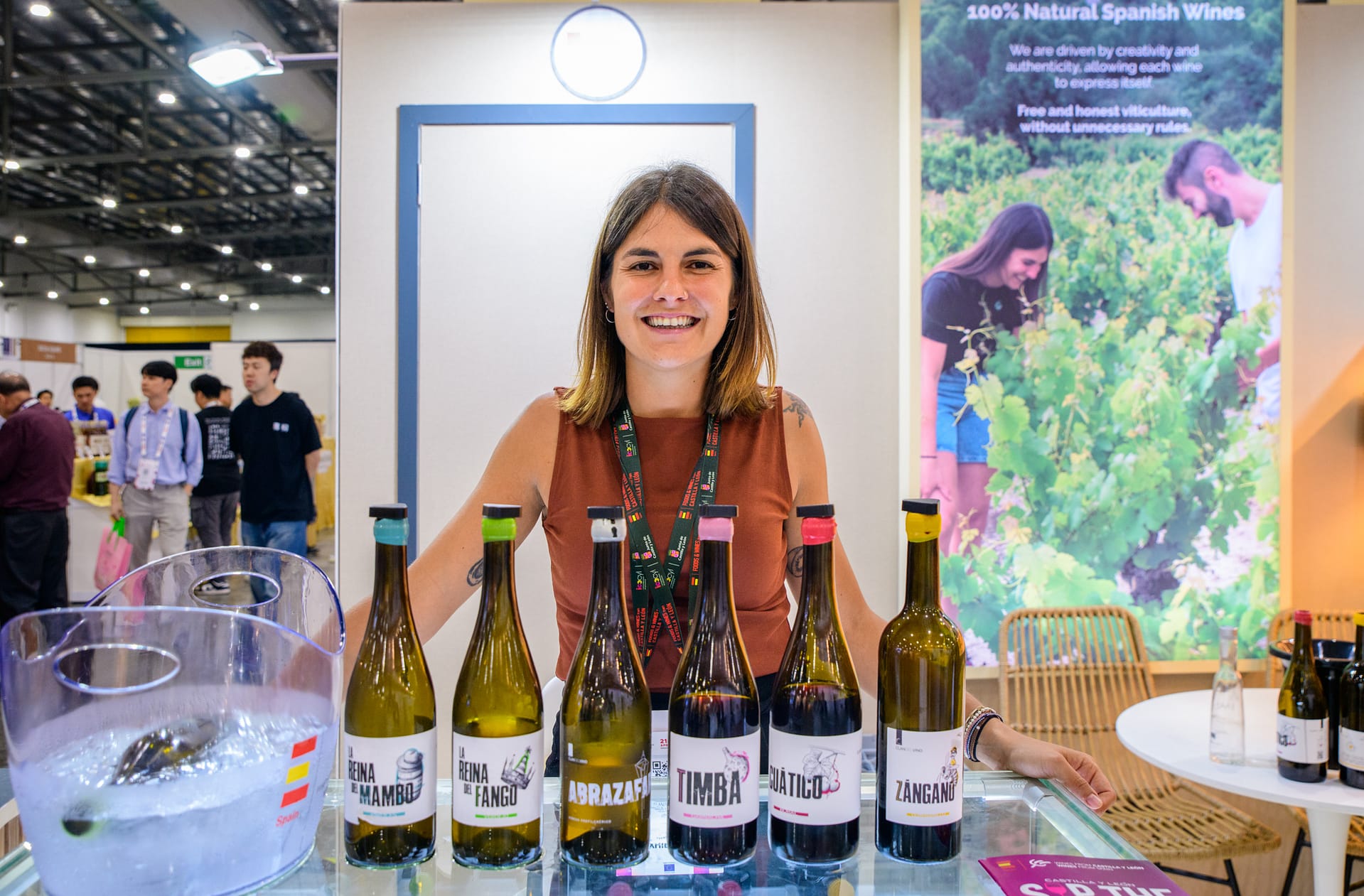
They clearly identify with the natural-wine movement, but I would bet most of those reticent to the movement would be blown away by their whites. They’re wonderfully clean, and still full of life.
“Yes, I know. That’s very important to us — I have a background in chemistry, so I’m actually very attentive to this and we strive to prevent the ‘funk’ which is often an excuse for poor winemaking”, Irene explained.
Part of their work involves helping to rescue native grape varieties such as Piruléls, which was close to extinction before they replanted and nurtured it, alongside more familiar varieties such as Verdejo, Tempranillo, Garnacha and Bobal.
One wine I would love to have access to locally is their beautiful La Reina del Mambo, an unfiltered, wild-fermented white made from 100 per cent Piruléls. Its profile is surprisingly complex, with expressive mineral and tropical-fruit aromas on the nose, balanced by a fresh, lightly citric palate, an elegant slightly oily texture and a gently spiced finish.
I highly recommend natural-wine importers to take a look at them. Their wines are genuinely special.
GERMAN WINES
Somewhere among the many booths on the main floor, a German wine bar had been set up for a series of masterclasses and presentations, most of them led by none other than Anna Zenz, the official “German Wine Majesty” – the annual ambassadorial title bestowed by the German Wine Institute on a young representative chosen from one of the country’s wine regions. Known for decades as the German Wine Queen, the role was renamed in 2025 when it was opened to male candidates.
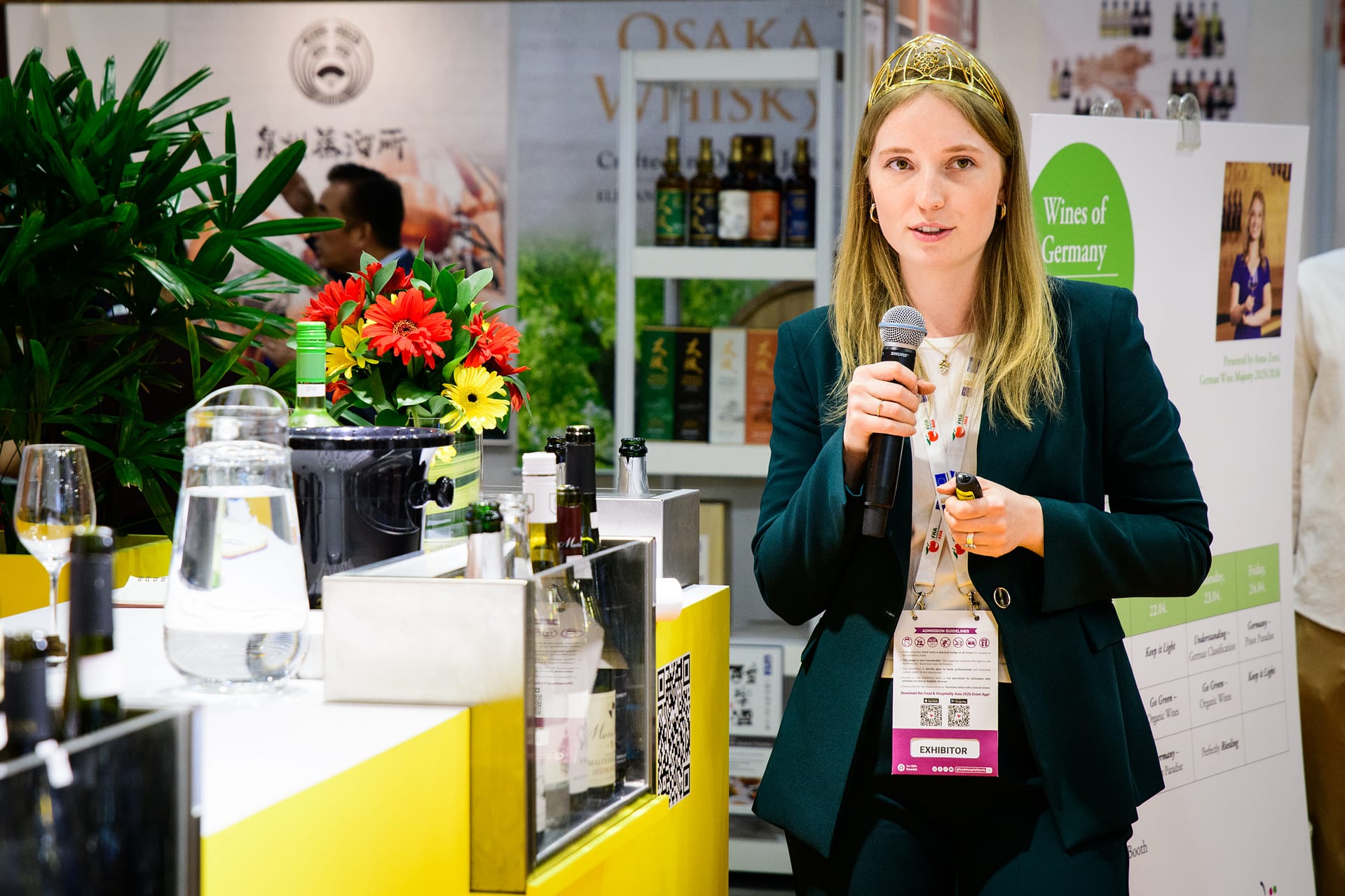
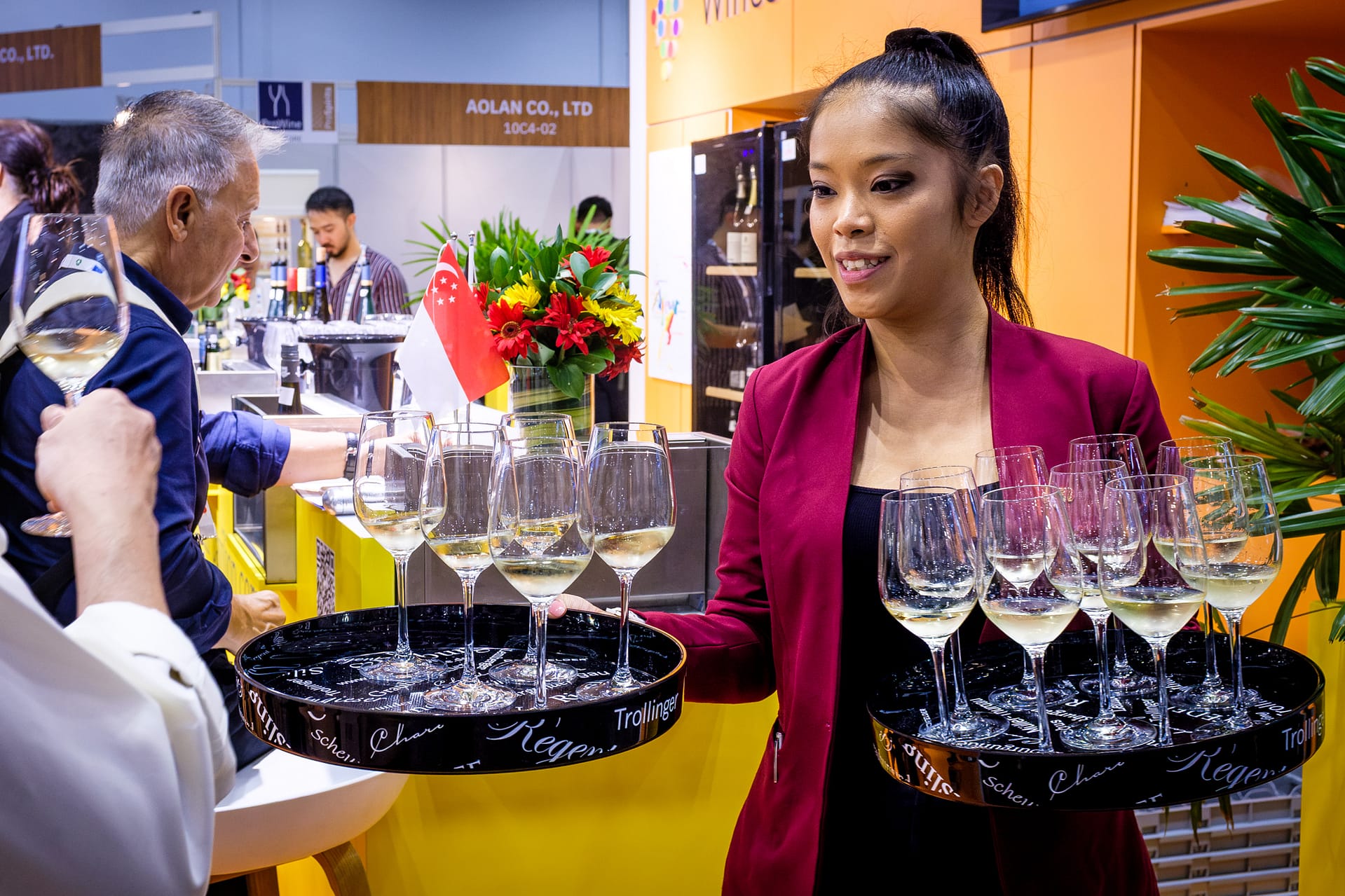
The German Wine Bar was also run by Nicole Roche, Beverage Manager at Restaurant Nouri and Appetite in Singapore – Nouri being a Michelin-starred restaurant whose wine programme is among the city’s best – as well as a DipWSET-qualified specialist working towards further certification. She has a gift for speaking about wine in a way that meets people where they are: never patronising, never over-technical. Kudos to the team, because the bar was never empty and people always seemed to be having a very good time.
Among the German wineries I stopped by, here are two I would especially like to mention:
Weingut Sinß – Windesheim
The Sinß family has been in Windesheim since 1791, and the current generation – brothers Markus and Johannes Sinß – is the eighth. I had the chance to meet Markus at ProWine Tokyo the week before, so it was a pleasure to see them again and taste the wines a second time.
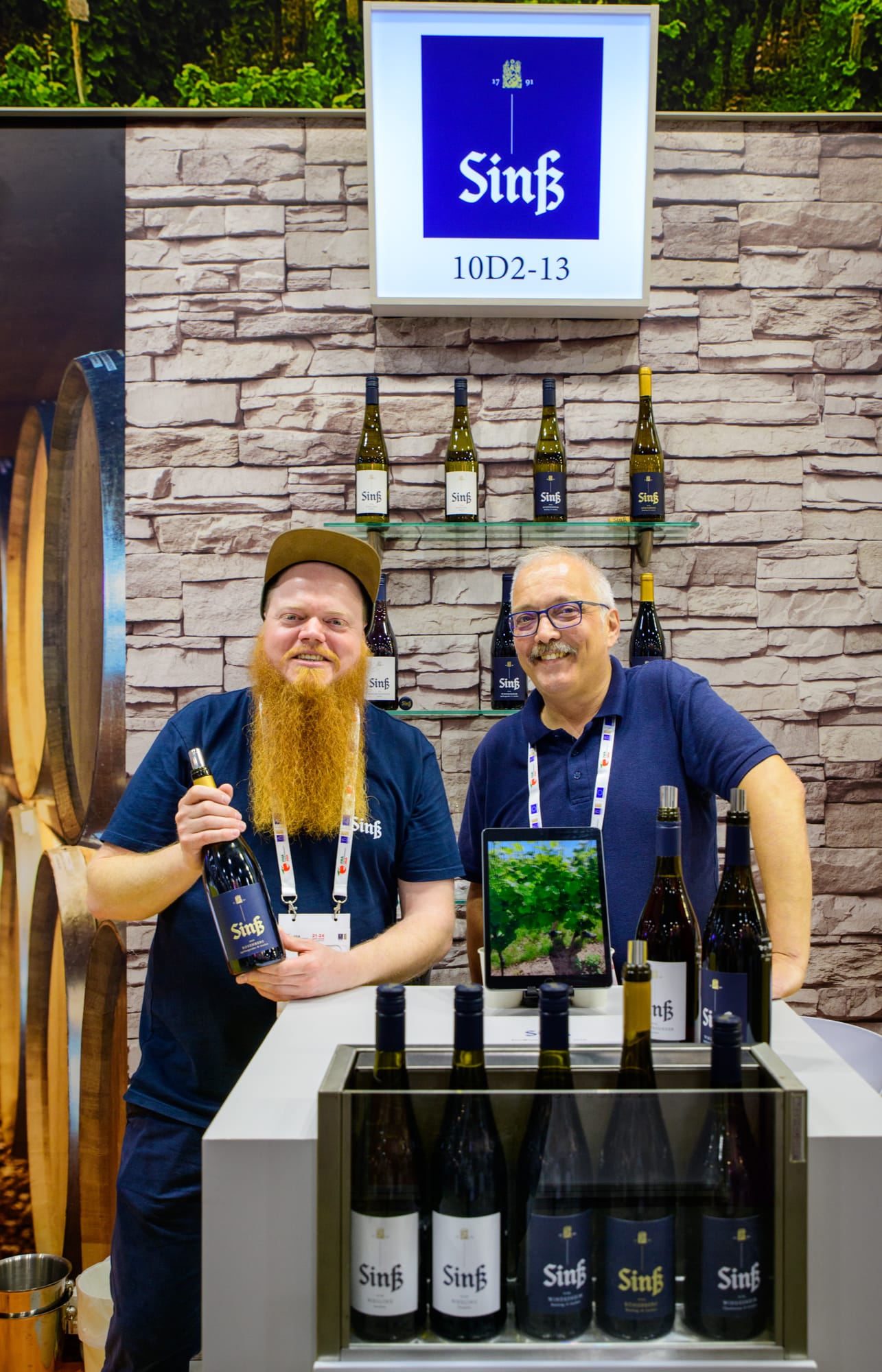
Their 13 hectares in the Nahe are farmed organically, which matters in a region with such varied soils – volcanic porphyry, sandstone, clay and loam – where terroir can easily be obscured by heavy-handed intervention.
The Nahe sits between the Mosel and the Rhine and remains less well known than its neighbours, despite the quality on offer. That ought to change, because these wines were splendid.
Among the bottles I tasted, the 2024 Riesling trocken had bright, easy freshness, with citrus, white peach, a hint of herbs and a clean mineral edge that kept it lively from start to finish. Nothing flashy, nothing overworked – just a very well-made white with real charm. The 2023 Spätburgunder trocken offered delicate red-berry fruit, a touch of earthy lift and a soft, savoury feel on the palate.
Bischöfliche Weingüter Trier
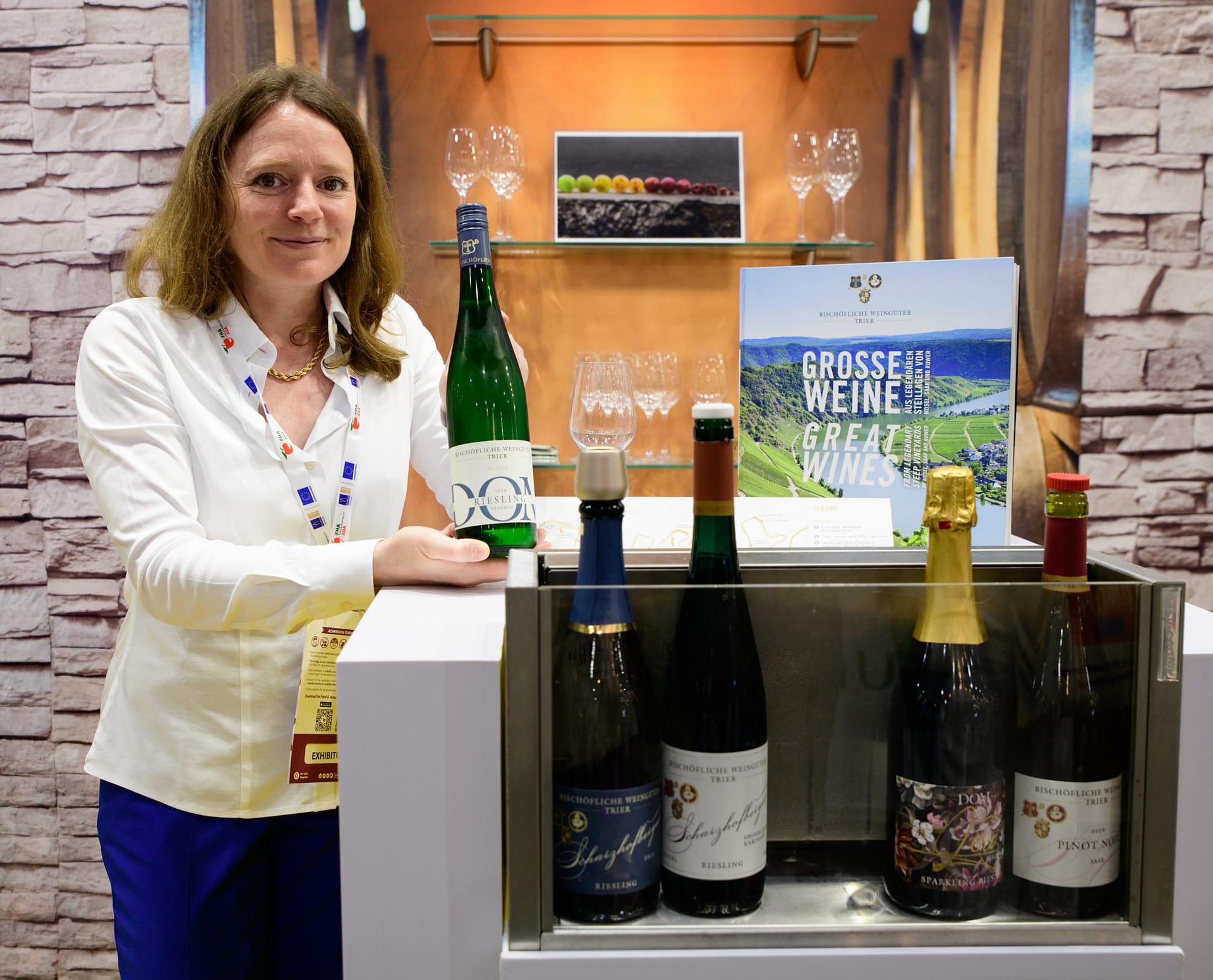
I was glad to speak with Aurélie Botton-Schmaus, who oversees sales and marketing and introduced me to one of Germany’s most historic estates: a charitable organisation formed in 1966 through the merger of three ecclesiastical foundations – the cathedral chapter of Trier, the Priesterseminar and the Cusanusstift. The institution’s roots stretch back to around AD 800, making it, by most measures, the oldest continuous wine estate in Germany.
Their 130 hectares of vineyards are spread across 35 classified single sites on the Mosel, Saar and Ruwer, and the wines lean towards the classical Mosel style: Rieslings of great precision and transparency, each expressing the particular character of its site.
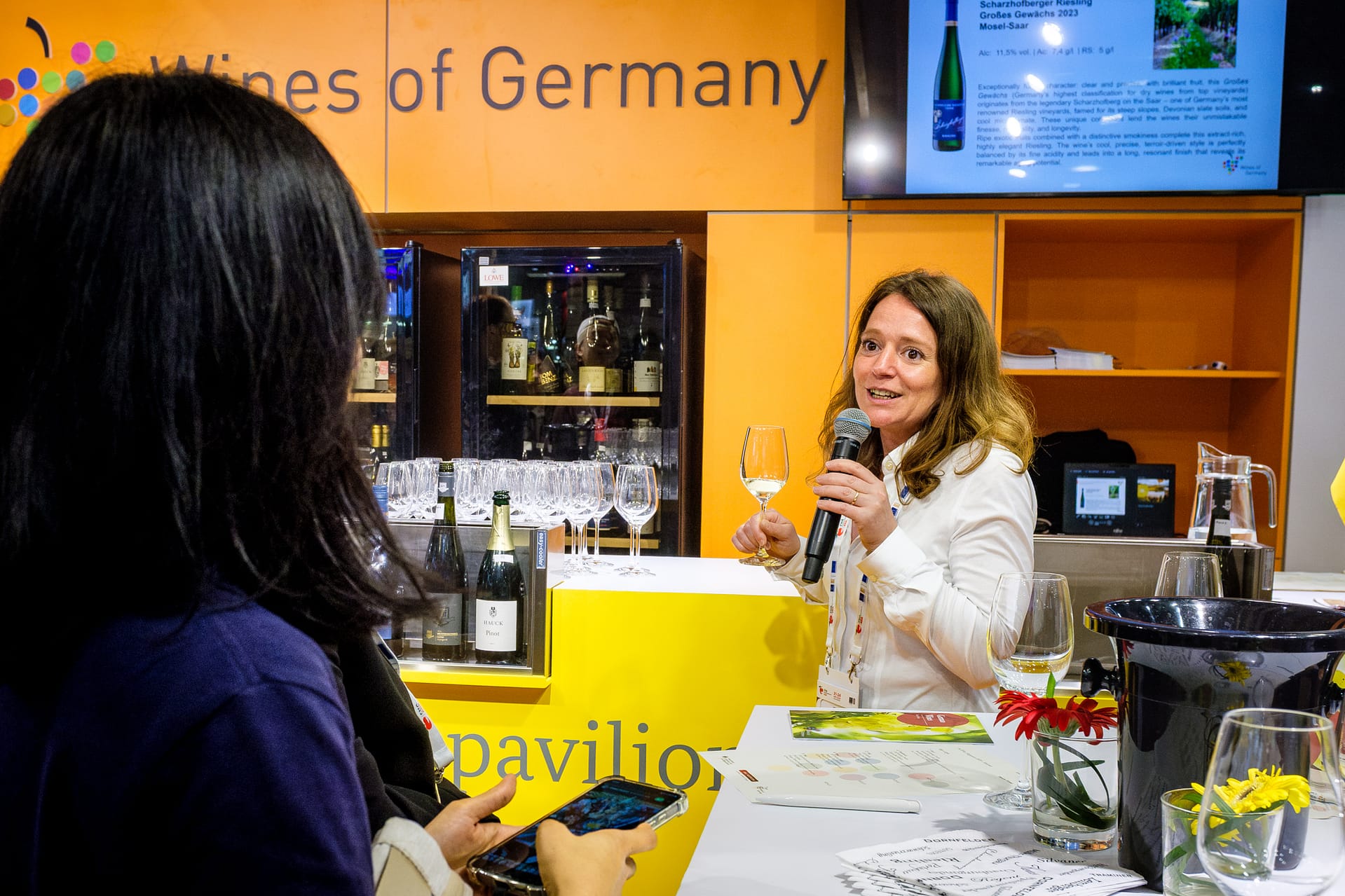
Of the wines I tasted, the DOM Riesling Trocken 2024 stood out as bright, stony and full of energy, with citrus, white fruit and that lightly smoky mineral line that makes Mosel Riesling so compelling. The Saar Pinot Noir 2020 showed cherry fruit, a touch of almond and a gentle earthy note before a long, fruity, lightly spiced finish.
GAIA WINES, Greece
I’ll be honest: I developed quite a crush on Gaia Wines at ProWine Singapore.
Founded in 1994 by Leon Karatsalos and Yiannis Paraskevopoulos, Gaia focuses on indigenous grapes and operates two wineries in very different landscapes: Santorini and Nemea. They were among the pioneers in bringing high-quality Greek wines to international attention.
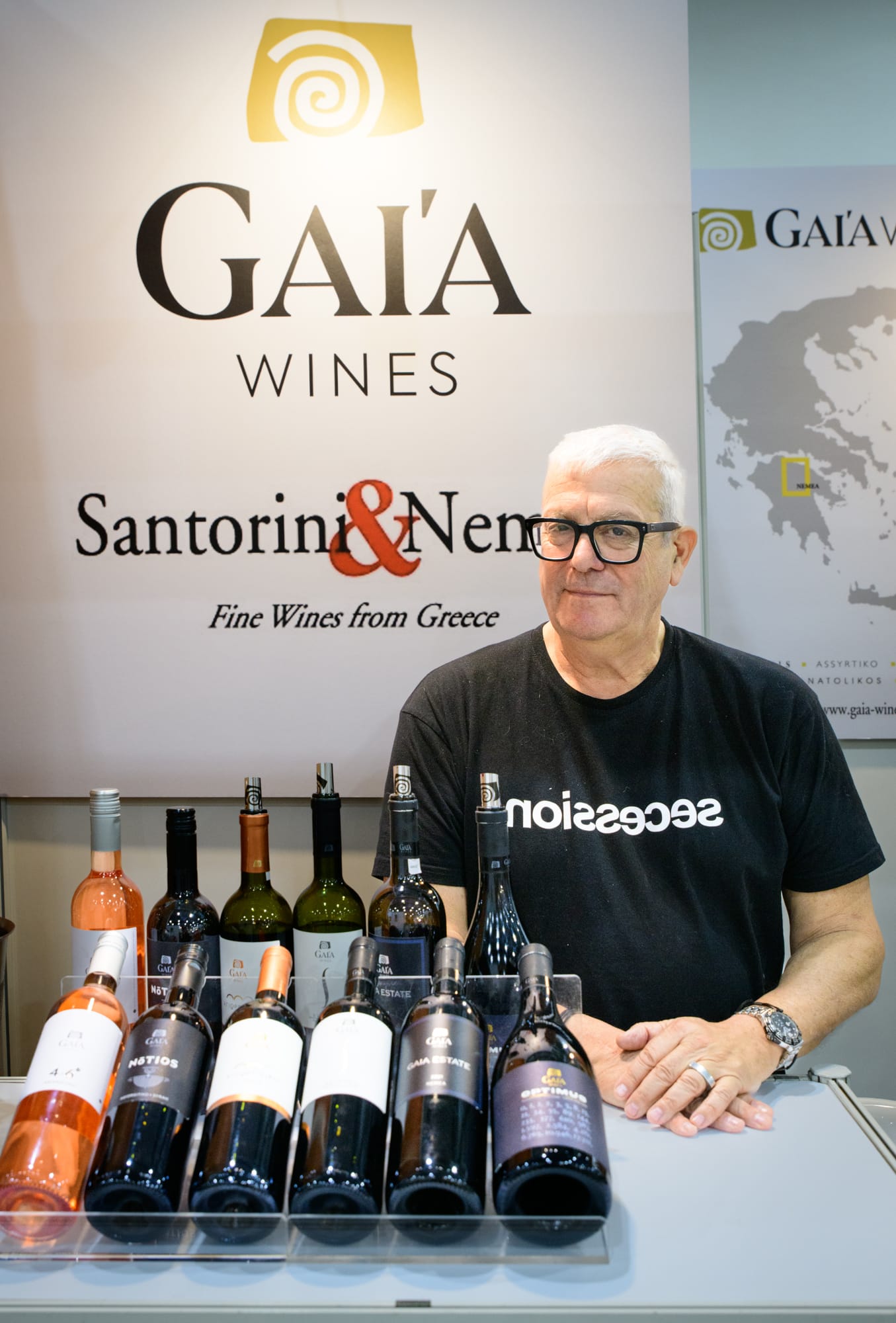
In Santorini, the focus is Assyrtiko. Rooted in volcanic, phylloxera-immune soils, some of these ungrafted vines are over a hundred years old and they are trained in the traditional kouloura basket shape, low to the ground, to protect them from the Aegean winds. Assyrtiko retains its acidity even in Santorini’s fierce summer heat, giving it a profile of remarkable precision: citrus, wet stone, sea salt, and a long, persistent finish. Their iconic Thalassitis was one of the wines that helped put Santorini Assyrtiko on the international map.
In Nemea, it is Agiorgitiko – “St George’s grape”, one of Greece’s most important red varieties – that takes centre stage. It is capable of both fresh, approachable everyday wines and structured, age-worthy expressions, and Gaia works convincingly across both registers.
Chatting with Yiannis Paraskevopoulos was one of the highlights of the expo. Full of character and not one to mince his words, he even went as far as writing ‘unnatural wine’ on one of his labels, just for a laugh, because as he points out, wine is an unnatural process: grapes on their own would just become vinegar, and it is human intervention that makes wine what it is.
If I had to pick only two bottles from their rich line-up, I would definitely go with Ammonite, which absolutely blew me away: broad yet razor-sharp, with a hint of smoke, salt, citrus and a deep stony persistence that gave it real gravitas.
On the red side, their Agiorgitiko showed the grape in a very convincing light, with ripe cherry and plum fruit, a touch of spice and just enough oak to round things out without smothering the variety’s natural charm. This is a bottle I would happily open with lamb.
Mūrbūdu Sidr, Latvia
This one is not a winery but a cidery, founded by Krišjānis Putniņš of Mūrbūdu Cider from Latvia. Founded in 2016 in the Valka region, in an old stone building near the ruins of a Livonian castle, Mūrbūdu presents itself as “abnormal cider” – and this reflects a genuinely restless, exploratory spirit evidenced by the large selection of their ciders.
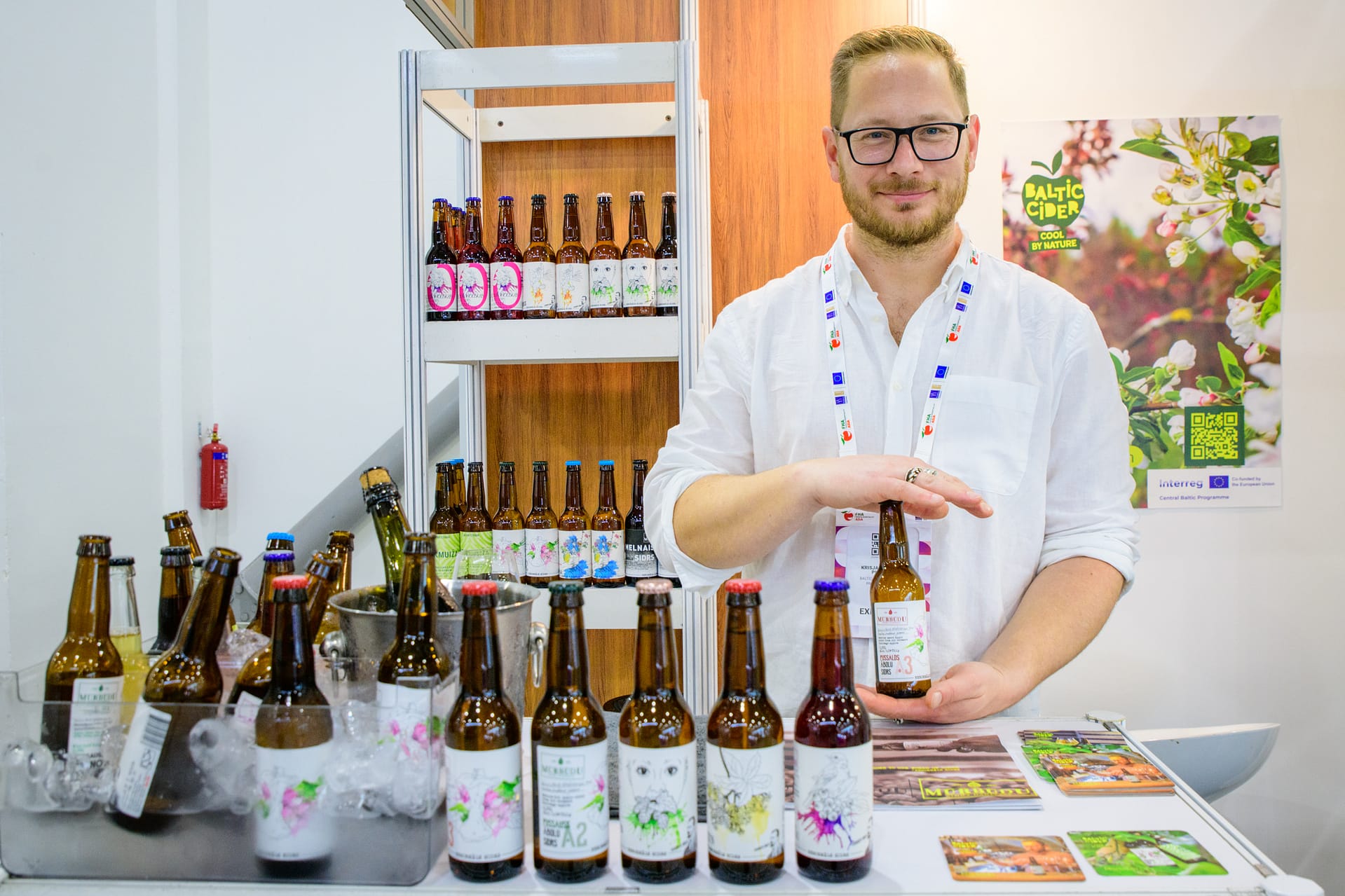
They work with Latvian apples and, whenever possible, fruit and berries sourced from the surrounding area, but they are not bound by any narrow idea of what cider ought to be. Hops, chokeberries, ginger, spices, wild fermentations, different yeasts, barrel ageing – all of that enters the picture. Their curiosity and willingness to let cider be playful is inspiring and should definitely allow everyone to find their own.
In much of continental Europe, cider still suffers from being a little old-fashioned or reduced to rustic cliché and Mūrbūdu, by contrast, felt alive, contemporary and unafraid to push at the edges of the category. My personal favourite was their wonderfully dry Charmat-method cider, it was both original and with a touch of glamour! I’d love to have a couple bottles in the fridge to surprise friends after a hot day.
That’s a wrap on Part 1 which focused on the wine side of ProWine Singapore, but check our part 2, dedicated to the spirits we noticed at Prowine!
CELLAR BRIDGE | cellarbridge.com | editor@cellarbridge.com | Words & Photography by Aurélien Foucault