Baia’s wine:
Imereti’s Big Sister
Words & Photography by Aurélien Foucault
Baia’s Wine, Meore Obcha, Imereti, Georgia
Annual average production: 45,000 bottles/year
Export share: 70%
As the long-distance bus drops me off at an intersection in the Imeretian countryside, in the village of Meore Obcha, I receive a message from Baia, who’s on her way home from well‑deserved family holidays: “I’m so sorry, we’re stuck in traffic and I’ll be late. Don’t worry, I’ve called my mum and she’s coming to pick you up.”
I start walking along a dusty road and a few minutes later, a little car passes by and I see a radiant woman squinting at me, trying to understand if I’m the expected visitor. Two smiles later and we’re laughing our way to the family house.
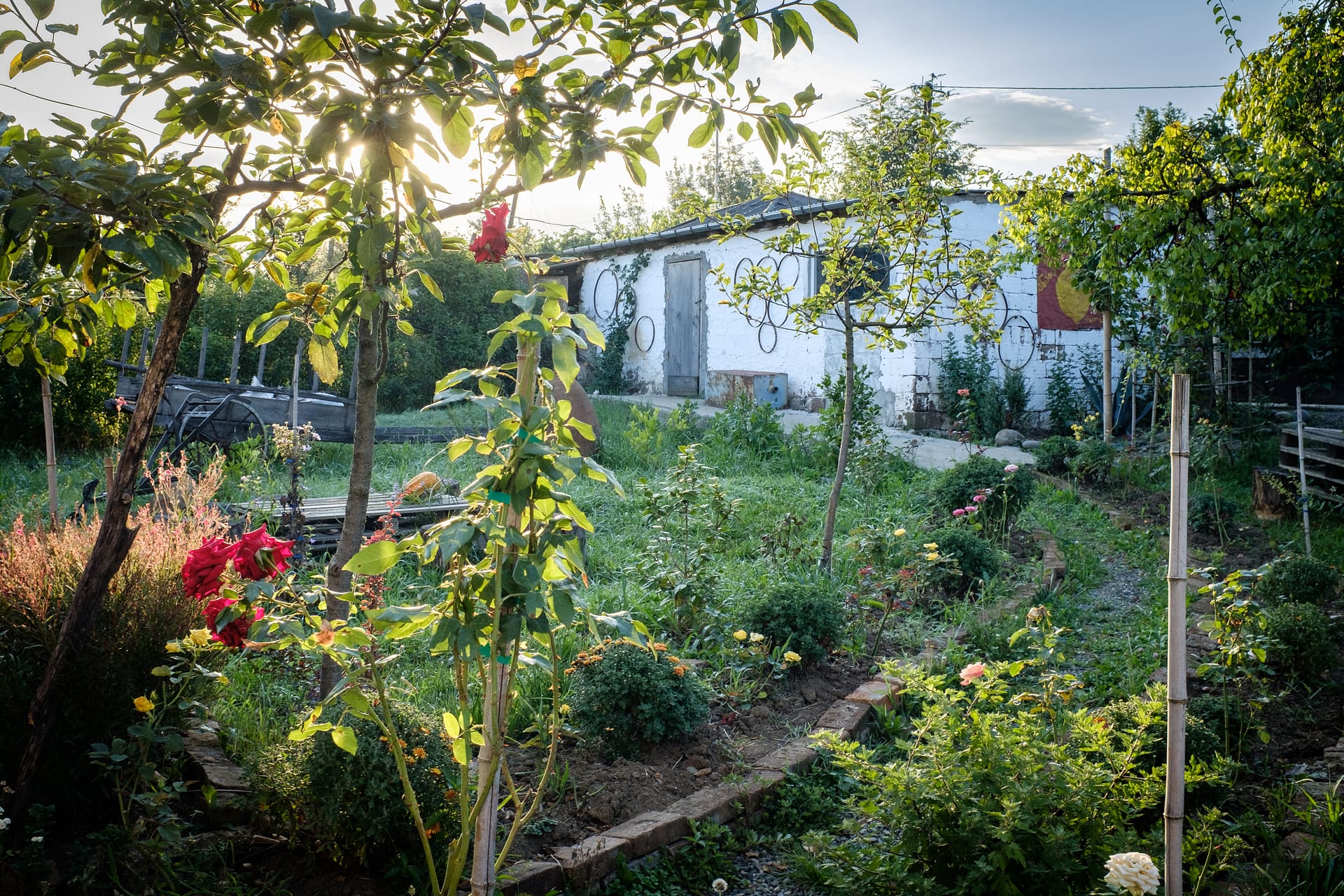
At the Abuladze household, as is often the case in Georgia, wine is a family affair.
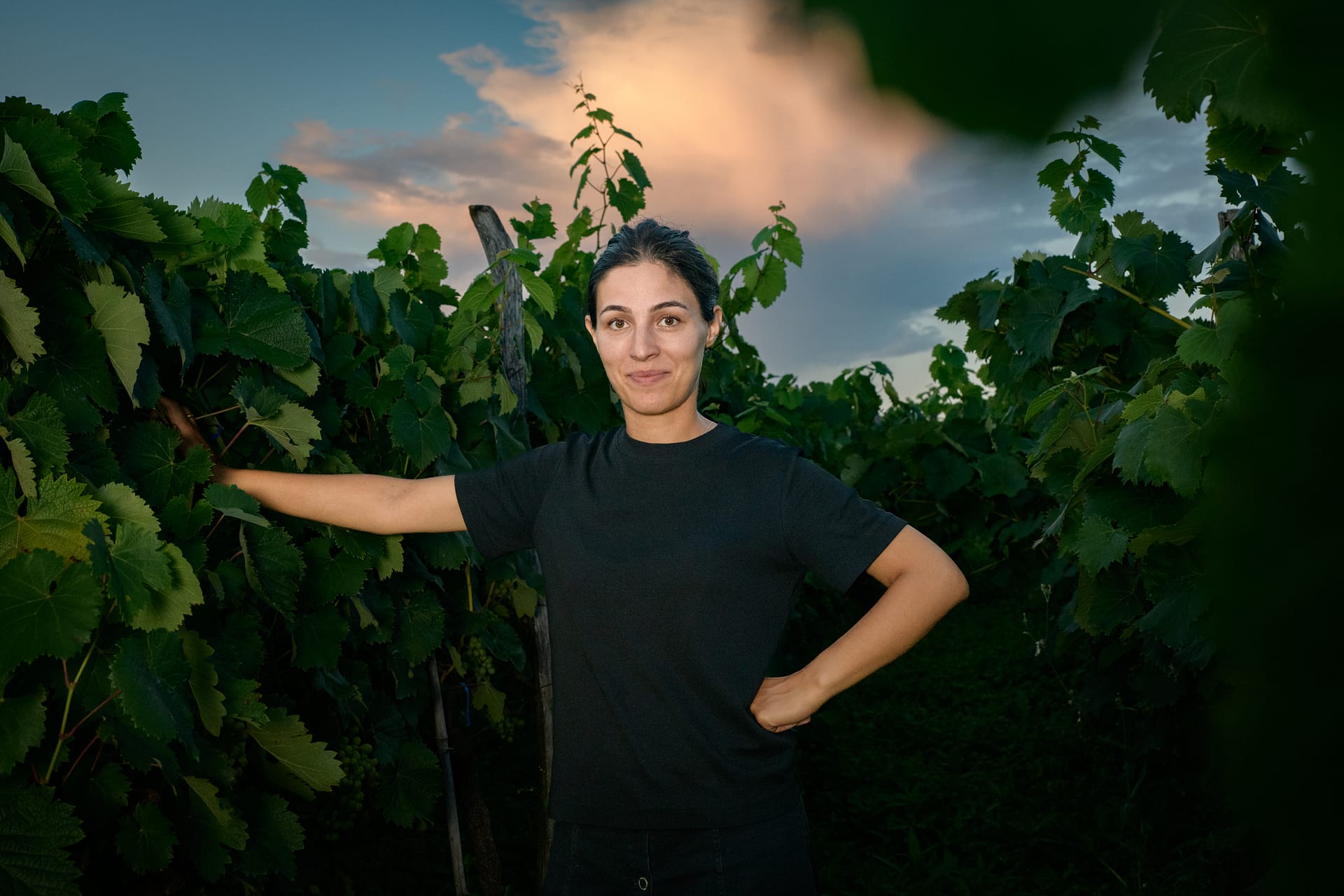
For Baia, a cheerful woman in her thirties, the relationship with the vine started early, helping her parents work their two hectares of agricultural land.
During the Soviet times, the system had collectivised winemaking across the country: families were reduced to a small personal plot — around half a hectare — whilst the bulk of production was handed over to large state‑run factories. Those factories had one priority: volume. They planted whatever yielded the most, primarily Rkatsiteli and Saperavi, and had no commercial incentive to experiment with rare local varieties, refine techniques, or share knowledge between small producers.
The Abuladzes, however, had the good fortune of never having planted those dominant varieties. The family’s vineyards had always focused on distinctly Imeretian grapes: Tsolikouri, more resistant to humidity and fungal disease, with yields reaching eight tonnes per hectare; Tsitska, valued for its acidity and sparkling wine potential; and the rarer Krakhuna, whose aromatic character adds complexity to the blends.
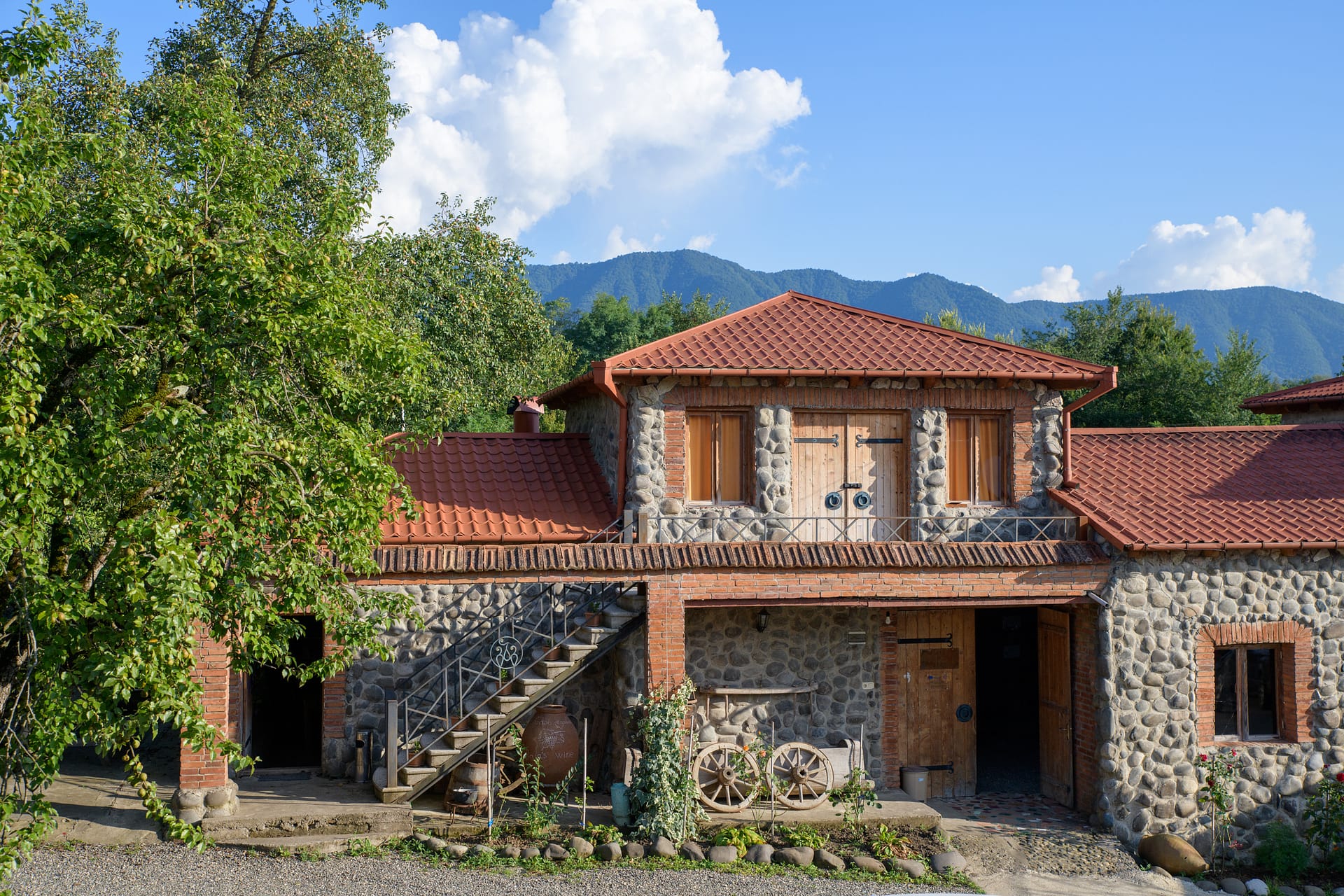
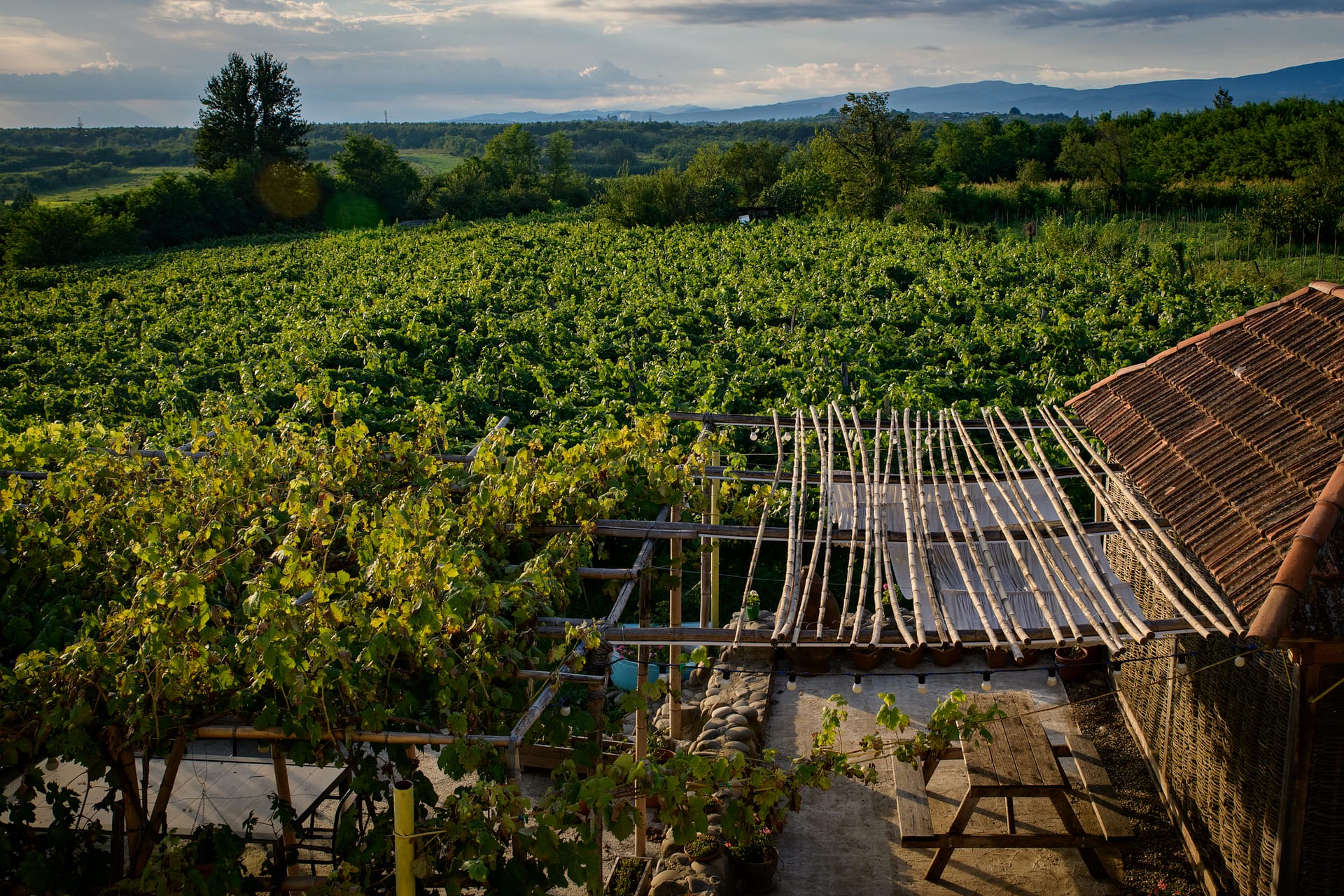
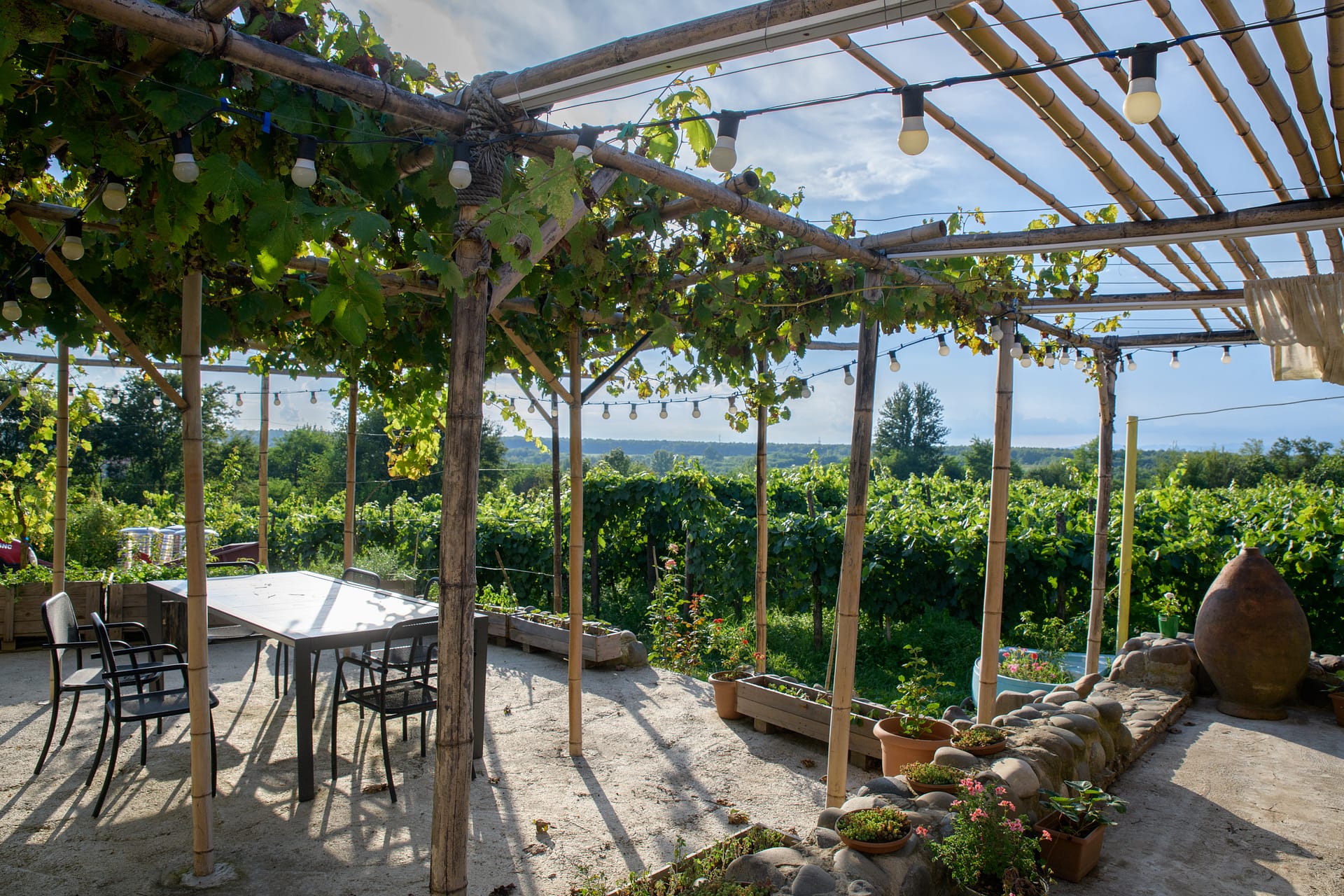
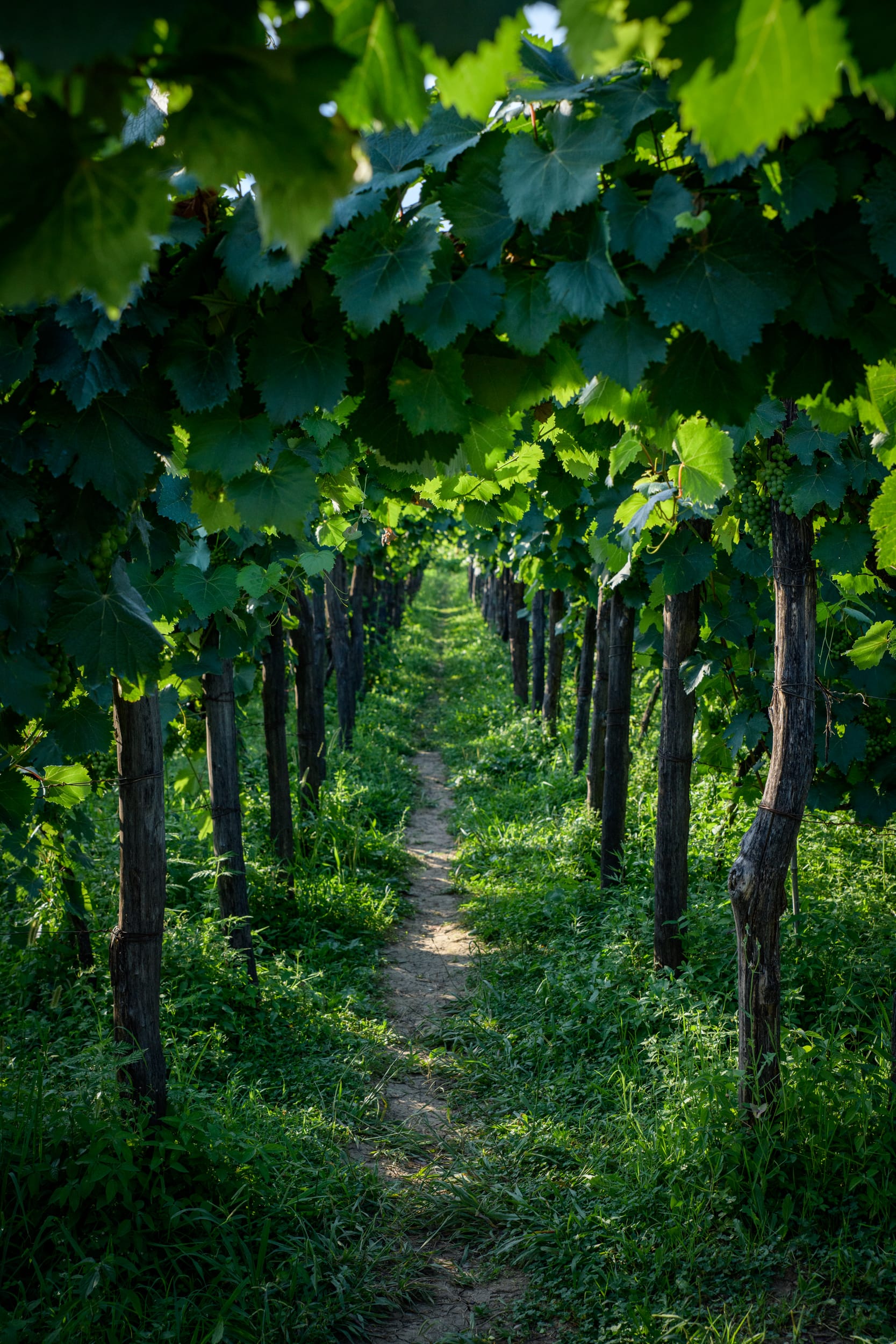
The village of Obcha, where the Abuladze vineyards sit at 324 metres above sea level, has a microclimate worth understanding. Positioned to the east of the Sairme mountains, the site receives a slightly sharper angle of sunlight than the surrounding lowlands, translating into greater solar intensity during the growing season. At night, dense cold air drains down from the peaks, meeting the cooler moisture of the valley floor and producing a pronounced drop in temperature. That thermal contrast between day and night is one of the key factors in building acidity and aromatic complexity in the grapes.
The soil adds another layer: an alluvial mix of clay, gravel, sand and limestone that drains well in wet years and retains moisture when conditions are dry, whilst contributing mineral elements that carry through into the wines.
In 2009, Baia and her family decided to bring their wine — drawn straight from 20‑litre vessels — to the New Wine Festival in Tbilisi, and the experience was an eye‑opener. The solidarity amongst producers and the public’s genuine interest in wines from Imereti showed them that quality winemaking was achievable at a small scale. Baia explains that Georgian winemakers form a tight‑knit community where sharing knowledge generously is the norm, something she experienced firsthand from the start and has helped pay forward ever since.
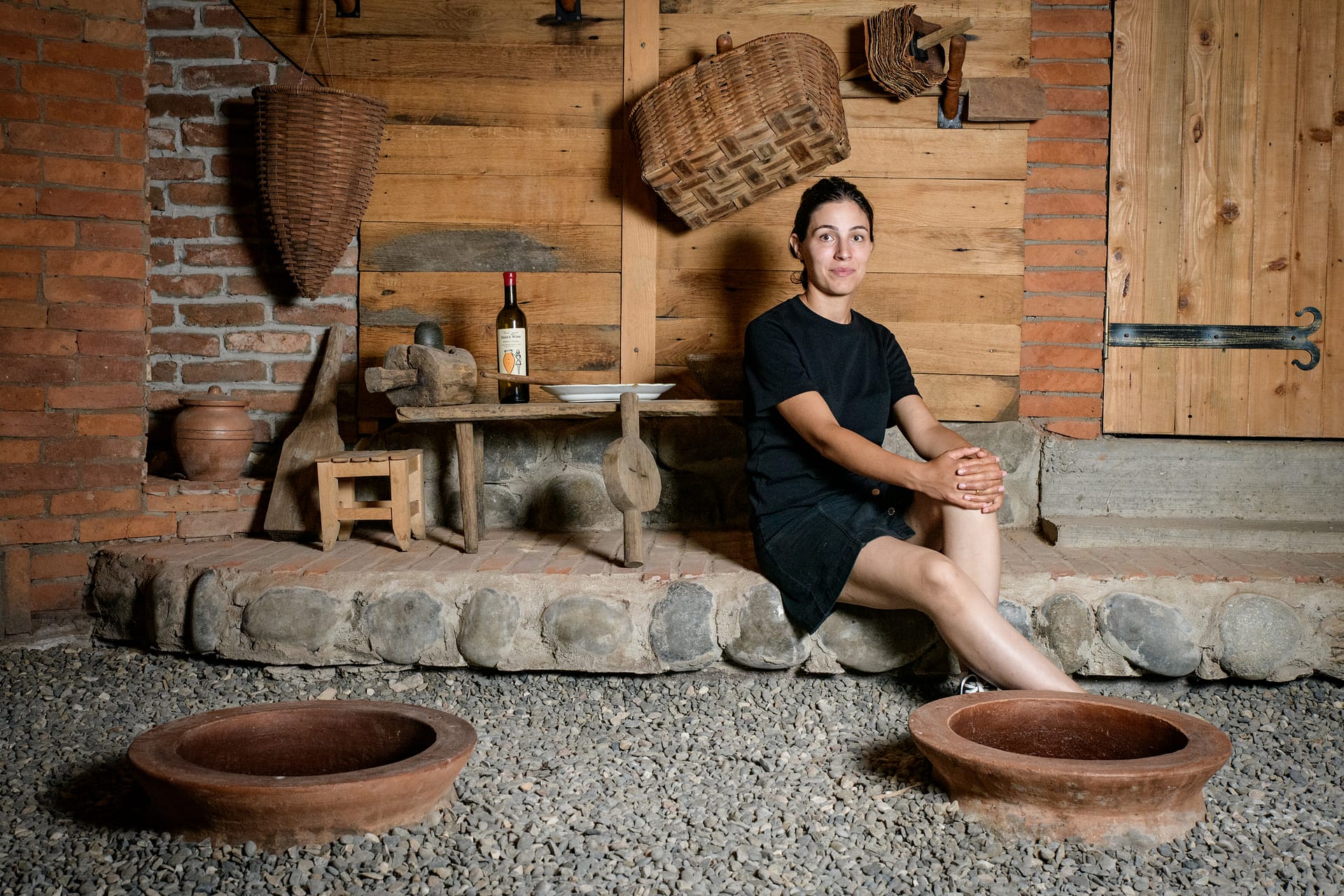
Inspired by the example of Nino Zambakhidze, a prominent figure in the Georgian Farmers Association who ran a large dairy operation in the south of the country, Baia realized that women could carve out a serious place in agriculture and, at the age of 25, after finishing her studies in Tbilisi, she decided to come home and committed to scaling up production.
It was not an obvious path at the time: many young Georgians, even those from farming families with land and resources, were gravitating towards law, economics, or other conventionally prestigious careers. The Abuladzes went the other way, and did so methodically. Her younger sister Gvantsa went to work in the Moselle region of Germany to train in viticulture, whilst their brother Giorgi completed a degree in oenology. The family was building a strong team with their project in sight.
With the support of various government and international grants, Baia and her siblings launched Baia’s Wine, which found an audience both locally and abroad relatively quickly. The commercial approach has been consistent: regular presence at international fairs and exhibitions, membership in professional associations, and direct relationship‑building with importers and HORECA buyers. Sweden, for instance, became one of their main export markets through Gvantsa’s connections and a partnership developed over time through that kind of sustained, on‑the‑ground work.
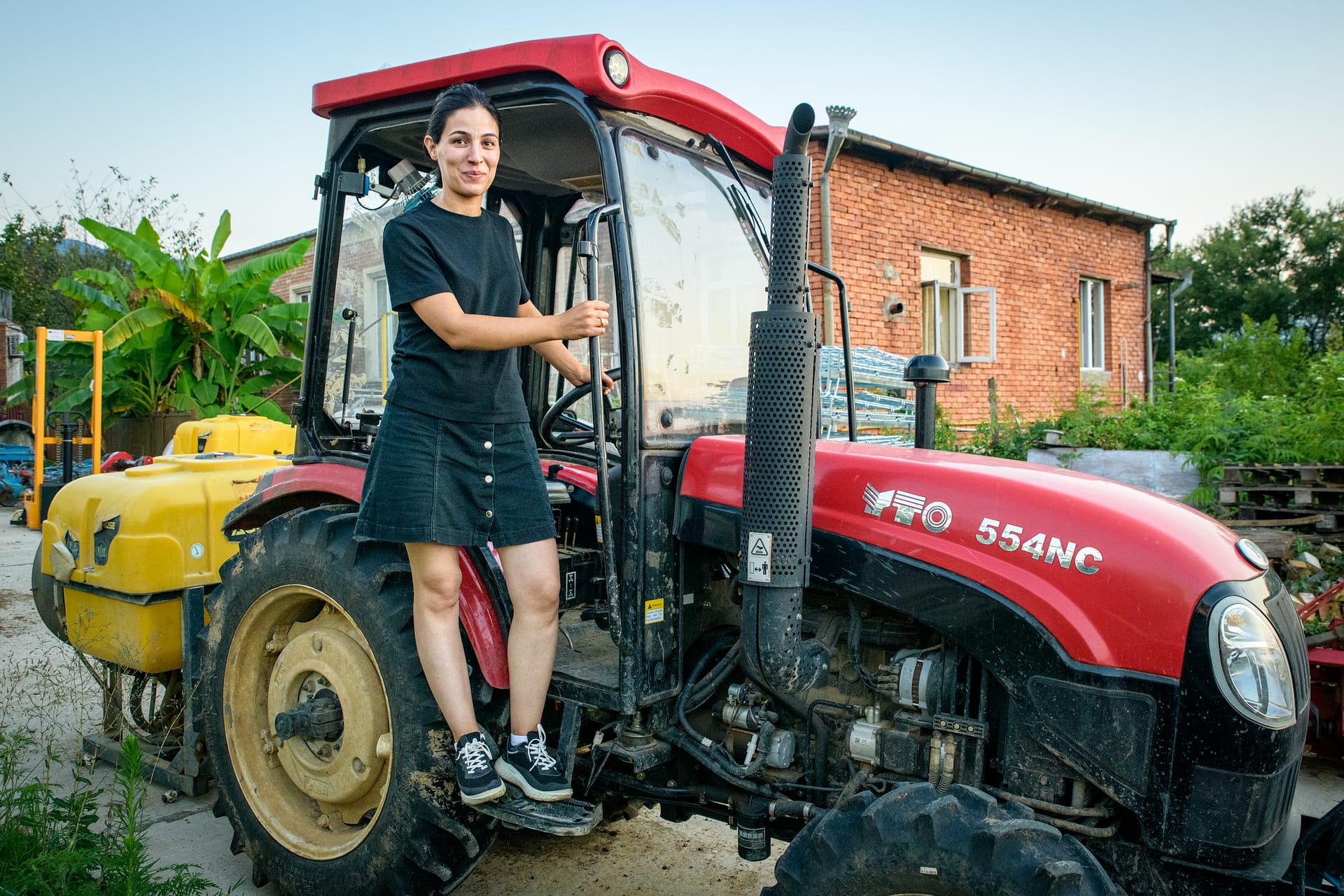
Today, the United States is their largest export market, followed by Sweden and Germany, with a presence also in the UK, Canada, and around a dozen other countries. Roughly 30% of sales stay in Georgia, a high figure for a producer of their size.
In the cellar, the approach is one of low intervention throughout. Fermentation relies entirely on wild yeasts, sulphite additions are kept to a minimum, and the wines are bottled unfiltered. The white range under Baia’s Wine, built around Tsolikouri, Tsitska and Krakhuna vinified separately before blending, spends around a month on skins before being racked off the heavier lees and transferred to tchuri, the Imeretian version of the qvevri, for six months of slow settling. A final period in stainless steel prepares the wine for bottling. The Krakhuna, made as a single-variety wine, follows a longer maceration with a partial proportion of skins, producing something richer and more structured, with notes of persimmon, apricot and honeycomb.
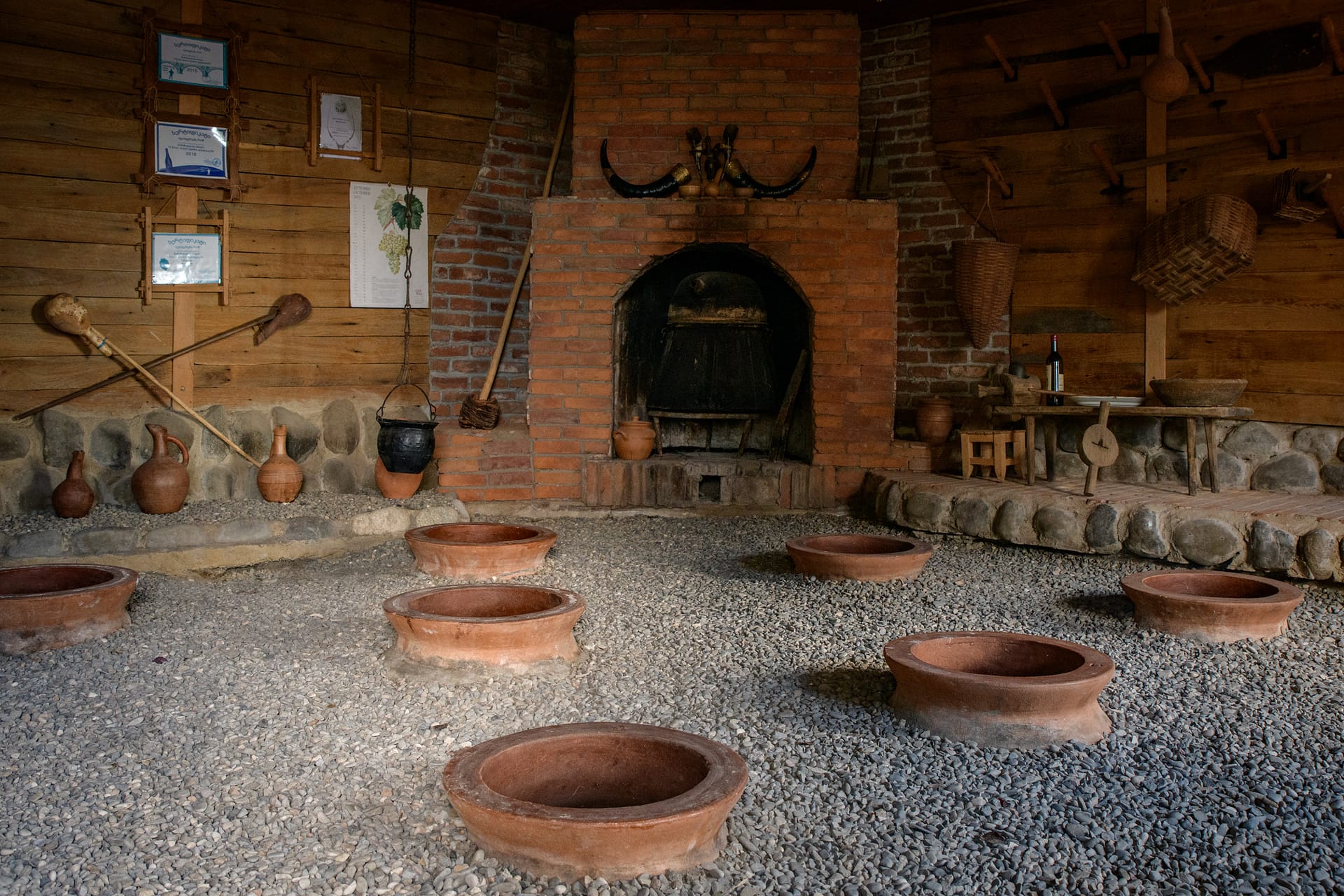
Gvantsa’s Wine extends the range in two directions: still reds made from Otskhanuri Saperavi and Aladasturi, two indigenous Imeretian varieties vinified in tchuri with the same low-intervention philosophy; and two pétillant naturels – a white from Tsitska and a rosé from Aladasturi – known to go down wonderfully with Japanese sushi.
The family currently has 10 hectares under vine — a figure that has shifted recently as older plots were pulled up to make way for new variety trials, a decision that reflects a longer-term view of the domaine rather than a contraction. Baia’s track record has not gone unnoticed: she was included in the Forbes 30 Under 30 list, and sommeliers around the world hold her wines in high esteem.
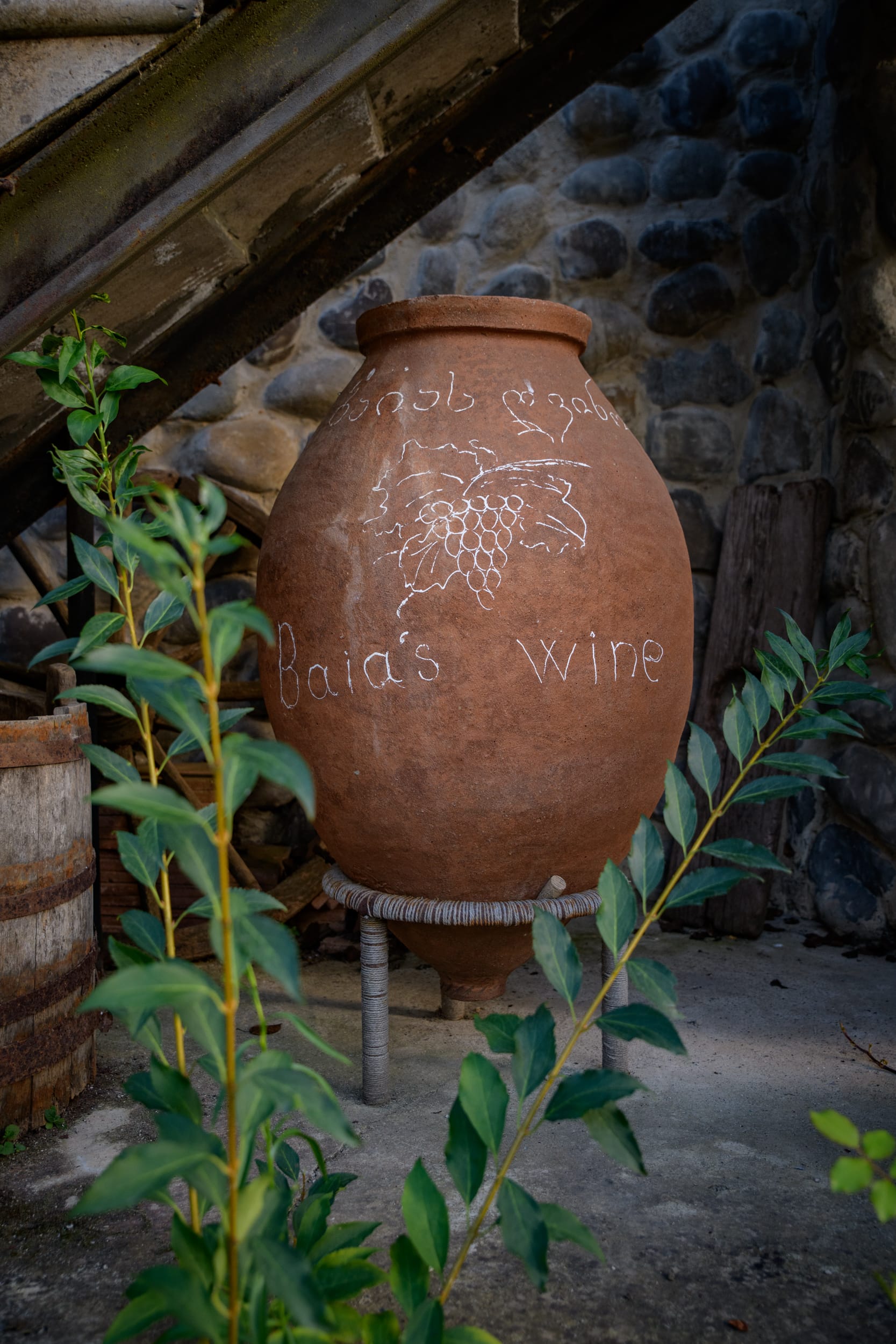
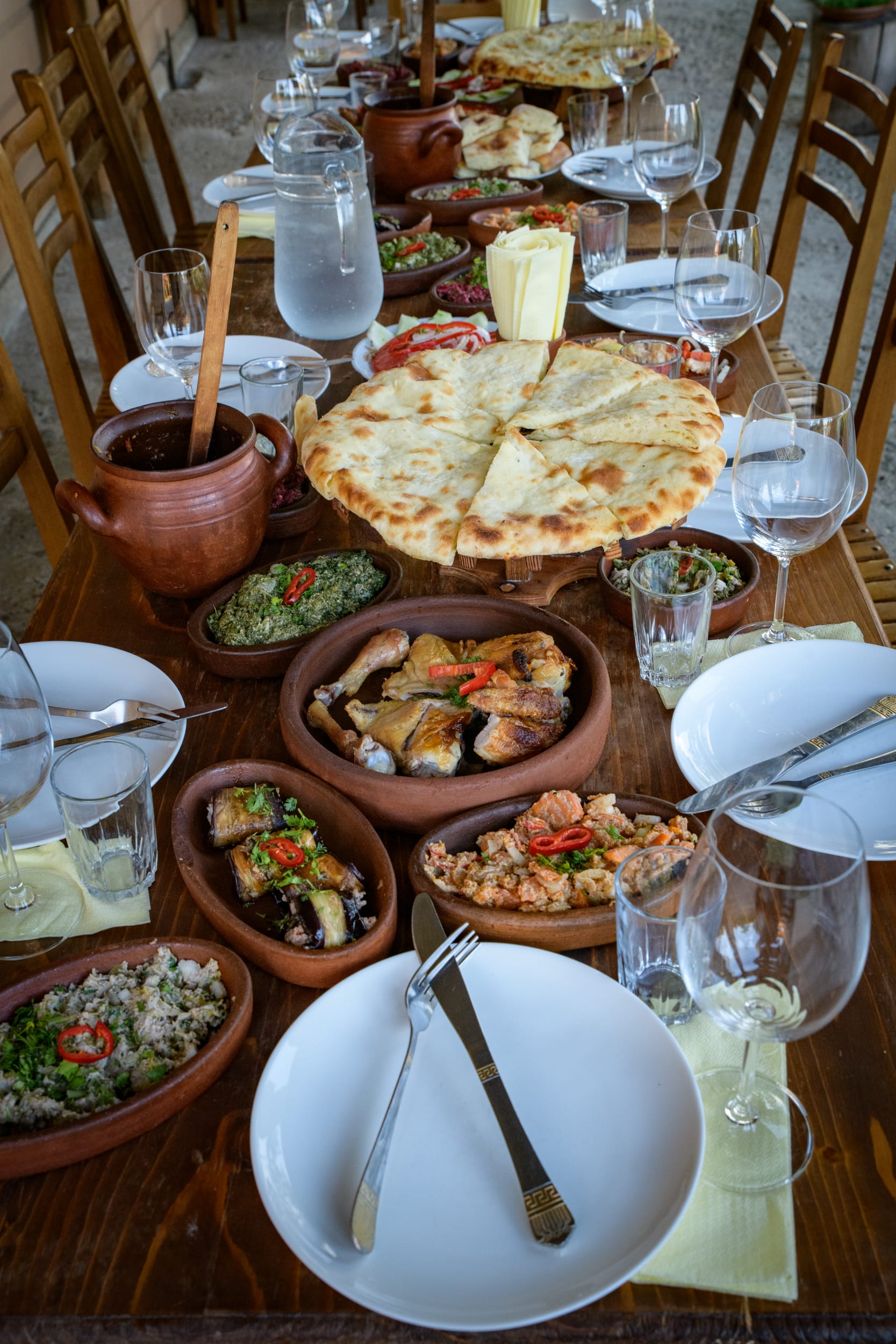
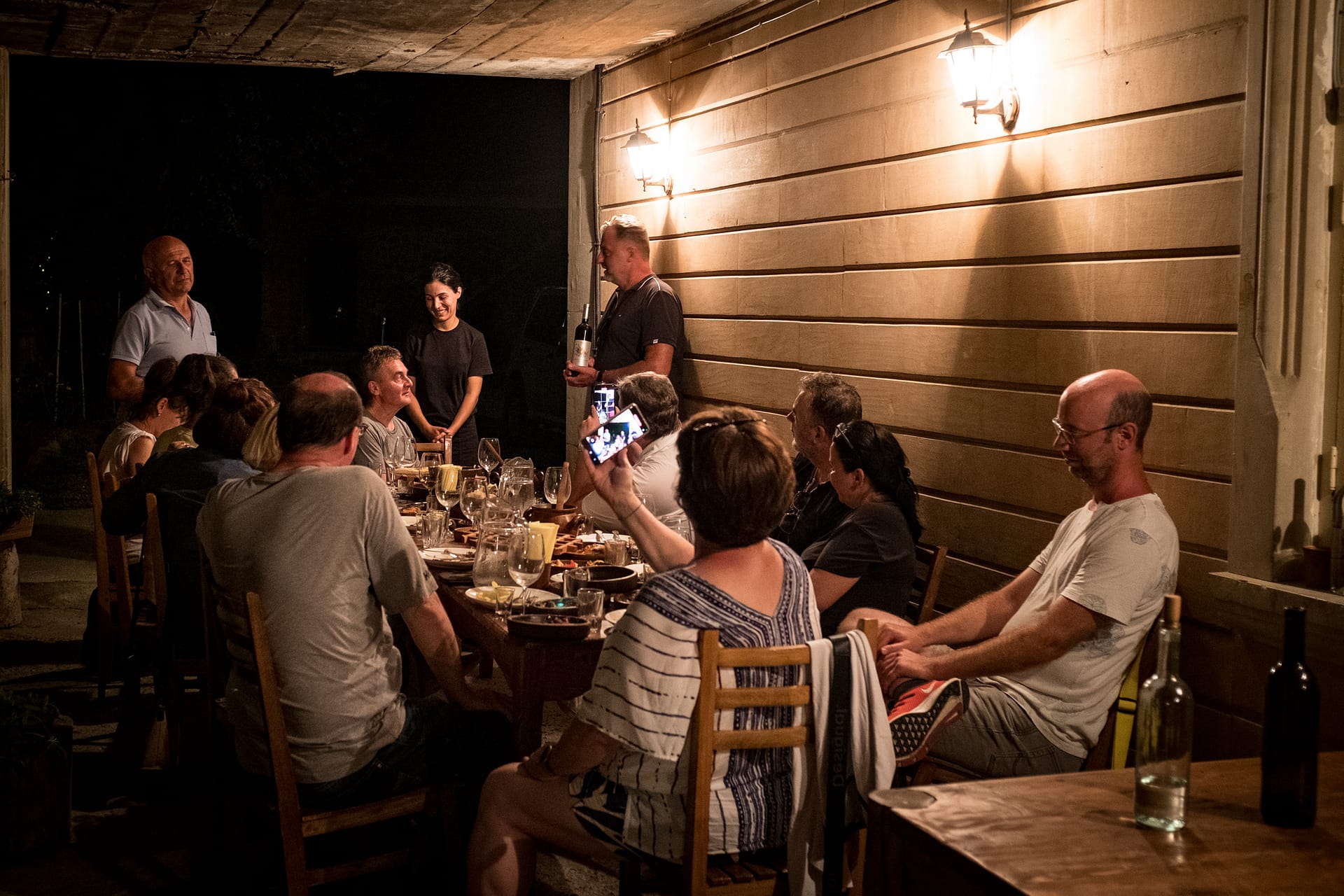
But as Baia is quick to remind anyone who asks, this is a family success where everyone plays a crucial role. Their parents enjoy welcoming guests and visitors, and the father, makes a point of toasting them at family meals. Coming from a Georgian father of his generation, she says, that means something.